A surviving corps in a failing strategic system
The final campaign of the Teran 87th Elite Battle Corps ran from May 7 to June 17, 1234, in western Tera. Rusk's remaining organization faced Lathorne's 7th Army and Allied partners after years of fighting around Meren and Tassar. The familiar commanders and formation titles remained, but the conditions sustaining their contest had changed. Hukular's national capitulation on April 12 had weakened the central Axis partnership. Wider Allied operations further constrained Teran choices. Rusk retained the capacity to resist locally while losing the strategic circumstances that had once made successful defense renewable.
Hukular's defeat must not be placed inside the Teran corps' chain of command. The fall of Varkhest on March 23 and the April 12 capitulation belonged to a separate national sequence. Their consequences affected Teran resources and freedom of action, but they did not authorize Rusk to end Tera's war. His responsibilities concerned the formations actually under his command. Keeping those limits visible explains why the corps surrendered on June 17 while the Teran national capitulation followed on July 9 through another authority. The two events were connected without being the same decision.
Lathorne's army had also changed during seven years of continental service. Its experience survived through rebuilt formations and surviving leaders, not through an intact original roster. Other Allied campaigns had improved the coalition's position and limited Teran choices beyond his immediate front. The last contest therefore was not a personal duel sealed off from the wider war. The outcome resulted from operational pressure against a corps whose remaining options were shaped by a collapsing support system, and from an Allied grouping able to sustain that pressure within an increasingly favorable coalition setting.
Varen and the shrinking space of resistance
The Varen depot district supported movement within the corps' remaining area. It was not the Teran Empire's single supply source. Rusk needed it to keep his defense or withdrawal organized. Lathorne sought to reduce that capacity while preserving his own army for further operations against a state still fighting. Their competing purposes made the district important through its connections. A depot's value lay in what could move through it, what could be stored or evacuated, and the relationship of those functions to troops still able to act.
The corps' earlier withdrawals had preserved its institution inside a strategic system that still offered other positions and opportunities to rebuild. By spring 1234, the areas behind its current line were themselves threatened or overloaded. A withdrawal might avoid an immediate loss while leaving the formation with less room for the next decision. This difference changes how the final campaign should be compared with Meren or Tassar. Rusk had used retreat effectively before, but a method that preserved units could not create the missing resources or secure rear space on which its continued usefulness depended.
The corps' celebrated status was another burden. Reputation could sustain cohesion and influence access to finite replacements, but it could also encourage a demand to continue fighting merely to preserve the image of an undefeated formation. The retained account instead shows Rusk increasingly confronting responsibility toward survivors. An institution's previous achievements did not give its commander an unlimited claim on their lives. The question was whether continued resistance could still produce a meaningful outcome, not whether surrender would leave an unbroken legend for others to celebrate.
May 7–24: competence under contraction
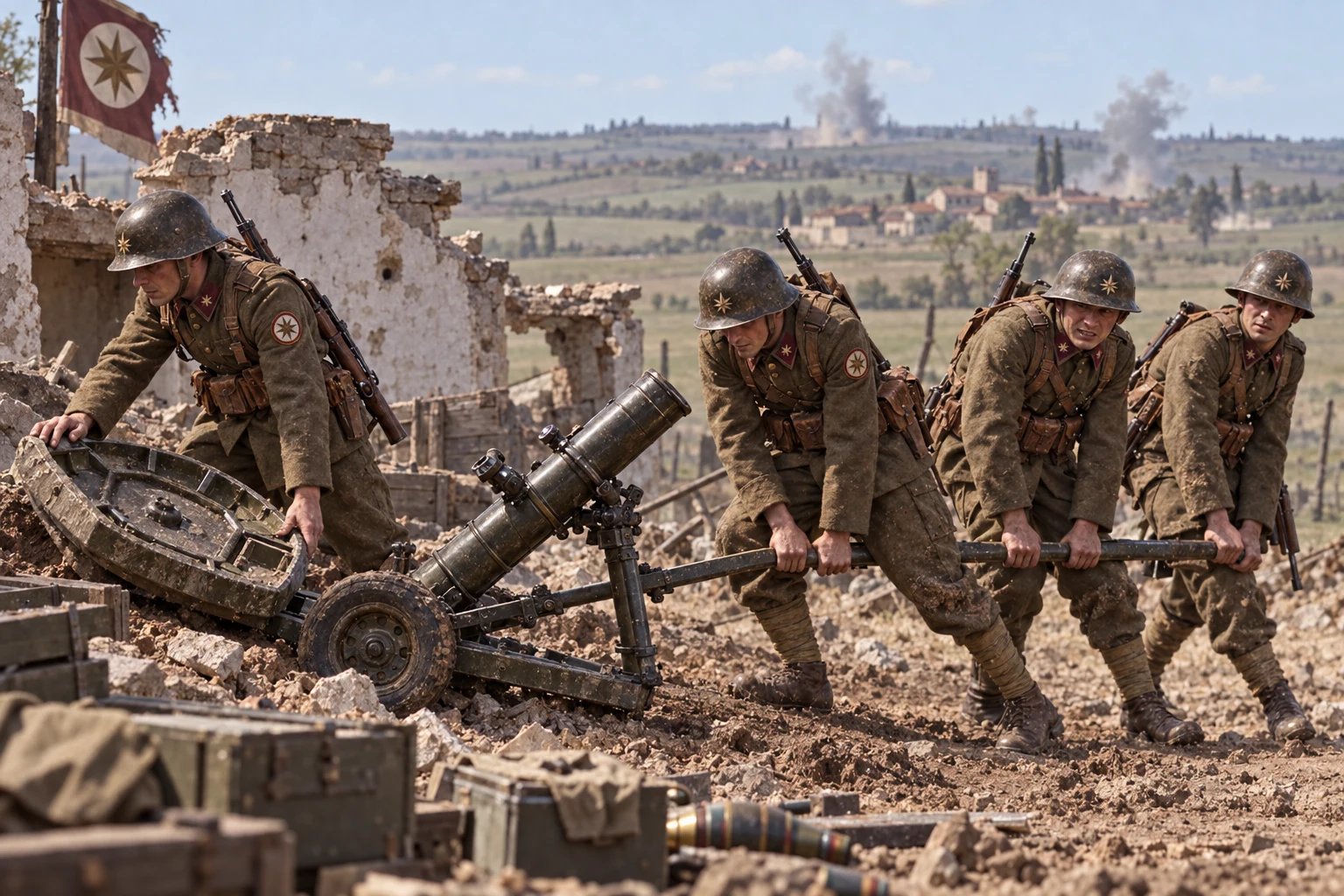
The Allied offensive began on May 7. Prepared positions and local counterattacks inflicted losses, contradicting easy expectations that the 87th would immediately dissolve. Vale's formation faced troops still capable of discipline and coordinated resistance. Reports of withdrawal therefore required checking before a larger movement was committed. Allied superiority in the war's direction did not remove local risk. The history of the last campaign preserves a competent defender because that competence explains the cost and sequence of the victory, rather than weakening its significance.
Rusk transferred units between threatened sectors, but each movement left fewer alternatives elsewhere. His staff distinguished formations able to act coherently from groups whose effective capacity had fallen below the implication of their titles. Reinforcement requests brought promises, partial deliveries or units needing restoration themselves. These were not interchangeable resources. Adding a formation's designation to a return did not establish that it could perform the task required of it. The contraction of practical options was therefore greater than a simple count of named units might suggest.
Savin Drel served among men who remembered successive versions of the same corps. They had seen withdrawal from Meren and Tassar preserve it for later action. The present situation felt different because the rear no longer offered the same prospect of renewal. Their perspective links operational change to lived experience without making every soldier aware of the entire strategic picture. They could recognize that shelters, replacement expectations and destinations had changed while still lacking full knowledge of national decisions. The final defeat developed through those immediate constraints as well as through high command's broader assessments.
May 25–June 10: the depot loses its function
Fighting around Varen narrowed the corps' movement. Some stores were evacuated, while others remained because vehicles and routes were needed for wounded and combat formations. The competition shows that logistics was not a neutral flow proceeding behind the battle. Every choice about what to move affected the future capacity of the surviving force. Material could be useful yet impossible to carry without blocking people whose preservation had become more urgent. The district's declining value came through the disruption of these relationships, not merely through the loss of buildings bearing depot labels.
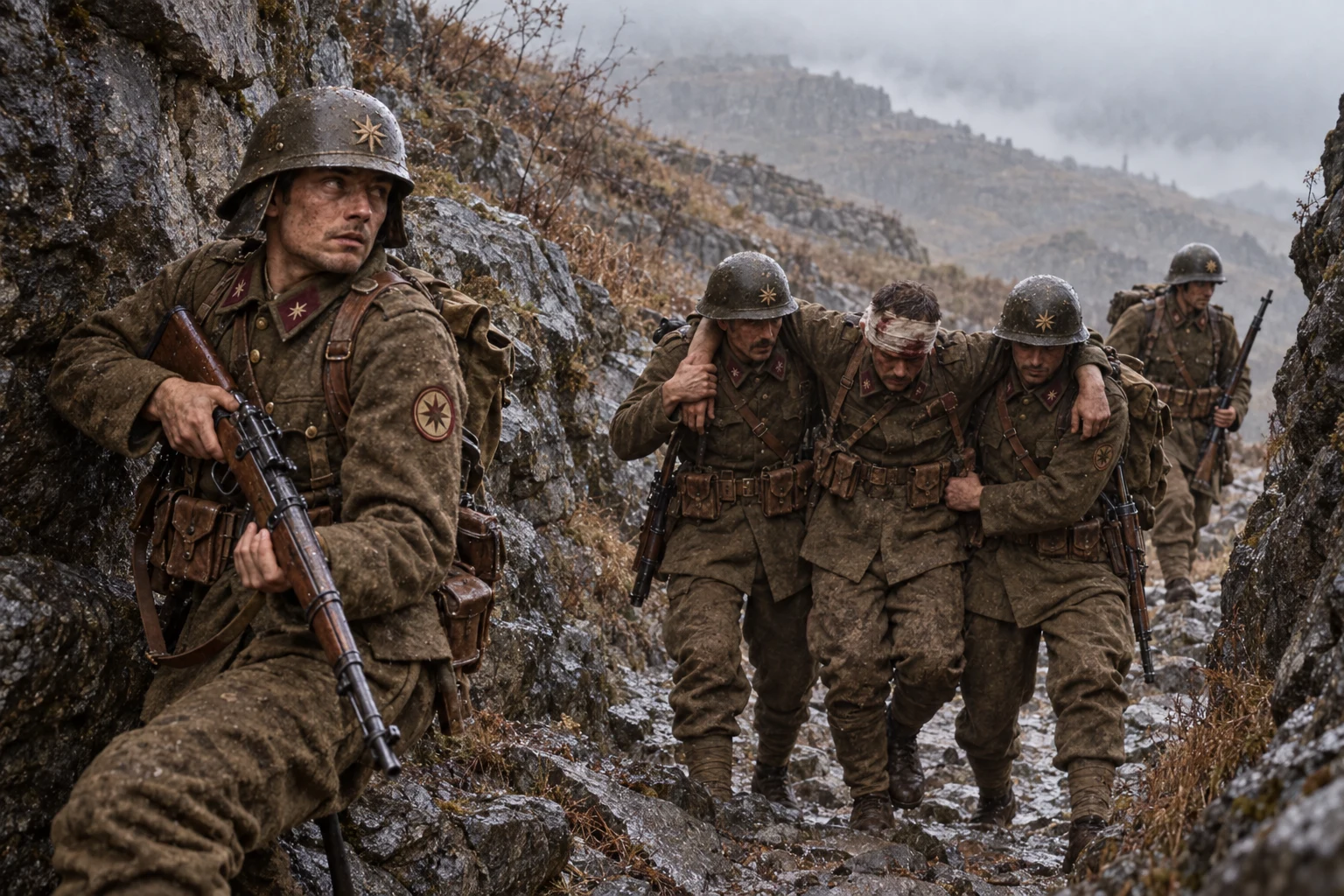
Rusk ordered the preservation of people and coherent formations to take precedence over equipment that could not be removed in time. Implementation varied as subordinates faced different immediate pressures and incomplete reports. The order's existence is therefore evidence of a priority, not proof that every withdrawal followed it successfully. Some troops could make a considered choice; others were forced out before they could act on a full inventory. A responsible account retains that variation and does not turn the commander's intention into a comprehensive claim about every locality in the retreat.
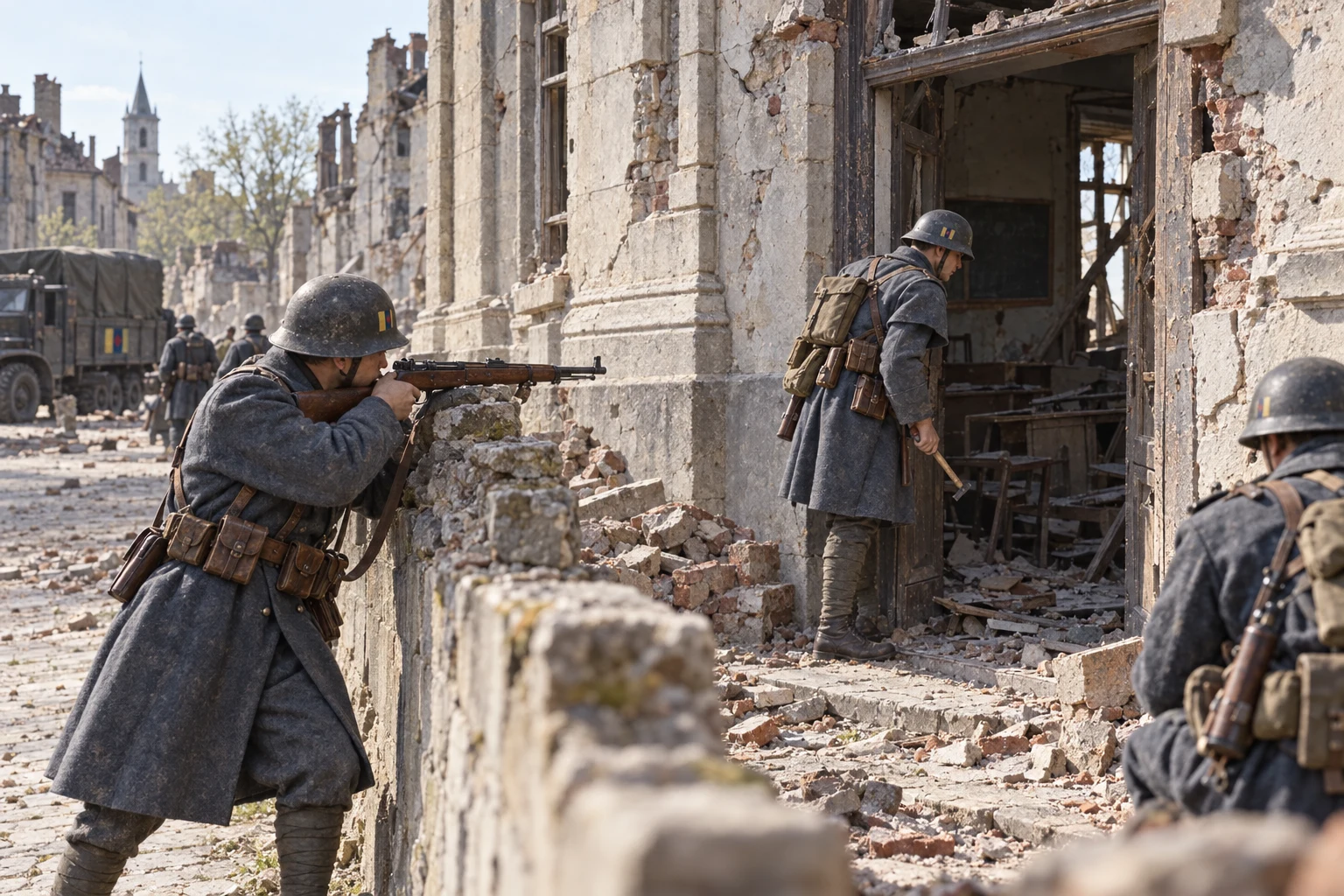
Allied troops capturing parts of Varen encountered wounded Terans beside abandoned material. Vale helped arrange their transfer while continuing to secure the district. Combat and custody overlapped. A man still resisting and a man incapable of continuing could occupy nearby spaces, and the army had to distinguish them. Years of knowing the opponent primarily through fire did not remove obligations toward those now under control. The transition required discipline and records as well as force, particularly when the defeated formation's familiar name concealed people with different immediate conditions.
A decision bounded by real authority
Rusk attempted further contraction to preserve enough command for an organized conclusion rather than general dispersal. Remaining officers debated whether further resistance could improve the outcome or only increase losses. The retained narrative does not present surrender as an inevitable private revelation shared by everyone simultaneously. It shows a command confronting the diminishing usefulness of delay. The corps' experience allowed it to recognize changing conditions, but no amount of local skill could restore the Axis partnership or guarantee reinforcements that the national system could no longer reliably provide.
By mid-June, the corps could not sustain its assigned struggle. Communications remained sufficient to arrange coordinated cessation. That remaining capacity mattered. A command still able to identify units, transmit instructions and discuss implementation could reduce the risks of leaving each group to make its own terms. The surrender was therefore an action by a depleted institution, not proof that it had ceased to exist before the agreement. Its coherence survived long enough to be used for the care and accountability of the people whose further combat it could no longer sustain.
Negotiations concerned the forces under Rusk's actual authority, including wounded, records and the arrangements for surrender. They did not give him control of every Teran soldier or sovereign authority over the national war. This limit prevented a corps-level settlement from being mistaken for national capitulation. It also prevented the documents from promising physical control over detached parties whose current location was uncertain. The scale of a signature had to match the signer's real responsibilities. Otherwise, an apparently comprehensive agreement could generate false expectations about groups it could not immediately reach.
June 11–17: the organized corps stops fighting
On June 17, Rusk surrendered the surviving organized elements of the 87th to Lathorne's command. Those elements were not every person who had ever served in the corps. Earlier deaths, wounds, transfers, captivity and detachments had dispersed the larger historical roster. The surrender return concerned an institution at the end of repeated replacement and loss. This distinction is necessary for both military and family history. The people present could be entered into custody; people absent from the collection points required different inquiries rather than being retrospectively imagined among the men who surrendered that day.
Rusk's final strength return marked several categories incomplete. He refused to certify detached parties' locations merely because names remained on the roll. Lathorne's receiving staff accepted the qualification and established later reconciliation. That agreement preserved a useful boundary between authority and knowledge. Rusk could direct surviving connected units while acknowledging limits concerning others. The receiving command could accept responsibility for custody without pretending the document had solved every unresolved absence. The result was a more accurate surrender record than an unqualified total whose apparent precision concealed facts neither side possessed.
Drel passed through a collection point where weapons were surrendered before food and medical inspection. Under the recorded arrangements he retained personal letters and identifying papers. A clerk initially entered his surname incorrectly, and a companion corrected it before the group moved. The error was small within the military scale of the campaign, but consequential within the history of one family. Correct identification connected custody with later correspondence. Preserving that link was part of administering a defeated organization as a collection of people rather than a single prestigious name now crossed off an enemy list.
Custody after victory
Vale ordered corrected lists copied before prisoners were transferred. Custody created obligations extending beyond the unit's immediate assignment. A receiving establishment needed usable identities and records if medical care, correspondence and future inquiries were to connect to the people being moved. Victory gave the Allies control; it did not make subsequent administrative errors harmless. The process therefore required a different form of sustained discipline from that used to defeat prepared resistance. A battle could end while the responsibilities created by its outcome grew longer and more extensive.
The source's surrender scene does not require a theatrical personal duel between Rusk and Lathorne. Their histories were intertwined through years of operations, yet neither individual embodied the whole war. The arrangements were completed through staffs, subordinate officers and the behavior of soldiers at collection points. That ordinary organizational work explains how military cessation became an implemented condition. A dramatic exchange might represent the event in memory, but it could not feed prisoners, treat patients or locate detached parties. The narrative retains those tasks as part of the outcome itself.
Rusk's professional competence also does not resolve the question of accountability. The commander registry identifies later proceedings concerning requisition and compelled labor. Those issues require evidence about conduct and responsibility, rather than praise or condemnation based solely on the corps' battlefield performance. Preserving soldiers during the final retreat was a meaningful decision, but it cannot erase previous harm. The same distinction applies to the institution: the 87th's resistance was formidable, while the occupation and its consequences remain part of the history in which that resistance occurred.
June's surrender and July's national end
The national capitulation of Tera followed on July 9. The interval between the corps surrender and the state's decision was real. Other national forces and command responsibilities still existed beyond Rusk's settlement. A chronology merging the dates would exaggerate his authority and erase the larger Allied pressure required to end the national war. Conversely, treating June 17 as a minor administrative footnote would miss the conclusion of an enduring operational contest whose earlier phases had repeatedly shaped the front around Meren and Tassar.
The final campaign explains the difference between a corps that can still impose losses and a corps that can sustain its assigned role. Rusk retained the first ability longer than the second. Lathorne's grouping prevailed through pressure supported by a wider coalition advantage, not through suddenly encountering an enemy devoid of skill. This balance preserves the Teran victories earlier in the archive while making eventual Allied victory intelligible. The strategic system that had allowed local success to be renewed was gone or failing, and continued competence could not replace it.
This authored synthesis uses the inherited final campaign for dates, people, settlement sequence and the custody episodes. It introduces no invented final headcount or new quotation. Its interpretation follows formation continuity, the declining value of withdrawal and the obligations created by surrender. The resulting crosslinks connect the recovered ridge and junction to the final western campaign without turning recurring names into timeless units. The 87th's organized war ended through a decision taken by a diminished but functioning command, while the histories of its survivors and the people harmed during its service continued beyond that decision.