A front altered before the first attack
Meren was recovered between October 10 and November 4, 1229. The battle belongs to the long contest in eastern Aldren between Lathorne's Allied forces and Cevan Rusk's Teran defense, but its explanation begins before October. The Darsel position secured earlier that year gave the Allies a more useful starting arrangement. Access, support and the accumulated experience of failure now worked together. None could guarantee victory separately. An army could know the enemy well and still be defeated if the means of sustaining its next movement remained inadequate.
The earlier failures had given both commands information. Lathorne could identify the point at which an apparent penetration had become a liability rather than an advantage. Rusk had learned where Allied pressure was likely to develop and rebuilt his arrangement accordingly. Preparation therefore did not simply remove an old obstacle. It changed a contest in which the opponent was also learning. The October offensive succeeded against an active defensive institution, rather than discovering that the same positions had waited unchanged for a better Allied attempt.
The ridge carried several meanings at once. For Silvian soldiers it was the ground associated with lost comrades and frustrated attacks. For displaced Aldren residents it contained actual properties and the routes connecting them. For Teran higher command it represented a public promise of endurance. Those meanings were not harmless additions to the military problem. They could encourage an attacker to pursue a familiar name beyond the limits of support, or force a defender to spend a useful formation preserving a claim that no longer served the war.
Orders designed to survive uncertainty
Lathorne distinguished the objectives that had to be secured from opportunities whose exploitation required further authority. That distinction helped separate pressure for a visible result from the sequence needed to retain it. A headquarters could order rapid movement toward a landmark, but it could not create a usable road or restore a damaged supporting unit by doing so. The new plan gave the army room to encounter resistance without treating every departure from its schedule as evidence that someone had failed to obey.
Supporting arrangements allowed for damaged ground and delayed progress. This mattered because the area had been fought over repeatedly. Earlier maps and surviving landmarks provided a frame, but military use depended on what could still carry traffic or shelter people. An assault formation moving successfully through a district might consume its supplies before following elements could reach it. Lathorne's emphasis on support made the relationship between movement and persistence part of the battle itself, rather than an administrative task reserved for the period after victory.
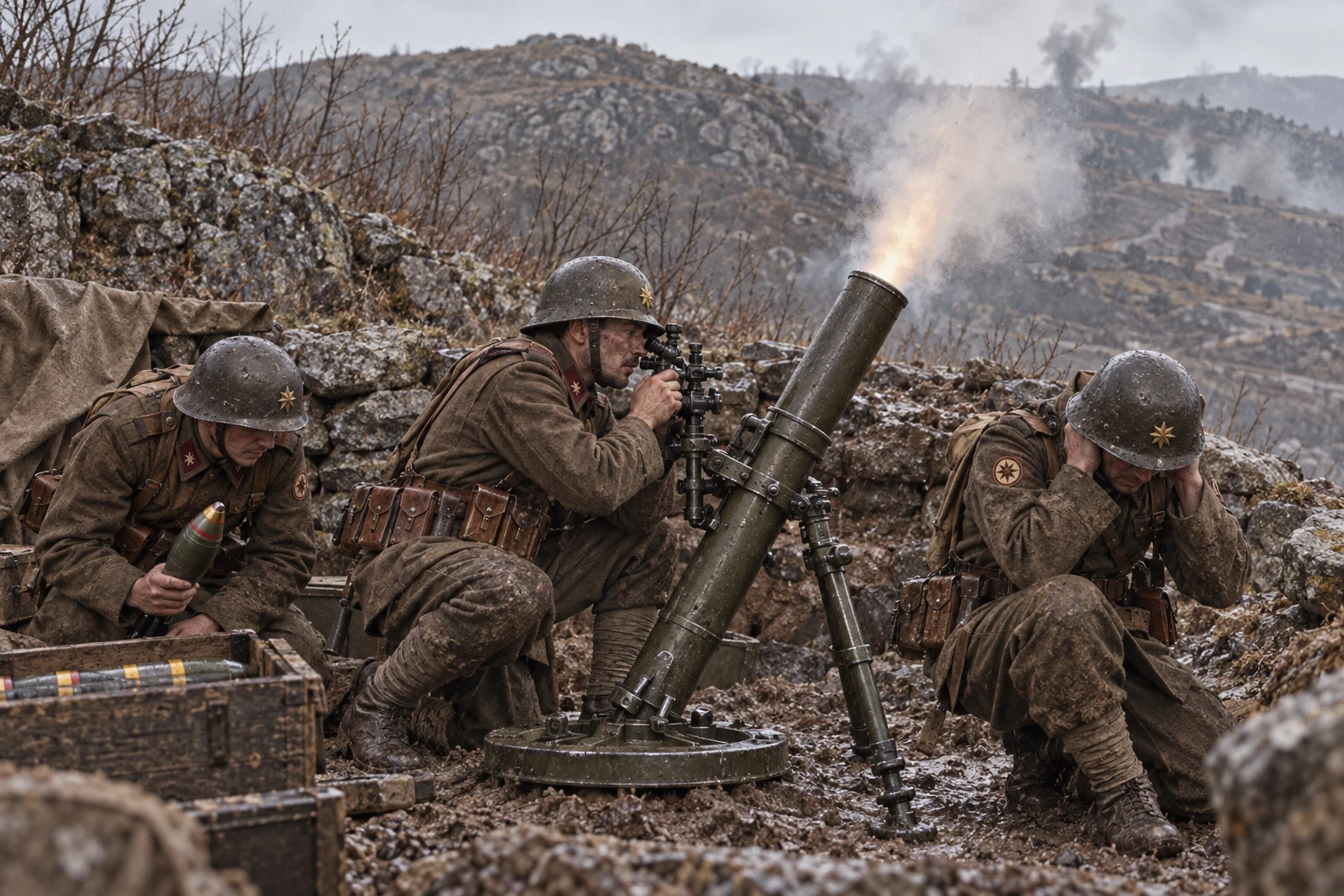
Rusk's answer remained coherent defense with a capacity to give up selected ground. His corps had repaired positions and prepared alternatives. A local Allied gain could be accepted if it did not destroy the connections needed for the next resistance. This approach made the ridge harder to capture than a rigid line whose every point had to stand. It also created a political problem: the higher the value placed on the public permanence of Meren, the harder it became to explain the military value of a planned withdrawal.
October 10–17: Contact with a revised defense
The offensive began on October 10. Allied troops recovered parts of the lower district through costly fighting, rather than moving across ground already emptied by a collapsing opponent. Vale's formation brought familiarity with the area, but familiarity was unevenly useful. It helped men recognize where they were. It could also persuade them that a previously usable approach remained open. The defense and the landscape had both changed since earlier campaigns, and an old route could now lead into a different local problem.
West Quarry made that danger visible. The Allies knew it from the fighting of 1228, yet recognizable buildings had disappeared and defensive arrangements had been altered. Vale's warning against substituting memory for reports was therefore more than an instruction to be cautious. It identified a recurrent weakness of armies returning to famous ground: experience can become a fixed picture that stops the soldier observing what is in front of him. Familiarity had to guide questions instead of supplying answers without fresh evidence.
Rusk used reserves to prevent losses in the lower area from pulling his whole system apart. The defense still imposed delays and casualties. What changed was the Allied ability to keep units on the ground they had taken. They no longer had to consume the formations intended for the next phase simply to preserve the last one's gain. A battle described through captured landmarks could miss this difference. The relevant change lay in the relationship between the units engaged, the support following them, and the uncommitted force still available.
October 18–29: The loss of defensive choices
The central struggle developed across several connected features. A single prominent crest could attract a report declaring Meren taken without making the surrounding positions secure. Lathorne's headquarters assessed progress through function and contact. Could an occupied point be supplied? Were neighboring formations connected? Could the defender move behind it? Those questions explained the actual military meaning of possession. The useful outcome was not a photograph of soldiers at the highest point, but an arrangement that reduced Rusk's choices without exposing the Allied force to destruction.
For the 87th, continuing competence depended on teaching new personnel while fighting. Savin Drel's unit received replacements during the battle. Veterans distributed them among surviving groups and explained the immediate responsibilities of their positions. Some had little time to learn before becoming casualties. Drel's growing authority reflected survival and acquired judgment, not a sudden transformation into a different rank or command. The process preserved the institution while wearing down the people responsible for transmitting its knowledge. The corps' continuity cannot be measured by imagining unchanged men behind an unchanged title.
As pressure increased, Rusk asked to move portions of his defense toward Tassar. That request was evidence that the operational situation had altered, not proof that he had abandoned resistance. Withdrawal could preserve a corps able to fight on another line. Higher command hesitated because retreat contradicted previous claims about Meren. Rusk had to make the value of the formation intelligible to superiors who were also defending a political account of the war. The delay exposed how command responsibility included the choice to accept bad news while choices still remained.
The objects a retreat could not carry
Rusk authorized the abandonment of equipment whose transport would slow depleted formations. The decision reversed a familiar disciplinary assumption that loss of material indicated weakness. Some weapons had been repaired and moved repeatedly by men who regarded them as part of their own service. Leaving them was difficult precisely because the equipment had an accumulated history. A withdrawal plan nevertheless had to distinguish an object useful in its present position from an object whose removal now threatened the survival of the people needed to use it elsewhere.
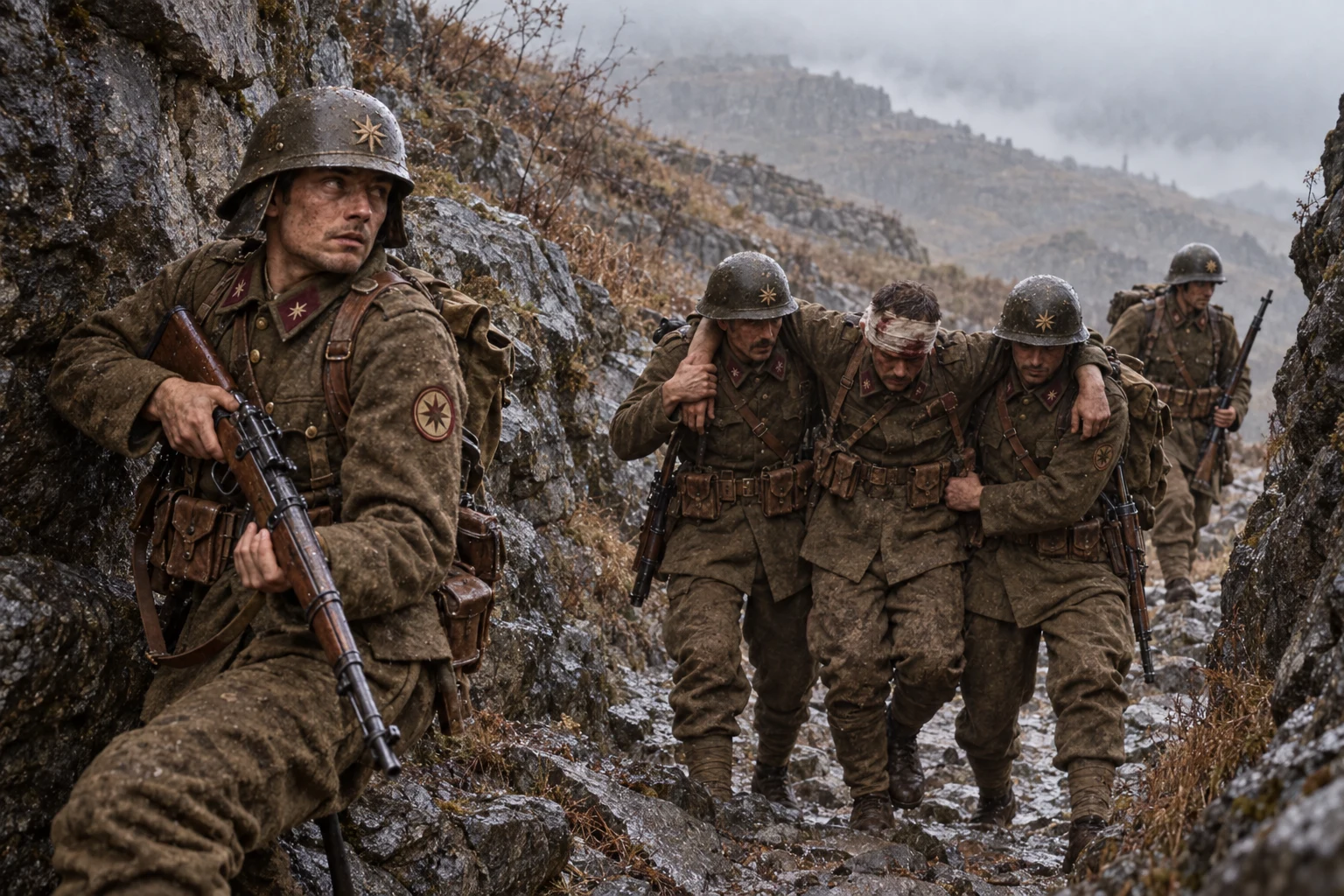
Drel's group carried a wounded crew instead of the weapon they had helped emplace. That choice connects the material and human accounts of retreat without pretending that either was painless. The order did not make equipment worthless; it changed the priority under immediate constraints. Rusk's staff recorded the authorized losses so that subordinate troops would not later be punished for following the plan. Written responsibility mattered because a successful withdrawal could still produce accusations when higher offices compared missing material with an inventory that ignored the circumstances of its abandonment.
On the Allied side, captured equipment became another problem of classification. Some pieces could eventually be repaired, others supplied salvage, and others first required specialist inspection. Initial reports treated the count as if each item were equally useful. Lathorne required an assessed inventory before adding the material to effective capacity. Capturing an object is a battlefield event; making it support an army is a further process. The distinction prevented a victory return from concealing an immediate shortage beneath an impressive number of pieces now inside Allied lines.
October 30–November 4: Pursuit with limits
The Terans disengaged in stages amid continued fighting. Some positions withdrew successfully; others became isolated or were overtaken. This unevenness prevents either command's preferred simplified account from explaining the whole result. The Allies captured prisoners and material, but the 87th survived as a coherent formation. The Terans preserved part of their force, but preservation did not cancel the loss of a position that had imposed years of difficulty on their enemy. Each result must be retained if the next battle is to make sense.
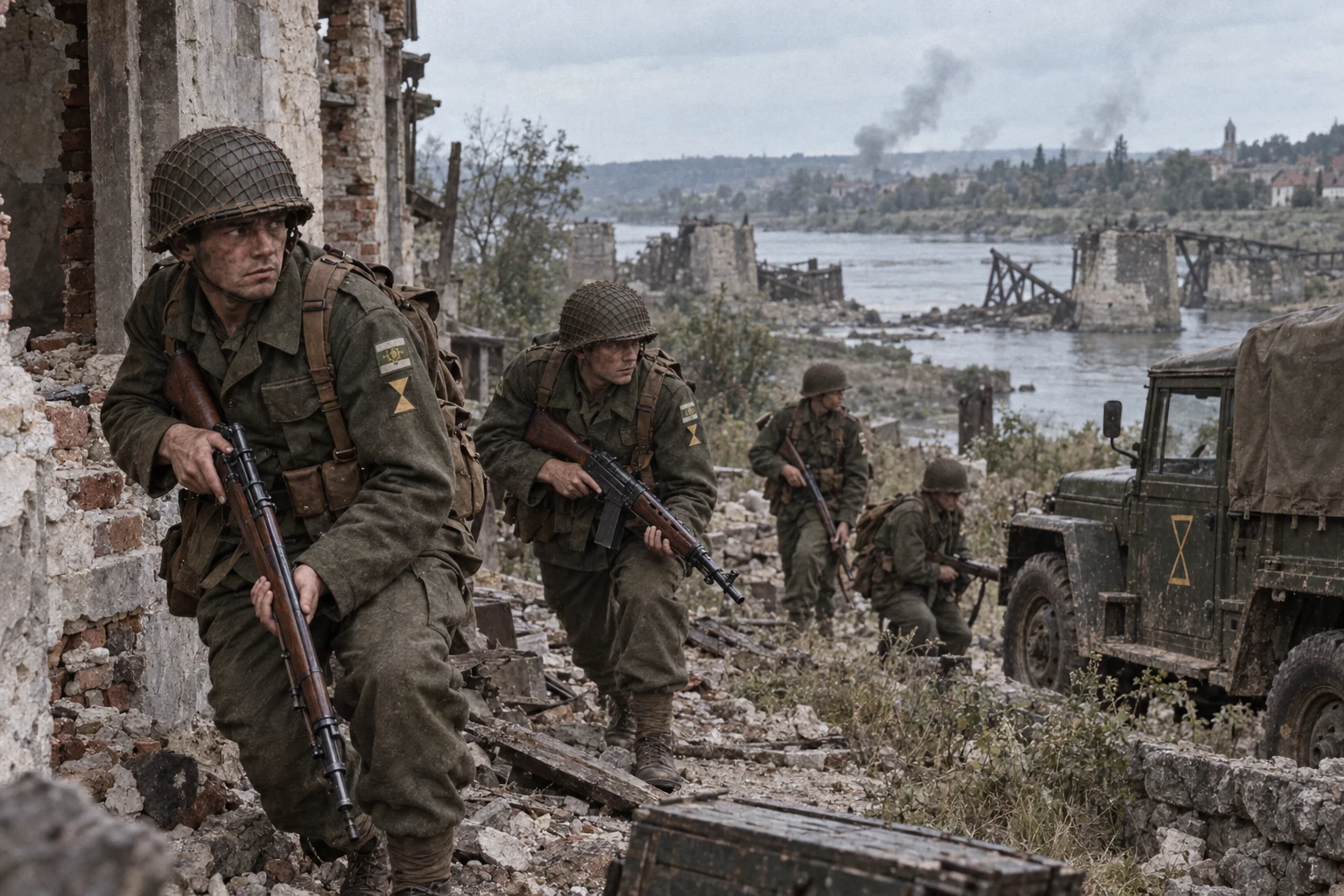
Vale's troops found wounded, abandoned stores and evidence of hurried departure as they moved into the lost defense. Continuing pursuit competed with immediate requirements to secure the area and organize treatment. Those were operational obligations as well as duties toward individuals. Unsecured positions behind an advance could disrupt its support; unattended wounded could not simply be treated as part of the terrain. The force that entered a recovered district acquired responsibilities that the order to attack had not completed merely by reaching its objective.
On November 4, Allied forces secured Meren Ridge. Lathorne resisted declaring Rusk's corps destroyed because reports still showed organized resistance farther back. That restraint helped define the victory accurately. The army had achieved a retained position and forced a major withdrawal, while also needing restoration before another large effort. The result altered the front without eliminating the opponent. Its strategic value depended in part on avoiding the familiar temptation to spend the exhausted winner as though success had restored every person and vehicle lost in obtaining it.
Recovery through the residents' knowledge
Mela Orsen helped displaced families compare the list of recovered places with information about houses, missing people and conditions for return. A settlement marked liberated on a military map was not necessarily ready for daily life. Families could visit, recover what remained and depart again. Such movement did not diminish the importance of liberation. It revealed that ending hostile occupation and restoring a habitable community were different achievements with different requirements. The civilians making those assessments were participants in recovery, not an anonymous audience waiting to applaud the arrival of an army.
The battle had disrupted the relationships through which residents ordinarily knew their district. A road useful for military movement might lead to a property whose building no longer stood. The absence of people from a place could reflect evacuation, death, detention, displacement or a temporary search elsewhere. A general victory announcement could not decide among those possibilities. The work of comparing names and locations gave the recovered ground a human meaning more specific than the ridge's place in the history of rival formations.
The surviving material also demanded restraint in interpretation. An abandoned object might establish where a unit had been, but it could not by itself establish what happened to every individual associated with it. A prisoner could describe a local withdrawal without knowing Rusk's whole arrangement. Meren thus offered the Allies more evidence while imposing a duty to distinguish what that evidence actually showed. The battle's immediate reports and the later reconstruction belong together, provided later knowledge is not attributed to people who had to decide before possessing it.
What the victory changed
Meren's recovery demonstrated a change in Allied practice: sustained pressure now arrived with support sufficient to make gains durable. It also demonstrated that the 87th's institutional strength could survive the loss of celebrated terrain. The two observations are compatible. A competent defender can be defeated by an opponent that improves, and a successful attacker can still pay heavily. The next contest at Tassar emerged from those realities, not from a clean division between a suddenly brilliant winner and a suddenly helpless loser.
The earlier defeats cannot be justified simply by naming the later success. They produced information, but they also destroyed people and equipment whose loss remained irreversible. October's improved arrangements were decisions made after those failures, not evidence that all the failures had been necessary steps in a plan known from the outset. Reading Meren through operational causality therefore requires attention to the alternatives available at each stage, as well as to the final result that makes the sequence seem orderly in retrospect.
This synthesis treats the inherited battle account as its narrative foundation and the interpretation of support, command pressure and civilian return as authored analysis. It does not add an invented local strength return or a newly discovered quotation. Meren links the Darsel crossings to Tassar's later recovery and the 87th's eventual western withdrawal. Within that chain, the November result was substantial and limited: the Allies held what earlier attacks had failed to retain, while their enemy and the communities damaged by the fighting continued into a war still far from its end.
The practical measure of improvement was therefore the ability to continue making decisions after the initial plan met an intelligent opponent. Rusk's reserve interventions were not unforeseen accidents that could be removed from the explanation. They were the expected behavior of a formation whose earlier success had rested on restoring threatened connections. Lathorne's arrangement was stronger because it endured those interventions without sacrificing its whole next phase. That distinction directs attention away from the prestige of either commander's name and toward the organization through which decisions became possible at the front.
Meren also changes how the later recovery of Tassar should be read. Rusk's movement preserved a defense capable of contesting the next objective, while Lathorne inherited a base requiring repair. The interval between major battles belonged to the history of both armies: teaching, treatment, maintenance and the reconciliation of records all shaped the forces that would next meet. Leaving those activities out would make each battle appear to begin with unexplained strength, and would turn the survival of recurring formations into a fictional immunity from the losses their own narratives establish.