Victory changes its purpose
The [frontier counterblows](campaign-the-frontier-counterblows) in 1231, [invasion-year counteroffensives](campaign-the-invasion-year-counteroffensives) in 1232, [retreating empire’s victories](campaign-the-retreating-empire-s-victories) in 1233 and [final organized counterblows](campaign-the-final-organized-counterblows) in 1234 form four selected phases. They begin in Neral’s frontier districts and move through the Teran western frontage into withdrawal districts and Western Tera. Their sixteen victories are not proof of a reversed strategic ending. The changing objectives provide the key: disrupting a future offensive gives way to preserving repair cadres, reopening evacuation corridors and holding a road long enough to move wounded people. Teran tactical competence survived inside an increasingly narrow set of achievable tasks.
General Selan Var’s 3rd Reserve Corps appears in the 1231 frontier group and the 1233 retreat group. Colonel Dema Orven’s recorded 1232 force belongs to the 14th Field Army. General Cevan Rusk’s 87th Elite Battle Corps supplies the 1234 counterblows. Each command used forces physically available in its sector, not an imaginary shared reserve drawn from every still-existing national establishment. Their unit histories describe sharp contraction and withdrawal; July 1234 capitulation ended independent national warfare. Later Allied final victory on November 21, 1235 belongs to the fall of the Kelonese imperial center. It does not extend these Teran corps operations beyond surrender or revive the same formations under their former imperial command.
Frontier gains in 1231
At [The Neral Fuel Column](new-battle-313), February 15 onward, Allied armor beyond Tassar relied on fuel crossing exposed frontier ground. Var struck the convergence and blocked recovery before attacking vehicles already short of allocation. Crews reached a second supply route and retained part of the force. Tera imposed a decisive local defeat while the Allies kept an established position beyond the frontier. The May [Grain Elevator Road](new-battle-314) likewise exploited a road guard’s separation from neighboring infantry. Engineers enabled support through a harvested field after infantry verified the path. Allied shortening of the line conceded the district; removed civilian stocks and the cost of holding it restricted the value of Teran recovery.
The [Forward Survey Camp](new-battle-315) in August stored instruments and route records for an inland offensive. Reconnaissance followed escort traffic, then Var’s force attacked the security perimeter under fire isolating evacuation. Survey teams escaped with critical notes and later reconstructed the plan. Tera destroyed equipment and delayed preparation without erasing accumulated geographical knowledge. November’s [Western Reserve Fork](new-battle-316) threatened one sector until reserve vehicles committed, then attacked the fork and another frontage. Allied redirection along a longer road prevented a wider break, though several formations suffered heavily. These operations still contested the coalition’s forward initiative; their military purpose was postponement and disruption rather than a promise of renewed continental conquest.
The western front during SharkStrike’s year
The [Summer Ammunition Pocket](new-battle-317) is dated February 18, 1232 in the retained subsidiary record despite its title. The date governs its placement. Allied supplies accumulated for western operations while SharkStrike was being prepared separately. Orven isolated the concentration’s roads and infantry seized the nearby junction. Allied evacuation and redistribution followed a western pause; the loss did not cancel the separate invasion. At May’s [Canal-side Counterstroke](new-battle-318), Teran infantry held a penetration’s shoulders while fire attacked bridges behind it. Allied engineers maintained one damaged crossing for retreat. Tera restored its line at high cost and lacked fresh reserves for sustained pursuit, setting an explicit boundary to the battlefield result.
The [Inland Reception Belt](new-battle-319) in August exploited the interval between arriving and departing Allied units while attention also focused on the Hukular coast. Veteran staffs improvised separate reinforcement and evacuation lanes, reducing losses without preserving the equipment or original western advance schedule. November’s [Autumn Observation Ridge](new-battle-320) combined short counterbattery missions, a sheltered infantry route and engineer clearance before the reserve moved. Observers escaped with maps and established another post. Tera recovered a ridge while pressure continued from other fronts. These victories occurred around SharkStrike’s airborne opening on June 6 and seaborne opening on September 6; none moves those events, relocates the Teran formations to the landing beaches or makes their local western successes decide the invasion.
Protecting withdrawal in 1233
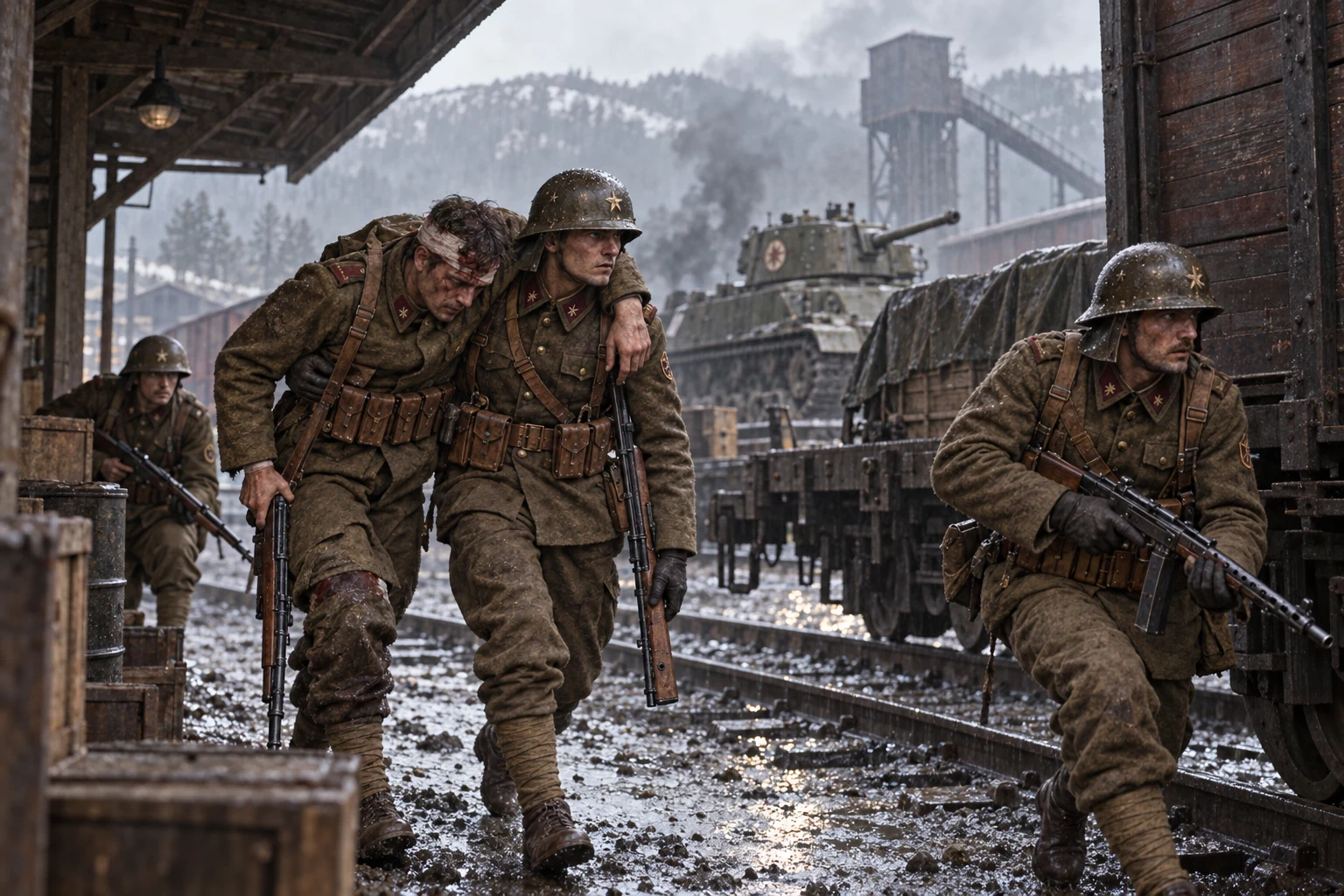
February’s [Evacuation Road Battle](new-battle-321) identifies the change in purpose most clearly. Allied troops threatened maintenance cadres and wounded personnel withdrawing along a road. Var concentrated his remaining mobile reserve with infantry support to reopen it. Allied troops stepped back to avoid isolation and maintained pressure elsewhere. The immediate result was a successful retreat. The May [Abandoned Depot Counterattack](new-battle-322) recovered stores after Allied infantry dispersed inside a site Tera had left. Fire delayed neighboring support while a compact reserve struck the entrance. The Allied commander saved soldiers by abandoning recent gains. Tera recovered useful equipment and evacuated it again because the wider front still required withdrawal, so possession was a means to recovery rather than a durable territorial reversal.
At [The Repair Corridor](new-battle-323) in August, patrols cut the route for damaged vehicles. Infantry fixed them while engineers opened a parallel exit and mobile action recovered the principal road. Allied positions beyond the corridor remained and pressure resumed. November’s [Rainbound Pursuit](new-battle-324) punished infantry advancing ahead of guns through damaged roads. Var’s limited reserve and supporting fire struck before the support could reunite with the leaders. Allied engineers restored another route and continued a slower, better-coordinated pursuit. Tera gained time to form another line, not the industrial or logistical balance needed for a new grand offensive. The Allies’ adaptation made the successful counterstroke harder to repeat with identical results.
The final four counterblows
The [January Rear Guard](new-battle-325), January 12–18, 1234, protected the road carrying supply establishments behind Rusk’s 87th. Available infantry and guns displaced a leading Allied battalion long enough for transport to pass, then stopped. Allied reinforcement resumed the pressure. February’s [Workshop Escape](new-battle-326) rescued technical capacity from isolation through a narrow counterattack corridor. Engineers regulated towing so badly damaged vehicles would not block people and tools. Allied flank attacks inflicted heavy losses but failed to seal the route before workshops evacuated. The saved mechanics could prolong resistance in a smaller rear establishment; they did not recreate the industrial network already lost or restore vehicles merely because they appeared on a workshop inventory.
The [May Orchard Counterstroke](new-battle-327), May 16–22, sits inside the inherited 87th last campaign, which ran May 7–June 17. An Allied supporting detachment entered before its lateral connection was secure. Rusk struck the connection with his remaining local reserve while holding the orchard frontage. The detachment withdrew after a hard fight, and Lathorne reorganized support to continue the larger campaign. The subsidiary Teran victory did not change that inherited campaign’s eventual Allied success. It exposed a vulnerable sequence in one supporting operation while further depleting the corps whose reserve had exploited it. The larger command retained the ability to alter its arrangements around the setback.
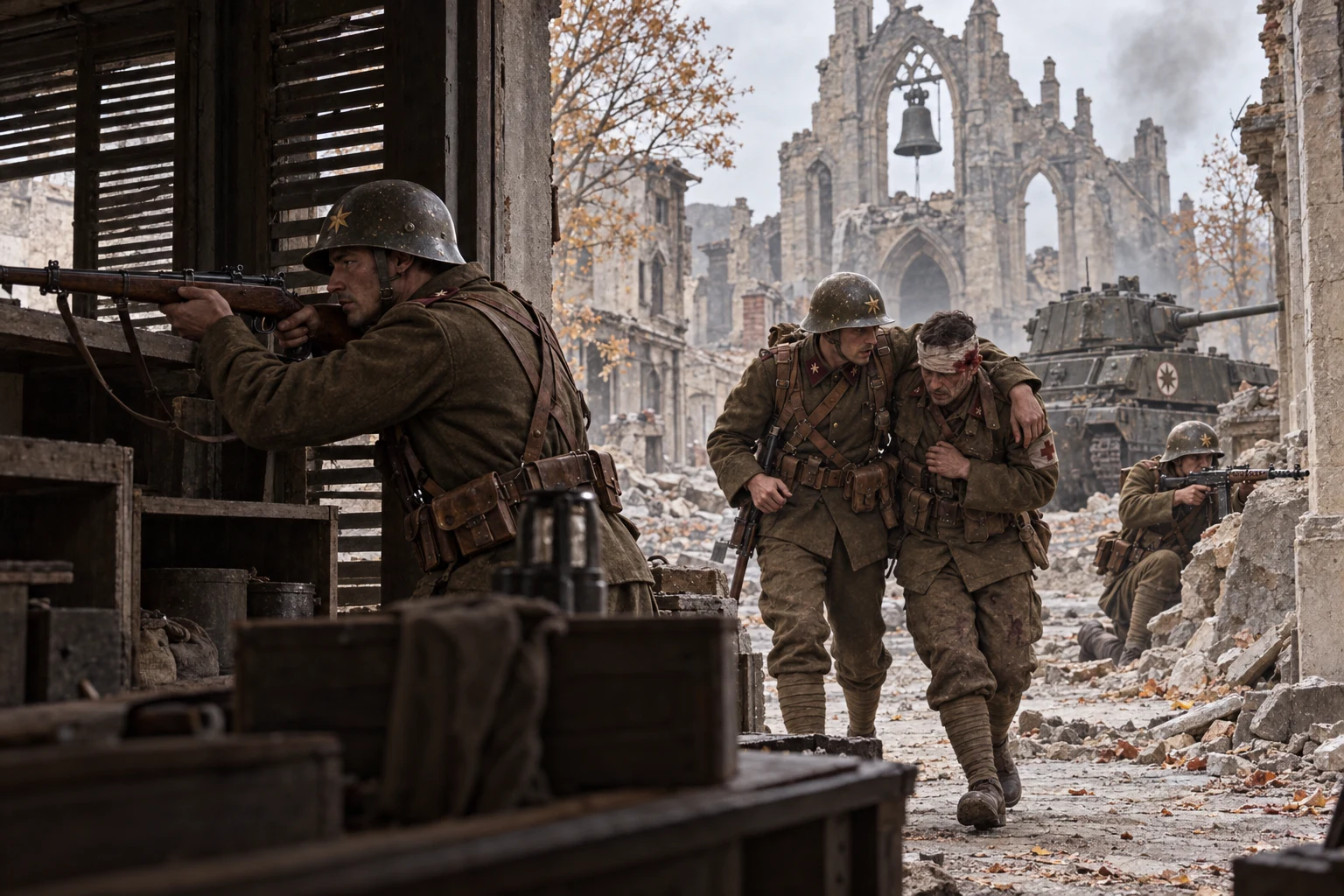
The [June Transport Window](new-battle-328), June 8–14, recovered a road entrance for several hours to move wounded and remaining stores. Engineers and medical personnel used the interval for people, not an imagined restoration of strategic initiative. The counterattacking force withdrew, and the Allies occupied the road. Tera achieved the immediate task at irreplaceable cost; July capitulation followed. This classification rests on the bounded objective, not final ownership of the ground. It also keeps the last campaign’s chronology intact. Rusk’s remaining forces could win a narrow interval while losing the campaign, and the evacuation could preserve lives without granting the aggressive empire another independent phase of national warfare.
Opposing decisions determine the limit
The Allied forces in these sixteen entries responded to genuine defeats with different choices. Crews sought another fuel route, survey teams carried notes out, engineers maintained damaged bridges, staffs separated traffic lanes, commanders abandoned captured stores and pursuit forces rebuilt roads. None of those responses made the lost equipment reappear. They limited the degree to which Tera could convert a local win into wider disorganization. By 1233, continuing pressure elsewhere and using another pursuit road had particular weight because Teran commands had insufficient depth to answer everywhere. The aggressor still exploited an isolated leading formation, but the coalition increasingly retained enough support and options to resume pressure after the immediate interruption.
This asymmetry explains why repeated tactical victories could coexist with strategic defeat without making either fictional. A Teran reserve could be concentrated for a brief task at the price of weakening another frontage or consuming its final replacement capacity. An Allied detachment could be defeated while its higher command retained resources to reorganize. Earlier in the war, delaying relief might open a new conquest; later, an equally professional counterattack might only keep workshops from being lost during retreat. The military skill had continuity, but its purpose and available consequences changed. Evaluating the final counterblows by the promise of a new continental offensive would substitute imperial political rhetoric for the actual objectives established in the records.
Lives preserved inside an aggressive empire’s defeat
Maintenance cadres, mechanics, medical teams and wounded soldiers become central to the late campaign because survival increasingly depended on temporary movement windows. The distinction between rescuing people and protecting the regime matters to consequence. An evacuation accomplished a particular humane result for those moved while helping the remaining force resist. It did not erase occupation crimes or settle the legal responsibility of commanders. Rusk’s retained biography places him later in requisition and compelled-labor proceedings. This synthesis makes no new judgment about offenses at a particular workshop or orchard. Military competence, a bounded evacuation objective and accountability can all belong to the same history without one being used to invalidate the others.
Civilian routes suffered from rain damage, repeated combat and priority military movement. Recovered roads and grain-elevator ground did not necessarily restore ordinary food or medical access. Families living in the orchard district faced renewed fighting even though the operation was subsidiary to a larger campaign. The battle records support those physical disruptions without providing a comprehensive civilian death or displacement count. No total is invented here. The archive should preserve the people moved during evacuation and the communities left beside damaged routes as distinct perspectives on the same operations. Their experience measures consequences that a victory classification, however accurate militarily, cannot fully convey.
Chronological boundaries and the end of the sequence
The [1231](year-1231), [1232](year-1232), [1233](year-1233) and [1234](year-1234) annual records place these selected successes within the whole war. [The 87th’s last campaign](chron-major-038) provides the inherited major-battle scale. [The airborne battle](chron-major-034) and [Hell Beach](chron-major-035) explain SharkStrike on the Hukular coast rather than assigning its outcome to western Teran counterattacks. Hukular’s national capitulation on April 12, 1234 preceded the last Teran May and June actions; Teran capitulation followed in July. The Allied final victory in 1235 is a later coalition endpoint. Respecting these boundaries prevents a connected narrative from quietly blending distinct countries, fronts and surrender dates.
The sixteen victories close this Teran campaign coverage with a change of military horizon. Frontier disruption in 1231 still defended room for continued operations. The 1232 battles contested local initiative while multiple Allied fronts widened pressure. The 1233 counterstrokes protected retreat and technical capacity. The 1234 actions created increasingly brief intervals in which establishments, equipment and people could leave. At each stage the recorded commanders remained capable of imposing severe defeats. At each stage the coalition retained or rebuilt enough means to continue the larger campaign. The empire’s decline therefore appears through narrowing achievable objectives and diminishing replacement capacity, ending in capitulation without erasing either its battlefield competence or the human and political consequences of its war.