Returning as a coalition rather than a single nation
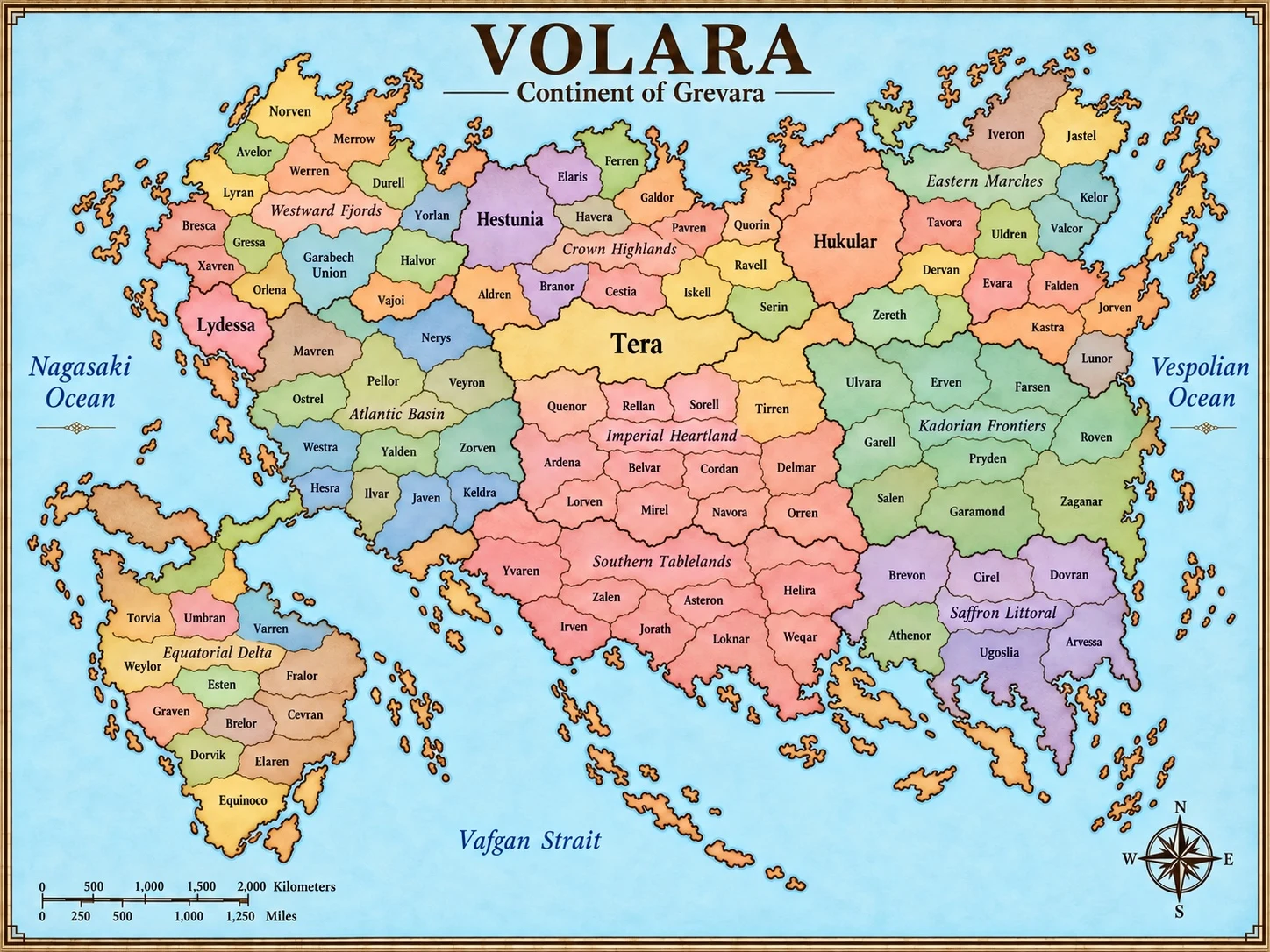
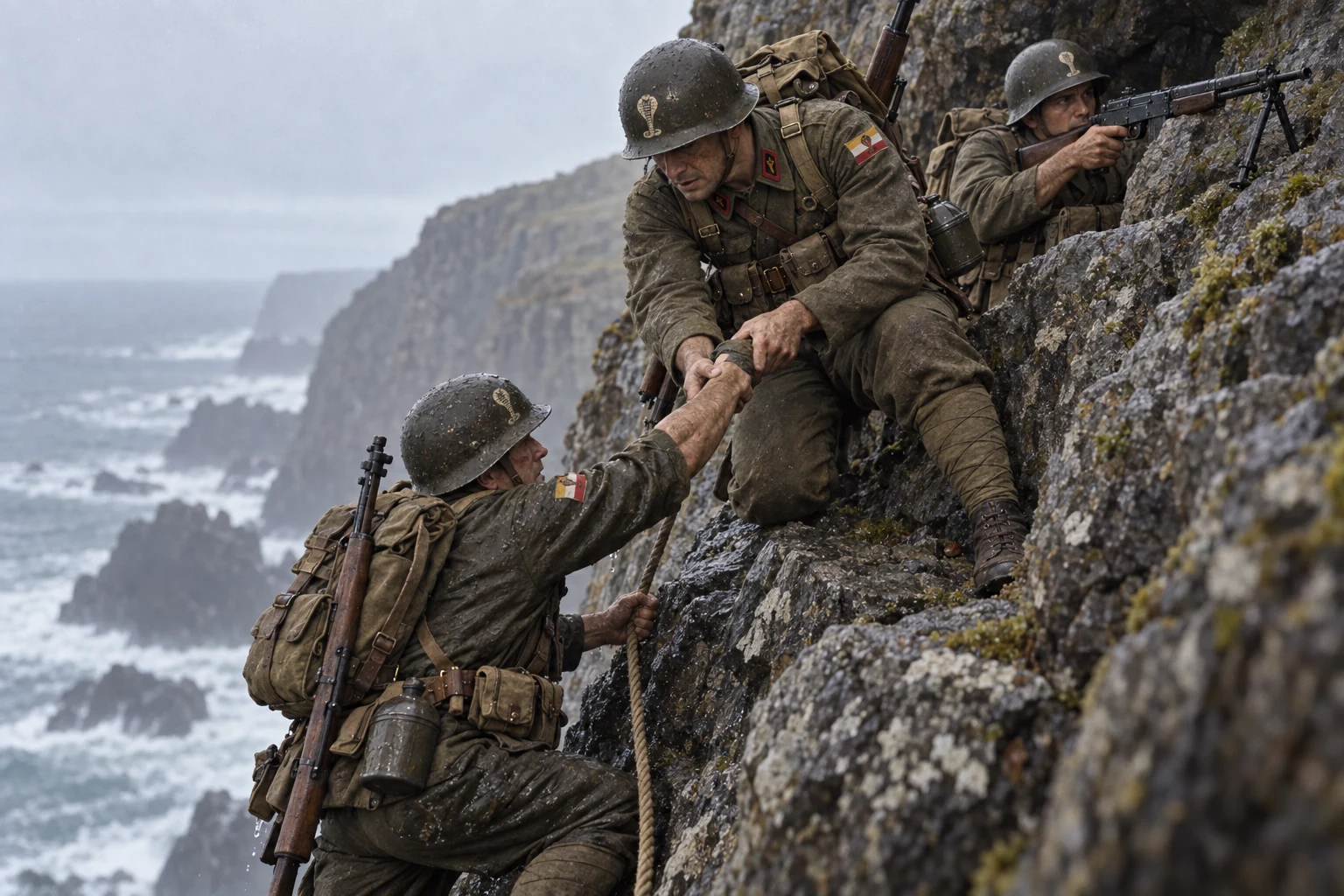
Liberty was contested from September 6 to September 10, 1232, during SharkStrike's seaborne assault on the Hukular coast. It was one of the Commonwealth's four assigned sectors and its cliff sector in the retained narrative. The Commonwealth was an operational grouping of exiles, not a sovereign nation added to the alliance's national roster. Its approximately three dozen regiments preserved affiliations with conquered Allied states while serving under a common arrangement. Garamond's national force at Gale was separately organized and accounted for. Treating it as another Commonwealth component would conceal that distinction.
The grouping expressed political survival through military organization. Troops from occupied countries could continue fighting without surrendering their national identities to a single replacement state. That purpose required more than shared anger or a promise to return home. Equipment histories, languages and administrative procedures differed. The Commonwealth had developed common practices before the landing because a coalition of displaced people still needed functioning communications, medical arrangements and authority. Its cohesion was work performed by institutions and personnel, rather than an automatic consequence of the injustice that had driven them into exile.
Lieutenant Sera Malk approached Liberty with soldiers whose service continued after Garabech's collapse. Some had escaped in organized formations; others reached the grouping through later recovery and training. Their routes into the same battle differed, and those differences mattered when locating people, understanding experience and maintaining rolls. The source's local view does not make Malk commander of the whole Commonwealth. It follows an officer whose responsibilities at Liberty show how a multinational operational structure could preserve useful immediate authority without swallowing the identities on which its political purpose rested.
A cliff with its own conditions
Liberty's cliff constrained the initial movement from shore to defensible positions. Troops had to establish themselves under pressure and retain means of sustaining the ground they gained. The sector shared SharkStrike's larger system but did not duplicate Hell. The retained account supplies no Liberty equivalent of Hell's exact fortification survival rate or divisional death toll. Importing those figures would replace local evidence with a dramatic number from another battle. The comparison is useful through the different organizational and geographic demands, not through an invented equality of losses.
The symbolic name also risked obscuring immediate tasks. Liberty could represent the hope of returning to countries still occupied, while the actual first requirement was to keep a foothold connected and recover wounded. A soldier's larger purpose did not make the cliff easier to move through or simplify orders when neighboring units were scattered. The operational history explains the political meaning by showing what the grouping managed to do under those constraints. A return toward home became possible through a sustained military connection, not through the name of the beach alone.
The defenders retained depth beyond the initial shoreline. A group reaching a point above the cliff had not necessarily secured the entire local system. Reports from separate groups therefore could not simply be added into a declaration that the sector had fallen. Each report described a fragment and its time. The sector command needed to understand whether those fragments were connected and capable of holding. That question distinguished an encouraging penetration from a usable foothold, and protected follow-on decisions from being based on the most favorable surviving message.
September 6: identities survive a broken landing plan
The landing scattered part of Malk's force and interrupted contact with supporting elements. She assembled with men from another regiment and directed them temporarily. Recording their origins when possible allowed the emergency arrangement to work without becoming a permanent administrative absorption. Exile forces faced a particular danger here: a person could survive physically yet disappear from the records of the country responsible for informing his family. Keeping affiliation alongside attachment gave later offices a way to follow the soldier across the gap between planned and actual organization.
Commonwealth groups achieved uneven progress. Some established positions beyond the most exposed ground while others were pinned or forced to reorganize after casualties. The resulting reports were partial rather than deceptive merely because they differed. A command receiving them had to preserve the limits of each account. Declaring the whole cliff secure from selected successes could expose groups still struggling below or behind them. The ability to say what remained unconfirmed was itself a contribution to the battle, particularly when public expectations made any foothold seem like the beginning of immediate national liberation.
Malk's group eventually connected with a neighboring element. Their combined task became holding the connection and bringing wounded from below. Further movement waited while the gain was made more sustainable. This was a choice between competing necessary activities, not a pause outside the real battle. The men now carried strangers through a locality that had immediate practical importance. The Commonwealth's purpose was visible in those strangers: different national affiliations did not prevent common service, and preserving their identities made that service accountable to more than the formation temporarily directing it.
September 7–8: the defenders contest consolidation
Hukular counterattacks began before the Commonwealth completed consolidation. The inland defense remained capable of local response, regardless of Allied pressure elsewhere. The sector could not count on every enemy reserve being absorbed by another landing. Commonwealth reserves entered conditions differing from the prelanding plan, with altered roads, shelters and command locations. Their arrival increased the need for current information and local coordination. A reserve was useful through the tasks it could actually reach and perform, not simply because its original assignment placed its name behind Liberty on an operational chart.
After a senior officer was wounded, Malk helped reorganize a mixed defensive group under an assignment confirmed through the working command chain. The retained distinction between temporary authority and permanent absorption mattered in action and afterward. Immediate responsibility had to be clear, yet an officer from one country's organization could not simply assume ownership of another country's personnel. The Commonwealth's arrangements allowed shared action while retaining the information required for surviving units to reconstruct their own rolls. Coalition function depended on managing that relationship rather than eliminating its complexity.
Medical arrangements improved as the foothold became more usable. Personnel from several national services worked together, but names appeared in variant spellings across their records. Later reconciliation was therefore necessary even where a soldier had received effective care. For families displaced across the Allied world, an incorrect entry could delay news through several stages of transmission. Liberty's rear organization had to connect physical survival with documentary continuity. The difficulty was amplified by exile, because the family's location and the soldier's national administration might both differ from where either had begun the war.
The 6th Exile Regiment's duplicate record
Malk served with the Garabech 6th Exile Regiment within the Commonwealth's 3rd Brigade. The brigade roll recorded national affiliation alongside current attachment. That structure preserved two true facts at once: a soldier could act under common orders and remain part of the national community whose institutions owed him an account of his service. The categories answered different questions rather than competing for a single identity. The arrangement proved especially valuable after landing groups broke apart and personnel fought alongside neighboring formations whose own documents might otherwise have become their only trace.
Regimental clerk Arven Pell arranged duplicate identity summaries carried by different parties. One packet was lost with its carrier, while another reached a shore post after several hours. Pell then supplemented the surviving information through medical labels and statements by companions. The result was not instantaneous completeness. It was a basis for continuing inquiry when the original landing arrangement no longer described where people had gone. An administrative preparation made before combat gained value because the clerk adapted it to evidence created during combat instead of treating the surviving packet as the final answer.
Pell would not mark a man dead solely because his landing group had suffered heavily and no report had arrived. This caution delayed definitive notices, which imposed a painful burden on families already familiar with uncertainty. It also prevented false conclusions. The Commonwealth preserved provisional entries indicating what had been confirmed and what remained open. That practice recognized both the demand for news and the danger of supplying certainty the evidence did not support. The responsibility continued after the beachhead improved, because better military movement did not automatically complete every person's record.
A multinational organization with national duties
The recordkeeping served a political function as concrete as the movement of a regiment. Governments in exile remained accountable to people fighting through a larger grouping. A common military structure could otherwise turn the displaced soldier into an anonymous coalition resource, particularly when temporary attachments multiplied. National identity on a roll preserved a route for correspondence, casualty inquiry and eventual return. Liberty's story consequently involves the survival of a relationship between institutions and citizens, not simply the presence of several flags inside an Allied order of battle.
Those national duties did not excuse failures of common coordination. The same soldier needed orders he could act on, medical support able to find him, and a current commander aware of his condition. An arrangement preserving every national procedure unchanged would have impeded the grouping's immediate function. The Commonwealth's importance lay in accommodating both requirements. The source illustrates that balance through a confirmed temporary command and a roll retaining affiliation, rather than through an invented account of perfectly uniform language, equipment or doctrine among troops who had arrived by very different routes.
The grouping should also remain within its actual place in the larger invasion. It was neither all Allied exiles nor a substitute for the national commands participating elsewhere. Garamond's force at Gale remained separate. Nor did occupying Liberty immediately liberate Garabech or every country represented in the regiments. The cliff established a contribution to a force capable of fighting toward those aims. Political survival and territorial recovery were connected, but they occurred on different schedules. Keeping those schedules visible avoids assigning the landing a result that the subsequent continental campaigns still had to achieve.
September 9–10: making the gain durable
By September 10, the Commonwealth held a more coherent position and began turning its gains into a sustained foothold. Resistance continued, and support from the larger invasion remained necessary. The result did not restore every regiment to its original capacity. Some needed major rebuilding before another significant task. The operational history of Liberty therefore extends into its recovery, even though this battle account closes with the first consolidated period. A successful grouping could carry depleted components whose needs differed sharply from the overall impression of an advance.
Malk prepared a preliminary list of Garabech personnel missing from her group. The work recalled the records carried from the union's collapse in the preceding winter. The difference was that this list belonged to a coalition now advancing from a foothold on enemy territory. That altered the possibilities for future recovery and return, but it did not make the missing people present. The formation's success could support inquiry while remaining incapable of answering every family immediately. Preserving that limit keeps the victorious account from appropriating the unresolved histories within it.
Liberty's gain mattered through its place in the coastal breach and through the continuation of the regiments that had survived national defeat. The Allies acquired another connection into Hukular's defense. The exiled states demonstrated that occupation had not ended organized service under their national affiliations. Hukular troops, meanwhile, had contested a local assault before the sector's defenders lost sufficient ground for the Commonwealth to hold. All three observations help explain the result, while responsibility for aggression and the occupation remains with the regimes that imposed those conditions on the exiles and their countries.
What the cliff can and cannot represent
Liberty provides a counterpart to Hell that emphasizes coalition administration rather than borrowing its neighbor's casualty arithmetic. Both sectors required surviving groups to create usable connections under strong defense. Their local sequences and established figures differ. The comparison shows that SharkStrike was not twenty-eight identical battles arranged along a coast. Each sector entered the larger campaign through its own mixture of terrain, supporting conditions, formation histories and losses. The Commonwealth's distinctive history included maintaining national records inside temporary common command, a problem inseparable from the experience of exile.
The subsequent spring breakout would require wider coordination as the invasion moved beyond its original sectors. Liberty's organizations contributed to that possibility without becoming straight lines of troops permanently advancing inland from one beach. The retained sector name remained useful for memory and administration, but the campaign's later shape depended on new arrangements. Understanding the landing as a sustained foothold rather than a completed national return makes that later work visible. It also preserves the agency of those who would organize recovery, relief and the reestablishment of civil institutions as territory was liberated.
This account retains Malk, Pell and the identified regiment and brigade from the inherited narrative. The discussion of accountability, uncertainty and organizational identity is authored analysis, not a newly discovered quotation or independent source. No exact local casualty figure is supplied where the reference offers none. The battle's central achievement was the conversion of scattered arrivals into a coherent contribution to the coastal invasion. The deeper meaning lay in doing so while retaining the identities and obligations through which displaced soldiers could remain people belonging to countries whose territory they had not yet recovered.