A coast held through winter
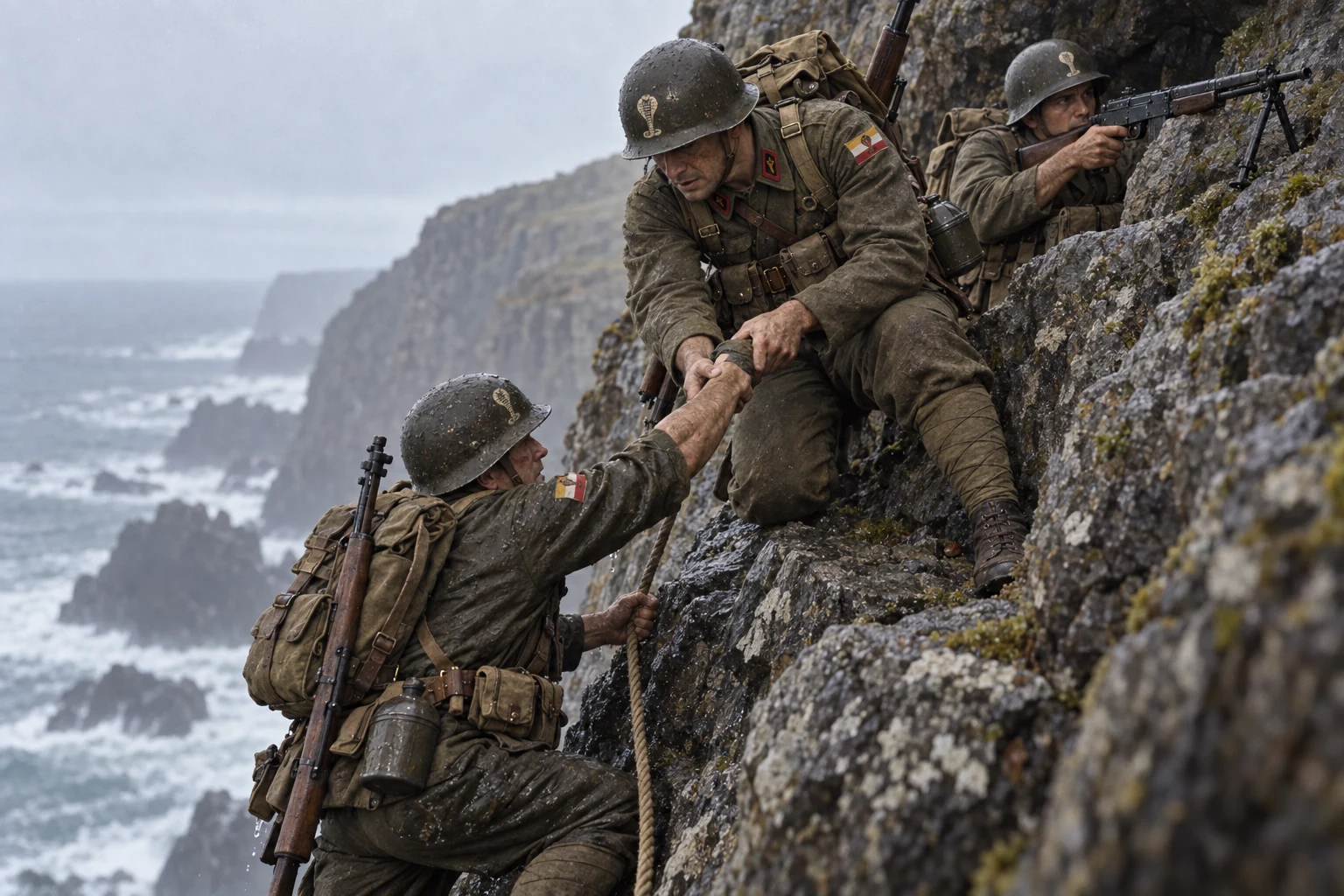
The spring breakout ran from April 8 to June 27, 1233, in the Hukular invasion theater on Volara. SharkStrike had opened the coast in September 1232, but an established foothold did not equal freedom to move through the continent. The original coastal defense and approximately seven additional belts formed a system of varying condition. Some parts had been damaged or bypassed; others remained substantial. Towns, roads, civilians and formations occupied the spaces between them. The Allied problem was therefore a continuing organized defense, not an uninterrupted series of empty obstacles beyond a completed beach battle.
The winter position required immense support while troops were rebuilt and formations reorganized. The people who had landed were not all available for the spring offensive. Survivors of devastated units, including the original 1st Infantry Division force at Hell, passed through treatment and restoration. Others served under temporary attachments needing reconciliation. National command structures also had to coordinate movement beyond their initial sectors. The invasion could become a wider continental threat only by sustaining this work. Its size alone did not turn a narrow foothold into usable operational depth.
Leren's works district was one contested locality within that wider struggle. It connected defensive positions and transport functions rather than serving as the only route through the entire theater. The Allies sought a passage they could support; Axis commands sought delay, disruption and losses sufficient to confine them. The local record is valuable because it shows how the breakthrough became useful. Capturing a district was part of the process, while restoring movement and maintaining the relationship to neighboring positions determined whether that capture could contribute to the wider campaign.
Preparing a force able to continue
The spring preparation included replacements, transport repair and liaison among national commands. Each activity answered a different constraint. A restored infantry formation could not advance effectively if its supporting routes failed. A usable road could become congested if commands used different movement assumptions. A headquarters could authorize an objective while lacking enough current information to know whether an apparent success could be sustained. The preparation's value came from bringing those relationships into the operational plan rather than assuming they would resolve themselves after the first inland position was gained.
The original beach sectors were still recognizable in records and memory, but the campaign no longer resembled independent columns moving straight inward from twenty-eight starting points. National formations had to work through liaison as the fronts changed shape and supporting arrangements crossed the boundaries of initial assignments. The sector names could help locate a formation's experience without describing its whole current function. This distinction matters when connecting Hell or Liberty to the breakout. Their surviving institutions contributed to a later organization, not to an unchanged reenactment of September's landing structure.
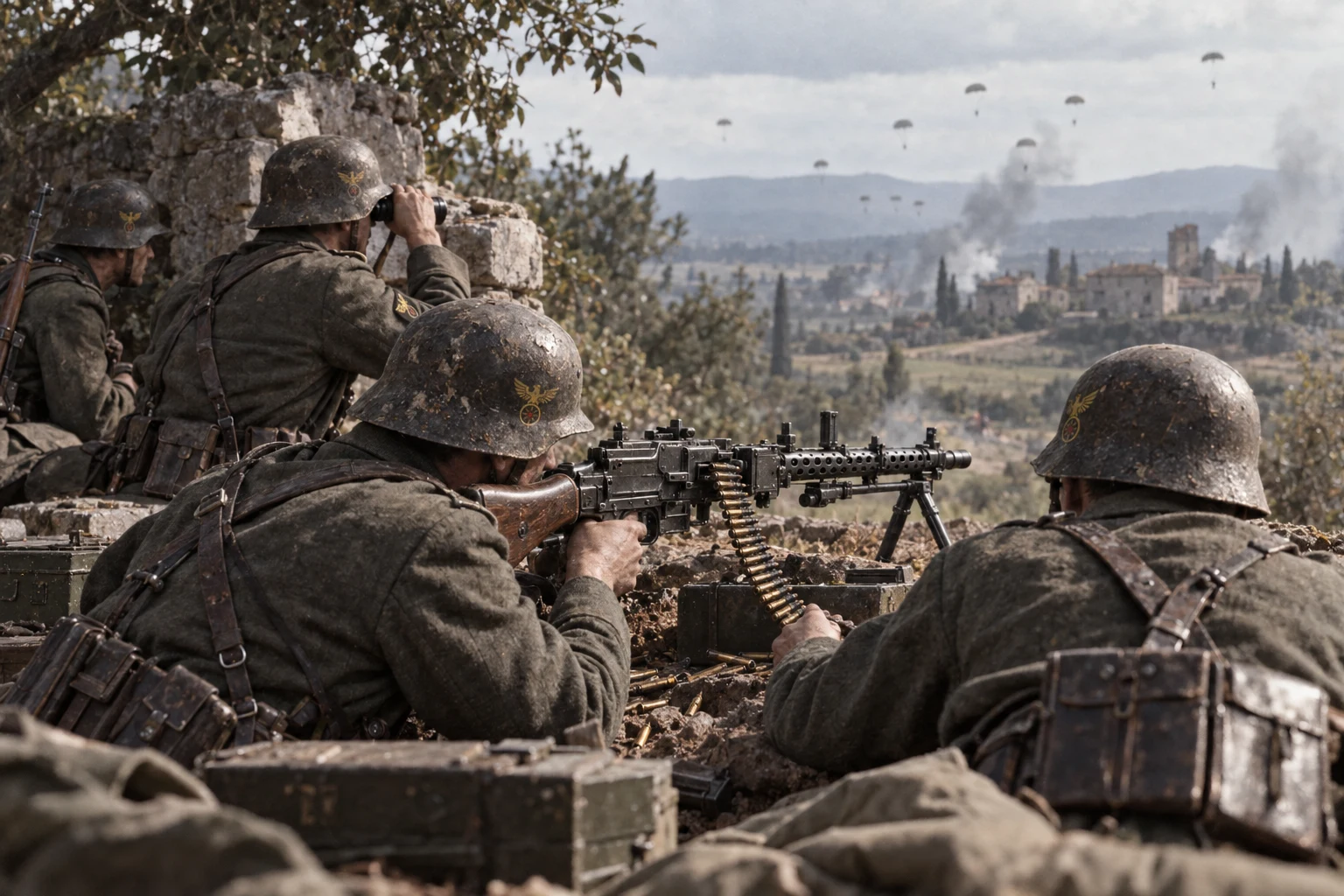
Axis commanders retained the means to contest that transition. Hukular and Teran forces could counterattack local gains, use the remaining depth of their system, and force the Allies to spend time consolidating. Their theater totals did not mean all reserves were available everywhere at once. Nor did political confidence guarantee that one command would receive the reinforcement another had requested. The spring contest developed through the widening gap between an established defense's continuing local ability and its capacity to meet several coordinated threats over a prolonged period.
April 8–23: openings of unequal value
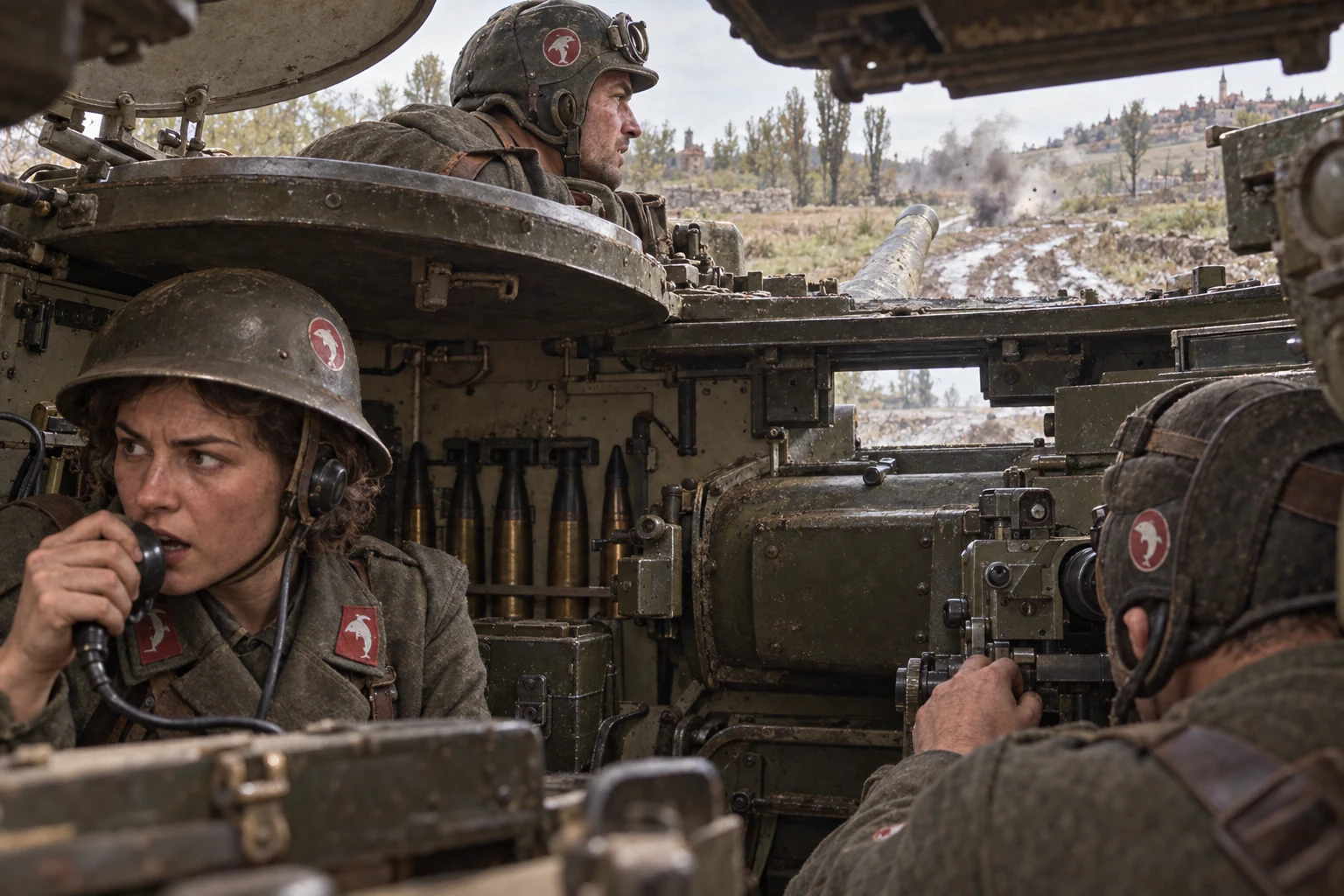
The offensive began on April 8 across coordinated sectors. Progress varied. Some formations entered positions weakened by earlier fighting; others met strong resistance despite preparation. A coalition headquarters could not reasonably use the most successful locality as the timetable for all others. Such an expectation would turn partial progress into pressure for unsupported movement elsewhere. The initial phase instead required interpretation of each opening through its actual condition, the contact of neighboring units and the support available to keep it from becoming an exposed projection.
At Leren, Allied troops reached a damaged service district while the main route beyond remained contested. The map suggested a wider opening than could be used in practice. Clearance, repaired road surfaces and security of adjacent positions determined what movement the route could carry. Reinforcements initially increased congestion. Their presence became useful only as engineers and traffic personnel imposed a more workable sequence. That episode illustrates why arrival and employment must remain distinct in a campaign whose success depended on sustaining an expanding force through damaged infrastructure.
Counterattacks sought to cut advancing groups from support. Some forced the Allies to give up exposed ground; others suffered heavily against positions already consolidated. The varied outcomes show a contest between actual arrangements, rather than a rule that every counterattack either worked or failed because one side had gained strategic momentum. A local defensive success could delay the breakout without restoring the entire theater. A local Allied success could weaken the defense without removing it. The campaign's larger change emerged from the accumulation of those unequal encounters and the forces' capacity to continue after them.
Late April–May: depth becomes a contested resource
As Allied pressure continued, Axis reserves were requested by several sectors at once. A reinforcement decision might preserve one threatened connection while leaving another with fewer options. Hukular and Teran cooperation remained a military factor, yet operated within an increasingly strained system. The record therefore does not support a picture in which the Axis partnership simply ceased functioning in spring. It shows capable local resistance whose restoration became progressively harder. The difference explains how a formidable defense could bend before losing its capacity to contain the invasion across the whole operational front.
Allied gains became more useful as their support improved. Liaison staffs had growing importance because the task involved formations with different procedures moving through connections no longer aligned to the original coast sectors. Their work is easy to overlook beside an advance on the map. Yet a coordination failure could prevent supplies reaching a formation that had already won its immediate battle. The coalition's operational competence included the ability to make these different organizations act in relationships reliable enough to preserve gains, not merely to issue common declarations of intent.
Surviving airborne personnel gradually connected with the expanding coastal system where conditions permitted. Sarl's men did not regain their initial condition merely by reaching contact. Some needed treatment; others had served through temporary attachments; inventories had changed during scattered service. Their reports contributed knowledge of the rear struggle while revealing the limits of the information they held. The airborne and coastal experiences could now be joined without pretending either had possessed the other's full situation during the long interval when distance and resistance kept them separated.
Leren: secured ground requires restoration
The principal works district was secured through repeated fighting. Restoring movement then became part of sustaining the victory. A captured facility might still contain damaged services, inaccessible buildings and hazards invisible to an initial military inspection. The record describes railway workers identifying connections and explaining how systems functioned. Their local knowledge had value distinct from the army's power to occupy the site or engineers' authority to assess it. Recovery proceeded through cooperation among those forms of knowledge rather than through a single victorious command possessing every answer.
Civilian residents emerged and sought access to relatives in areas still contested. Their needs followed the advance into a system originally planned chiefly to sustain troops. Relief personnel had to arrange food and medical support as part of keeping the recovered district viable. The issue could not be postponed simply until an unspecified end of the war. The Allies had created access to people whose needs were immediate, while their movements and survival affected the same settlements through which the force needed to operate. Civil relief and operational consolidation became linked demands.
That connection did not make civilians into another military formation to be directed according to a battle schedule. A family seeking relatives faced information and movement problems different from those of a unit securing a route. Its members might know one building intimately and know nothing about a nearby enemy position. Recovery arrangements had to recognize that partial knowledge and the household's own purpose. The army's advantage in authority could otherwise turn an offer of assistance into a demand that residents perform services unrelated to their need for care or safety.
Cloth signals and a mistaken interpretation
Several houses in a railway settlement displayed improvised cloth signals asking for medical help. The signals were not standardized, and an officer first interpreted them as evidence that the entire district wished to surrender. Civil liaison personnel corrected the assumption. Residents did not command the Axis troops in adjoining positions. The difference mattered immediately: treating civilian gestures as a military agreement could expose troops and residents alike when firing continued from forces not represented by those gestures. The episode shows interpretation affecting practical decisions rather than remaining an abstract concern of later historians.
The Allies continued securing the area while arranging a medical collection point where circumstances allowed. Residents offered information voluntarily, and treatment was not conditioned on intelligence usefulness. That separation recognized the obligation created by access to a vulnerable population. It also helped establish a civil relationship in a district where fear of retreating and advancing troops shaped encounters. Aid could serve a military interest through stability, but that interest did not exhaust the reason for providing it. The recipients' needs remained valid even when they could contribute nothing to the operation.
The settlement required distinct authorities to remain distinct. Troops could establish security. Engineers could assess physical condition. Local workers could explain services and their histories. Civil officials and medical personnel addressed needs that neither a combat report nor a repair return fully described. The breakthrough brought these activities into the same place without making them interchangeable. A successful advance created an opportunity for restoration, and the usefulness of that opportunity depended on the army allowing knowledge beyond its own immediate chain of command to influence how the recovered area was used.
June: containment gives way unevenly
By June, the defense had lost sufficient coherence in key areas for the Allies to expand beyond the earlier confinement. Retreats, local encirclements, captured stores and continued resistance occurred together. Some Axis formations withdrew effectively and would fight later. Others surrendered after losing contact or support. A description of every belt falling at one moment would conceal the uneven process and make the survival of later defenders inexplicable. The wider result was a change in the pattern of possibilities, not a simultaneous disappearance of every position or military organization across the theater.
The spring operation closed on June 27 with a substantially enlarged Allied position and conditions for further advance. Hukular remained at war. Teran participation in the theater did not vanish at the boundary of this campaign. The victory mattered because the invasion armies now posed a broader continental threat rather than being principally occupied with sustaining their coastal breach. That change depended on the work already done to make gains usable. Ground gained without such support would have enlarged the map position while leaving the army vulnerable to renewed confinement or costly contraction.
The consequences reached toward Garabech's liberation in August and greater pressure on the Axis partnership. Those later results were enabled rather than completed in June. Treating them as automatic would remove the further fighting and restoration needed to turn the breakout into liberation. For soldiers, inland movement brought unfamiliar places and new civilian encounters. The enemy was not suddenly absent, and the scale of responsibility increased as access widened. The end of coastal confinement opened another phase whose demands could not be met solely through the momentum or reputation of the spring victory.
The bridge to the final continental defeats
The next year's decisive chronology remains outside this operation's dates. Varkhest fell on March 23, 1234, and Hukular's national military capitulation followed on April 12. Neither belongs inside the June 1233 conclusion. The spring breakout contributed to the conditions for later defeat while leaving substantial war ahead. Tera's national capitulation came in July 1234 through separate authority. These distinctions prevent the invasion story from collapsing several campaigns and national decisions into one uninterrupted victory whose participants appear to possess knowledge of the final outcome before it existed.
The defense's competence and its strategic limits both matter. Hukular could counterattack and continue supporting local resistance even as the demands of several fronts increasingly exceeded the choices available to its command. Allied success therefore resulted from sustained pressure, support and coalition organization against a real opponent. It does not validate the aggressor's political claims or excuse crimes committed under occupation. The civil encounters at Leren show why the advance's moral significance included obligations toward residents, not simply the elimination of an opposing army from the operational map.
This synthesis interprets the retained breakout account through support, liaison and the distinction between military possession and usable recovery. It adds no new battlefield quotation, local strength figure or claim of independently discovered evidence. Its linked chronology joins the airborne campaign, the beachhead battles and the later inland defense without treating their formations as unchanged. The spring result was the creation of a sustainable basis for a broader campaign. The people and systems required to sustain it remained active subjects of the war, rather than disappearing behind the arrow representing the Allied advance.