A local balance inside an immense operation
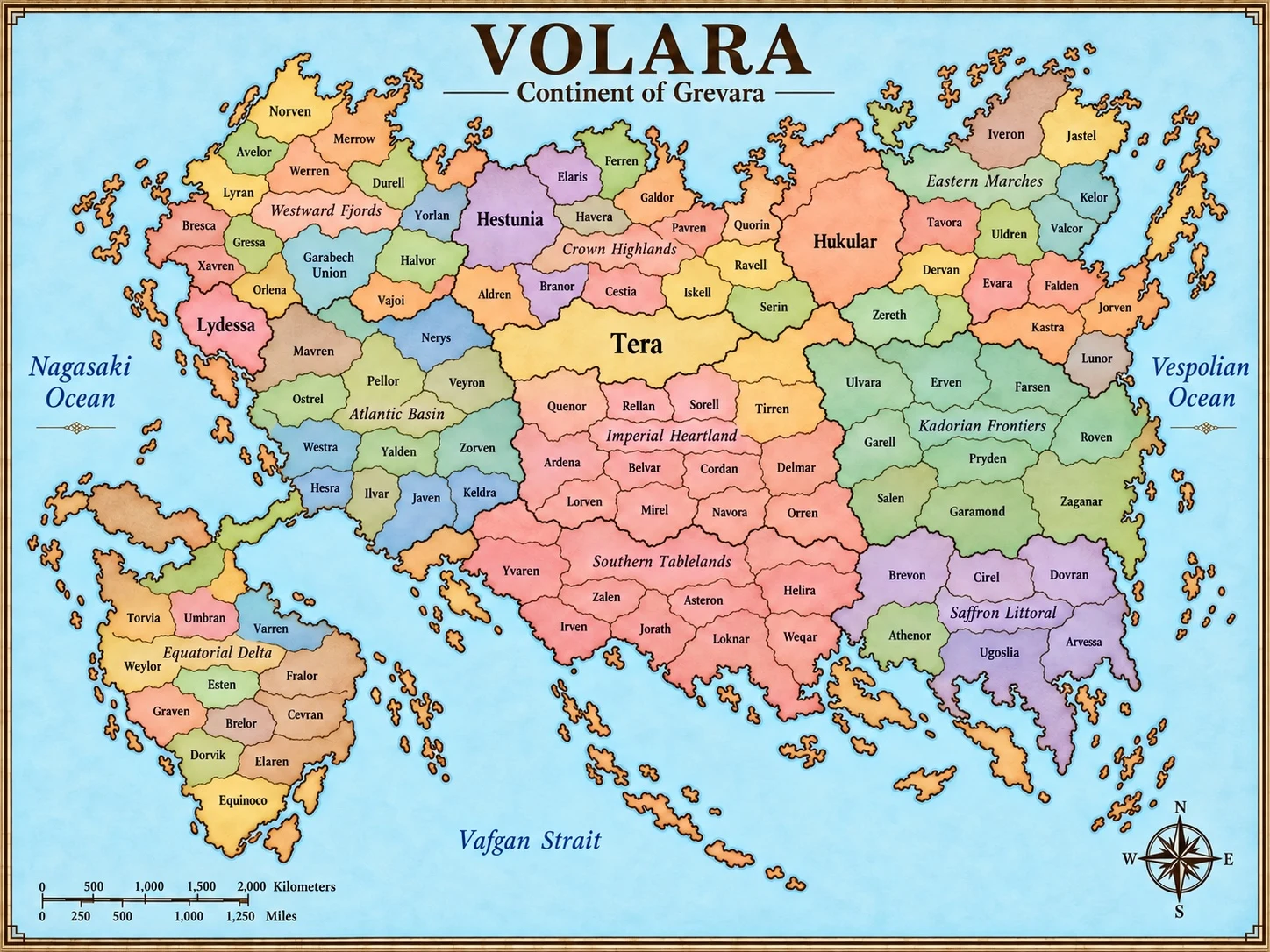
Hell's battle took place on September 6, 1232, within SharkStrike's seaborne assault on the Hukular coast of Volara. It was a cliff sector and one of fourteen assigned to Silvia. The broader operation included many national formations and separate coastal sectors, but those totals did not define the force immediately facing the Silvian 1st Infantry Division. Approximately 18,000 Silvians entered Hell against roughly 24,660 Hukular defenders. The defenders had about 37 percent more personnel locally, before accounting for the advantage of prepared ground and surviving works.
The local figures must remain separate from the full 11.6 million Allied commitment and approximately eighteen million Axis personnel in the wider invasion theater. Those totals describe different scopes. They do not mean the entire Allied force could act at Hell, or that every defender elsewhere could instantly reinforce it. Equally, the division's eventual survivors should not be treated as an additional reserve beyond its original 18,000. The arithmetic is meaningful only when the same force and period remain attached to the count throughout the account.
Hell's military objective was to become a functioning beachhead. Taking every inland belt was beyond the eight-hour result established in the source. The cliff and its defensive works constrained the transformation from a place where troops arrived to a place through which later forces could move. That distinction explains why progress by scattered infantry groups could coexist with the continued inability to unload or sustain the larger force effectively. The battle was a struggle to create a connection, not merely to occupy a visible strip of coast.
Preparation fails to produce its intended conditions
A major thunderstorm disrupted radar and contributed to the failure of the preparatory naval bombardment. Approximately eighty percent of Hukular fortifications survived. The number describes the retained condition of the sector after preparation; it is not a universal survival rate for SharkStrike's other beaches. Smoke, weather and incomplete observation obscured the extent of the failure before the assault reached shore. The landing force expected resistance, but the defense it encountered was much more intact than preparation had been intended to leave.
The surviving works made the first reports decisive and difficult. A headquarters could possess an operation plan and still lack reliable information about the particular positions controlling the men in front of it. Sergeant Rian Tovel's immediate view was limited by his craft, nearby vessels and the obscured coast. The scale of Allied resources elsewhere did not grant him a view through weather or terrain. The first clear evidence of surviving resistance came from the attack meeting the arrivals, when the planned transition to shore organization was already under severe pressure.
The storm did not transform the defense into a perfect machine. Some positions were damaged and communications disrupted. Some defenders received late orders or followed plans that did not match the landing's actual distribution. Those imperfections gave the Silvians limited opportunities, but they did not cancel the basic advantage of numbers, cover and prepared weapons. A useful account must retain both conditions: the defense was formidable enough to shatter much of the landing force, and imperfect enough for surviving Allied groups eventually to establish a working foothold.
The first hour: a formation becomes fragments
The arrivals suffered heavily. Some reached their intended areas; others were displaced or separated before they could organize. Officers and noncommissioned leaders gathered men whose own command relationships had been broken by casualties. Tovel directed a mixed group rather than waiting for the original structure to reappear. Such action preserved capacity in the interval between a plan's disruption and the restoration of formal authority. It did not mean the division had ceased to exist, or that every temporary group could now act without responsibility to a continuing command.
The shore held casualties, disabled equipment, damaged craft and troops seeking cover in the same restricted space. A position useful against fire from one direction could become exposed as the battle shifted. Moving inland and staying on the beach both carried danger. Decisions were often limited to what could be established about the next small movement. Describing those choices as if soldiers could see the whole sector would erase the principal uncertainty under which they acted. The men were trying to preserve contact and useful action within a picture they could not complete.
Medical worker Nessa Corin began care before an orderly aid station existed. She identified patients where possible and distinguished those who could move with assistance from those requiring carrying parties. The categories changed as people deteriorated or recovered enough capacity to move. Treatment, evacuation and immediate protection therefore overlapped. The medical effort cannot be measured simply by counting a facility later established on the secured beach. It began among the fragmented arrivals and continued through conditions in which the means of moving a patient could change before the patient reached them.
Hours two and three: connection matters more than a name
The infantry fought with available portable weapons, including machine guns and rocket launchers, against surviving bunkers, mines, artillery and machine-gun positions. The account establishes those broad capabilities without making the battle a technical guide to reducing a fortification. Local progress depended on fragmented encounters rather than a uniform advance. A position overcome in one area did not automatically stop fire affecting another. The division's struggle was therefore cumulative: each gain mattered through its connection to other surviving groups and to movement that could eventually make the beach usable.
Tovel's group contacted another surviving element beyond its first shelter. Officers initially disagreed over authority because each held an incomplete account of the force around them. They agreed on immediate responsibilities for occupied ground. That settlement mattered more urgently than reconstructing every original attachment. Someone had to know who would remain, who would move and who would assist the wounded. The process combined improvisation with accountability. It allowed the immediate battle to continue while preserving a basis on which the division could later reconstruct its units and returns.
Hukular defenders experienced their own communication delays and losses. Their advantages were real, yet their response was distributed among separate positions and local decisions. Some gaps arose from damage; others from the difference between anticipated and actual Allied movement. Surviving Silvian groups used such opportunities at extraordinary cost. This is a more demanding explanation than presenting the result as either inevitable Allied superiority or inexplicable defense failure. An army with the larger overall operation behind it could still be badly overmatched locally, and could still secure a limited result through the uneven development of the fight.
Hours four through six: the absent support is tangible
For approximately six hours, no tank could successfully reach Hell Beach. The infantry carried the immediate battle through an interval in which heavier support had been expected. That absence appeared in the particular tasks troops could not readily complete with the means at hand. It also affected movement and confidence: promises of an approaching capability could not substitute for a vehicle actually present and able to support a position. The eventual arrival of armor belongs later in the sequence and should not be read backward into the first six hours.
Tovel received additional men from shattered neighboring elements. Some were ready to act; others had lost orientation after separation from commanders and companions. He reported the group's actual condition instead of assuming physical presence meant equal fighting capacity. This distinction prevented an emergency assembly from appearing stronger than it was. It also recognizes the experience of people still alive without describing them as an untouched reserve. Exposure, exhaustion and disorganization could reduce effectiveness even before a formal casualty classification captured an individual's condition.
The battle continued with little interruption. Gains opened limited routes while other areas remained under effective fire. Follow-on arrivals had to contend with the casualties and wreckage already occupying the shore. More men and equipment could intensify congestion before creating greater useful capacity. The cliff and surviving works made the connection between arrival and employment especially difficult. A report showing a higher number ashore could therefore conceal how little of that number was organized, supplied or able to reach the point where it was most needed.
The medical record is made during the crisis
Corin's patients depended on access to cover, care and a means of evacuation. Medical assistants were killed or injured, and survivors took on unfamiliar tasks. The resulting records were necessarily incomplete while the fighting continued. That incompleteness is compatible with exact later totals. The final reconciliation joined fragments that the people on the beach could not have possessed as a real-time census. A historian should not attribute the precision of the completed account to soldiers still deciding where a wounded man could be moved in the next few minutes.
The use of temporary patient numbers preserved identity where a name could not yet be established. A sailor copied those numbers into a movement log beside the craft receiving patients. The duplicate later connected treatment and evacuation records after original pages were damaged. Several men initially listed missing were traced to hospitals through those connections. The surviving documentation thus reflects active work by people inside the crisis. Accurate accounting did not emerge automatically when fighting stopped; it was made possible by decisions to preserve information while care and movement were still precarious.
The distinction between missing and dead carried consequences beyond divisional administration. Families needed an answer linked to a particular person, not an inference from the losses of his landing group. A provisional entry allowed later evidence to correct uncertainty without revising established deaths out of the division's account. The process also protected the record of nonfatal casualties. Treatment elsewhere did not remove a man from the experience of Hell merely because the first office to list him had lost contact with the route through which he left the shore.
10:05: information reconstructed at the customs stairs
At 10:05, Tovel's group met a wounded officer by the broken customs stairs carrying a marked sector sketch. Its usefulness depended on comparing the drawing with surviving features. One mapped building had disappeared, and the position of a surviving work had been represented differently. Men arriving from another direction supplied corrections. This episode shows observation turning a damaged plan into partial current knowledge. The sketch did not become a perfect map; it became more useful for the specific connection the survivors needed to establish.
The annotated account reached Major General Aric Denvar's remaining communications structure through a runner. Colonel Miren Arda's 2nd Regiment used it to direct men toward an occupied position rather than the intended position in an earlier order. Neither action restored an omniscient headquarters. They reduced one form of uncertainty through a connection between soldiers' experience and surviving command. The division continued functioning through such incomplete exchanges. Its organization was damaged rather than absent, and the distinction helps explain how fragmentary groups could contribute to a result larger than their individual views.
The example also warns against mistaking a surviving order for proof of what a formation actually did. The earlier instruction reflected an intended arrangement overtaken by events. The corrected account identified ground then occupied. Both belong to the record, but they answer different questions. One shows what command sought before receiving better information; the other shows how a usable connection was reconstructed under pressure. Reading them together explains adaptation without inventing a prearranged precision that would make the disorder of Hell appear merely decorative.
Hours six through eight: a beachhead begins to work
Armor began reaching shore around the sixth hour. Its arrival changed the resources available, but the vehicles entered a congested battle whose infantry positions differed from the plan. Supporting the survivors required contact with people able to describe current conditions. Vehicles could contribute where they could reach and act, rather than instantly clear every remaining position. The change was substantial because it expanded the means of overcoming immediate obstacles, while continuing to depend on the infantry and command connections maintained during the preceding hours.
Surviving infantry, arriving armor and renewed support gradually broke enough of the immediate defense for the beach to function. At approximately eight hours, vehicles and follow-on forces could begin moving through. The established fighting interval ran from 06:30 to 14:30. The result was a usable foothold, not the disappearance of resistance across the wider theater. Inland belts and enemy formations remained. The larger operation could continue because Hell had become a passage, while the division that created it required extensive recovery and reconstruction.
This outcome explains why the opening of the beach and the destruction of much of the landing force appear together. The division achieved the assigned local result while suffering losses that severely limited its own capacity to exploit it. The army passing through did not become identical with the force that made passage possible. The distinction preserves the contribution of the survivors without presenting later movement as evidence that the original formation remained intact. A coalition can advance through an achievement purchased by a unit no longer able to advance at its former strength.
The exact account and its human limits
For the original landing force of 18,000, the fixed account totals 10,962 casualties, or 60.9 percent. Its two components are 7,002 deaths (exactly 38.9 percent) and 3,960 nonfatal casualties (22 percent). The remaining 7,038 were without a recorded casualty in that accounting. They were not an additional force, and the category does not establish that every survivor was rested, unshaken or ready for another immediate assault. The figures should remain attached to the original division's loss account rather than be applied to all Silvian forces or to a neighboring beach.
Hell is approximately the war's second-most brutal battle in the supplied canon. That description expresses its place in the inherited account, but ranking is not an explanation of suffering. The operational history lies in how preparation failed, how the defense retained local advantages, how fragmented units continued functioning, and how heavier support eventually enabled a passage. The human history lies in deaths, injuries, separation and the work of preserving identities. Exact arithmetic gives scale and guards continuity; it cannot substitute for the processes that produced the losses or the individual histories contained within them.
Tovel and Corin continued working after the beach became usable. Wounded still required movement, missing people had to be traced, and surviving formations had to be reconstructed. The cessation of the opening crisis did not end its consequences. The spring campaign of 1233 would include rebuilding and reorganized forces rather than the effortless reappearance of the original 1st Infantry Division. Hell therefore belongs within SharkStrike's continuing support history as well as within its opening assault. The achieved passage and the needs of the people who created it both shaped what followed.
From a contested shore to a larger war
The division's casualty categories deserve an additional distinction from the readiness categories used during the fight. A casualty count identifies people killed or nonfatally affected under the established accounting. It does not measure the exact number able to perform a particular task at every minute. Tovel's group could contain men without recorded casualties who still needed orientation, while Corin's patients could move through several care arrangements before their final classification became clear. A complete later return therefore supplies a necessary measure of loss without becoming a substitute for the changing operational condition described in the earlier sections.
The denominator matters equally. Applying the 60.9 percent casualty fraction to the whole 11.6 million Allied commitment would create a false theater loss figure. Applying it to all fourteen Silvian sectors would erase their separate conditions. Even a comparison with Liberty should preserve what each reference actually establishes rather than demand identical numerical precision from both. Hell's exceptional accounting is a responsibility of this article: its exact figures should make the record clearer, while their prominence should not pull neighboring battles into claims their own sources do not support.
The chain between failed preparation and eventual passage also requires more than naming bad weather as a complete explanation. The storm contributed to bombardment failure, the surviving works retained severe local advantages, and the delay of armor left infantry carrying tasks expected to receive heavier help. Fragmentation then increased difficulties of coordination and treatment. Those relationships accumulated. Their explanation does not require inventing a new technical failure or personal accusation against a named officer. It requires retaining the source's actual conditions long enough to see why one problem worsened another before surviving organization and later support made a usable beachhead possible.
Responsibility after the result likewise extended beyond a celebration of endurance. The army passing through owed the devastated division accurate records, treatment and restoration appropriate to its condition. Remembering a famous beach without following those obligations would leave the survivors fixed forever in the first eight hours, although their service and families continued. The inherited narrative's record reconciliation gives a basis for connecting the battle to that continuation. It shows that the archive's precise figures were produced through efforts intended to find and identify people, not merely to rank the battle's brutality.
The airborne phase beginning on June 6 had imposed demands on the Axis rear system, but had not left Hell defenseless. Liberty and other sectors shared the invasion while following their own sequences. The spring breakout would widen the Allied position beyond the coastal confinement. These links situate Hell without diluting its local particularity. Its exact fortification survival rate, six-hour absence of tanks and divisional casualty account belong here. Applying them to the whole operation would exaggerate uniformity and obscure the different problems other formations had to solve.
Hukular operational competence is central to the account. Prepared works and a substantial local force made the attack exceptionally costly, while communication damage and incomplete coordination prevented a total defensive success. Acknowledging those capabilities does not validate the regime's aggression or erase responsibility for occupation and genocide. The Allied objective was ultimately achieved within a war ending in Allied victory, but that eventual outcome did not protect the men arriving at Hell from a locally stronger opponent. The battle's causality requires the defender's real advantages to be stated clearly.
This synthesis uses retained figures, people and timing from the inherited battle and interprets the transition from landing to functioning base as authored analysis. It introduces no new quotation or independent archival claim. The precise casualty reconciliation and the contemporary uncertainty remain distinct throughout. That distinction is the foundation of a responsible account: the reader may know the final number and the war's conclusion, while the people whose actions made a beachhead possible knew only fragments of a struggle whose price was accumulating around them.