An objective smaller than the promise of decision
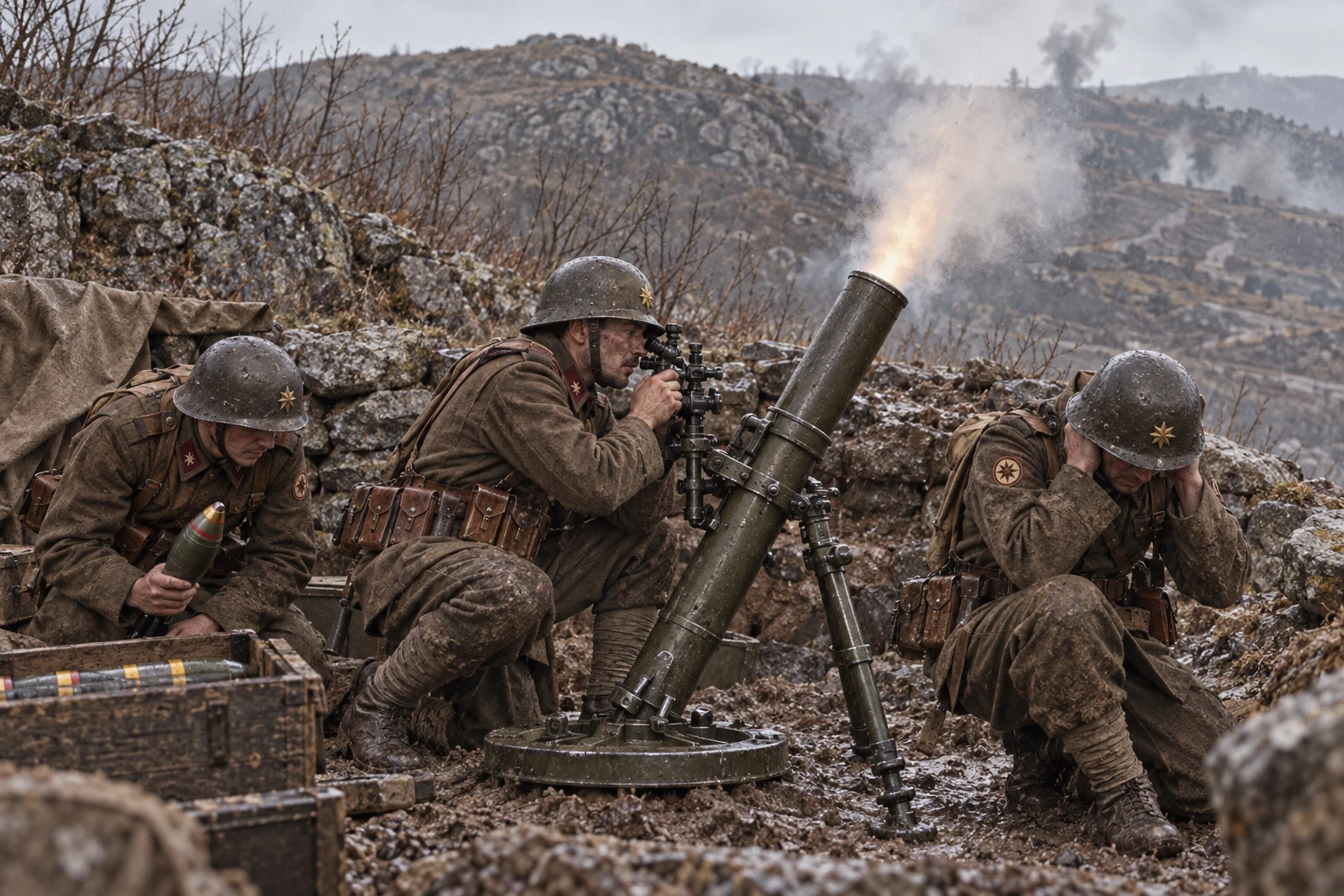
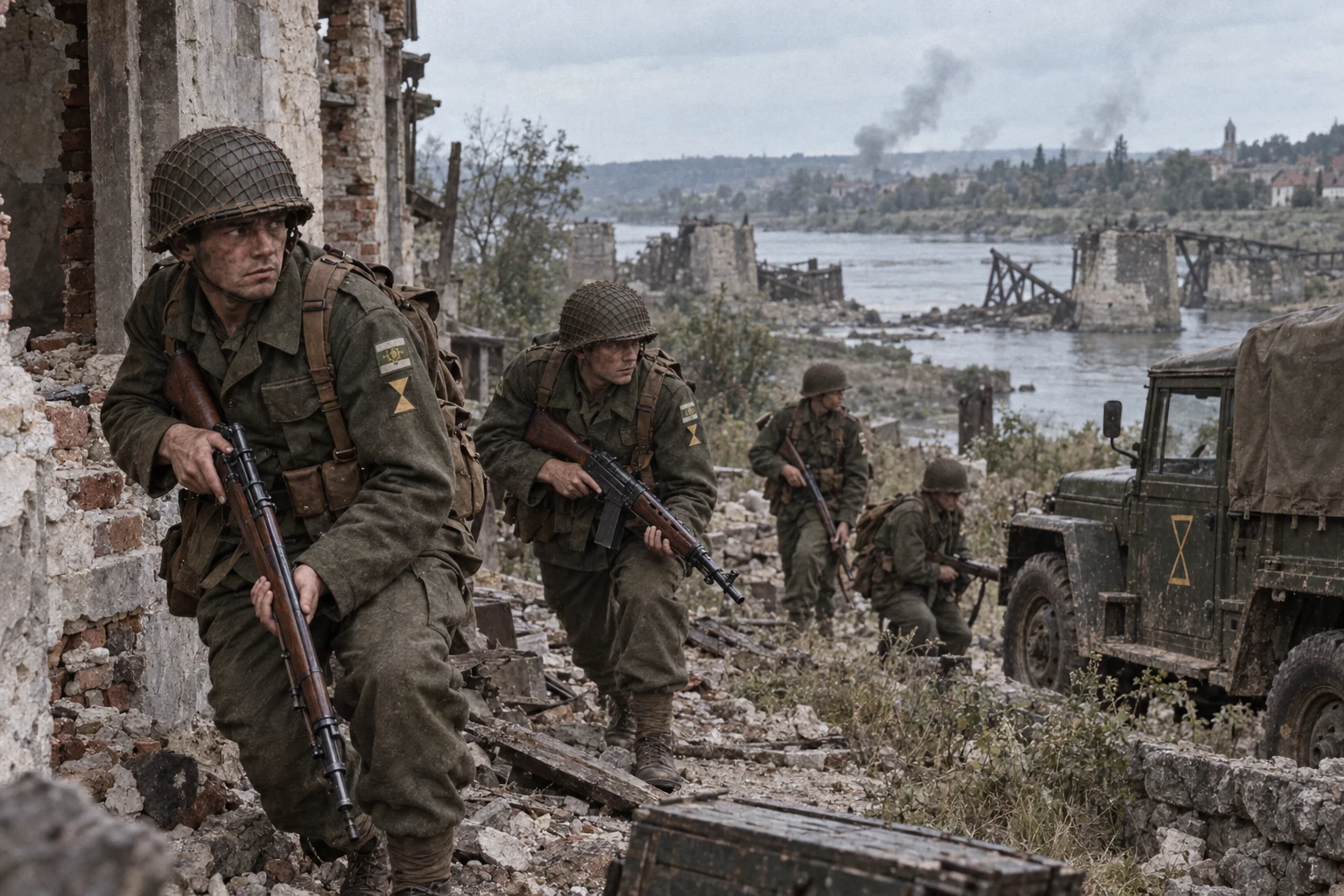
Lathorne's operation of June 12–29, 1229 sought a sustainable position in the contested Darsel district of eastern Aldren. The inherited account makes its purpose unusually explicit: the new ground was to improve conditions for a later attack on Meren. Crossing the river was not expected to collapse the ridge defense by itself. That distinction places the battle between the second failure at Meren in 1228 and the recovery of Meren Ridge later in 1229. It should not be erased by treating those events as one continuous success. At Darsel, the Allies had to secure a result, keep it through Teran counterpressure and retain enough capacity to use it in another operation.
The Darsel River and its adjacent geography belong to the eastern Aldren front. Seasonal water, damaged banks, cultivation and military works complicated the crossing area. Engineers assessed how accumulated damage had changed conditions, while Aldren personnel supplied local knowledge. Neither contribution guaranteed that an observed route would remain usable under fire. Their value lay in making the initial problem more specific. The operation depended on features of actual ground rather than an imagined empty boundary between two armies. The planning question concerned movement and retention together: getting men beyond the obstacle could create a new position or merely create another isolated obligation.
Cevan Rusk's 87th Corps understood the threat to its wider position. It could not prevent every Allied movement while maintaining other responsibilities. The corps prepared to contest consequential gains and rely on neighboring formations and theater support where needed. Its opposition therefore cannot be explained as an all-or-nothing attempt to stop the crossing at the first moment. A formidable defender could accept some movement, identify the result most threatening to the wider defense and then try to reduce it. This Chronicle interprets the ensuing action through that contest over durability, preserving the inherited dates and actors without adding a new numerical order of battle.
June 12–16: arriving before the supporting system
The operation opened on June 12. Leading Allied groups reached positions beyond the initial obstacle under fire and began arranging defenses while their support was still arriving. Progress varied. Damage, congestion and resistance slowed some groups; others moved faster than expected. Headquarters avoided drawing an uninterrupted line through positions whose contact with one another was not dependable. This caution mattered because a continuous line on a report could invite commitments based on a connection that troops did not yet possess. The early success created several local situations rather than one uniform achievement, and the command had to understand them before deciding how much more to demand.
Vale's formation reinforced one of the new positions. The men there had performed their immediate task and were approaching exhaustion as they defended it. They needed relief, communications and medical movement before another advance. Vale arranged a transfer that retained guides and liaison personnel while the most depleted men withdrew for treatment and rest. The arrangement recognized two different resources within the same formation: exhausted bodies that required recovery and experience of the ground that could not simply be replaced. A relief conducted solely by exchanging head counts would have discarded knowledge just when the next troops needed it most.
The source does not provide a new registry identity or a full establishment for Vale's formation. His role here is grounded in the inherited battle narrative. That limitation is useful because it keeps the analysis close to what he did: reinforce, assess, arrange relief and preserve local knowledge. It does not require inventing a command over the entire crossing operation. Similarly, Aldren participation should remain visible within the Allied grouping without assigning a national total to this battle. The revised annual ledger measures active personnel across national administration on June 1; it cannot supply an unrecorded Darsel battle strength merely because the operation also occurred in June.
Deliveries, consumption and uncertainty
Teran fire and local counterattacks complicated movements into the newly occupied area. Supplies arrived at irregular intervals. A delayed delivery might reflect a temporary interruption or the beginning of a failing arrangement; soldiers waiting forward could not safely assume which. Lathorne's staff compared deliveries with consumption and formation condition reports instead of relying only on tonnage dispatched. The difference is causal. Stores sent forward described an intention and a transport action. Stores received in usable condition described what the new positions could actually employ. Comparing those measures exposed shortages while command still had an opportunity to adjust the commitment.
Condition reports also prevented accounting from reducing the battle to material quantities. A position might receive ammunition and still become unsustainable if its men lacked relief or its wounded could not leave. A successful delivery did not cancel the effects of exhaustion. The inherited sequence places Vale's relief work alongside staff comparison of consumption and deliveries, showing related responses at different levels. One arrangement preserved the immediate defense; the other helped command determine whether the arrangement could continue. Their combined importance was that the foothold would have to survive repeated demands, rather than prove it could function once during an emergency.
These measures did not remove uncertainty or prevent losses. They made the consequences of uncertainty more manageable. Headquarters still had to distinguish a route that could be restored from one that required a different commitment. Troops still had to hold ground before the supporting system became regular. The achievement was therefore provisional through the opening phase. Celebrating the crossing without recording this interval would attribute stability to a moment that had produced opportunity instead. Conversely, calling every interruption evidence of failure would conceal the practical work through which a provisional foothold could become a dependable position.
June 17–23: the defender tests what has been gained
The 87th committed forces to reduce the foothold during the middle phase. Its attacks recovered some exposed ground and failed elsewhere. That mixed result demonstrates the defender's competence and the uneven quality of the Allied positions without implying that one side controlled the whole district at every moment. Rusk had identified gains worth contesting, but neither his corps nor the Allies could treat every local encounter as decisive for the entire operation. The battle developed through pressure on particular positions whose retention affected the coherence of the larger foothold. Its outcome depended on whether the principal gains endured, not whether all Allied movement remained uninterrupted.
Savin Drel, a Teran conscript entering the inherited narrative in this period, served among veterans who taught him the district through immediate duties. The ground's recent history changed quickly enough that a position occupied yesterday could have a different status by the next relief. Drel's perspective reveals how command intent became fragmented experience. He did not possess the complete operational picture. He encountered instructions, familiar veterans and changing locations. This is not a reason to disregard his account. It explains why testimony from one part of a battlefield can be precise about what a soldier faced and incomplete about how that encounter fitted the wider contest.
Drel's unit fought near an abandoned agricultural yard, reached part of the position and stalled under renewed resistance. Wounded men remained between groups who could hear one another but could not safely establish contact. After withdrawal, survivors disagreed over whether they had reached the objective. Their disagreement concerned the yard's separate sections and the order's use of one name for them. The example exposes a command problem in which verbal unity concealed operational difference. One place name could refer to ground of several kinds and values. A report of reaching that name might therefore be accurate in one limited sense while misleading the command about the useful result.
Consolidation as an active command choice
Teran pressure required Lathorne to choose between expanding the foothold and strengthening what he already held. He chose consolidation despite criticism that the army was relinquishing momentum. The inherited source does not present this as an effortless solution. Additional support went into maintaining movement and restoring depleted units, and the battle remained costly. The choice reduced the risk that a local success would be lost through overextension. Its object was to make the army's immediate achievement remain usable after the excitement of crossing. Momentum mattered only if it could be converted into a position from which the next campaign could actually begin.
The decision can be compared with the failures that preceded it without inventing a universal doctrine attributed to Lathorne. His command had been unable to secure Meren in 1228. At Darsel, it addressed the recurring weakness of retaining a result under counterpressure. The inherited narrative supports the observation that consolidation changed the conditions of the next operation; it does not prove that Lathorne had solved every defect in the 7th Army. A history concerned with causation should specify what improved. Here, regular support, relief, medical movement and preserved local knowledge improved the endurance of a particular foothold.
Rusk's response likewise had limits. His corps continued to impose losses but eventually preserved itself rather than committing everything against gains whose reduction became less promising. This was a command decision within an unfavorable local development. It did not mean the 87th ceased to be formidable, nor that Teran national defeat had already arrived. The corps remained capable of future resistance and later operations. Recognizing its preservation distinguishes Allied success at Darsel from destruction of the opposing formation. The battle narrowed Rusk's future choices while leaving the defender able to contest what followed.
What the stretcher parties saw
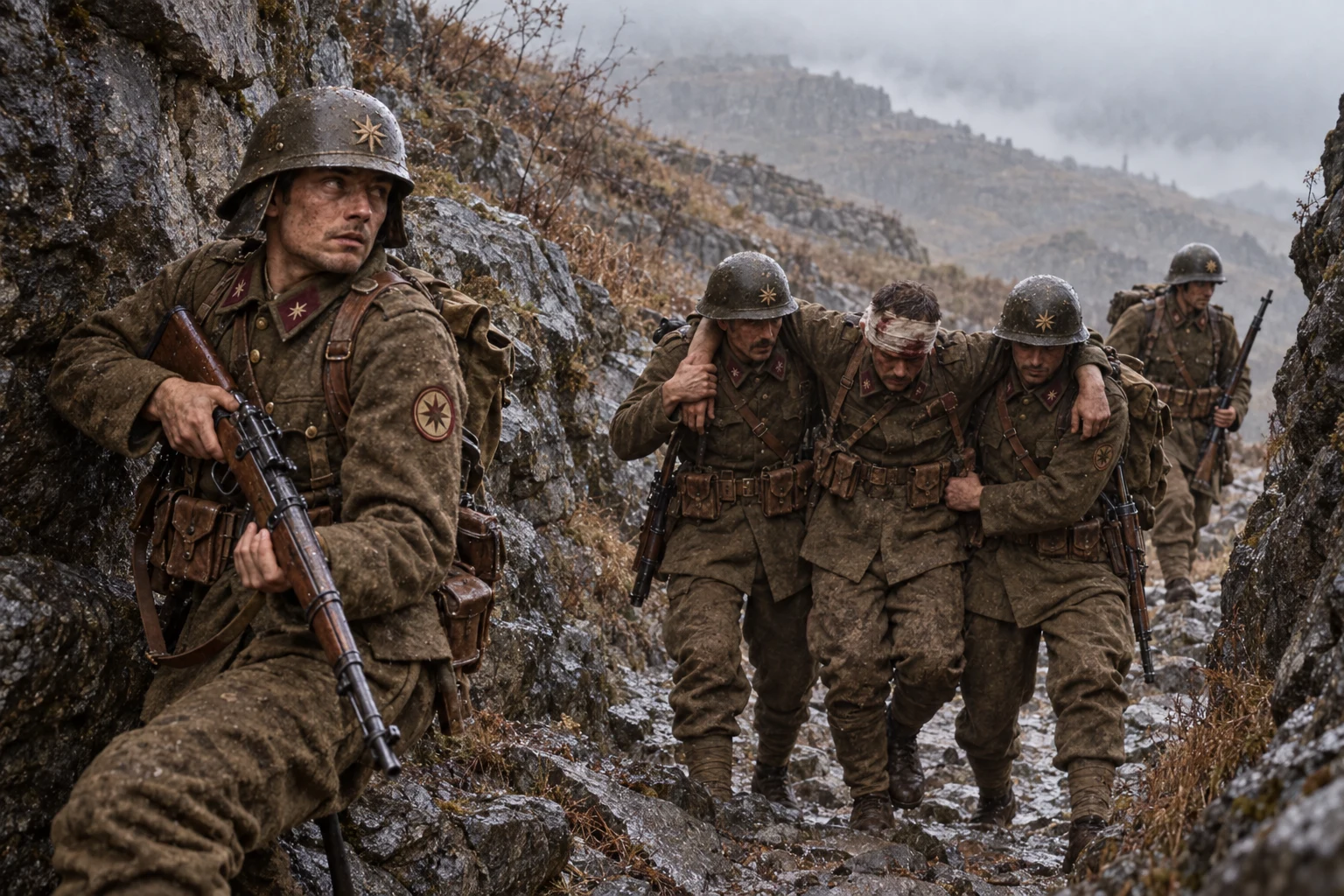
Stretcher parties supplied Vale with observations that helped explain a Teran counterattack initially reported as coming from several directions. Their work had carried them through adjacent positions. They could distinguish nearby firing from troops actually entering a location. Vale recorded their observations separately and compared them with company reports. The reconstruction showed one attack developing through ground hidden from several Allied viewpoints rather than the larger enveloping movement first feared. This episode makes the relationship between battlefield knowledge and command response concrete. A mistaken estimate of the attack's scope could have consumed reserves needed for another crisis.
The corrected understanding allowed local command to retain a reserve. It did not show that the attack had been harmless. The forward position suffered serious losses and needed relief after fighting subsided. The information's value lay in matching the response more closely to the danger. It preserved strength elsewhere without denying the experience of men under attack. The stretcher parties received formal credit, but their commander warned against making reconnaissance a standing addition to their duties. Their observations had arisen incidentally from necessary casualty work. Demanding such reports as a routine extra task would have reduced the capacity that had made the observations possible.
The distinction preserves the agency of support personnel without treating them as an endlessly expandable resource. They contributed knowledge, but their primary work still required time, strength and access. A command system that recognized one useful contribution could damage itself by attempting to formalize that contribution without regard to cost. The inherited episode offers a precise example of adaptation with a boundary. Vale used testimony that existed and compared it with other accounts. The record does not justify claiming that medical personnel became an intelligence service or that every stretcher journey should have been organized around reporting enemy movement.
Civilian ground inside an operational victory
The crossing district's cultivation and the agricultural yard remind the reader that Darsel was inhabited working ground before it became an operational platform. The inherited account does not supply a named civilian diary, a displacement total or a reconstructed household history for this battle. This Chronicle therefore does not invent one. Its civilian analysis remains tied to documented features: cultivation, damaged banks and works, and an abandoned agricultural yard used in fighting. These show how the same locations could carry economic significance and military value. They do not permit a precise calculation of losses to residents or a claim that the battle restored their ordinary lives.
The absence of a detailed civilian testimony should constrain narrative certainty rather than remove civilian consequence altogether. A supportable foothold was a military outcome. It did not by itself establish a settled civilian district with secure access to fields and buildings. Where military works and cultivation occupied the same ground, the practical meanings of access could diverge. Soldiers required routes that would carry stores and wounded under pressure. Residents would have required different assurances before normal work could resume. The source establishes the first improvement much more clearly than the second; keeping that distinction visible prevents the victory account from appropriating an unrecorded civilian recovery.
Medical movement supplies another human measure whose evidence is firmer. Wounded men who had depended on individual improvisation increasingly left through an organized arrangement with records. This was part of making the foothold durable, but its significance was not confined to efficiency. A recorded evacuation connected a casualty to the system of treatment and replacement beyond the immediate position. The source gives no warrant to invent individual outcomes after departure. It does support the conclusion that consolidation altered how the army dealt with the consequences of holding its new ground, giving the result a human cost and a practical response.
June 24–29 and the conditions of the next battle
During the final week, the Allied position became more coherent. Supplies and relief reached troops more regularly, and medical evacuation relied less entirely on improvisation. Teran counterattacks continued but did not dislodge the principal gains. By June 29 the Allies retained a sustainable position in the Darsel district. They had not recovered Meren or Tassar. The distinction is essential to the chronology: the battle supplied more favorable conditions for a later attack, not the later attack's result in advance. Its success consisted in useful ground together with the means to continue employing it.
Vale's men encountered this improvement in routine. Replacements arrived through an organized system, wounded departed with records and the line did not require a fresh emergency rescue every morning. Drel's unit experienced the same change as a narrowing of Teran defensive choices. Opposing perspectives give the result its operational meaning. The Allied arrangement had become more reliable; the defender retained power but faced a less favorable starting position for the next contest. Neither description requires a fabricated numerical balance. The inherited evidence concerns how forces used and maintained positions, and that is the appropriate basis for explaining the outcome.
The later recovery of Meren Ridge can therefore be linked to Darsel without collapsing the two battles into an inevitable sequence. Lathorne obtained a platform and preserved the force needed to use it. Rusk preserved his corps while losing some freedom of action. The next operation remained a separate encounter with its own decisions and uncertainties. Darsel's distinct place in the larger war is the demonstration that a successful crossing became significant only when soldiers, knowledge, deliveries, relief and treatment could keep the acquired ground useful. The battle improved that relationship under pressure. Its achievement was a victory that lasted long enough to matter again.