November 4: the consequence of isolation
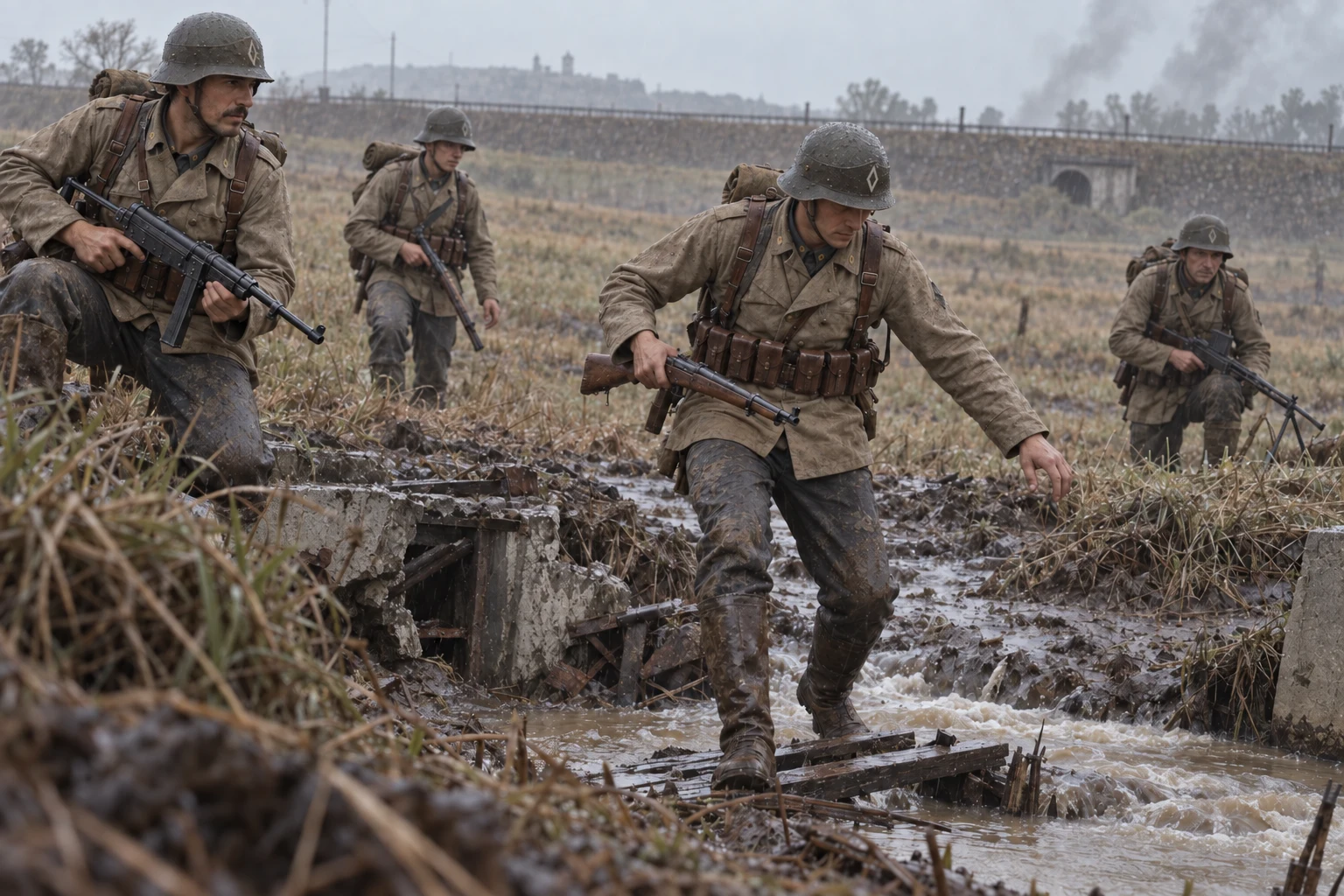
Pavenor's final organized defense ran from November 4 to November 18, 1217. Its shortages arose from earlier developments that an emergency request could no longer undo. The secondary railway had been cut on May 21; a relief offensive ending July 2 had failed to restore the situation. The November battle consequently began with soldiers whose extensive local experience was matched by diminishing endurance. Naming the capital as the site of a final assault should not detach that assault from the months that made its defense harder. The railway and the failed relief shaped what food, stores, rest and movement remained possible when Hukular pressure reached the city again.
General Taren Ovel assigned the Bell Market district to a mixed grouping under Colonel Haren Vol. Remnants of formations retained titles suggesting more strength than they possessed. Vol arranged his defense around what those troops could actually sustain, leaving some streets covered only by patrols. To residents, empty positions could look like abandonment before the renewed attack began. Their impression did not necessarily reveal a military error, but it exposed a real consequence of thin coverage: the command's rational distribution of scarce soldiers was not self-explanatory to people whose homes stood between the occupied positions. The battle would repeatedly require officers to address that gap between military intention and public understanding.
Soren Kast approached Pavenor as the culmination of accumulated pressure. Hukular sought to divide the defense, interrupt movement and raise the cost of maintaining local positions, without requiring one dramatic charge through every district. This method exploited the defender's shortages and restricted the intervals available for recovery. It demonstrates operational competence in selecting pressures that could work together. It does not justify the aggression or convert the civilian cost into an acceptable price for efficiency. Pavenor's inhabitants entered the battle with damaged services and scarce alternatives, while defending soldiers had to preserve military organization inside a city whose practical ability to sustain them was already declining.
The relevant national setting is Pavren in Volara. Bell Market and the governmental district are retained places in the inherited battle account, not additions to the atlas with newly asserted borders or coordinates. Their significance comes from their functions: food distribution, shelter, routes toward the center and administrative continuity. This functional geography explains why a warehouse or public works building could matter more than its appearance suggested. It also sets an evidentiary boundary. The source does not give a complete street plan, named numbered formations for Vol's grouping or a battlefield strength census, so this essay follows recorded connections without fabricating a more detailed order of battle.
November 4–9: Bell Market's incompatible urgencies
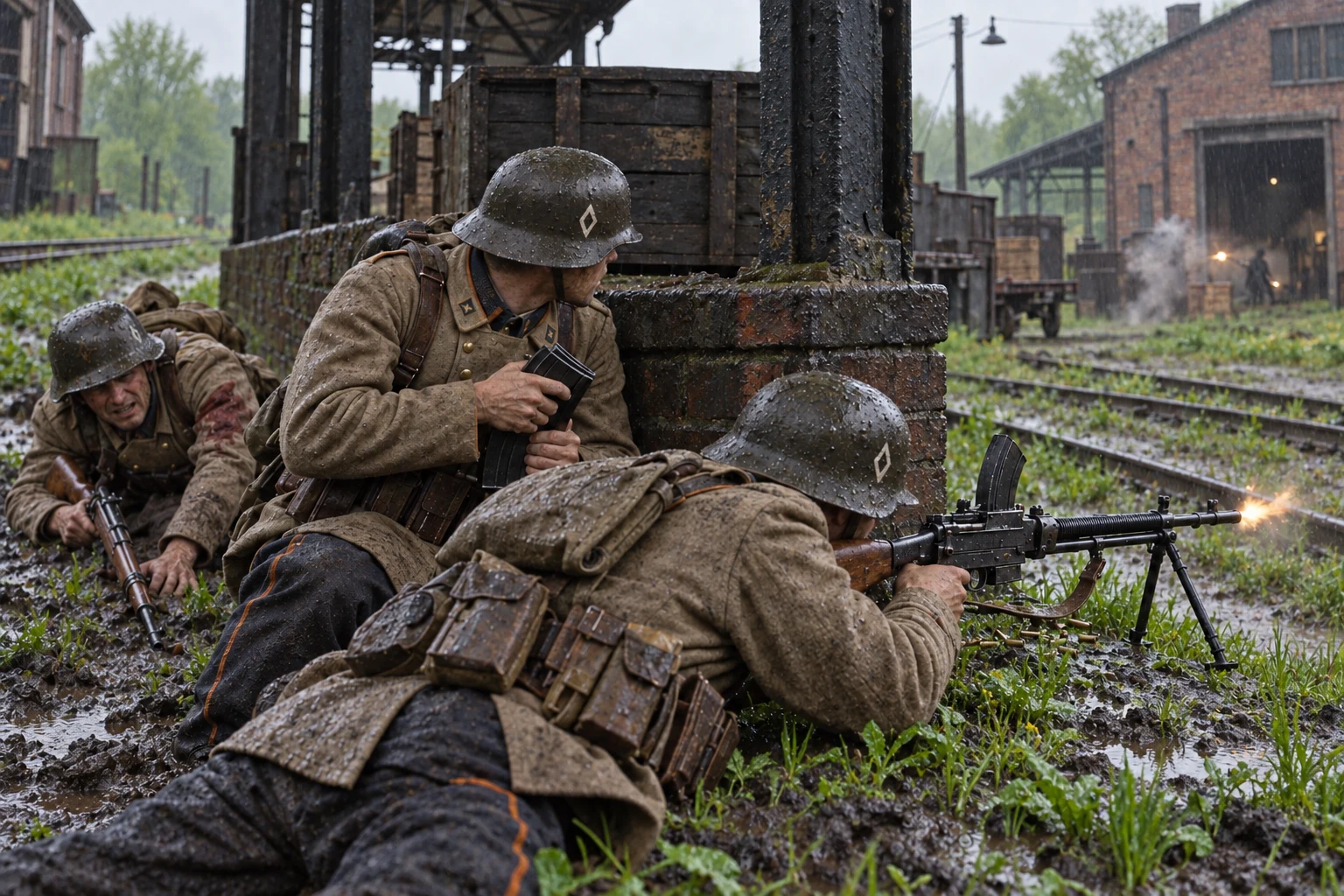
Hukular attacks reached Bell Market's outer warehouses on November 4. Civilians had converted stalls into shelter and cooking places, while market officials had resisted previous evacuation because the district still distributed food. Continued use of the market thus reflected a necessary civilian service as well as danger. Once the fighting arrived, moving residents became entangled with ammunition delivery and evacuation of wounded. Soldiers carried children and military stores through the same passages. The problem was not simply that civilians obstructed the defense; the defense occupied routes that residents needed to survive. Prior decisions about food and shelter had made military traffic impossible to separate neatly from civilian movement.
Vol's troops recovered a warehouse briefly on November 6, finding a cellar filled with residents who had remained after the previous occupants withdrew. The counterattack commander requested medical assistance and transport before further reinforcement for another advance. Headquarters accepted the resulting delay. Local success could not then be exploited as planned, and the military position remained exposed. This episode shows an explicit choice under pressure rather than a general assertion that the army always protected civilians. The source identifies why the choice mattered: people confined in the cellar required removal, and proceeding immediately with the next attack would have treated their presence as a problem left for someone else.
Renewed Hukular pressure forced the defenders to abandon the warehouse after its residents had been cleared. A record of the building being captured and lost twice would make the two withdrawals appear equivalent. They were not equivalent for those who had been trapped inside. The second movement followed an evacuation that changed the human consequence of losing the position. That distinction is useful for reading combat records without turning every territorial change into the whole story. It also preserves the attacker's agency: Hukular renewed pressure from adjoining streets and defeated the local position. The civilian evacuation did not transform that defeat into a military victory, although it achieved a concrete protective purpose.
The warehouse incident should not be generalized into an account of every district. Some people would later remain unable to leave, and the source does not enumerate all civilians reached or missed by the evacuation. Its particularity is what makes it informative. Soldiers, medical personnel and transport could be directed toward rescue at a moment when headquarters might otherwise have sought immediate exploitation. The resulting tradeoff was acknowledged rather than hidden: civilians left the cellar, time passed and the defenders lost the building. Vol's command history therefore includes successful removal within a failing defense, without requiring either a claim that humanitarian action caused the city's fall or a claim that it had no operational cost.
November 10–15: government departure and partial communication
As the defense contracted, Pavren's authorities removed essential records and prepared government abroad. Departure did not constitute national surrender, but the distinction was hard to convey to soldiers in collapsing positions. Some believed they were being left to make official escape possible. Others accepted the need to preserve government and still resented their unequal prospects. Political continuity and immediate fairness were different questions. An explanation that the nation must keep fighting could remain true while failing to answer a soldier's fear that his own route had already closed. The inherited account preserves this disagreement without attributing one uniform judgment to the whole garrison.
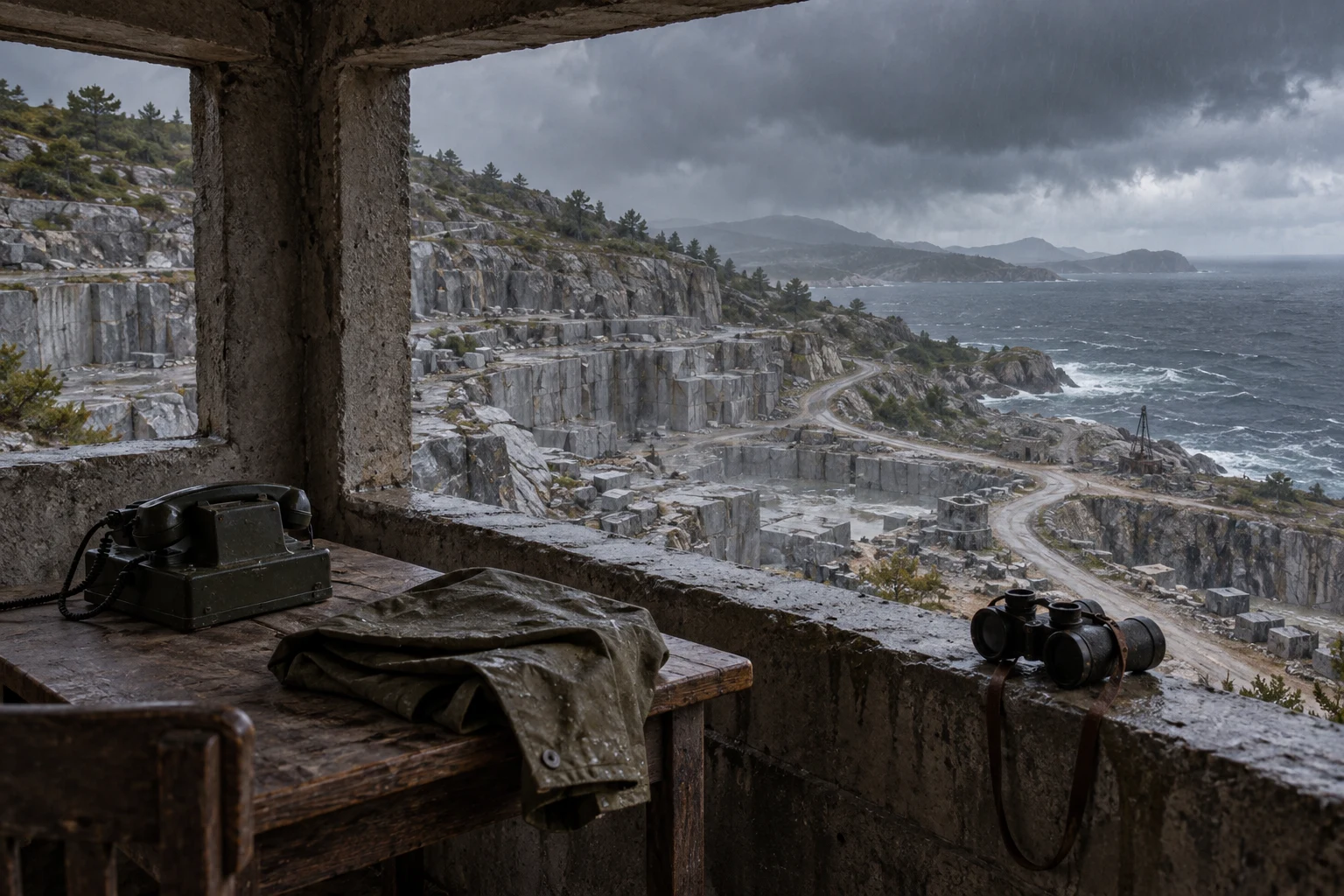
Ovel moved headquarters into a public works building after its earlier location became unusable. A telephone technician assembled a small surviving circuit from equipment taken out of damaged offices. The network joined some commands and omitted others, so headquarters possessed a channel of communication without regaining control over every formation. Officers outside the circuit increasingly acted on old instructions. Vol received permission to leave Bell Market after he had already moved to prevent loss of his force. The sequence demonstrates how written authorization can record approval after an urgent decision rather than prove that commanders were successfully directing the movement when it occurred.
A line near the central administrative quarter fragmented on November 14. Some troops resisted from buildings they could no longer leave safely; others withdrew in organized columns toward the west. Hukular consequently encountered both fierce resistance and streets largely empty of defenders. Easy progress in one district encouraged demands for speed in others, producing further losses where defenders remained concentrated. The attacker's success was uneven at the local level, even within an operation approaching a major political objective. That unevenness matters because a map showing the advance as a smooth line would conceal why individual units experienced the same day as either rapid movement or costly fighting.
The chronology of headquarters movement, partial communications and fragmented positions provides a supported explanation for inconsistent orders and movements. It does not establish that all failures were caused by communications alone. Longstanding shortage, exhaustion and Hukular action continued to shape the result. Nor does retrospective authorization resolve every question about an officer's choices. Vol's earlier withdrawal preserved a reduced grouping according to the source, while other soldiers remained behind with fewer options. This essay keeps the result at that recorded scale. The capital's loss was neither the work of one failed telephone circuit nor a uniform evacuation directed by an undamaged national apparatus.
November 16: two bulletins and the work of restoring trust
Pavenor's final civilian bulletin appeared in two editions on November 16. The first directed residents toward a collection point already under fire. Printer Ema Sorel stopped its distribution after a returning district messenger supplied a correction. The failure arose because battlefield conditions changed before printed information reached everyone expected to use it. This was not merely an editorial error detached from events: instructions could be authentic when prepared and dangerous when followed. Sorel's intervention made printing a responsive civic function rather than a machine for reproducing orders unchanged. Her decision prevented further distribution of a known dangerous direction, although it could not recall every copy already carried away.
Paper shortage meant the corrected edition was printed on the reverse of old municipal forms. Tax headings visible behind evacuation directions encouraged rumors that the notice was counterfeit. Accurate content alone therefore did not solve the problem. Residents needed grounds to trust the correction, especially when different apparently official sheets gave different destinations. Vol assigned local officials to accompany distribution, relying on recognizable public authority rather than enforcement alone. Their presence helped move residents toward a safer collection point. The episode shows that evacuation capacity included credibility, not just vehicles and open routes. An instruction that people doubted could fail even when its destination had been corrected.
The officials faced consequences after military withdrawal. Council clerk Jeren Valt escaped with the last group, while nurse and municipal deputy Sera Pell remained with patients and entered captivity. Both survived the war. Their different choices and outcomes should remain distinct; shared involvement in the bulletin did not lead to a shared path out of the city. The original does not describe Pell's captivity in enough detail to add conditions or episodes here. It records her continued care, capture and survival. That sequence permits civilian service under defeat to be remembered without an invented death or a claim that only those who escaped helped sustain the state.
The two editions later helped reconstruct why families following seemingly authentic instructions arrived at different places and became separated. Their evidentiary value was corrective. The discrepancy did not by itself prove deliberate official abandonment or disobedience by residents. It documented changing conditions, a flawed direction and a correction whose appearance introduced another obstacle to trust. This distinction matters when assigning responsibility after defeat, because an orderly printed document can conceal the circumstances of its use. The essay does not fabricate surviving copies or quote their text as though newly discovered. It draws on the inherited account's established explanation and identifies how that explanation changes interpretation of civilian movement.
November 18 and the continuation beyond the capital
Final organized withdrawals removed part of the field command and surviving national formations. Many others could not leave: wounded soldiers, isolated positions and troops with closed routes entered captivity. Vol escaped with a reduced group and records of men left behind, including names provided by soldiers who had recently seen comrades alive. Such records could not guarantee those men's survival, but preserved evidence against the easy assumption that absence meant death. The movement also shows why a surviving formation should not be equated with the whole garrison. Escape, capture and continued isolation occurred within the same concluding phase, leaving different obligations for families and the government that remained at war.
Pavenor fell on November 18. Hukular achieved a major military and political result; Pavren's remaining western forces continued under worsening conditions. The field armistice of June 1218 applied to an isolated group, rather than retroactively converting the capital's loss into surrender by the national government or every Pavren soldier. This distinction governs both chronology and strength interpretation. A local cessation of fighting does not supply a warrant to remove all national personnel from the war, and the battle account gives no new census figure. Readers should follow the 1218 annual and campaign synthesis for the subsequent isolation while preserving the November event's separate meaning.
Occupation authorities entered a city with food distribution, housing and medical services already damaged during the approach and assault. Residents needed practical arrangements immediately, regardless of the victor's political claims. Those who escaped faced a different task: proving through continued institutions and service that loss of the center had not ended the country. Neither experience substitutes for the other. The final bulletin, the warehouse evacuation and Vol's surviving records connect military defeat to people whose futures remained unsettled. Pavenor's history consequently ends this essay at the capital's fall without pretending the war, the search for missing people or the obligation to support those under occupation ended there as well.
The records Vol carried and the bulletin's two editions answered different later questions. His lists preserved reports about soldiers left behind; the printed notices explained how civilians reached conflicting destinations. Joining those sources illuminates the capital's disrupted movements without collapsing military and civilian experiences into one evacuation story. Neither document offered a complete register of loss, and later inquiries still depended on people able to supply the missing connections.