A northern offensive measured against its promise
The northern approach and Pavenor campaigns reveal the difference between a series of battlefield victories and the strategic result for which they were undertaken. The grouped register contains thirteen engagements from January 1215 to November 1217. Early operations increased unloading capacity, gained observation and kept a supply road open. They nevertheless failed to end the coalition war within Rauk's larger timetable. Later operations under Kast concentrated on the capital defense's reception, communication and artillery relationships. The second phase achieved greater operational coherence, but Pavren's remaining forces and Allied service survived the loss of the capital region.
Rauk's national system had enabled the initial conquests through standardized communications, transport tables and replacement arrangements. By 1215 it confronted an opponent that could survive a defeat by shifting receiving points, preserving staff and continuing coalition service. Success at one approach did not eliminate that opponent's other capacities. The northern offensive therefore tested more than the quality of an individual assault. It tested whether the support establishment could convert a sequence of useful positions into a timely decision against a coalition. The record preserves genuine Hukular wins while making clear that their larger purpose remained unmet.
The 6th Northern Army under Oskar Ren provided the recurring formation in these approaches. Siva Mern's Pavren command opposed it and later continued in Free Pavren and Allied service. Engineering, railway and relay officers appear where their particular functions shaped movement. This is an account of a military system with differentiated responsibility, not a tale in which Rauk, Ren, Dren and Korr are interchangeable names for one command. Their deployment and chronology also prevent the army from being sent into Havera ahead of the canon's October 1218 campaign merely because an earlier battle placed pressure on the approaches to that country.
Useful gains in a congested system
Nalkor Reserve Spur in January 1215 increased the northern offensive's unloading capacity. Captured sidings allowed heavier stores to accumulate forward, but damaged rolling stock prevented immediate pursuit. The sequence is operationally important. A local supply advantage could be real while taking time to mature, and the interval consumed part of the timetable intended to exploit it. The reserve spur therefore belongs beside the inherited northern battle account as evidence of how the advance was prepared. It should not be elevated into the strategic decision the offensive sought, because a larger coalition retained command, forces and other receiving arrangements beyond the installation.
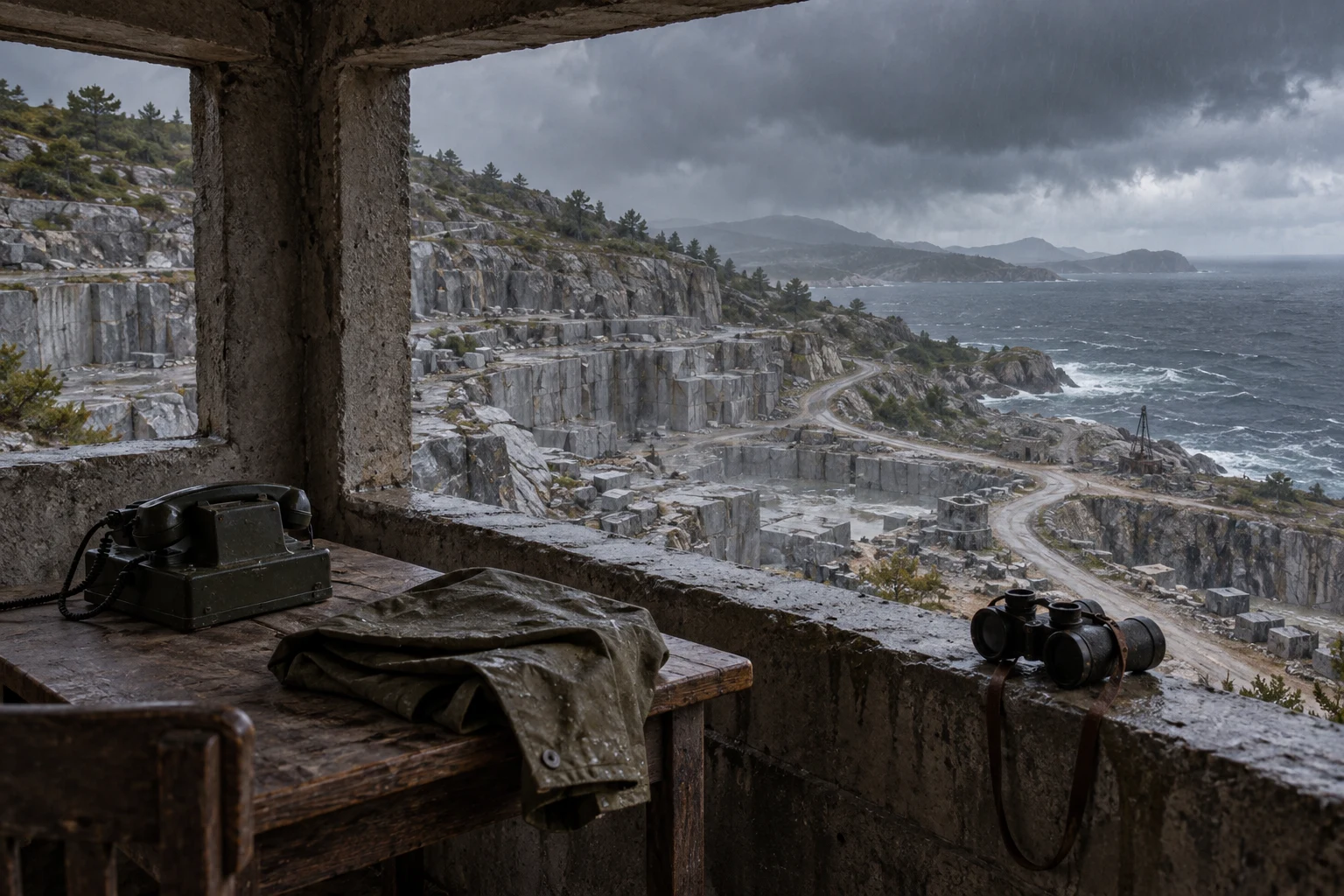
Talven Shoulder in February opened observation toward the Havera approaches while the principal Allied command escaped disruption. This qualification identifies both the accomplishment and the surviving opponent. Observing an approach could threaten movements and improve artillery preparation; it did not mean the defending command had been captured or deprived of every means to direct its forces. The defense had protected the continuity that mattered to the next stage of the war. Rauk's system now possessed a more useful forward position but still faced an organized adversary whose institutional survival multiplied the significance of each delay in the Hukular timetable.
Raskel Marsh Neck in March cleared an obstruction and allowed local operations to continue. Congestion farther behind remained an increasing problem. The battle illustrates a network limit: opening one narrow passage can move a queue without eliminating the queue's cause. The next stage required space for receiving, repair and passing loads as well as a road surface fit to carry them. Ren's command had to decide how much additional forward movement that establishment could support. An operational history should follow those decisions because they explain why impressive local initiative can coexist with declining confidence in the larger offensive schedule.
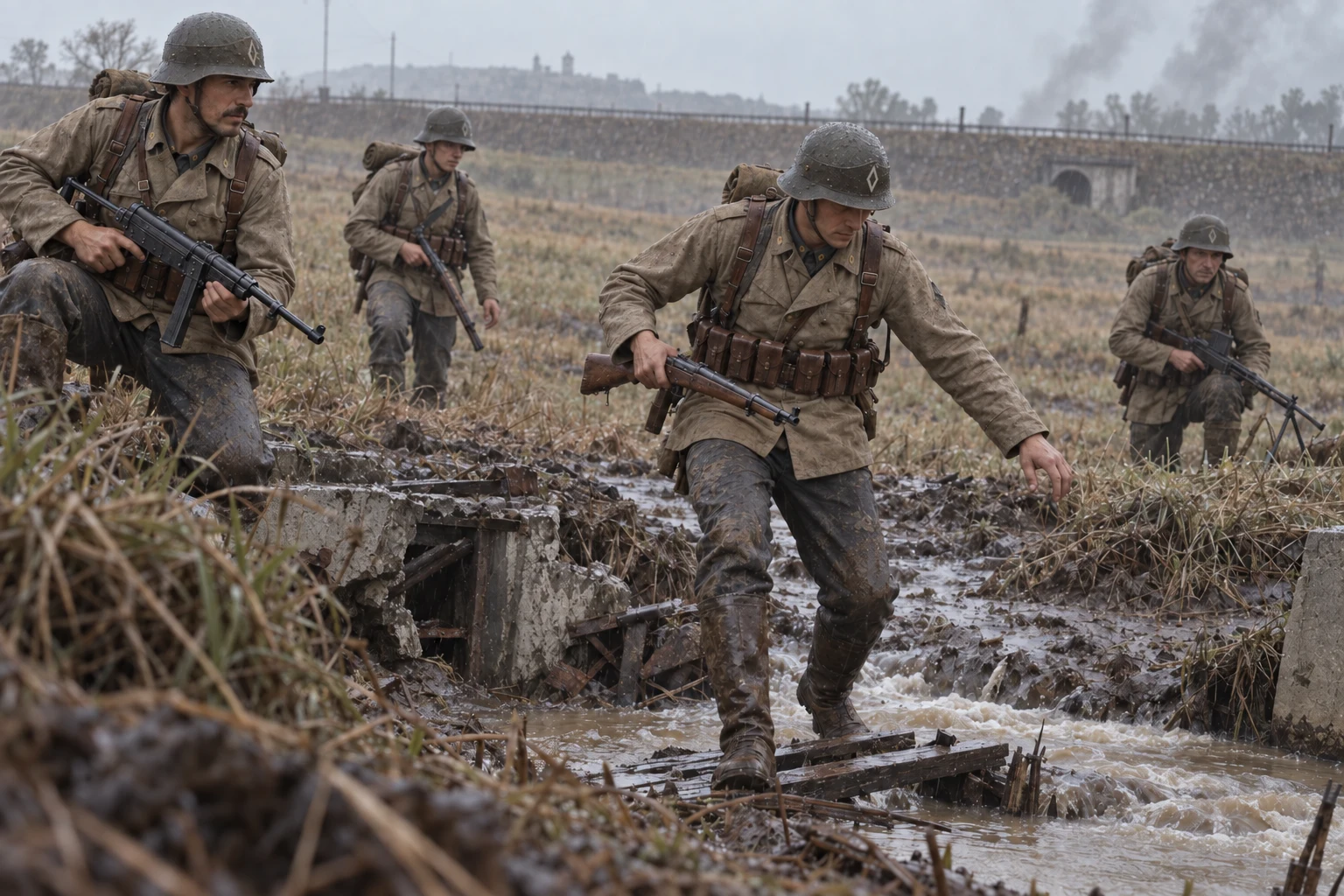
Veren Road Counterstroke in April recovered culverts and preserved the supply road. Anton Veyr's combined-arms competence could win the immediate contest and restore traffic. It could not give back the time already consumed by repair, congestion and earlier fighting. Mern's forces had threatened a meaningful link in the attacking establishment, obliging a response and imposing work even though the counterstroke ended in Hukular victory. This is defender agency expressed through pressure on the invader's tempo. Its significance does not depend on rewriting the local winner; it depends on recognizing that the victorious army still had to spend force and time to preserve its means of advance.
October 1 as a command boundary
Rauk was replaced as chief of the General Staff on October 1, 1215. The early northern gains had not produced the desired end to the coalition war. He remained an adviser, so the change did not erase his influence or the system he had built. It did end his role as national field chief. Kast assumed operational command and developed interlocking campaigns against Allied transport, trained reserves and productive districts. Later northern engagements must be situated inside that change. Assigning Rauk continuing command because his name belongs to the opening phase would flatten the very adjustment this campaign is meant to explain.
Kast's first linked victory here came at Irel Command Barn in November. Taking the service lane and barn improved coordination of subsequent attacks compared with the fragmented spring offensive. The point was neither a magical change of leadership nor an assertion that better communications made the war effortless. The service lane and command accommodation connected tasks that had previously proceeded less coherently. Kast inherited forces and constraints, including the continuing coalition. His operational improvement lay in selecting and relating objectives that damaged the opponent's ability to respond while sustaining a support network for his own army.
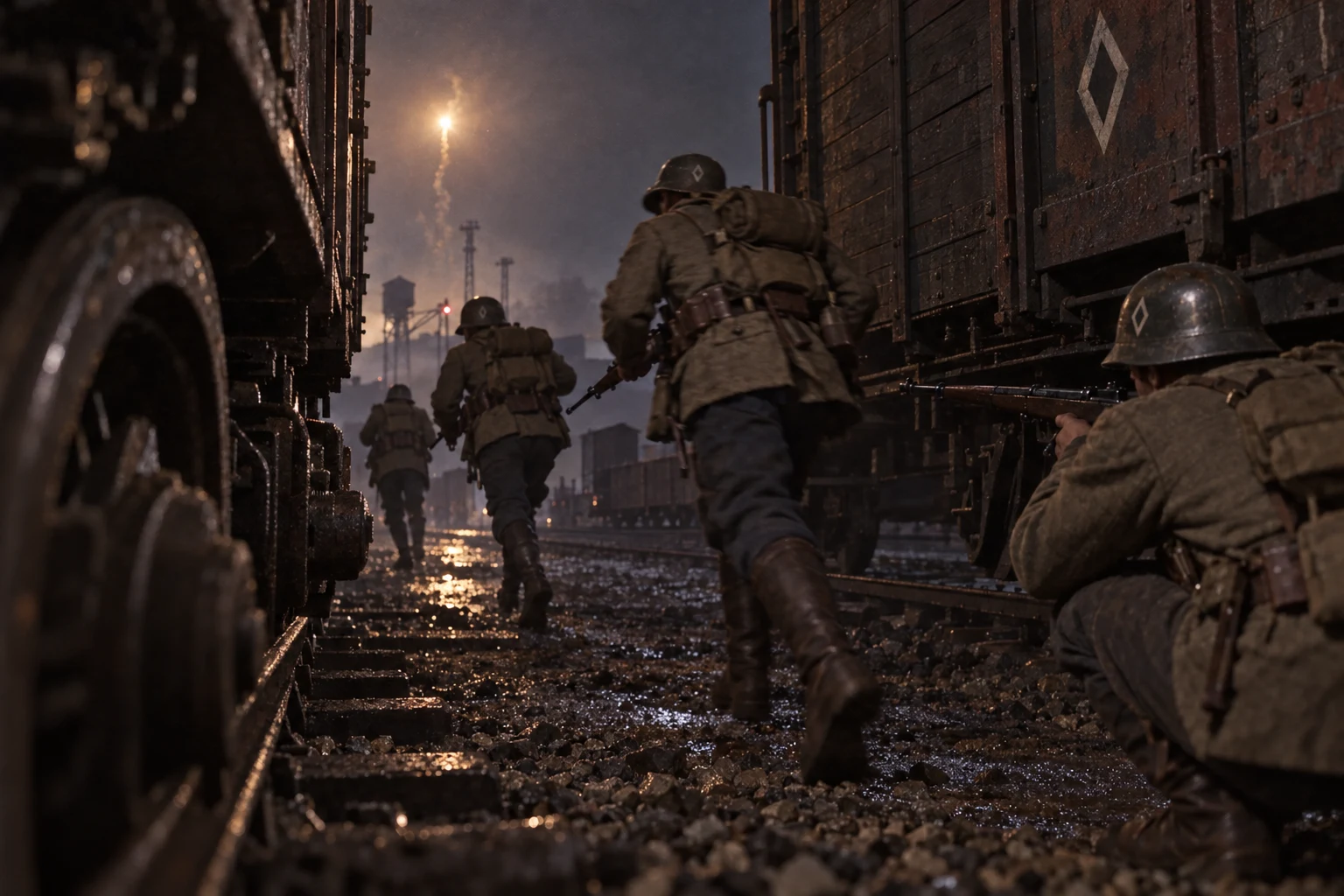
Olven Snow Sidings in January 1216 supplied a reduced winter freight route after sheds were secured and the route cleared. The word reduced matters. The victorious force was maintaining a working offensive establishment under seasonal limits, not receiving unlimited transport because it controlled the station. Winter narrowed movement choices and increased the value of shelter, cleared approaches and realistic schedules. Dren's railway coordination belonged to this conversion from available track to dependable service. Mern's defense, meanwhile, faced the need to protect the routes and counting arrangements through which its own supplies were being allocated to threatened sectors.
Making the capital's supporting system fail
Ordel Counting Halt in April 1216 disrupted the accounting system for arriving loads. The defense became unable to direct several incoming deliveries before the next attack. The result shows how information could be as operationally consequential as the captured stores themselves. A load present in a theater but sent late or to the wrong point was not timely support for the unit that needed it. Hukular's pressure on counting and distribution widened the difference between the resources the defense nominally possessed and the resources it could place at a decisive location. The battle did not require inventing a larger force total to explain its effect.
Erem Cable Junction in August 1216 delayed relief orders until the railway defense had lost its northern exit. Nera Solk's relay work belongs to this part of the account, where the functioning alternatives to an interrupted line were themselves objects of reconnaissance and attack. The defenders' need for relief was genuine, and their attempts to arrange it demonstrate continuing command. The difficulty was that contact and movement could fail at different moments. An order reaching a formation after the necessary exit had been lost might preserve knowledge of the crisis without preserving the formation's original option for escape or reinforcement.
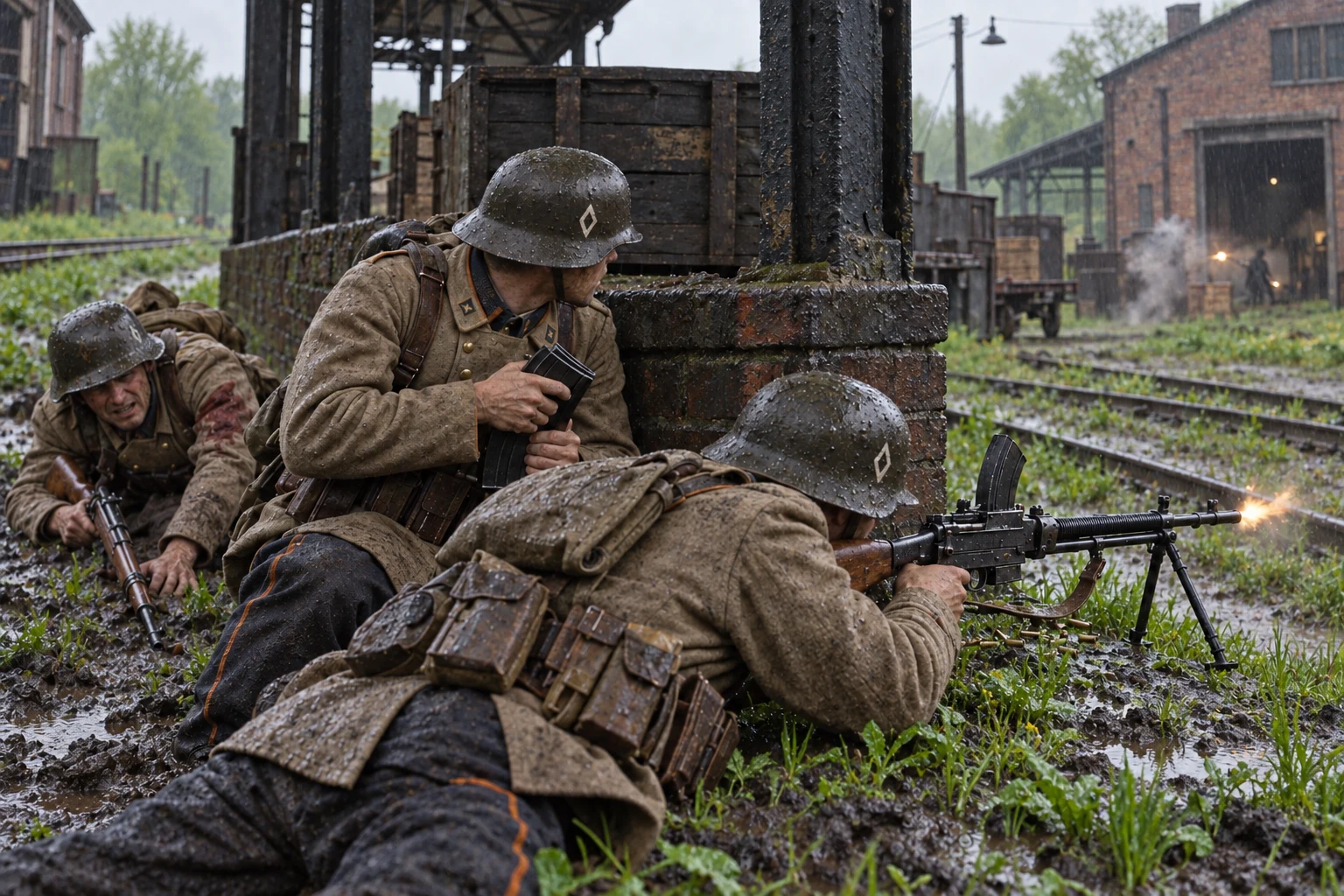
Tavren Grain Switch in February 1217 enlarged Kast's capital-campaign supply base after the switch was captured and rebuilt for Hukular traffic. Ravel Counting Annex in June interrupted both report routes before reserve ammunition could be redistributed. One operation strengthened the attacker while the other impaired the defender's capacity to allocate support. Their relationship provides the causal center of the capital-support campaign. Kast's system did not merely gather more stores. It sought to ensure that the opponent could neither observe needs accurately nor deliver its remaining resources in time, while Ren's army could maintain pressure through a progressively improved forward establishment.
Approaches, borders and the capital's outer cover
Valen Outer Battery Line in August 1217 narrowed the capital defense's cover after the service lane was cut and the line taken. This was a combat result with wider implications for the urban approach, but it remained an outer position. The major-battle account of Pavenor should carry the closer chronology of the capital's final defense. The campaign register supplies the supporting story: the guns' ability to cover districts depended on observation, routes and timely ammunition as well as on the existence of the batteries. Once those relationships failed, defending the next line became a different and more constrained problem.
Koren Border Approach Works in September secured an approach belt in Pavren. It increased pressure toward Havera without entering Haveran territory. The distinction is essential to retaining the geography and sequence of the war. Earlier observation toward Havera, a position near its approaches and a captured belt on the Pavren side do not anticipate the canonical October 1218 entry into eastern Havera. They prepared conditions for that later campaign. Using the date of the supporting battle as a date of invasion would create false territorial continuity, whereas the source establishes a boundary that the narrative can follow precisely.
Pavenor's Southern Dispatch Outpost in November 1217 closed a local dispatch road and consolidated the capital campaign. It did not extinguish Pavren's remaining defense. Messages, staff and surviving units could continue through other means, though under more difficult conditions. Mern's subsequent Free Pavren service belongs to that continuity. The city-centered military crisis and the nation's continuing Allied contribution therefore need different scales of explanation. Losing a dispatch road altered what could be done near Pavenor; losing the capital region altered the territorial setting of the defense. Neither outcome automatically ended the country's identity or its surviving formations' ability to act with partners.
People moving through military priorities
The same supporting system carried civilian journeys. At Nalkor, civil officials and volunteer carriers accompanied withdrawing defenders while others stayed with relatives unable to travel. Remaining was not consent to occupation. Capturing reception ground forced residents to negotiate a changed distribution and transport regime, often with less capacity available for their ordinary needs. The military victory did not transfer rightful ownership of requisitioned provisions or buildings. A campaign account centered on useful sidings must retain those claims, because the attacking army's forward reserve could be built partly through the redirection of resources intended for households and local services.
Information also had civilian stakes. Military counting annexes and dispatch routes appear in the campaign because armies needed reliable returns. Household, medical and municipal records served other purposes: identifying missing people, preserving ownership and reconnecting separated relatives. Their protection and loss formed a parallel history of administrative survival. A successful assault on a command facility should not become an assertion that every civilian record there was destroyed or every family thereby lost its identity. The source supports particular disruptions. The authored synthesis connects their implications while keeping the limits of the record visible and avoiding invented individual testimony.
The command change from Rauk to Kast should consequently be read alongside both military and civic continuity. Rauk's efficient early apparatus did not yield the short war. Kast's coordination deepened pressure on Pavenor's supporting network, yet surviving Pavren formations remained part of the coalition. An imperial account might emphasize improved control; a defender's account would emphasize the preservation of force, contact and national service despite lost ground. Both perspectives describe consequential actions. Their unequal material results are not obscured by presenting the defenders as competent people facing a formidable invading system rather than as a passive background to Hukular success.
The bridge to the longer northern war
This grouped campaign reaches its register ending in November 1217, before the eastern Havera invasion and before the later struggle over Pavren's occupation corridors. Its links to the early Ravell and Pavren synthesis establish the inherited support network, while the subsequent corridor and industrial synthesis explains what Kast attempted with the capital region consolidated. The annual accounts supply the national chronology around these operations. They also prevent the narrative from making the whole war turn on one command barn, one switch or one ruined timetable. Those installations mattered because they were embedded in forces and governments that continued to fight beyond them.
The campaign's result was a substantial consolidation of Hukular's northern position and a failure to make that consolidation equal the end of the coalition. Rauk's early local victories and Kast's later coordination should both retain their weight. The thirteen engagements explain how that outcome was produced through unloading, observation, road preservation, command contact and supporting artillery. They also establish the limits from which the next campaign began: the need for continued force, a surviving opponent and an army whose gains required a growing establishment to sustain. Those limits make the later industrial conquest causally intelligible without claiming that the northern war had already been won.