The campaign reaches the railway system
The Three Junctions, fought from June 2 to June 18, 1208, belongs to the opening invasion of Ravell rather than to an isolated contest for three station buildings. Hukular had begun the invasion on May 14. By June, advancing formations needed to convert their early movement into a sustainable supply arrangement, while Ravell needed to preserve the connections joining its remaining field forces to national stores. The inherited account places the fighting in Ravell's eastern transport district on Volara. It describes separate junctions linked by sidings, repair works and open stretches of line. Their separation matters: a success at one point could displace traffic into another without deciding the whole system. The battle's successive stages therefore reveal how local pressure became an operational defeat through accumulating restrictions on movement. A diagram showing stations still in Ravell's hands could conceal a railway already unable to perform the work for which those stations were defended.
Colonel Anet Daro's position combined responsibility with incomplete authority. She coordinated battalions drawn from different commands, while railway personnel possessed knowledge absent from her staff. Her appointment did not erase those differences or make the district a single homogeneous defensive formation. The freight office serving as headquarters connected command to the railway's working environment, but its wall diagram initially reduced that environment to intact and damaged track. Daro's request that stationmasters distinguish availability from physical condition was consequently more than a clerical improvement. It changed the question from whether the railway existed to whether a particular movement could be attempted at a particular time. Enemy observation could deny a sound section as effectively as a broken rail. The refinement gave soldiers and railway workers a common description of danger without assuming they understood each other's professional vocabulary. This was an adaptation made during defeat, and its value should not be measured only by whether the junctions ultimately survived.
What Hukular could interrupt and what it needed to inherit
Hukular's operational advantage was substantial, but it contained a dilemma. The attackers could disrupt Ravell's movement through fire and observation more readily than they could operate the captured railway afterward. A bombardment that denied a repair shed or approach to the defender might also remove facilities the invader required for its own advance. The inherited account records initial concentration on approaches and defensive positions, followed by damage caused partly by confusion over occupied warehouses and stores awaiting evacuation. That uncertainty prevents an interpretation of every destructive effect as a deliberately calculated transport policy. It also prevents the opposite conclusion that destruction made the attack militarily irrational. Interrupting Ravell's service produced immediate gains even where the longer repair burden was costly. Hukular's competence consisted in pressing a vulnerable system and exploiting its restrictions; it did not grant perfect information about cargo, civilian uses or the consequences of every shot.
For Ravell, the same system held several kinds of value that were difficult to reconcile. A railway connection supplied ammunition, carried medical and maintenance stores, and offered a route out for civilians. Defending the works could preserve all three functions temporarily, but military concentration also made them targets and congested the limited space available for departures. The railway's significance thus cannot be expressed adequately as the number of buildings captured. A workshop might remain standing yet cease to be accessible; an intact wagon might contain equipment that could no longer be delivered to the unit needing it. Conversely, a damaged installation could still permit a useful evacuation during a short interval. These distinctions explain why Daro's decisions repeatedly concerned recoverable functions rather than the restoration of an ideal line. Her defensive purpose narrowed as the battle progressed, from keeping eastern traffic possible to preserving what could sustain another defense farther west.
The eastern connection and the costs of displacement
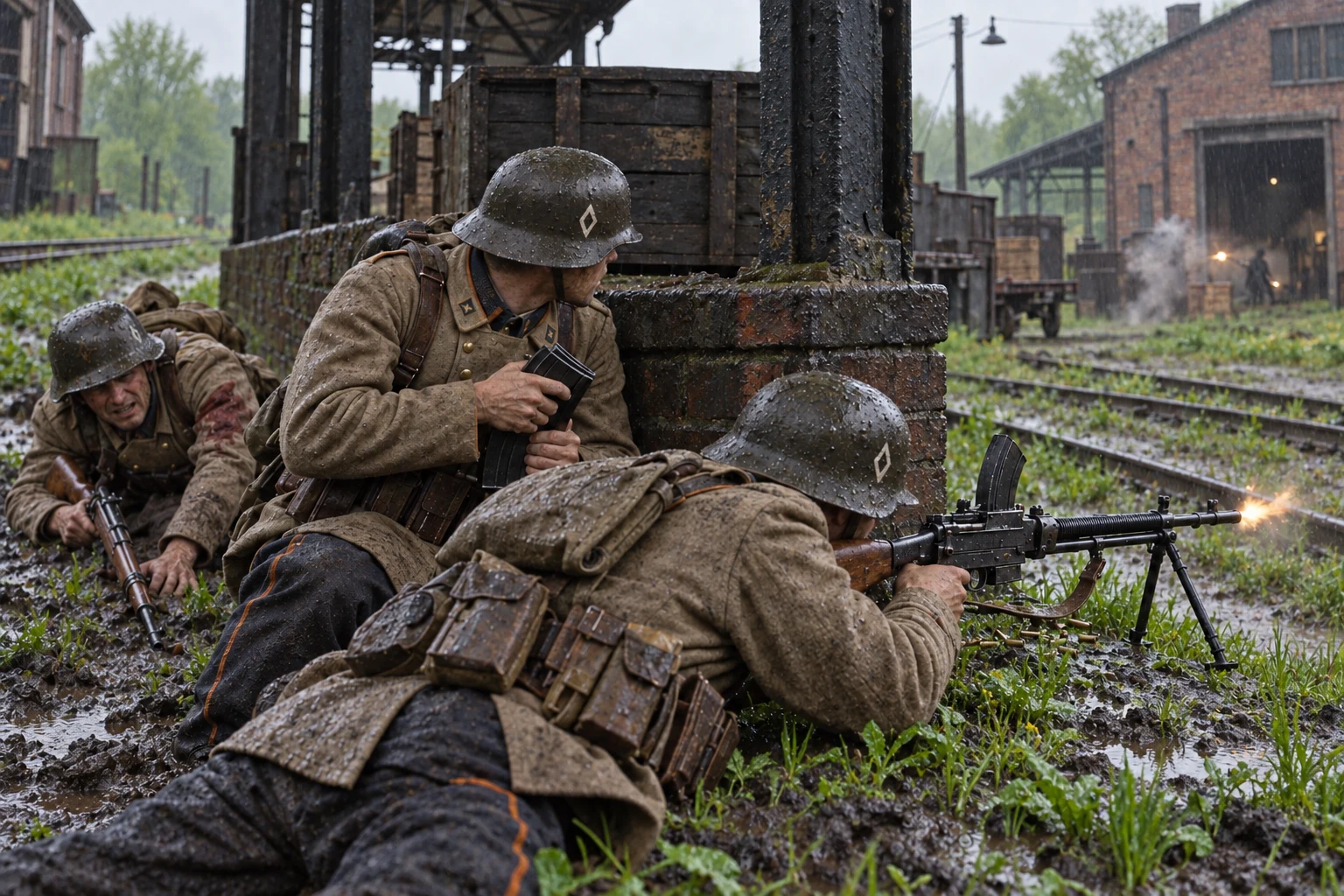
The sustained attack on June 2 drove Ravell's forward companies from exposed cottages into the railway works. That movement generated uncertainty in patrol reports because a change of position could resemble the collapse of a battalion. Hukular infantry reached an abandoned platform and then met resistance around the repair sheds. The apparent simplicity of a captured station dissolved into fighting for workshops, coal heaps and wagons of uncertain contents. Neither side could rely on a single view of the installation. The defenders' withdrawal from exposed housing had not ended resistance, and the attackers' arrival at the platform had not secured the working district. This opening stage establishes a pattern visible throughout the account: the names of objectives were clearer than their practical boundaries. Reports that converted a platform or building into a whole station created expectations that later movements could not safely meet.
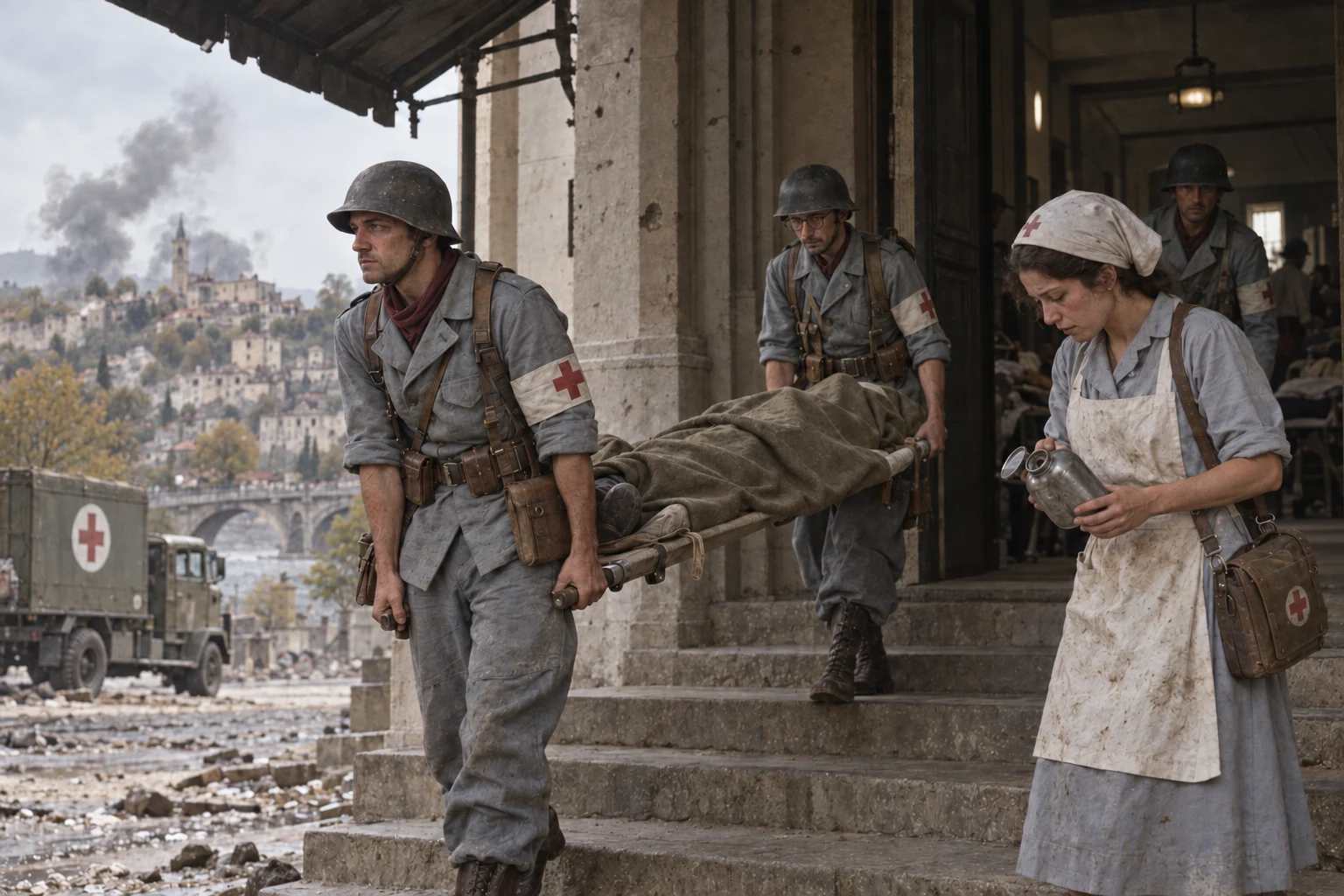
Fire in a loaded freight wagon led Daro to move the medical post west. The decision saved patients when the former dressing rooms were shelled later that afternoon, but it increased the distance and uncertainty of subsequent evacuation. A choice can be justified by the information available and still impose serious human costs. Here the longer carries and search for the relocated post delayed treatment. The account does not provide a casualty total or permit an estimate of deaths attributable to the move, so the consequence should remain qualitative. On June 4, reinforcement by rail encountered a damaged signal cabin; soldiers detrained along an embankment without the cranes expected for unloading. More rifles reached the defense, but the method of arrival absorbed time and labor into moving equipment. By June 7, the decision to abandon the eastern junction followed removal of the last recoverable medical and maintenance stores. The withdrawal acknowledged the limits of reinforcement rather than the worthlessness of what remained to defend.
The middle yards and the danger of an encouraging report
Hukular read the eastern withdrawal as evidence that the entire district was near collapse. In the middle yards, however, Ravell concentrated surviving companies that understood the surviving connections and misleading passages. Buildings and wreckage created a different environment from the sketches available to the attacking formations. Knowledge of how casualties could pass through the works supported the defense as much as knowledge of firing positions. This local advantage delayed the extension of Hukular's success. It did not reverse the invasion, replenish stores, or guarantee that the western connection could be held. Its importance lies in the distinction between delaying a stronger enemy and defeating that enemy's campaign. The account allows both conclusions together: Ravell's resistance was effective in particular intervals, and Hukular retained the capacity to continue pressing the system beyond those intervals.
Daro's reserve recovered a weighing house and adjoining yard on June 10. The success was real, but its report became a claim that the middle station had been cleared. A supply train was released before that claim could be corrected. Railway workers stopped the movement outside the threatened area and spent the night reversing vehicles. Their intervention shows how a favorable tactical result could become an operational danger when translated into an excessive description of access. Reversing a train demanded time and coordination that a map arrow could not represent. The workers preserved transport whose loss would have exceeded the value of the recovered building. There is no need to diminish the reserve's achievement to recognize this imbalance. The error lay in allowing a limited recovery to certify a broader route. The episode also makes civilian expertise visible as an independent check on military reporting, rather than as an auxiliary contribution made only after officers had determined every important fact.
Ammunition, inventories and unavailable reserves
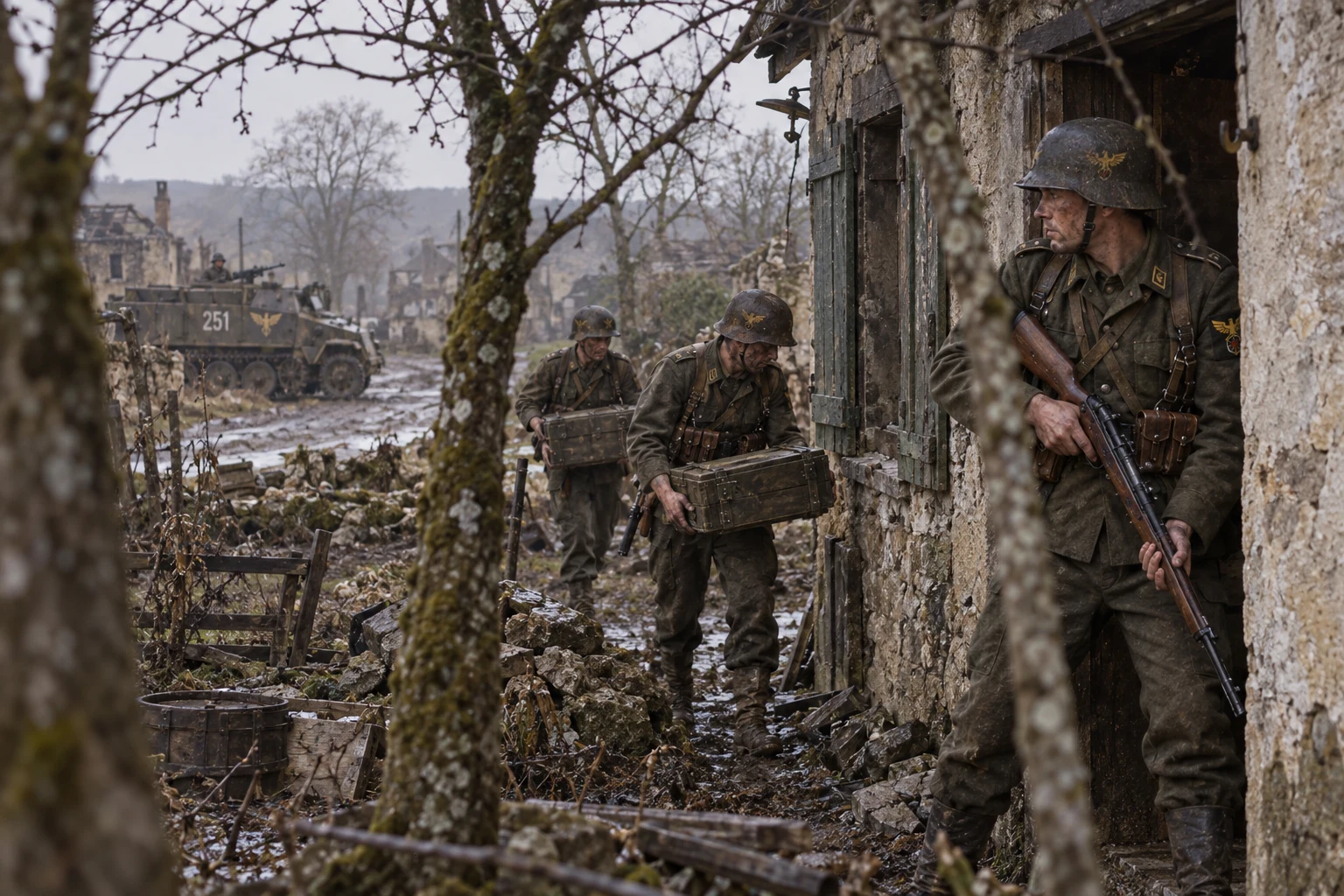
By June 13, some companies received mixed ammunition loads stripped from abandoned wagons. Possession of military stores did not mean possession of usable supply: a unit could hold shells incompatible with its weapons while lacking infantry cartridges. Handwritten inventories accompanying individual carts improved the connection between a consignment and a recipient's need. The method was slow, and it did not recreate the throughput of an intact railway. Yet it gave shortage a describable form. The distinction matters because an undifferentiated total of ammunition could encourage commanders to order activity unsupported by what troops could actually fire. In a damaged network, counting weight or wagons was insufficient. The remaining delivery system required knowledge of contents, compatibility and destination. Quartermasters were therefore repairing an information process at the same time that railway crews struggled to preserve a physical one.
Daro declined another counterattack because the forces listed as available included soldiers searching the yards for their equipment. Those men still belonged to the army, but that administrative fact did not establish their immediate readiness. Her decision connects the battle to the later Veylan counterstroke in Pavren, where Colonel Haren Vol would distinguish men present from men fit for the next movement. The comparison is analytical, not a claim that Daro transmitted a formal doctrine to Vol. Both inherited accounts expose a recurring reporting problem: a strength return could accurately count personnel and still mislead an operational decision. At the junctions, the available evidence supported preserving cohesion over another attempt to recover ground. To criticize that choice merely because Hukular ultimately captured the district would assume that a successful attack was available. The source supplies no such assurance and instead describes a force whose functioning was deteriorating despite its remaining numerical presence.
A broken coupling and the meaning of an absence
The separated brake crew offered another test of what a report could establish. Driver Pel Naret stated that a coupling had failed before enemy fire reached the line. An infantry officer suspected abandonment. Daro asked railway inspector Arda Sel to examine the equipment. Sel's identification of a fractured drawbar and blood changed the meaning of the crew's absence from possible misconduct to probable separation during mechanical failure. That finding redirected the search toward the disabled wagon. Two men were recovered alive before dawn, one having stayed beneath it with a wounded colleague. The source permits a clear causal claim here: technically informed inquiry changed the search order and assisted recovery. It does not support a larger claim that every accusation in the retreat received fair investigation or that a single inquiry cured distrust between military and railway organizations.
Information obtained after the recovery also revealed an interval of access on track presumed occupied. Daro removed a carriage of medical equipment before renewed observation closed the opportunity. The limited duration is central to the episode. Neither the recovery nor the movement demonstrated permanent control, and trying to repeat the journey after conditions changed would have mistaken a temporary opening for a restored service. Sel's report also prevented disciplinary action against workers whose absence had been interpreted without sufficient evidence. Its later preservation by the railway union placed a technical finding beside military orders. That archival survival gives the episode a second significance: cooperation under pressure depended on whether commanders tested accusations before turning them into punishment. The workers' agency appears in operating trains, correcting information and preserving an account of their treatment, all functions that a purely military description of the retreat would otherwise flatten.
Comparing two forms of transport loss
The order of the junctions' loss matters because it separated several military effects that could otherwise be merged. The eastern connection's abandonment followed evacuation of recoverable stores. Resistance in the middle yards then bought time through knowledge of altered passages, while the western connection joined the final defense to departure. A description limited to three successive captures would imply that each stage performed essentially the same task. In fact, the system's surviving purpose changed. By the final stage, restoration of routine eastern service was no longer a realistic description of what the defenders were doing. They were using what remained to preserve a force and material beyond the district. That distinction gives the withdrawal a measurable meaning within the available evidence, even though the source supplies no complete tonnage or evacuated-personnel ledger. The named functions and their changing locations demonstrate preserved capacity without supporting a numerical claim about its total.
The attacker also encountered two different kinds of transport loss. Destruction made track and works unusable, while Ravell's evacuation removed stores and skilled organization that could not necessarily be replaced by repairing masonry. Taking possession of a warehouse did not establish that its former cargo remained; occupying a railway office did not recreate the local knowledge of workers who had departed. The inherited account documents a repair burden but does not trace the district's subsequent reconstruction in enough detail to judge its duration. This limit should accompany any claim that Hukular's conquest paid for itself. Its immediate benefit was denial of Ravell's eastern system and the acquisition of ground for continued advance. Its longer usefulness required work the battle itself had complicated. In parallel, Ravell's preserved diagrams and people remained useful after loss of the buildings in which they had worked. Material possession and institutional continuity diverged on both sides, which is why the district's operational significance extended beyond the flag placed over its last junction.
The western junction and the boundary of a successful delay
The final connection served simultaneously as defensive position and evacuation point. Retreating troops, hospital wagons and civilians needed the same constrained space. The separate schoolyard assembly area reduced the danger of families waiting directly beside military loading tracks, but it could not resolve missing relatives or supply unlimited transport. Some residents refused departure while relatives remained unaccounted for. That refusal should not be treated as irrational disobedience. The authorities were offering a route whose social cost differed between households, and a departure list could not certify that a family was reunited. On June 16, Hukular resumed pressure. Ravell's rear companies held long enough for organized formations to withdraw, while scattered groups were cut off in the industrial district. The outcome included both preserved military capacity and people who did not escape. A claim that the evacuation was successful requires that qualification.
On June 18, the last junction passed into Hukular's control. Daro reached another command post with exhausted officers and clerks carrying the railway availability sheets. The invasion had been delayed, not stopped. Ravell retained some of its army and stores but lost the transport system that had supported defense in the east; Hukular gained damaged infrastructure and obligations to repair it. The chronology leads toward Ravessa's fall in September, without making that later defeat inevitable at every moment of June. The preserved sheets support a more exact explanation than a simple story of overwhelming numbers. They reveal the divergence between track existing on paper, track usable during an interval, and track able to sustain a continuing operation. This Chronicle interprets that divergence from the retained fictional account. It supplies no new casualty totals, no invented orders, and no claim that military evacuation protected civilians from the occupation that followed.