The fall of Ravell's capital
September 1–19, 1208 · Ravell, Volara · Ravell against Hukular
A capital with two clocks
Ravessa, Ravell's capital, entered September measuring time by military reports and civilian departure lists. The army wanted to know when outer positions would become untenable. The government wanted to know how long ministries could continue issuing orders from their own buildings. Neither question had a reliable answer. Telephone service persisted in some neighborhoods already threatened by shellfire, while intact districts lost contact because a switching station elsewhere had failed.
Prime Minister Sera Danic initially remained in the capital, arguing that departure before the field command requested it might turn a difficult defense into panic. Her presence reassured some residents and encouraged others to postpone evacuation. The army's urban command, led here by General Levan Oset, wanted a definite decision so that transport reserved for ministries could be reassigned. Their dispute concerned the consequences of timing, not whether the city could be defended indefinitely.
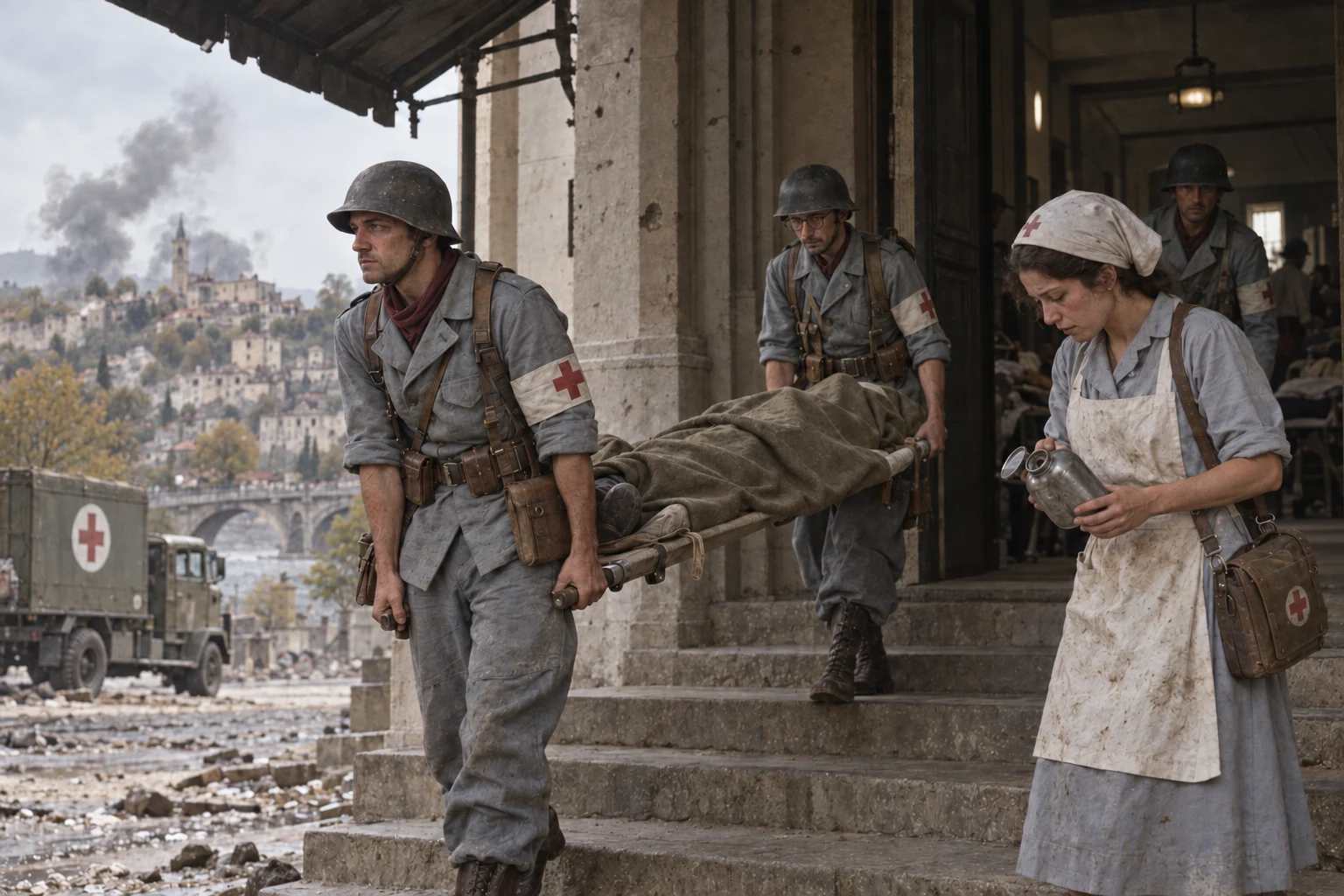
Hukular's formations approached a capital already deprived of much of its eastern transport. Their artillery could disrupt services without occupying the districts dependent on them. Water pressure fell unevenly. A hospital on comparatively quiet streets received patients from bombarded neighborhoods until its own reserve tanks began running low. Medical officials requested transport for those unable to walk, competing with requests to remove archives and machine tools.
September 6–11: The outer districts
The first major urban fighting developed around the freight approaches. Ravell's defenders occupied masonry buildings that offered protection from fragments but became dangerous when fire blocked their exits. Some units moved too late because commanders interpreted continued telephone contact as proof that withdrawal routes remained open. Other units withdrew early after losing contact, exposing adjacent positions. Oset spent much of September 7 reconstructing a front from reports that described different hours.
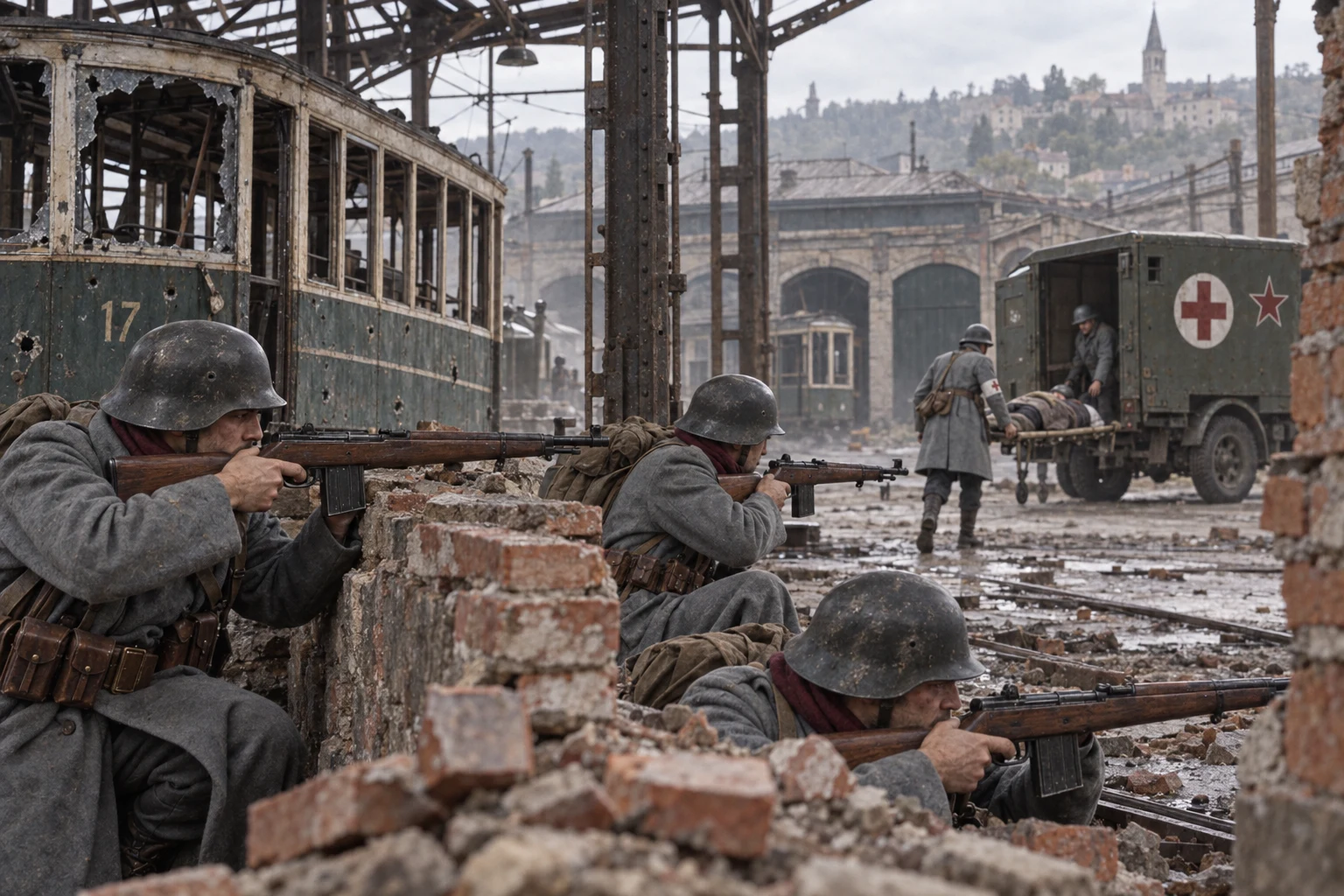
At a tram depot, Captain Mira Sellen held a mixed force of reservists and railway guards. Their task was to delay entry into the inner district while civilian traffic passed behind them. The depot contained disabled cars that provided cover and obstructed movement in equal measure. When a neighboring unit withdrew, Sellen's company stayed because its written order had not changed. A dispatch rider eventually reached her with authority to retire, after two earlier messengers had failed to return.
The withdrawal brought defenders and civilians onto the same streets. Municipal workers tried to separate carts from military vehicles at intersections, but shelling repeatedly displaced the traffic. One school basement became an improvised collection point for children separated from adults. Its teacher maintained a register on the back of attendance sheets. The children were later moved again, and the register became more valuable than the building that had briefly sheltered them.
September 12–16: A narrowing defense
Oset shortened the defense rather than trying to hold every municipal boundary. That decision surrendered neighborhoods whose residents had been promised protection. Officers delivering the orders encountered anger from local officials and soldiers whose families remained nearby. The command arranged limited collection parties, but these could not locate everyone. Some defenders left their assigned positions to search for relatives; others stayed and learned only later what had happened behind them.
Hukular's advance was uneven. Infantry entering one district met abandoned barricades, while formations a short distance away fought for successive buildings. The contrast encouraged exaggerated claims from commanders who believed their own progress represented the whole city. Reserves ordered toward an apparent opening found roads blocked by damaged vehicles and troops awaiting instructions. The capital's fall was approaching, but its final stages remained difficult to coordinate even for the stronger side.
On September 15, a central exchange ceased functioning. Messages traveled through substitute circuits and couriers. Danic's government could still communicate with outside representatives, but local ministries increasingly learned of military decisions after they had begun. Oset advised evacuation of the remaining national leadership. The air departure prepared for a small governmental party could not carry the army or the city's population, and no one responsible for it could plausibly promise otherwise.
The municipal survey plans
On September 13, Sellen's surviving company occupied the municipal survey office briefly while the next defensive line formed. The office held property plans on rollers, showing courtyards and alleys absent from the army's smaller maps. Surveyor Elat Ren remained with two clerks and helped officers distinguish a covered passage from a wall that merely appeared open on an old plan. Their corrections allowed a group of wounded to leave through municipal property without entering the street where the company had suffered casualties earlier.
The clerks could not take every plan. They selected the sheets covering the remaining withdrawal district, folded them despite the damage this would cause, and handed duplicates to separate messengers. One messenger reached Oset's headquarters; another was captured. The surviving sheets therefore improved the defense while similar information probably reached the attackers. The incident offered no clean division between a clever advantage and a permanent secret.
Before leaving, Sellen found a payroll drawer containing money owed to municipal laborers. She recorded its contents with Ren and transferred it to the departing civil authority rather than distributing it among troops who had also gone unpaid. The choice preserved a civilian obligation at a moment when military need seemed capable of swallowing every other claim. Ren later identified evacuated workers through that payroll, connecting a brief military occupation of an office with the capital's surviving municipal administration abroad.
September 17–19: The government leaves
Danic authorized removal of the national seals, essential records, and a limited staff. Clerks argued over which files proved obligations to displaced citizens and which could be reconstructed later. Several departments sent duplicate summaries by different means. The effort was incomplete, but it preserved enough administrative continuity for the government abroad to recognize personnel, debts, and claims without pretending it had escaped with an intact state apparatus.
The final governmental air evacuation took Danic toward Hestunia. Surviving army formations pursued their separate withdrawal toward Serin, where organized resistance would continue. Oset's urban command divided into rear guards and retreating groups. Some positions received the withdrawal order in time; others fought until ammunition or access failed. Prisoners included both wounded soldiers who could not be moved and intact parties whose route had closed.
On September 19, Hukular controlled the capital's principal governmental district. Occupation troops found empty offices beside rooms still full of civilian petitioners. The seizure gave the invader a major political victory without ending Ravell's belligerency. Danic's government survived abroad, and the field army's remaining strength was concentrated elsewhere. For residents, the immediate change was more tangible: new movement restrictions, unfamiliar authorities, missing relatives, and the discovery that surviving the battle did not mean the city's ordeal had ended.
Original illustrations for this source record
Original archive artwork and captions are preserved. Dates, labels and claims printed within inherited images belong to the previous edition; the revised text governs the current history.