An invasion built around usable ground
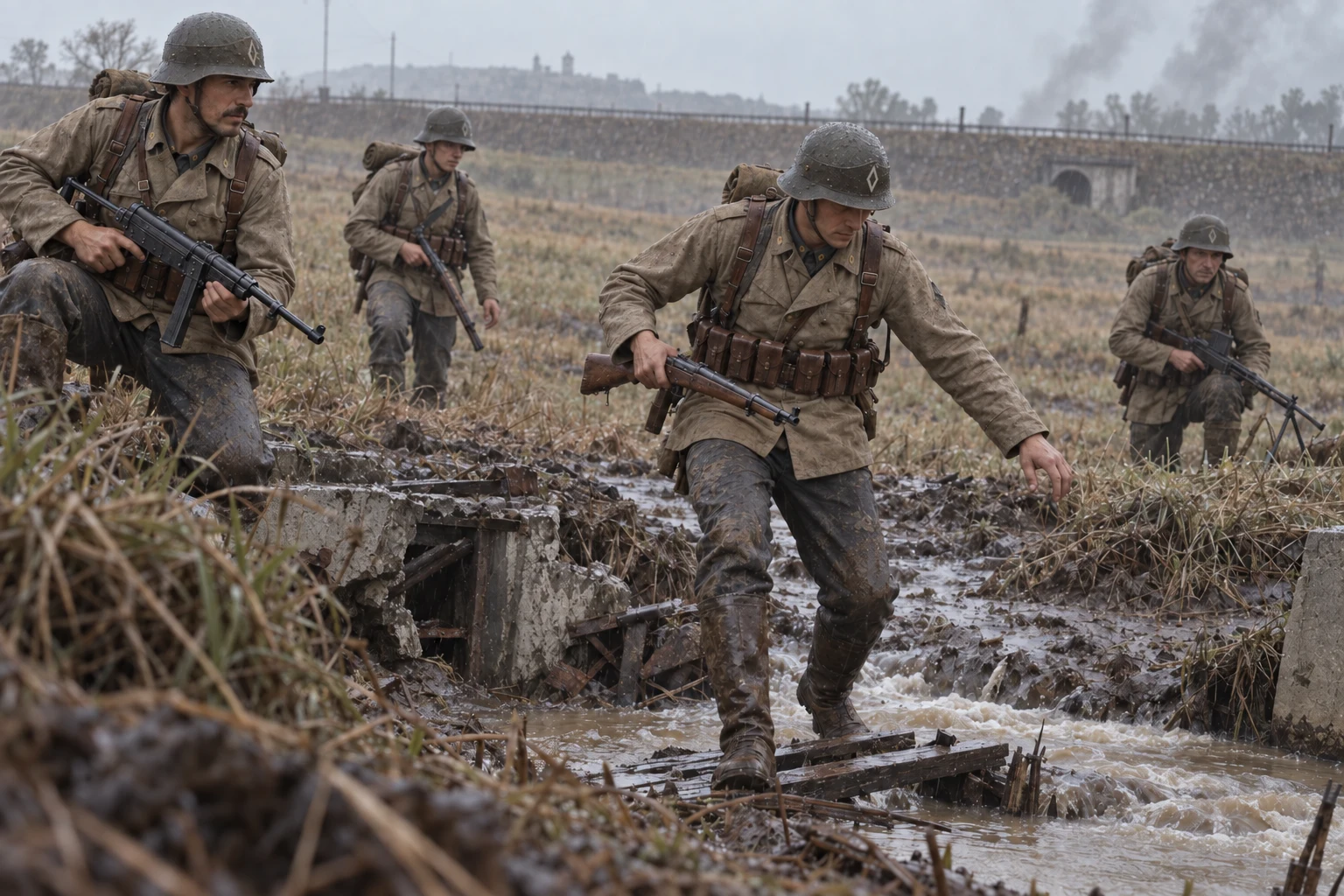
The Ravell and Pavren campaigns formed the first extended test of Hukular's ability to turn political aggression into durable military movement. The invasion began on May 14, 1208. Its opening success came through the conversion of particular installations into working reception points, rather than through an unexplained advance across a continent. Marshal Ilyan Rauk supplied the organizing system; General Oskar Ren commanded the Hukular 6th Northern Army on the ground. Together their operations revealed an important distinction. An army might possess a railway on its situation map while lacking the unloading space, water, repairs and protected approaches needed to use it.
Talzar Orvek II's imperial policy and Darek Voss's coercive administration gave this military effort its purpose. Talzar means emperor; it is a title, not another commander competing with Orvek. Efficient movement served an invasion of an independent country. The operational competence of the invaders therefore belongs in the account alongside the disruption and violence of occupation. Ravell's defenders also acted within a continuing national purpose. Oren Telk's recurring railway and field defense sought delays, preserved troops and protected mobilization records that could support resistance after the frontier was lost.
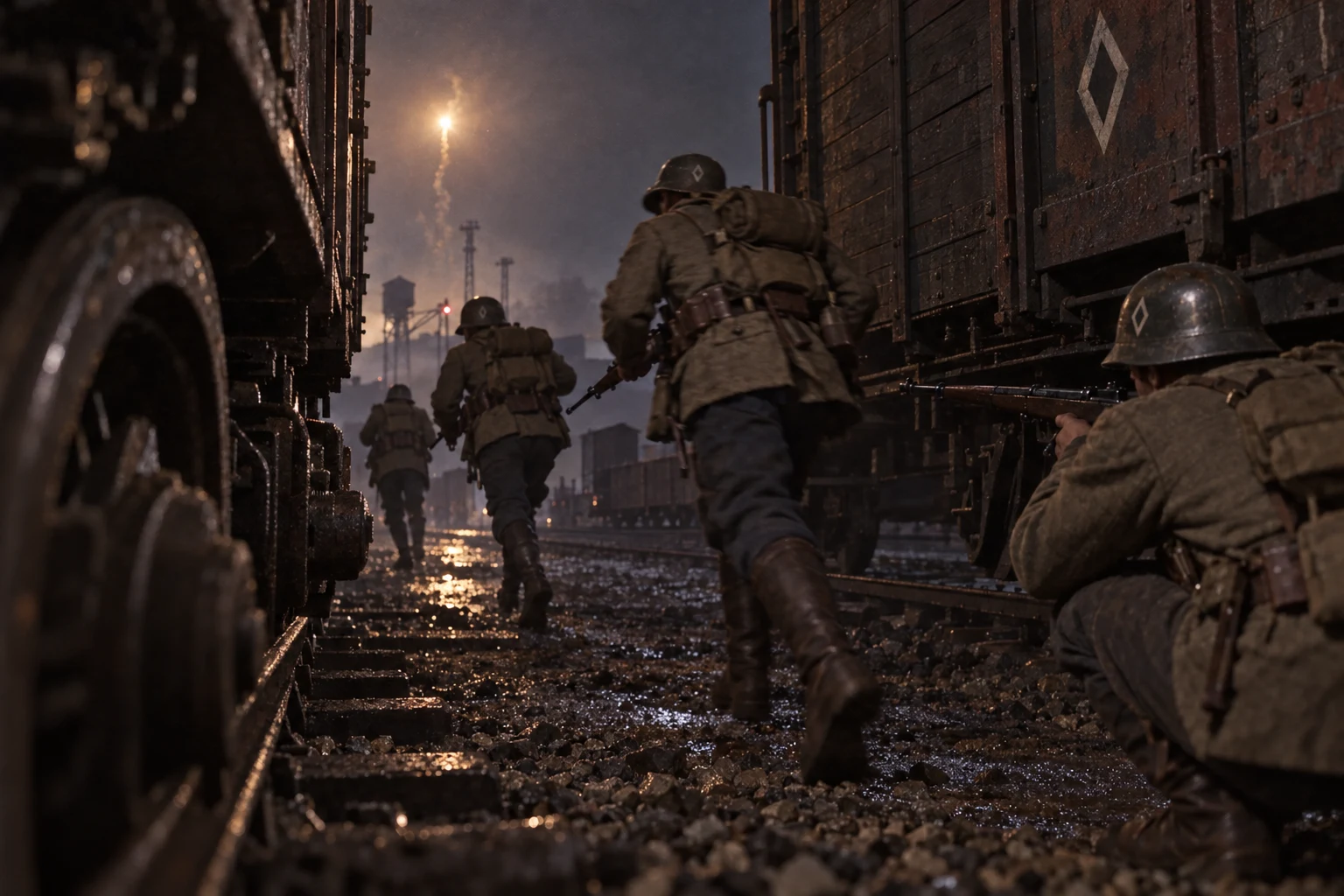
Pelren Customs Spur established the campaign's first dependable unloading point only after the captured yard had been repaired. Telk's guards withdrew with mobilization registers; Ren obtained an installation whose tactical possession preceded its logistical usefulness. This sequence explains the next series of operations. A forward reserve of stores made further movement possible, but that reserve required secure crossings and routes beyond the yard. The invader's growing reach remained dependent on existing frontier approaches. No battle in this group supplied automatic rights of transit through an unrelated nation or removed the need to guard the route behind the advancing formations.
River access, water and the capital's approach
The contest at Velsen Chalk Ford in late May and early June joined ground fighting to a specific engineering result: the timber ramp admitted the ammunition column. Ardel Telephone Ridge then separated the frontier reserve from the positions it sought to reinforce. These victories worked on different parts of Ravell's defense. One improved delivery to the Hukular line; the other impaired timely reinforcement of the opposing line. Their combined significance lay in the widening disparity between what each command could bring to threatened ground. The defenders' loss of contact did not imply that they had ceased to understand or contest the invasion.
At Mossen Ferry Steps, the secured landing allowed ammunition to reach an upstream detachment without a return to the frontier. Talvek Orchard Enclosures exposed the flank of the next road position. Beran Reservoir Cut addressed an equally concrete limit: control of the outlet ended a local water shortage and supported movement across the upland. These were mutually supporting gains, although none made every intervening road safe or every formation ready. Men protecting a ferry, carrying water or guarding the reservoir were men unavailable for an immediate assault. Ren's success rested on accepting those assignments as part of campaigning strength.
Ilva Korr's field engineering and Marek Dren's railway coordination recur because their work connected battlefield possession to subsequent operations. Korr's trafficable approaches mattered at crossings and damaged works. Dren dealt with receiving capacity, repair loads and the separation of freight from evacuation. Their functions should not be confused with Ren's field command. The archive offers a campaigning system with distinct responsibilities. It also offers a basis for asking how that system sustained coercive rule. Knowing how a train moved is relevant both to explaining a military advance and to tracing responsibility for what an occupying authority required it to carry.
Ravessa falls; Ravell continues
Dalen Brick Kilns supplied covered assembly space in August. Sovren Quarry Stair denied the defenders observation of the road and let heavier stores move nearer Ravessa. Luren Eastern Spur narrowed the capital's supply alternatives during September. Read together, these actions show preparation for a capital campaign through shelter, observation and distribution. They should be read beside the major-battle account of Ravessa's fall on September 19, 1208. Luren's loss contributed to the capital's predicament; it did not by itself capture the capital, end the government or resolve the war.
After Ravessa fell, Naven Seed Depot sustained the autumn deployment while missing allocation books preserved evidence of civilian ownership. Edrin Forest Tracks reopened through traffic, but organized resistance continued in the deeper woods. Orsen Winter Viaduct secured its approach before heavier weather in December. These consolidation battles exposed the difference between occupying a capital and ending a country's participation in a coalition. Ravell's recognized government continued abroad under Sera Danic. Surviving soldiers, records and local knowledge remained resources of defense. Rauk had established the means of a longer occupation without obtaining the short war his system was supposed to deliver.
Civilian records provide a second chronology of these same gains. At Pelren, relatives searched customs books for missing family members, and teachers and municipal employees copied entries under increasing restriction. At Naven, the allocation books mattered because military stock-taking could obscure the prior claims of households and farmers. These acts neither erased displacement nor guaranteed restitution. They preserved names, destinations and ownership claims that an occupation return could omit. A synthesis of the campaign must follow that continuity as carefully as the continuity of Ren's army, because the consequences of each captured receiving point extended beyond the next military delivery.
The corridor becomes a campaign
The Pavren corridor offensive began in January 1209 and continued through August 1214. Its twenty-two linked engagements should not be mistaken for one uninterrupted pursuit. Kelmor Canal Gate provided a dry approach; Ravenk Freight Bend shifted Allied unloading farther from the front; Mavrel Wagon Causeway joined two Hukular supply districts. The invader was enlarging and diversifying a support network. That reduced dependence on individual routes while increasing the burden of protecting the whole establishment. Siva Mern's Pavren command opposed this process through field defense and counterattack, preserving a local and later Allied military identity despite successive losses.
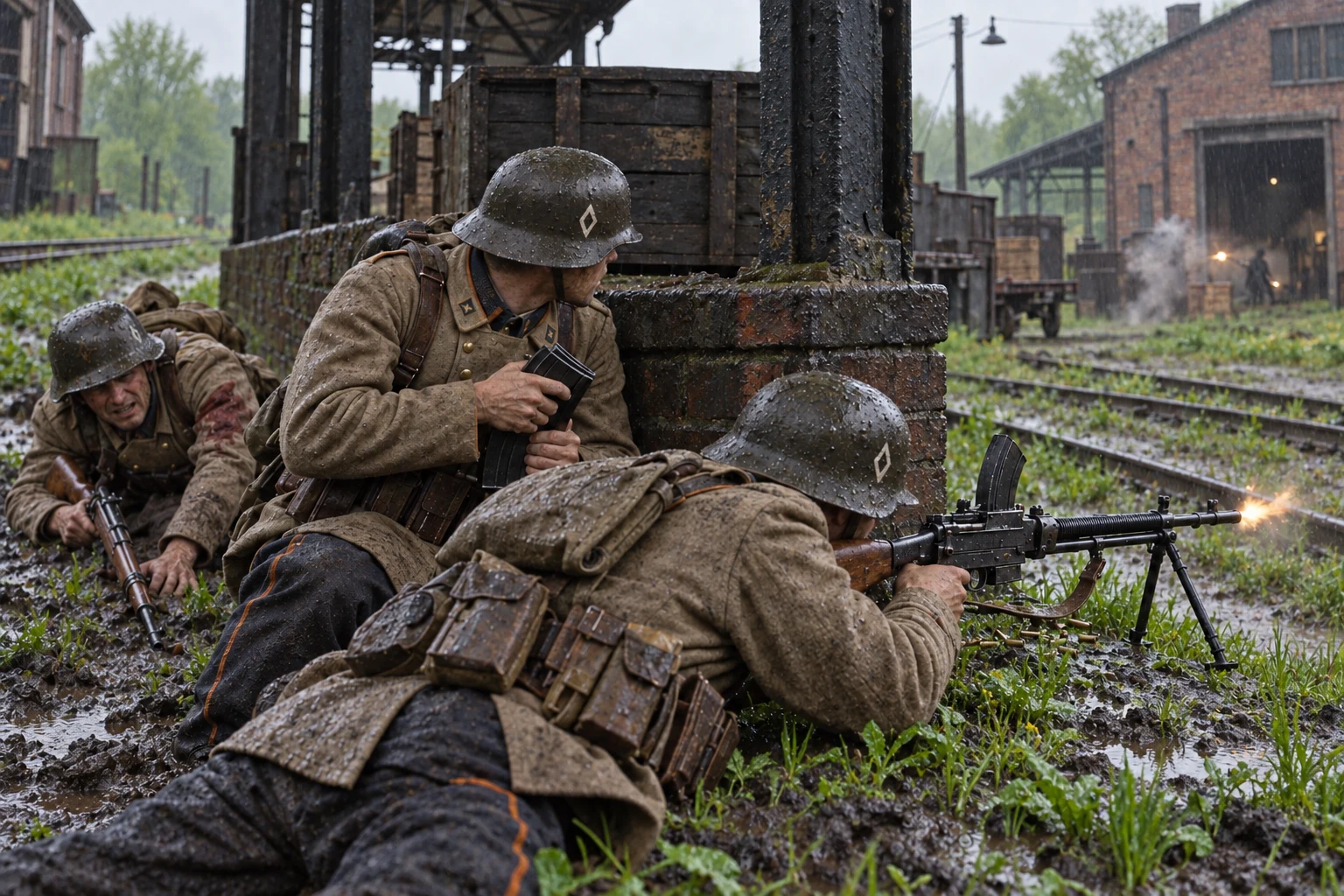
Halen Glassworks Corner released a road for heavy guns after the courtyards were isolated. At Vorsk Meadow Counterstroke, the defense attempted to recover the principal crossing, forcing Hukular to fight to retain what it already held. Korsen Loading Annex then yielded usable machine beds and electrical fittings as the Allied repair service moved west. This pairing is central to the campaign's causality. An attacker could improve its own repair cycle while lengthening the defender's. The resulting advantage was cumulative, yet it remained tied to the actual machinery, skilled work and routes available at each location.
Winter did not suspend the transport contest. Varrel Winter Locks shortened the exposed ammunition journey after reinforcement arrived over marked ice. Elvena Sluice Apron allowed the bank to be restored and heavier guns brought into a selected sector. Kestrin Culvert Battle denied the reserve an immediate route back to the forward line. Koren Clay Basin widened the corridor while the recovery of disabled vehicles helped preserve the attacking force. Anton Veyr's combined-arms work belongs in this setting: ready vehicles and supported movement mattered more than paper totals or a claim that one recovered ridge had opened all Volara.
Denial and repair, 1211–1213
Taren Embankment Spur increased the freight capacity available to Ren's army in early 1211. Velran Orchard Wall reopened an inner road onto the flank of a fork, while Hesven Battery Hollow deprived strongpoints of their common support. The subsequent Halen Canal Relief ended when Hukular retook the gatehouse and isolated the shuttle, though substantial defending forces escaped. Here the attacking system's coherence faced an active opponent trying to restore it in reverse: reopen a link, support a threatened position, recover freedom of movement. The failure of that relief was a battlefield defeat, not proof that resistance had become purposeless.
Tovel Underpass divided the local defense in 1212 and furnished a sheltered route across an exposed road. Paven Field Oven Line forced the defense away from positions whose food distribution had become insecure. Nestor Cable Saddle delayed reserve orders after the runner route was lost. These battles worked at the junction of sustenance, communication and protected movement. Nera Solk's relay and intelligence responsibilities recur where the problem was reliable contact, while Dren appears where distribution itself was at issue. Their separate roles help explain why the campaign could repeat success without requiring an all-purpose commander personally directing every technical task.
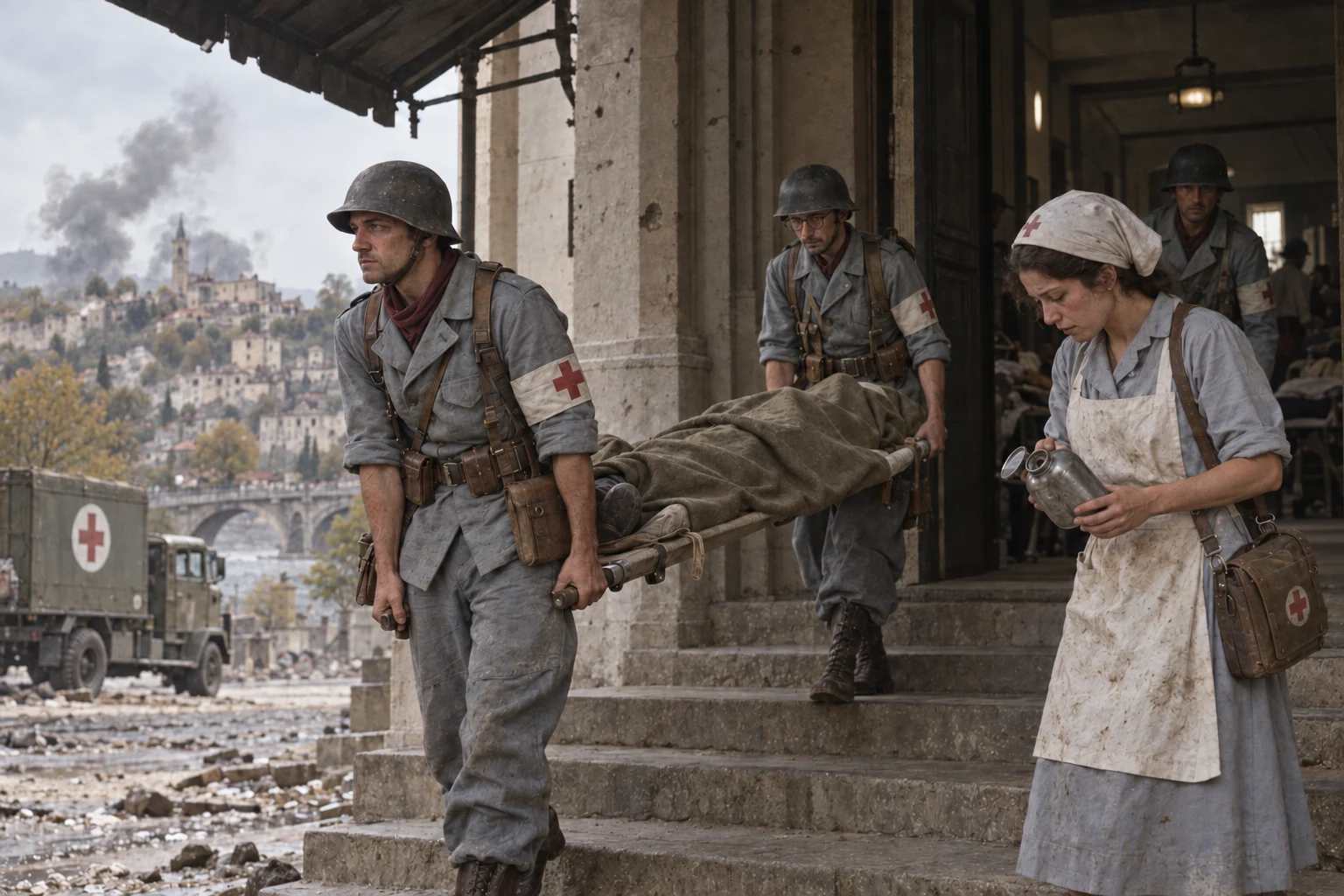
Olrek Switch Cabin, Brenel Hill Magazine and Tovek Factory Courtyard show the same system under the distinct conditions of 1213. The first redirected freight facilities; the second replenished local guns while distant depots caught up; the third split the defense through control of a passage and courtyard. Tovek also included a negotiated interval for wounded people to leave. That interval is part of the operational account, because it altered immediate movement, and part of the human account, because the wounded retained claims on both commands. It should not be inflated into a broader assertion that the invading state's occupation policy had become humane.
Limits of tactical recovery
Larek Winter Yard in January 1214 was a Hukular recovery of the freight apron within larger Allied gains. The qualification changes its meaning. The victors restricted the immediate scope of an opposing advance; they did not erase that advance or reverse every loss beyond the yard. Heskar Cable Annex in August enabled recovery of two forward positions before an Allied reserve could intervene. These successes prolonged pressure in the corridor while confirming that the defense could still gain ground, force reactions and threaten the invader's timing. A credible campaign history retains both facts rather than smoothing the record into inevitable conquest.
The campaign's civilian burden also accumulated. A longer military receiving journey could mean less transport for household provisions, evacuation or a missing relative. Requisition of a depot did not transfer rightful ownership of the goods inside it. Residents' preservation of registers and allocation books supplied evidence of those claims, while the continued existence of Pavren formations and Ravell's exile government supplied institutional continuity. The invading army's competence created conditions in which coercive administration could reach farther. Explaining that competence therefore increases, rather than diminishes, the need to identify the political and command structures responsible for occupation and abuse.
Together the Ravell and early Pavren registers contain thirty-four revised engagements. Their sequence belongs beside the year accounts from 1208 through 1214 and the major syntheses of the frontier, Ravessa and Pavren's counterstroke. They show an invasion becoming a network of reception, engineering, reserve and repair arrangements. They also show defenders converting survival into a continuing coalition war. Ren's army could capture installations faster than it could extinguish governments, loyalties and resistance. That unresolved disparity prepared the conditions of the later northern offensive and the change from Rauk's national operational leadership to Kast's, rather than concluding the history in a single capital's fall.