A war already in progress
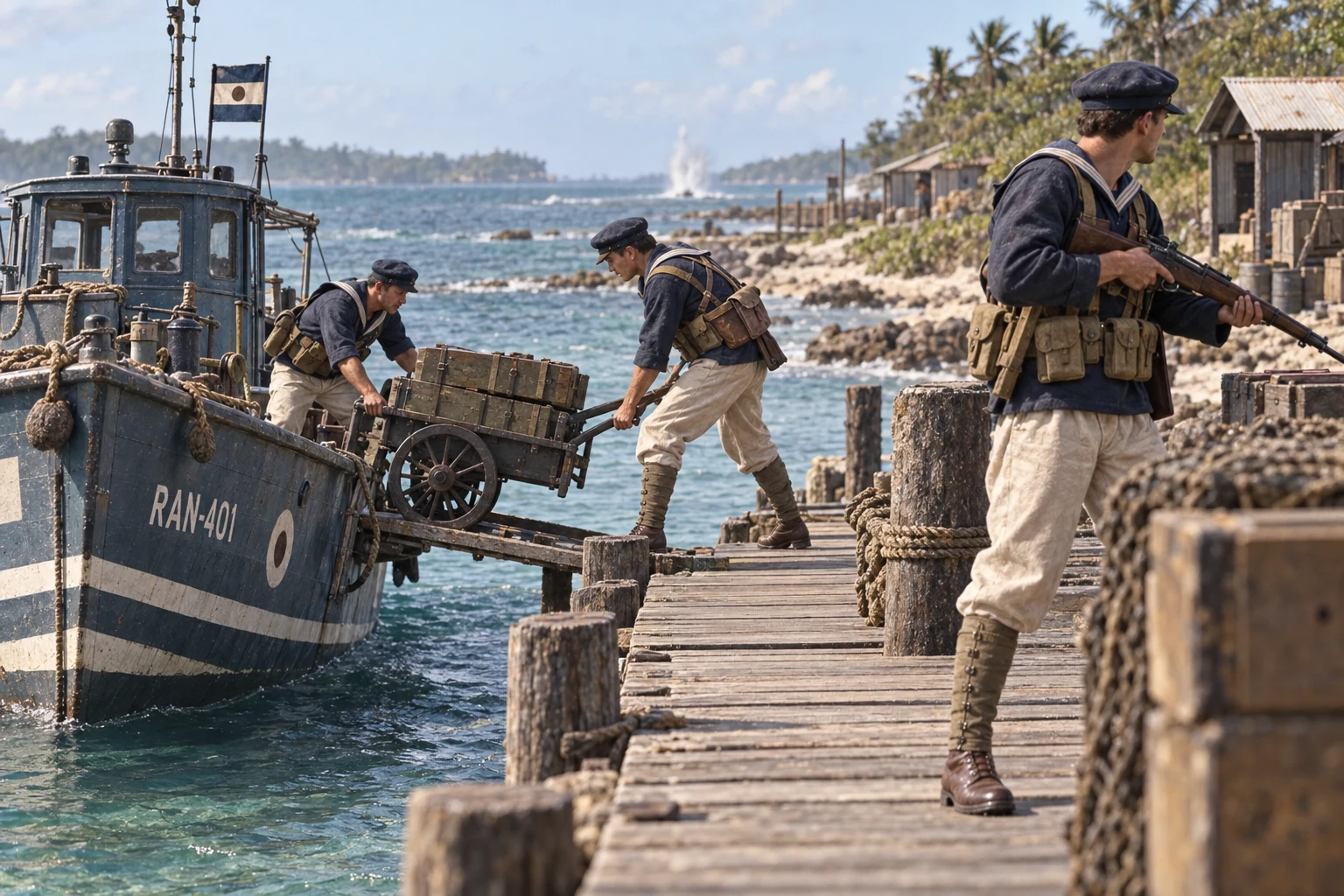
The Ranuvan relief battle began on October 2, 1225, within a central Grand Isles war that Silvia had not originated. Maliko’s Axis participation had made the region contested since 1210. Ranuva had maintained resistance through maritime support and local fighting for years before the Silvian reinforcements arrived. That chronology matters to the political and operational relationship between the partners. The larger expedition was joining an existing Allied system, not entering an empty theater where its arrival created the first meaningful defense.
The immediate objective was to reduce pressure on a receiving and defensive district. It did not promise settlement of the whole central-island war. This definition gave the operation a practical measure of success: the threatened system had to resume more dependable work. A recovered road that could not carry deliveries, patients and reception traffic would be an incomplete result. Conversely, retaining some contested surroundings did not necessarily prevent relief if the district’s principal functions could operate under continuing protection.
Silvian formations brought substantial strength and experience increasingly shaped by earlier amphibious fighting. Their hosts possessed more detailed knowledge of the district and the arrangements supporting its population. Neither contribution replaced the other. Numerical reinforcement could not supply a current map of buildings repaired repeatedly, while local familiarity could not provide all the additional capacity needed to resist pressure. The operation’s central problem was how to connect those contributions without making the smaller ally’s institutions disappear beneath the larger force’s priorities.
Tarel defines a relief that includes civilians
General Sena Tarel required the plan to preserve civilian reception facilities. Displaced people shared the district with military stores and movement. If the offensive shut the receiving system while securing an approach, it could exchange one crisis for another. The requirement therefore changed the operation’s design before combat began. Civilian needs were not a charitable addition to be considered once the military objective had been achieved; they helped define the objective’s usefulness.
Silvian officers accepted a joint schedule reserving access for medical and civilian traffic during increased military movement. The arrangement limited immediate military convenience. It also made competing demands explicit, allowing the allies to judge whether relief was reaching the people whose vulnerability justified part of the operation. Such cooperation should not be presented as painless agreement. Scheduling scarce access meant that legitimate claims could not all be met at the preferred moment, and commanders had to accept real constraints on their own movements.
The Loran receiving district contained coastal facilities connected to inland defensive positions. Repeated repairs left records that disagreed with the surviving structures. Joint surveys found shelter absent from military maps and damage hidden by optimistic returns. Checking those differences changed troop allocation before October 2. The episode explains why administrative evidence needed verification on the ground. A system officially described as available could be less capable than its reported capacity, while overlooked civilian structures could possess a usefulness military planning had missed.
Survey work also created a common basis for later decisions. Partners who began with different records could otherwise misunderstand whether a building, route or receiving facility was functioning. Comparing plans with structures did not produce perfect knowledge of the future battle. It gave the coalition an agreed description from which corrections could be made. The operation would still face damage and uncertainty, but discrepancies no longer had to be interpreted immediately as one ally concealing information or refusing to cooperate.
October 2–12: Reinforcement meets an existing defense
The opening movement reduced pressure on several Ranuvan positions and strengthened contact with Silvian support. Defenders short of reserves naturally saw arriving formations as a means of addressing immediate dangers. Silvian commanders resisted committing units before their supporting equipment arrived. The argument reflected different urgent needs rather than an automatic division between desperate local troops and unhelpful outsiders. Both sides had to establish what the newcomers could do at once and what required a more complete formation.
The agreed solution identified tasks by actual availability. This mattered because a formation’s arrival in the theater did not mean every service supporting it was ready at the threatened point. Sending incompletely equipped units into tasks that required those services could enlarge the crisis. Refusing every task until all concentration was complete could leave existing defenders without help. Distinguishing immediate local duties from operations needing full support made reinforcement more useful than either blanket assumption would have allowed.
Axis reactions contested recently secured positions. Maliko units used familiarity with parts of the local terrain, while Kelonese support added pressure. The opposing system could coordinate resistance and still experience delays and competing priorities. Recognizing both qualities prevents its actions becoming an undifferentiated threat possessing every available asset everywhere. The Allied force faced capable opponents whose local choices were also shaped by the practical limits of a coalition at war.
The repair compound becomes several battles
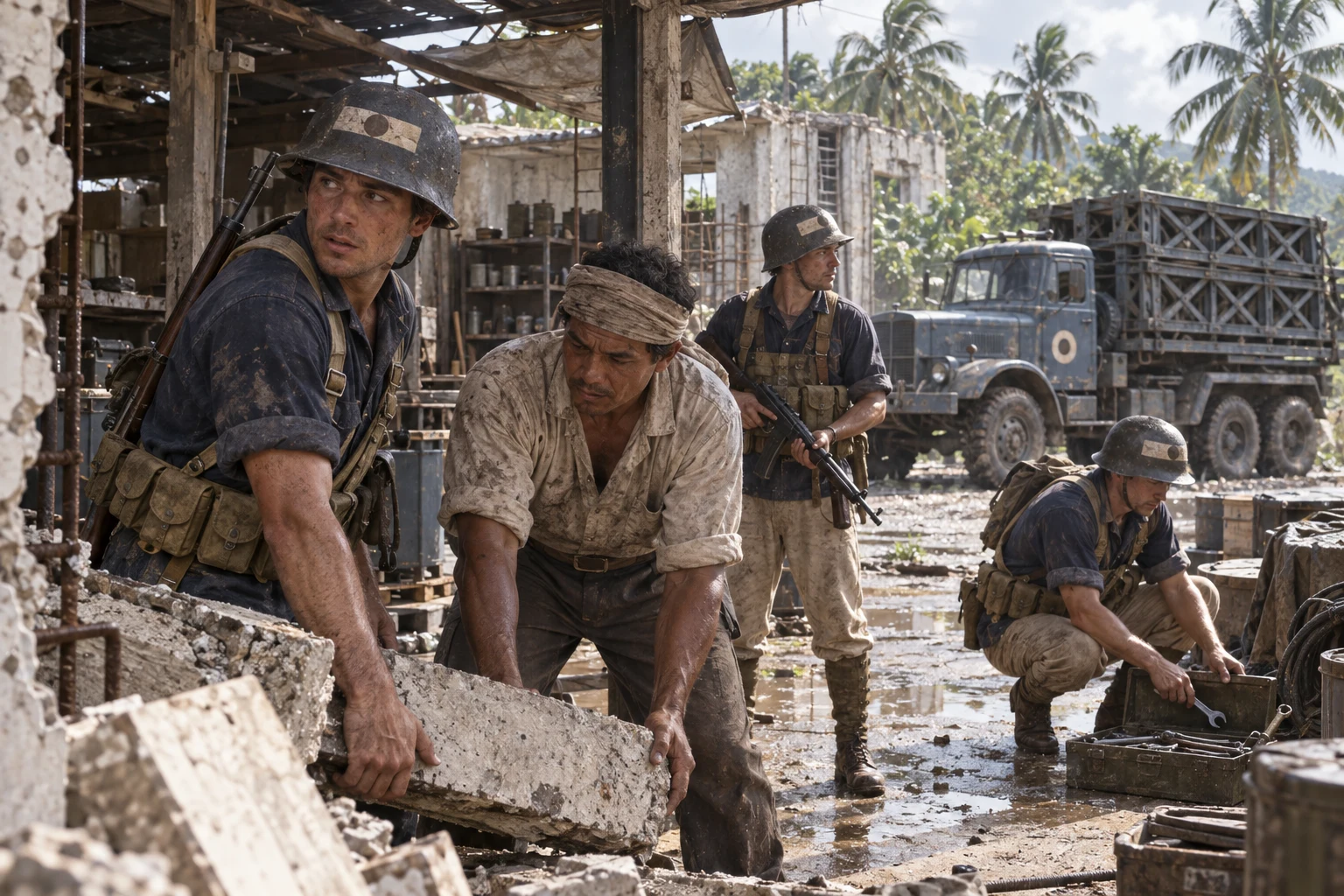
A vehicle repair compound controlled access between receiving facilities and the inland defense. Its operational importance therefore lay in movement through it, rather than its buildings’ symbolic ownership. Ranuvan troops held part while Silvian units recovered an adjoining district. A summary declaring that the compound was captured or lost would conceal the separate situations within it. Liaison personnel had to establish which entrances and structures each formation could actually use.
The compound illustrates how apparently clear place names could obscure cooperation. One headquarters could report progress using a workshop’s civilian name while another used a map number. Without reconciliation, the reports might identify two objectives where there was only one, or imply common control where different entrances remained contested. Correcting that picture affected relief and support as well as combat. Orders needed to bring troops to the right people and approaches, not simply to a label familiar to their own staff.
This was a problem of shared knowledge under damage. A building could remain standing while its access changed, and a compound could continue appearing on maps after some of its former functions ceased. The joint account of possession helped prevent assumptions about a complete usable facility. It also allowed each ally’s knowledge to enter the common command picture. The practical result was cooperation that recognized local understanding as a resource rather than merely translating all reports into the larger army’s preferred terminology.
October 13–27: A pause with a cost
Heavy rain, accumulating damage and exhausted formations extended the battle beyond early public expectations. Tarel opposed abandoning the effort because pressure on the district would immediately return. Silvian commanders sought a pause to reorganize support. Their compromise maintained gains while delaying further attacks until the force could sustain them. This was neither a complete halt to responsibility nor an uninterrupted drive. It was a decision about which commitments could continue while the means of further advance were restored.
The pause exposed weaknesses in the traffic schedule. Civilian medical vehicles arrived with emergencies that could not wait for designated intervals. Local exceptions solved immediate queues and sometimes caused congestion farther along the route. The coalition established a joint control post to make decisions across the movement system. Its significance lay in recognizing that separate sensible actions could produce an unsatisfactory overall result when no authority considered how one local change affected another.
Maintaining civilian access did not become unnecessary merely because the original schedule failed under emergency conditions. The schedule had identified a real requirement; the battle revealed that its execution needed adaptation. Treating those emergencies as proof that civilians should be excluded would have contradicted the agreed purpose of relief. The revised control arrangement instead tried to preserve that purpose with a more current understanding of movement and the ability to coordinate exceptions.
The third week's renewed fighting brought an improvement purchased through further Allied losses. In one Silvian battalion, attrition among experienced junior leaders outpaced the replacements' acquisition of local knowledge. Ranuvan officers helped preserve continuity through shared knowledge and liaison personnel. This assistance was particularly important because replacement by headcount did not reproduce the lost leaders’ understanding. The partnership’s effectiveness depended on admitting that dependence rather than insisting that each national formation remain self-sufficient in the face of attrition.
Building C and Eastern Coach Works
The disputed compound buildings received temporary letters for operational messages after confusion between Ranuvan names and Silvian numbers. Tarel objected to permanent renaming. The compromise used both forms at entrances while limiting the letters to wartime coordination. This solution addressed an immediate command problem without suggesting that reinforcement entitled the larger ally to redefine the district’s civilian identity. Names mattered because the structures were expected to return to ordinary use and existing records would remain important after fighting.
On October 19 a Silvian company ordered to Building C reached the entrance its Ranuvan guides called Eastern Coach Works. Earlier reports had treated the descriptions as separate objectives. Dual signs and the revised sketch allowed confirmation of contact without sending another party through contested ground. The improvement was modest in appearance and consequential in use. It reduced unnecessary exposure by making two reports describe the same real location to both commands.
After the compound was secured, its surviving foreman used the sketch to identify damage and prepare claims for repair. Military documentation became useful to restoration because it remained connected to local records. Had wartime terminology completely displaced them, the same sketch could have required another translation before serving civilian purposes. The temporary letters were removed afterward, and Tarel preserved a sign in the district office. Its retained meaning concerned a successful compromise between effective joint action and continued local authority.
This episode also shows civilian agency within an operational account. The foreman did not simply receive restoration from a victorious army. He used the record to identify needs and support claims. Tarel’s objection shaped the compromise, while guides connected terminology to actual movement. These actions helped determine what military success could return to the district afterward. They are part of the battle’s causality because cooperation preserved a system whose functions the offensive was intended to relieve.
October 28–November 11: A working connection
The final phase secured dependable movement between the receiving district and the defense within Allied-held territory. This was not a new international corridor across neutral land. The operation restored use of facilities and approaches belonging to the participating Allied system. Neutral Palora’s sovereignty remained distinct. Geographic difficulty did not create a right to treat a neutral neighbor as an available substitute whenever the existing routes became inconvenient.
Axis counterpressure continued and failed to undo the principal result. The Allies repaired handling facilities and established rotation before declaring the operation complete on November 11. Some surroundings remained contested and vessels still required protection. Those qualifications are essential to evaluating the result. Relief meant the district performed its tasks more reliably under danger; it did not mean the whole region had become safe or that the opposing system had ceased to operate.
The timing of completion also makes the repair work visible. Tactical control had to be converted into resumed function before it justified a declaration that relief was achieved. A route without handling, rotation or protected movement could remain a fragile military possession. Restoring the means of routine work reduced that fragility. The result required both fighting and the organization that followed the fighting, neither of which alone could deliver what the district needed.
Two valid measures of the same result
Ranuvan authorities measured improvement through resumed deliveries, reduced medical delays and continued organized accommodation for displaced families. Silvian commanders measured a retained objective and an effective joint operation. These assessments concerned different consequences of the same functioning connection. The military measure becomes more complete when it includes why the position was worth retaining. The civilian measure becomes more intelligible when it recognizes the defense and maritime support required to keep relief available.
The outcome should not be inflated into unlimited Allied freedom of movement through the Grand Isles. The Kelonese–Maliko system remained dangerous, and the larger central war continued. The operation demonstrated a capacity to sustain a limited common purpose amid attrition and uncertainty. Later island and naval campaigns would demand that capacity repeatedly and on a wider scale. Ranuva offered a concrete example of coalition effectiveness rather than proof that all subsequent coordination problems had already been solved.
Its distinction from Red Mangrove is equally important. Both battles depended on retained, usable connections, but Ranuva’s system already belonged to an ally with years of resistance and civilian administration. The arriving expedition had to reinforce those institutions rather than build an entirely new shore organization for itself. The comparison gives readers a way to follow developing Silvian competence without making every success a repetition of the same amphibious lesson.
The retained source supplies no exact combined strength for each phase, and this synthesis does not manufacture one. It explains the changing force through support readiness, attrition among leaders, liaison assistance and rotation. Those observations reveal why substantial reinforcement required further organizational work before it became sustained relief. They also keep the source’s known people and places within their actual roles: Tarel as a Ranuvan commander, Silvian officers as partners, and Loran as an existing receiving district.
The battle ultimately showed that an ally’s relief could be a genuine operational success while leaving its local authority intact. Cooperation worked through negotiated schedules, common surveys, temporary naming and acceptance of dependence. Its human consequence lay in a district better able to deliver, treat and accommodate people while fighting continued around it. That result was limited, costly and substantial enough to stand as a distinct major-battle Chronicle rather than an administrative footnote to the expedition’s next campaign.