A union worn down through its connections
The Garabech campaign extended from the arrival of Hukular's Western Army in 1212 to the union's autumn collapse in 1231 and the occupation withdrawals of 1233. Its fifty-seven constituent battles show a national front being damaged through the loss of shared supply, observation and reserve routes. They also show a defending state that continued to function through many severe defeats. A road district might be lost, a grouping compelled to surrender and artillery forced back, while the union maintained another line. The campaign became decisive through the accumulated narrowing of alternatives, not through a single early breakthrough that inexplicably ended twenty years of resistance.
Selra Torv commanded the Hukular 21st Western Army in Garabech and central Volara. Jora Elsen represented recurring union field command and later surviving Allied service. Torv's army was separate from the Teran 87th Elite Battle Corps, and it should remain separate in the history even where both empires benefited from one another's pressure on the coalition. Cooperation over defined approaches and reception arrangements did not permit movement through neutral countries at will. The Western Army needed its own engineering, freight and guard establishment in the theater; its manpower and matériel could not be borrowed without consequence from every distant Hukular formation.
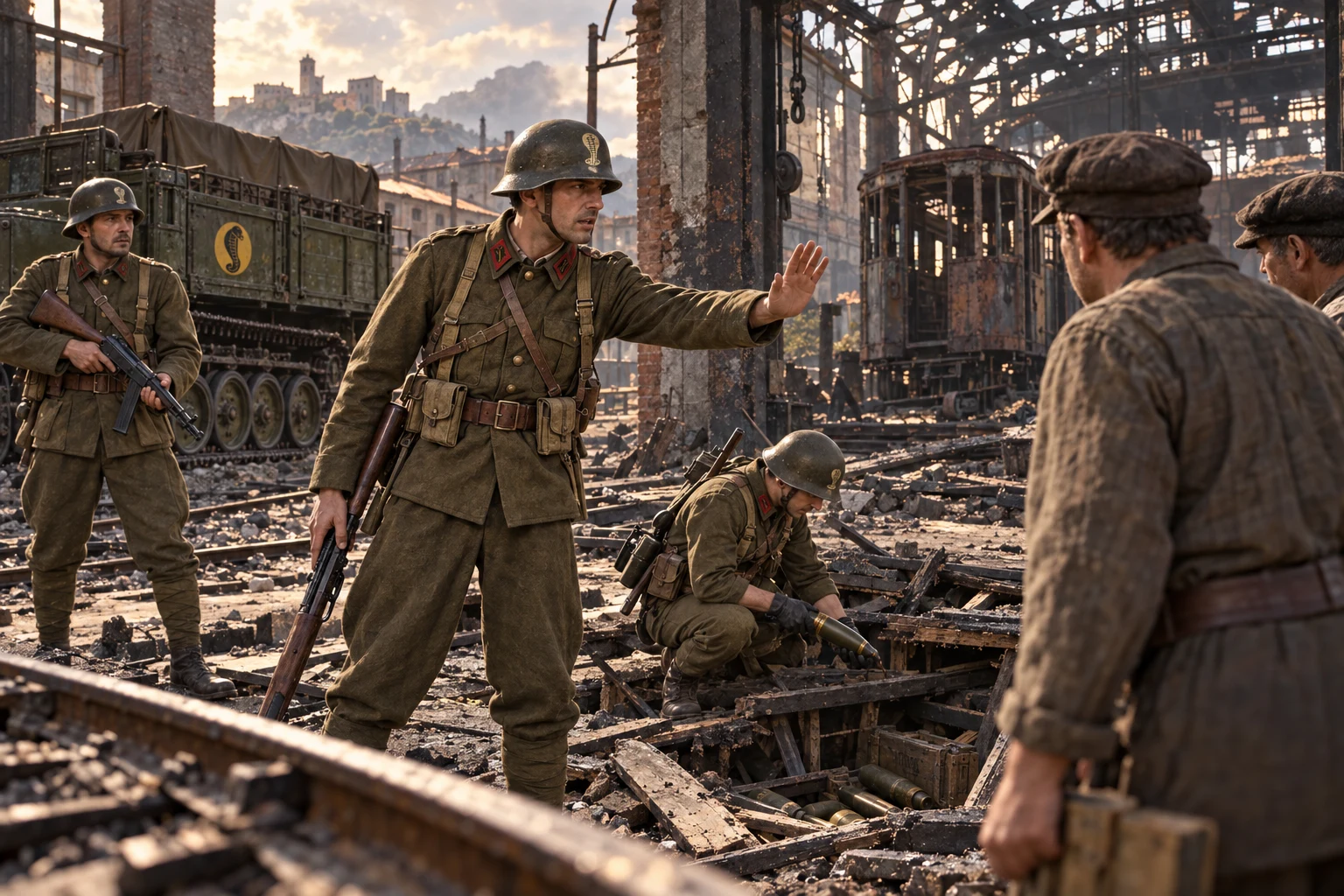
The Garabech Serel Spur in March 1212 began sustained supply denial by placing usable sidings in Torv's hands. Damaged rolling stock postponed immediate pursuit. This interval matters: a victory became a base for the next offensive only as heavier stores accumulated forward. The Ravelin Union Orchard later provided a covered lateral route after reinforcement held the packing yard. Both battles show the creation of a campaigning establishment. Torv was not merely taking the defender's ground. He was acquiring the means to sustain pressure across a widening front, while Elsen had to preserve the parts of the union system that could still receive and distribute support.
Successive belts, 1213–1217
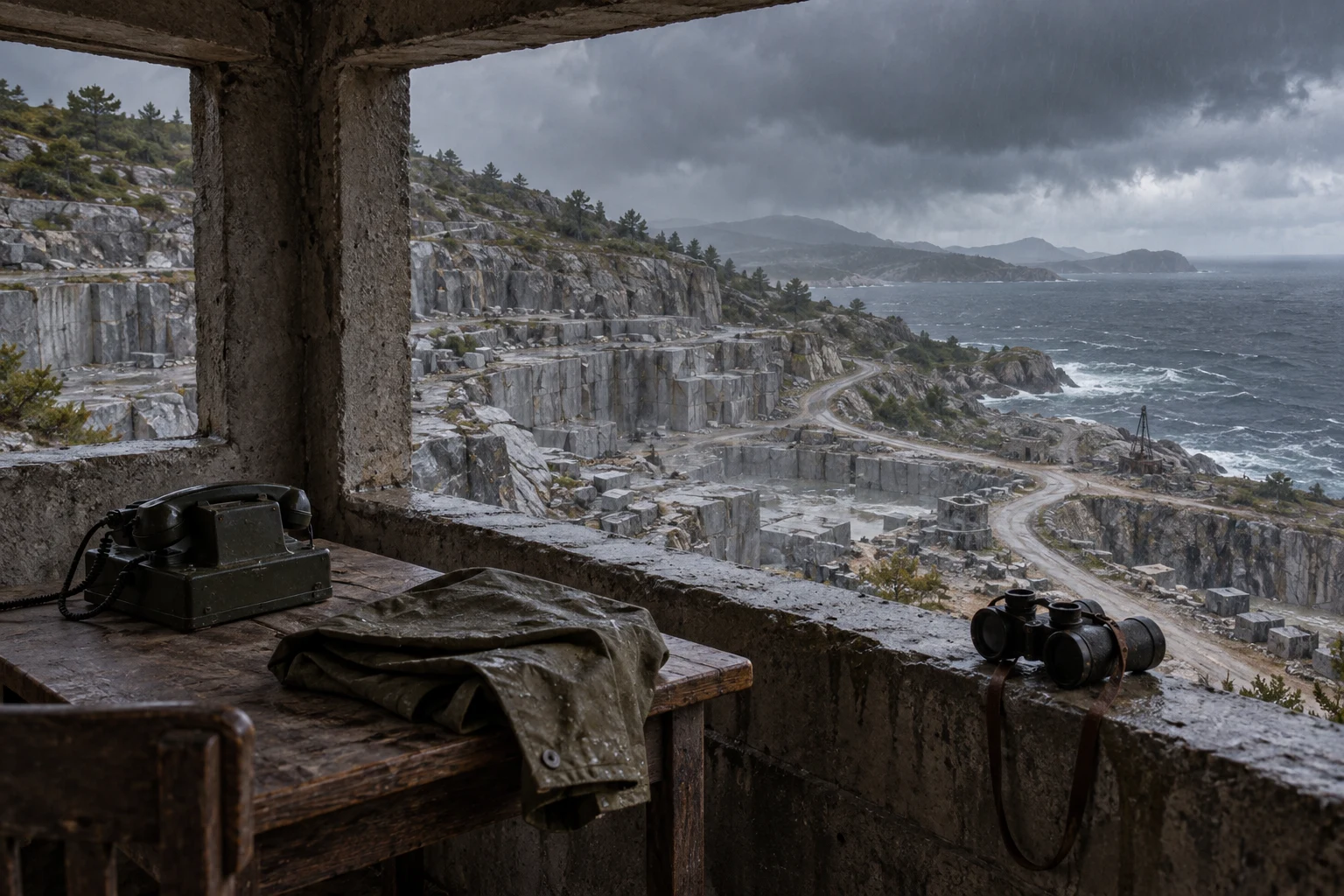
Merenka Ice Cut in 1213 shortened the growing army's winter supply line. Eren Freight Fan threatened the reserve's road exit and forced retreat from a larger district. Porel Lift Bridge in 1214 secured a usable crossing; Horen Battery Farm disrupted communications sufficiently to force field batteries back. These engagements reveal the dependence of a defensive belt on links beyond its firing positions. The batteries could continue to exist while their common observation, messages or ammunition routes failed. Hukular's task was to break those relationships and then secure an approach usable by the force that followed. The defender's task was to restore them before the next pressure became decisive.
Sarven Orchard Ditch opened another attack axis in September 1215. Kaven Winter Locks after the October command change supplied a drained approach suited to sustained operations. Rauk's replacement by Soren Kast on October 1 should be retained as a change in national operational command, not treated as Torv's disappearance from the local front. Kast coordinated an expanding struggle against transport, reserves and productive districts; Torv continued the resident campaigning work. The late 1215 sequence thus connects national strategy to concrete local means while avoiding the invention of a chief of staff personally leading every assault.
Selren Brick Ramp in 1216 opened a sheltered route into an industrial district after successive attacks. Boren Field Roads later split reserve routes during a commitment, producing a broad advantage. Elvar Pump Street in 1217 held the pumping house against a counterattack and divided defended blocks. Mavel Winter Road recovered a gateway and bend, denying the union's immediate objective. These results include offensive gains and defensive recoveries. They demonstrate a capable opponent that could threaten the Western Army, and a Hukular force that could react successfully. Neither capacity required a wholly uninterrupted advance or a depiction of union soldiers as passive occupants awaiting inevitable defeat.
The central establishment erodes
Veren Cable Basin in 1218 delayed coordinated counterattack through successive captures of portable relay sites. Lenar Pack Orchard compelled withdrawal across adjoining farms after barns and a road neck fell. Salven Winter Counterstroke in 1219 recovered a bridge and preserved a threatening concentration; Arven Feed Elevator then exposed the freight district through the loss of observation and battery routes. These actions linked contact, food and fire support. Marek Dren's transport work and Nera Solk's reliable communications supplied different functions within Kast's broader system. The campaign's cumulative pressure depended on those distinctions, because loss of messages and loss of supplies posed related but separate problems to the union command.
Braven River Spur in 1220 separated two reserve routes and forced a wider withdrawal. Talren Quarry Mouth furnished a protected base for the next attack belt. Mirven Train Basin in 1221 ended a shared receiving function, compelling separate and slower supply arrangements. Horrel Orchard Fork then removed a sheltered reserve concentration, and Narel Battery Orchard pressured the central freight road. The practical meaning of attrition here went beyond casualties. Separate supply arrangements imposed longer journeys and more duplicated work on a shrinking establishment. Elsen's surviving forces had to defend terrain while reorganizing the means to sustain it, a process the next attacks repeatedly interrupted.
Merel Loading Apron in 1222 converted a union distribution facility to Hukular freight. Tavrel Channel Gates linked attack groups across a broader frontage; Mavel Garden Screen disrupted reserve movement during a vulnerable interval. The invader's gains now reinforced its own support while depriving the union of common services. This did not make captured works infinitely productive. Engineers had to repair damage, workers had to remain available and routes had to be protected. The advantage was that Torv could impose those tasks on an establishment enlarged by conquest while Elsen's command faced the same tasks within districts repeatedly reduced by loss.
A durable offensive, not a total early conquest
The linked battles of 1223 through 1227 continue this pattern across store districts, crossings, gun positions and intake belts. The campaign acquired places from which a larger concentration could be fed and supported, rather than repeatedly staking its whole result on an unsupported thrust. Orel Harvest Bridge in December 1225 created a durable crossing after the weighhouse and far-bank exit were captured. Rovren Gun Terrace in March 1226 broke a shared fire system. Delven Canal Counterstroke in September recovered the tow bridge and lock house, while Kelar Field Exit in December compelled a remaining grouping to surrender. The union nevertheless retained a national front beyond those local losses.
Merlen Winter Apron in January 1227 forced winter distribution onto a longer road. Tavlen Road Basin in September widened a breach into a supported advance through the capture of culverts and exits. Selor Intake Belt in December removed water access and the reserve road together. The progression shows why supporting arms and engineers should recur as people performing specific roles rather than as generic decoration. Ilva Korr's concern with trafficable approaches and Anton Veyr's attention to ready combined-arms groups explain how captured ground could be consolidated. Their functions operated within Torv's army and Kast's system; they did not turn the 21st Western Army into the whole Hukular military.
Hukular had thirty-two million personnel under arms in 1228, the national anchor retained by the canon. That figure includes the national military establishment across branches and administration; it is not the strength of Torv's army or the number present at Thavren Rail Bow. The February victory there captured signal boxes and unloading space, converting national resources into a local advantage. The conversion is the point. Manpower became battlefield effect only through trains, receiving capacity, usable ground and supply. Roven Channel Vault, Erenka Reserve Switch and Dorren Encirclement Gate later that year expanded the Western Army's pressure through drained approaches, delayed reserves and the surrender of a major grouping.
The final approach to Meravan
Relven Snow Spur in early 1229 denied winter distribution; Sarrel Return Bridge later disrupted organized two-way traffic and extended Hukular's reach. Oren Battery Neck exposed the next road belt after artillery withdrawal. Leren Freight Arc in March 1230 disabled a major shared receiving system; Melven Orchard Road in September converted a rupture into a supported advance; Teren Flood Pocket in December removed another defended district. These losses were substantial and deserve their full weight. They did not change the chronology by making Meravan fall before its recorded date, nor did they establish that the union's government had already ceased to act.
Kerel Winter Switches in January 1231 continued distribution pressure from the Western Army's existing central Volaran positions. Salor Telegraph Gate in July forced exhausted field commands to act separately. Marven Gun Basin in August opened an operational approach toward the administrative center after observation exits and the gun road were lost. By the autumn rupture, earlier reserve and freight losses had made restoring the front increasingly difficult. The operational crisis therefore had an identifiable prehistory: shared services had been divided, repair and distribution displaced, and reserve action repeatedly delayed. The final offensive exploited that prehistory rather than creating collapse from nothing.
Noren Autumn Road Rupture on October 17 split field commands through the warehouse belt and road junctions. Meravan's Outer Records Road in November narrowed defensive options after the records escaped. The escape of those records is central to the civilian and institutional story. The center's canonical fall came on December 11, 1231. Orlen Residual Field Gate, beginning December 14, closed a remaining pocket during the collapse; it did not provide a competing date for the capture of Meravan. The chronology distinguishes preparatory disruption, loss of the administrative center and subsequent defeat of residual formations, allowing each event its proper consequence.
Occupation and withdrawal without national erasure
Dalen Orsic's government continued abroad after the December defeat, and surviving union forces continued with the Allies. Tavel Occupation Spur in February 1232 retained local Hukular transport control without removing that membership or national continuity. Torv's army remained in occupation and withdrawal tasks into January 1233. Elar Withdrawal Gate then recovered a yard long enough to move the repair column while restoration proceeded elsewhere. Its Hukular victory was a successful local delay during an unfavorable wider movement. The distinction protects both the reality of the invader's competence and the reality of the coalition's recovery.
Torv subsequently conducted homeland counterstrokes in 1233 with the 21st Western Army. That change was a withdrawal under Allied liberation, not an instantaneous transfer of an untouched army from Garabech to every threatened homeland sector. The Garabech register ends with a campaigning force preserving parts of itself while losing its occupation's strategic setting. Orsic returned in 1233, but return did not make missing people reappear or restore damaged institutions without work. Military liberation and political restoration were necessary changes of control; household recovery depended on the much less tidy reconstruction of families, property, services and documentary evidence.
Civilian agency runs through the twenty-one years of this account. Reception guides separated displaced residents from withdrawing gun columns where possible. Shelter registers and personal testimony preserved journeys omitted from strength returns. Records that escaped Meravan kept institutional memory available beyond the center's capture. These acts should not be romanticized as effortless resistance or treated as a guarantee of safety. They show people making choices within a violent invasion and occupation, and they provide evidence against an imperial account in which successful freight movement becomes the only measure of history. The campaign links therefore include people and national institutions alongside Torv's roads and formations.
Read with the central Volara major syntheses and the annual accounts through 1233, the Garabech campaign explains how Hukular sustained a formidable advance and why that advance did not settle the war. Torv's army progressively disabled a national front through its common services, finally reaching Meravan. The coalition survived beyond the union's occupied administrative center, then recovered the country as imperial resources contracted elsewhere. A local victory at the withdrawal gate prolonged a repair column's survival; it could not rebuild the political or military basis of the occupation. The distinction between those scales gives the campaign its proper beginning, culmination and ending.