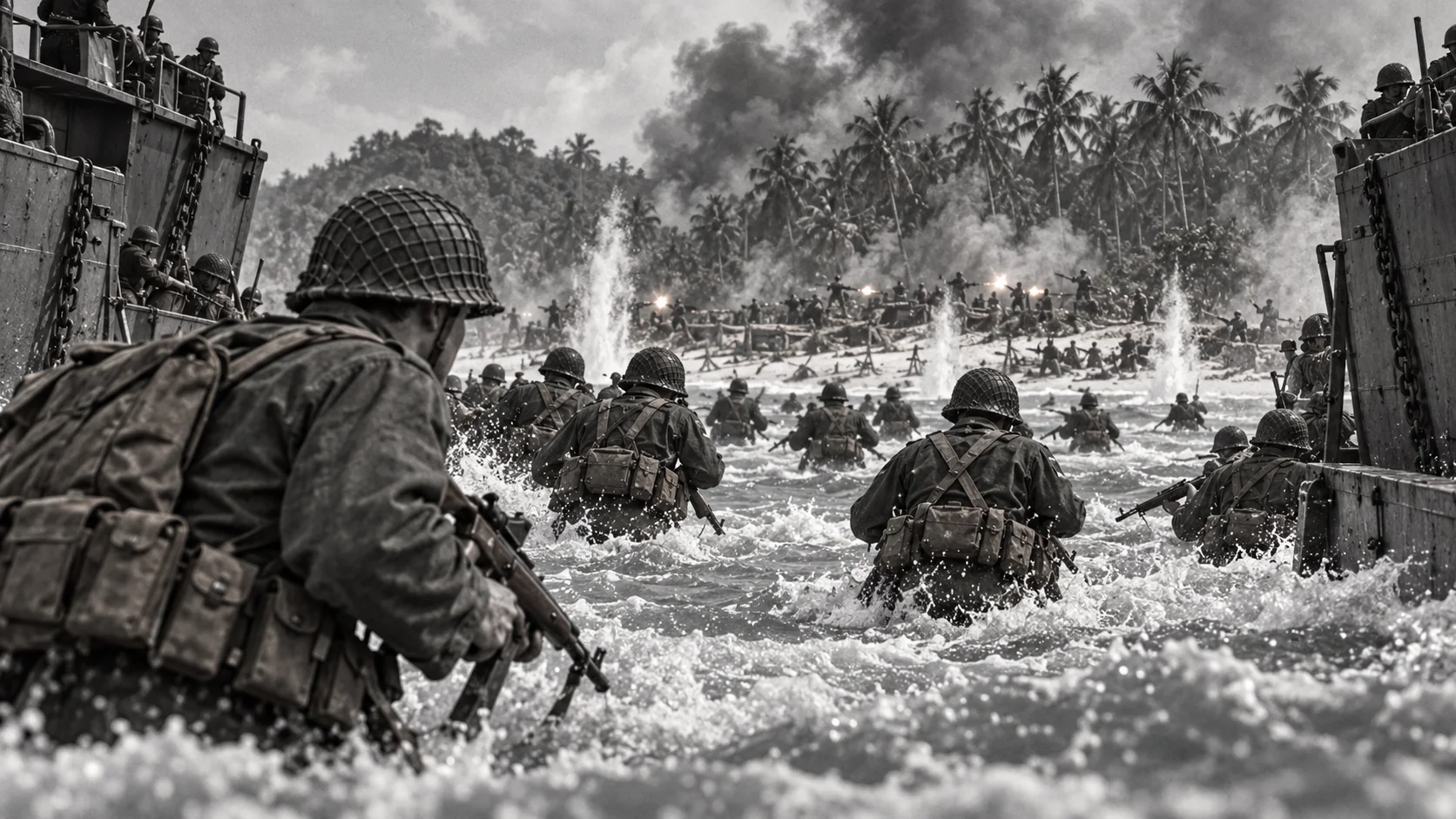
Proposed canon. Dates, tactical sequences and local positions are newly developed unless the text explicitly identifies a creator or source anchor. Related images document the wider war; they are not photographs of this proposed battle.
Strategic objective
This proposed operation gives the early island war a limited objective: an anchorage and repair point for later movement, rather than instant conquest of the entire archipelago.
Ground & operational constraints
Coral Cove's local terrain and coordinates are proposed. The supplied Grand Isles geography remains unchanged; the additional combat painting is explicitly a fictional reconstruction.
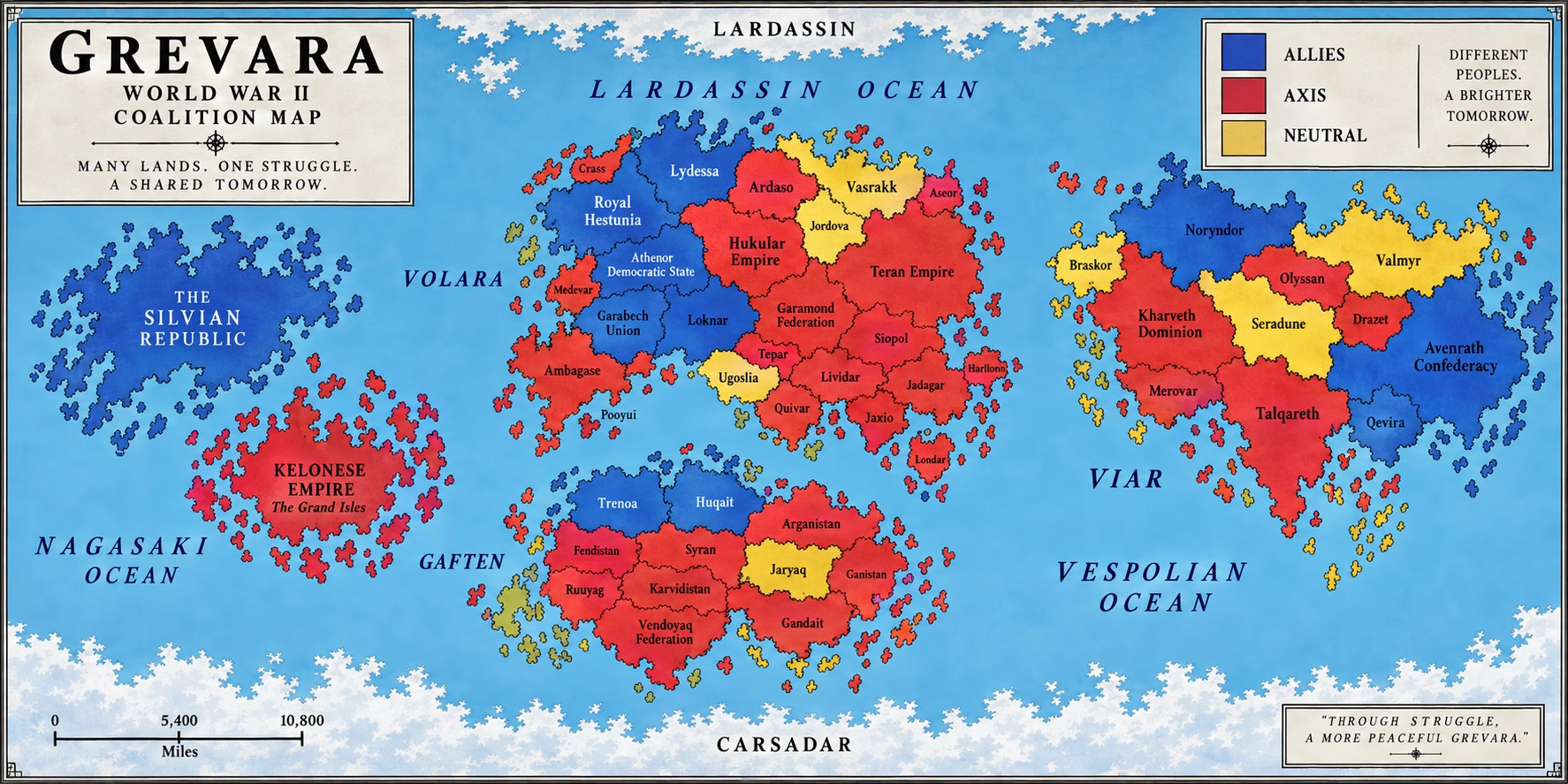
● Axis ● Allied ● Neutral · Zoom reveals cities, engagements and local positions. Drag to pan; use +/− or Ctrl+scroll to zoom. Hold over a marker for 5 seconds; click, tap or press Enter for immediate details.
Battle reference table
| Reference | Record |
|---|---|
| Dates | 1224-08-12 — 1224-09-29 |
| Participants | Silvian Republic; Kelonese Empire |
| Scale | Major |
| Status | Canon + proposed detail |
Commands & participating forces
Named operational commanders and supporting force groupings below are proposed additions unless explicitly marked creator-established. They are not a recovered order of battle or a claim of precise unit strength.
| Nation | Commander | Status | Forces |
|---|---|---|---|
| Silvian Republic | Naval commander Selvar Ren | Proposed operational commander | Permanent divisions operate within mission-based field armies. Specialist brigades, Logistics Divisions and Security Divisions provide distinct support roles; the original formation documents govern their organization. |
| Kelonese Empire | Kezan Morai | Proposed operational commander | Imperial naval forces, naval infantry, island garrisons and dispersed coastal transport defend bases while competing for fuel, repair capacity and trained crews. |
Fighting, tactics & logistics
Marines first secure unloading ground while naval guns suppress known defenses. Kelonese infantry withdraws from exposed shoreline positions to contest inland exits. Silvian engineers repair access and establish medical evacuation before expanding the perimeter. The decisive phase is a sustained inland push after ammunition and water can be delivered reliably.
Civilian consequences
Island residents face bombardment, displacement and uncertain food supply. A separate relief landing avoids making civilian survival depend entirely on assault-unit stores.
Outcome & wider significance
A proposed Silvian foothold supports later island operations. The landing is not treated as a documented newspaper event unless a matching source is supplied.