Grevara: World War II, 1227–1231
1227 — The 7th Army meets the continent
January–March: High General Hujo Lathorne takes the front
The Silvian transports arriving in Volara carried an army that had learned to survive the Grand Isles. Its veterans knew how quickly a promising landing could become a struggle to feed the troops already ashore. They understood damaged communications, interrupted supply, and the disappearance of confidence after the first casualty lists. Those lessons remained valuable. They did not prepare the soldiers for the scale of a continental front whose neighboring armies might extend beyond anything their own headquarters could see or control.
Among the formations completing deployment was the Silvian 7th Army, commanded by Silvian High General Hujo Lathorne. It belonged to the one-third of the army assigned to Volara under the previous year's allocation; it was not the whole continental contingent. Its divisions included island veterans, rebuilt formations, and replacements whose experience came primarily from training. Supporting troops arrived in stages. The army's name appeared on the theater order of battle before all the people and equipment required to make it effective had reached the same country.
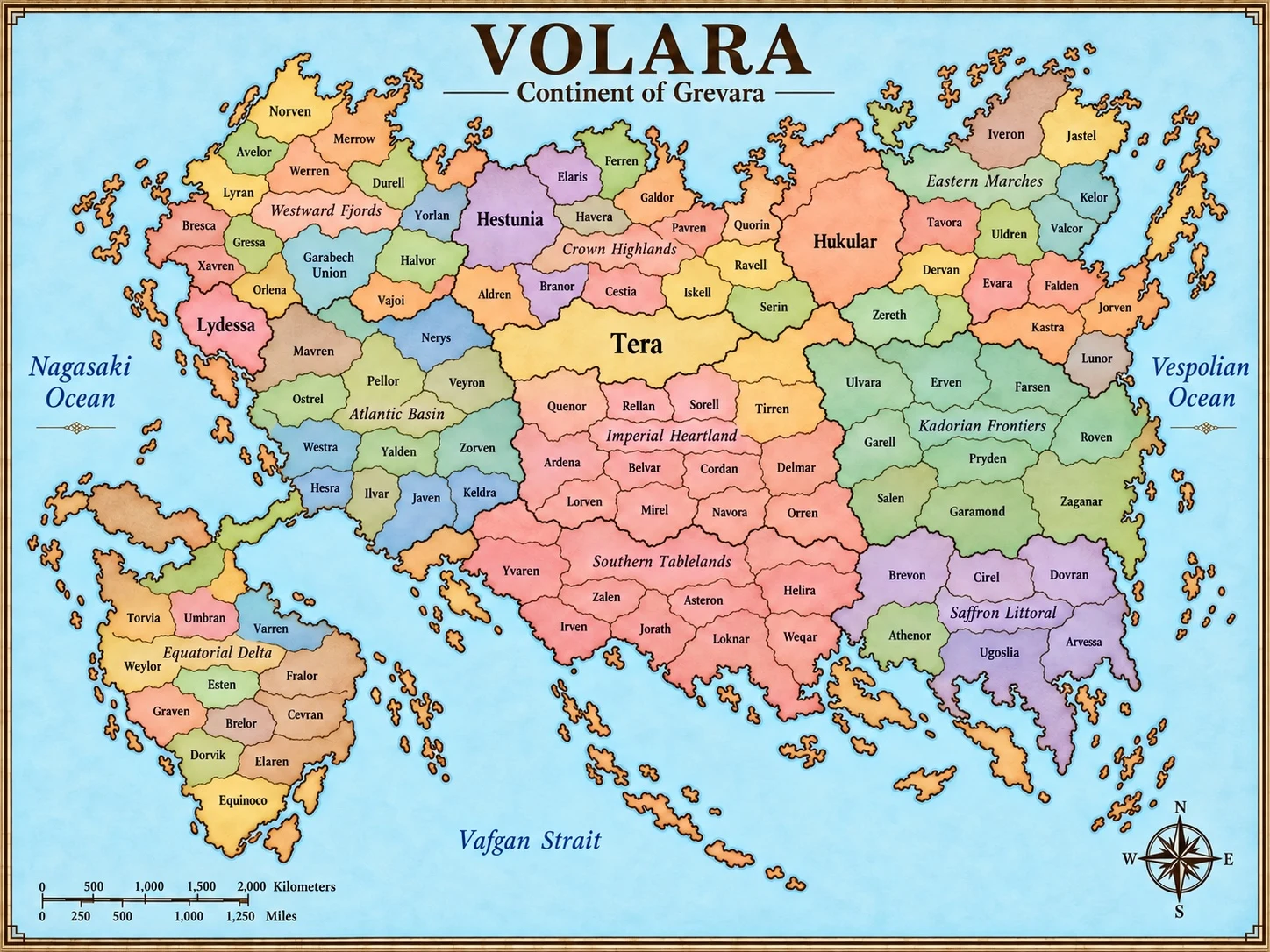
Lathorne established his headquarters in Allied Aldren, on the western approaches to the Teran Empire. Supplies reached the theater through agreements with Lydessa and the Garabech Union, then moved through consenting Allied jurisdictions, including Vajoi, toward Aldren. These arrangements gave the 7th a real route to its front. They also made it dependent on civilian transport authorities and neighboring commands that had claims on the same facilities. A ship successfully unloaded in Volara did not make its cargo immediately available to a soldier near the Teran border.
The new front differed from the northern struggle involving Hestunia, Havera, and occupied Pavren. Here the army faced the Teran Empire's western military system. Aldren remained an Allied state with its own government and forces. Lathorne could command his army, but he could not turn the country supporting it into a Silvian administrative district. Agreements over billets, road work, land requisition, and compensation accompanied the military preparations. Local officials wanted protection without losing authority over their own towns.
On March 14, the 7th assumed responsibility for a sector facing the Teran frontier. Across that sector stood the Teran 87th Elite Battle Corps. Its commander was General Cevan Rusk, a professional officer whose reputation rested on sustaining formations through difficult campaigns. The corps possessed a strong veteran core and priority access to some replacements and equipment. It also belonged to a larger Teran western command whose neighboring formations, artillery, aviation, and reserves helped it hold the front.
The difference in their designations did not make the coming struggle absurdly unequal. Lathorne's army had obligations beyond the ground occupied by the 87th, and he could not concentrate every formation against a single corps without exposing another sector. Rusk's command operated from prepared positions with support beyond its organic establishment. Their struggle would become the best-known contest on the front because their formations repeatedly met in its most disputed district, not because two isolated units fought the continental war by themselves.
April: An inland war
The country around the Darsel River district consisted of agricultural settlements, transport crossings, low ridges, and an increasingly damaged network of roads and railways. Meren Ridge and the Tassar rail junction would become familiar names in Silvian newspapers. They were ordinary local places before they became military objectives.
Major Eran Vale, transferred with one of the 7th Army's veteran formations, found the open stretches unsettling. In the islands, the limits of what he could see had often been close and obvious. Here distant observation, extensive artillery fire, and the dependence on neighboring units created another kind of uncertainty. A position could appear quiet while events far away were making it untenable. His soldiers needed new instruction without being told that everything they had learned in the Grand Isles was now worthless.
Lathorne's first assessments were cautiously optimistic. He believed the army's supporting organizations would give it resilience even when its initial attacks failed. He also underestimated how effectively the Terans could disrupt a plan without destroying the formations carrying it out. Delays in railway work, changes in the adjacent front, and the interruption of communications could consume the favorable period on which an offensive depended. The 7th could remain well organized and still arrive too late to achieve its purpose.
Rusk had similar practical concerns. His corps' elite designation attracted favorable attention and demanding assignments. Senior commanders expected it to restore situations that other formations could not handle. That reputation brought supplies, but it also meant that relief was repeatedly postponed. The 87th's officers knew how many experienced men had already been lost in the long war. Their confidence rested partly on skill and partly on the hope that their organization could continue replacing people without losing what made it useful.
May 18–June 26: The Teran offensive
The Teran attack began on May 18. It was a western-command offensive in which the 87th served as a principal striking formation, supported by other Teran units. Its purpose was to push into eastern Aldren, disturb the Allied concentration, and force the newly arrived Silvians to fight on an unfavorable timetable. The first days produced a dangerous breach in the Allied forward positions. Some Aldren units withdrew in good order; others lost contact with headquarters and appeared on reports only after they had reached a different formation's rear.
Lathorne committed available forces to stabilize the situation. His army demonstrated the cohesion acquired during the island campaigns, but cohesion could not remove the consequences of incomplete deployment. Units entered fighting while parts of their support were still moving forward. Headquarters received requests from threatened sectors faster than it could determine which represented a local reverse and which might become a wider collapse. The High General's first continental campaign became an effort to prevent a defeat whose shape was changing each day.
The 87th earned its reputation during the advance. Its subordinate formations maintained pressure despite losses and changes of direction. Yet the attack was not effortless. Teran commanders encountered stubborn resistance and delays in bringing forward supplies. Rusk's officers complained that the success expected of an elite corps encouraged higher command to assign it tasks that would have exhausted several rested formations. Their complaints did not stop the operation, but they help explain why the early gains did not become an unlimited breakthrough.
On June 9, Teran forces took Tassar's principal railway facilities and most of the town. The loss forced the Allies to reorganize local movement and sent civilians westward with whatever they could carry. Mela Orsen, an Aldren schoolteacher, left with her mother and a group of pupils whose families had become separated during the evacuation. She brought a school register that soon became a list for locating missing children. The same station that appeared in military reports as a lost junction appeared in her memory as the place where several families had last seen one another.
Lathorne's containment effort gradually held. By June 26, the Teran offensive had lost the ability to continue its advance at the earlier pace. The 87th retained valuable occupied ground in eastern Aldren, including Tassar and the stronger Meren positions. The 7th had prevented a larger rupture but had not restored the border. Its first major encounter with the corps ended with an enemy salient and a damaged Allied transport system. Silvian discipline had limited a defeat; it had not converted that defeat into victory.
July–August: The consequences of containment
The High General's dispatches emphasized the front's survival. His subordinate reports described formations worn down by repeated movement and fighting. Both accounts were true, and their coexistence caused political difficulty. In Silvia, people who had watched the army become a veteran force expected its arrival to relieve the Allies' exhaustion. Instead, the first summer produced new losses and a map showing Teran gains. Wodro's government had to explain why experience did not guarantee the initiative.
Lathorne asked for time to complete the army's concentration and restore its depleted units. Aldren authorities pressed for the earliest possible recovery of occupied communities. Neither request was unreasonable. Waiting gave the Terans time to improve their positions and left civilians under occupation. Attacking too soon could consume the formations needed to recover them. The High General's judgment would be tested by choosing among costs, not by discovering a course that avoided them.
Inside Tassar, occupation brought registration, requisition, restricted movement, and the displacement of local officials. Rusk's corps maintained military security while imperial occupation authorities pursued their own demands. An officer's wish to keep transport working did not protect residents from coercive labor requirements or accusations of disloyalty. The corps' professional effectiveness was part of the means by which the occupation endured. Its competence should not be confused with benevolence toward those whose country it held.
The 7th's medical and replacement systems coped better than they had during the earliest island disasters. They still faced the accumulated effect of wounds, sickness, and exhaustion. Soldiers returning from treatment sometimes found their old companies transformed. Vale discovered that familiarity with a unit's traditions did not mean familiarity with its current people. The army could retain its institutional experience while individuals increasingly felt that they were serving among strangers.
September 3–October 12: The first attempt at Meren
The Allied counteroffensive began on September 3 with more preparation and narrower goals than the spring expectations. Lathorne intended to recover ground leading toward Meren Ridge and reduce the pressure on the Darsel district. The 7th and neighboring Aldren forces made gains in the lower approaches. Those gains became harder to extend as the attack reached the stronger positions held by the 87th and supporting Teran units.
The campaign repeatedly produced the same frustrating sequence: an advance that appeared promising, reports of disordered enemy units, and then renewed resistance before the Allies could turn the local success into a wider result. Rusk did not preserve every position. He preserved enough of the corps and its access to support to contest the positions that mattered most. Lathorne's headquarters recognized the pattern but could not dissolve it through recognition alone.
By October 12, the offensive had ended. The Allies held some useful ground, but the main Meren positions and Tassar remained Teran. Lathorne had continued the operation longer than several subordinates advised, believing the enemy was close to exhaustion. That judgment proved mistaken. In the review that followed, he accepted responsibility for extending the timetable without sufficient evidence that the corps could no longer resist. His willingness to acknowledge the error mattered, but it did not erase the casualties incurred during those additional days.
The 87th's own returns gave Rusk little reason for celebration. Its veteran strength had fallen, and the formations held under its name required reconstruction. Imperial communiqués described an intact elite corps defeating repeated enemy attacks. The corps' officers knew how much of that intact identity now depended on replacement drafts, borrowed specialists, and the continued work of surviving leaders. Both opponents ended the campaign with a stronger understanding of the other and fewer of the people who had begun it.
November–December: A front for the winter
As the year closed, the disputed district filled with shelters, repair sites, hospitals, supply installations, and the improvised settlements of displaced civilians. The war was acquiring permanence in places that had expected an emergency. Mela Orsen resumed teaching in a borrowed room west of the fighting. Some children asked when they would return to Tassar. She could tell them where the missing families had been found; she could not tell them when the army would recover their homes.
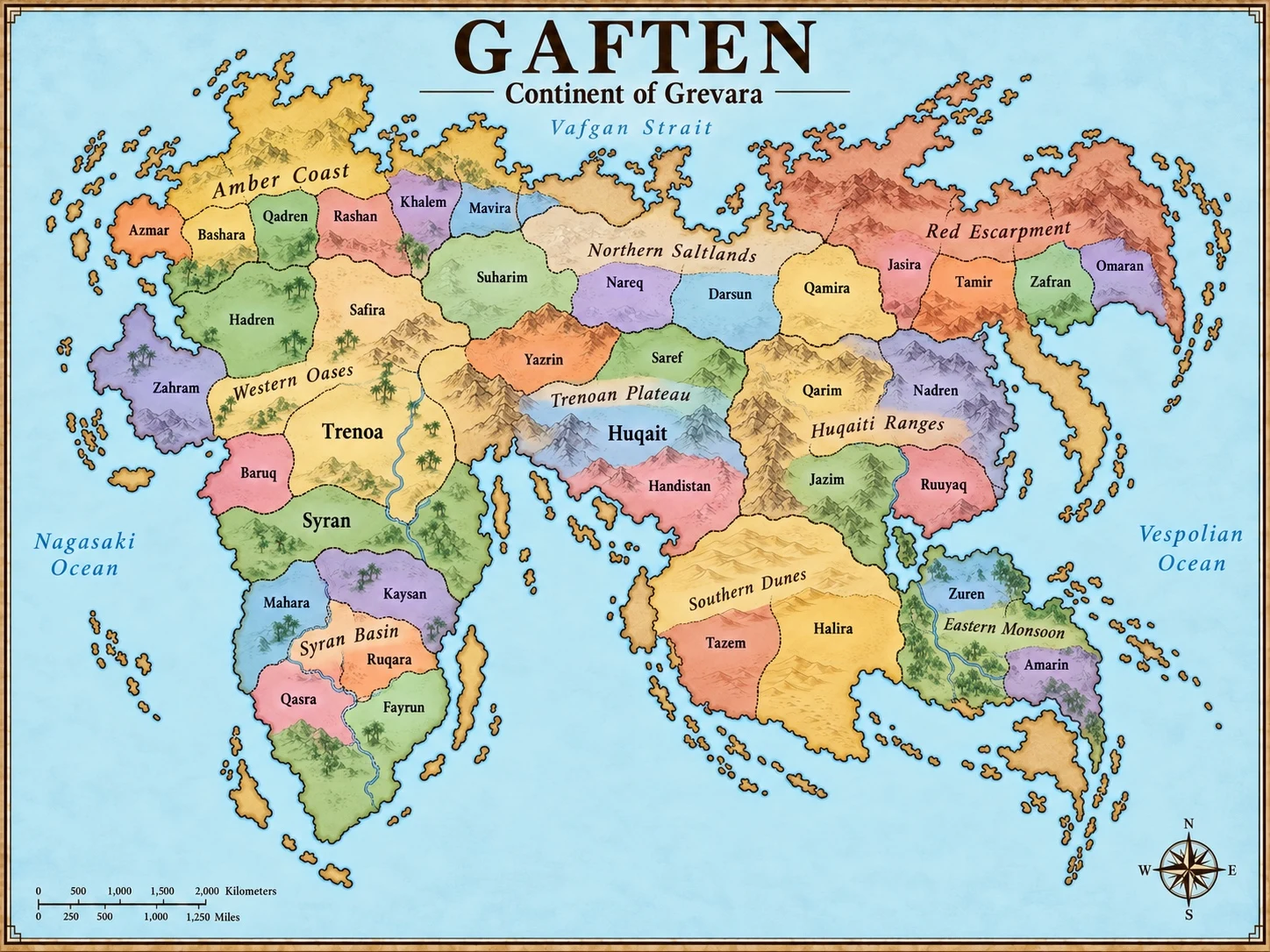
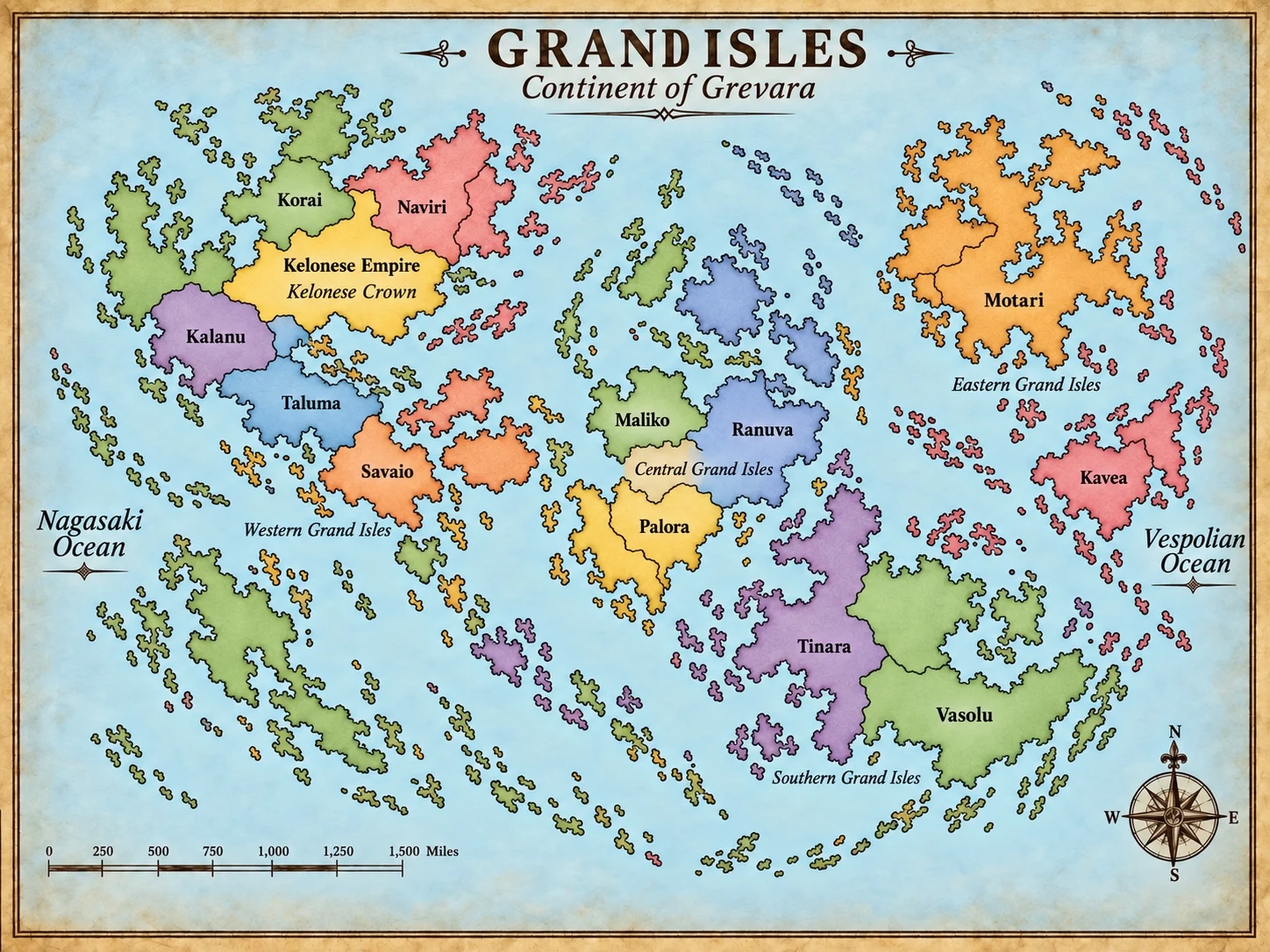
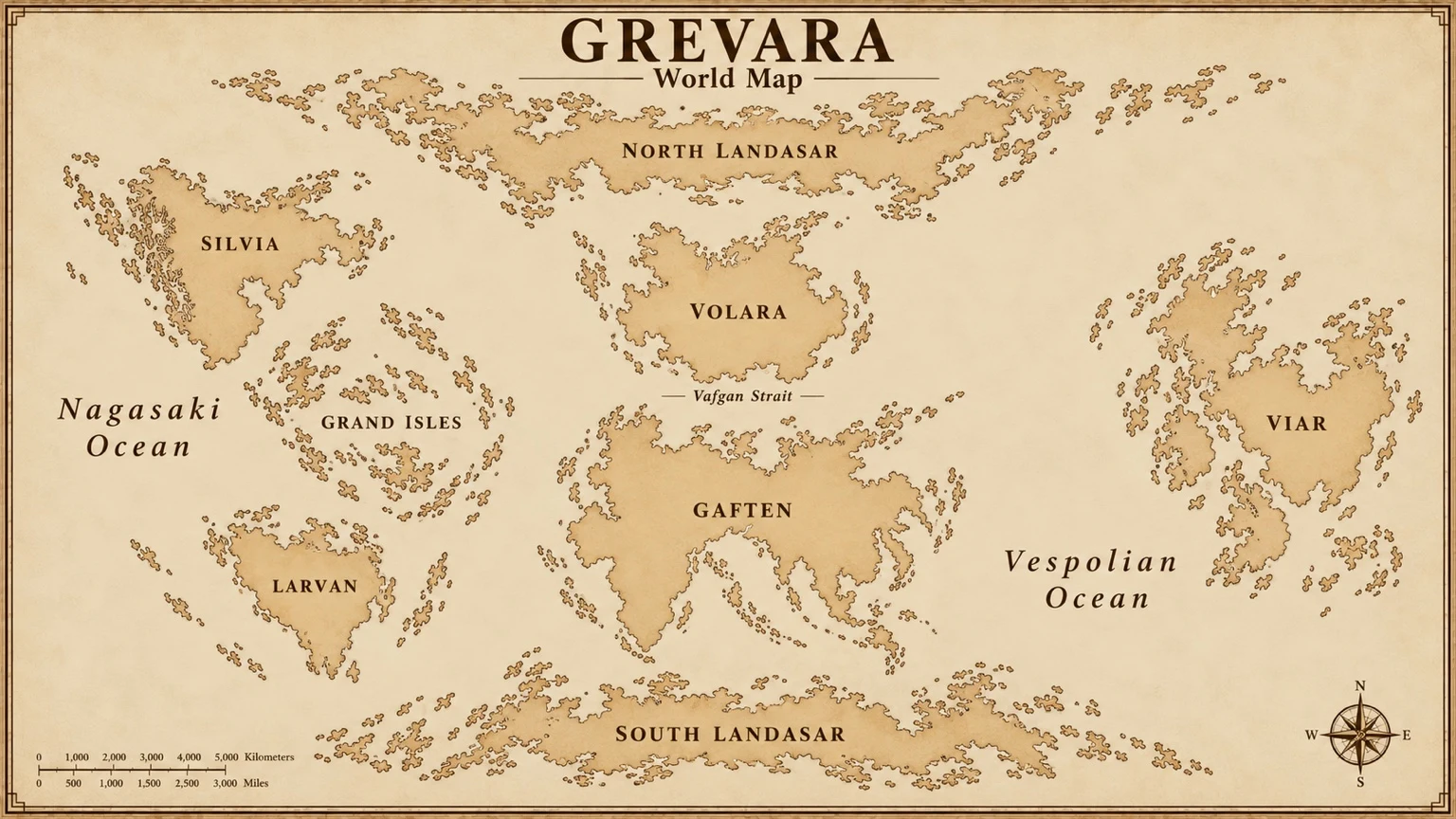
Elsewhere on Volara, the other Silvian formations strengthened Allied resistance without producing a general Axis collapse. Gaften and Viar absorbed their new contingents through difficult campaigns of their own. In the Grand Isles, the veteran sixth remained committed beside local Allies, while the Nagasaki and Vespolian fleets sustained the overseas war. The enormous naval deployment of late 1226 continued to require repair, replacement, and trained personnel. It could support Lathorne's army across an ocean without deciding a battle far inland.
By December, Hujo Lathorne and the 7th Army had become closely associated with the Teran 87th Elite Battle Corps in the public imagination. The association simplified a front involving many armies and states. It nevertheless captured an important fact: both commands had invested heavily in the same district, learned the other's habits, and survived an encounter neither had resolved. The 7th remained a formidable veteran army. The 87th remained a dangerous elite corps. Between them lay occupied towns, incomplete casualty lists, and the first year of a continental struggle that had scarcely begun.
1228 — The year of the ridge
January–February: Rebuilding for the same ground
The first orders of 1228 concerned replacements, transport work, medical returns, and the condition of roads. These activities attracted little attention beyond the people performing them. They determined how much of the Silvian 7th Army would actually exist as a fighting force when High General Hujo Lathorne next ordered it forward. The army's establishments looked impressive. Its available strength depended on how many wounded men recovered, how many recruits completed training, and how many supporting units could be restored before another campaign consumed them.
Lathorne spent part of January visiting formations that had borne the worst of the autumn fighting. Some officers wanted equipment; others wanted time. Several asked that the experienced men assigned as instructors remain in that work instead of being recalled whenever the front demanded another draft. The High General agreed in principle, then faced requests whose urgency made the principle difficult to maintain. His army's future effectiveness depended on protecting training capacity while its present commitments continually threatened to draw that capacity away.
Across the front, General Cevan Rusk faced the same problem under harsher political expectations. The 87th Elite Battle Corps had become a convenient symbol of the empire's ability to halt Silvia. Its record attracted recruits and official favor, but also reduced its freedom to admit weakness. Rusk submitted returns showing exhausted formations and inadequate specialist replacements. Higher headquarters approved some requests while ordering the corps to retain responsibility for the disputed sector. Its reputation had become another reason it could not be relieved.
The occupied Tassar district remained essential to the Teran position. Railway facilities required continual repair, and civilians were compelled to provide labor under occupation orders. The system could keep supplies moving while making ordinary life progressively less sustainable. Families sold possessions to obtain food or travel permission; local trades contracted around military demand. Reports reaching the Allied side described both shortages and continuing Teran activity. Lathorne could not responsibly assume that civilian misery meant an immediate military collapse.
March 4–April 22: The second battle of Meren
The new offensive began on March 4. Lathorne believed the army had repaired enough of the previous year's weaknesses to make a serious attempt on Meren Ridge. The operation involved neighboring Allied formations as well as the 7th. Its political purpose was clear: regain ground in eastern Aldren and move toward Tassar. Its military prospects were less certain. The Terans had improved their positions, and the 87th's losses had not deprived it of its ability to resist.
During the first week, Silvian troops gained several of the outer positions and brought back prisoners whose accounts suggested considerable strain in the opposing units. Lathorne's headquarters treated that evidence as encouraging without declaring the battle decided. Yet the army's reports still tended to describe the damage it could observe more precisely than the enemy strength it could not. Every captured position had a visible history of destruction. The surviving Teran capacity beyond it was harder to measure.
Rusk relinquished some ground and committed replacements to formations whose surviving leaders knew the sector. The corps' response was neither flawless nor inexhaustible. Some units were late, others suffered heavy losses, and several officers challenged demands that could not be reconciled with their available strength. Nevertheless, enough of its command and support system continued functioning to stop the Allies from converting their first gains into possession of the ridge.
Vale's formation entered fighting around a damaged farming settlement below Meren. The infantry occupied buildings that had already changed hands and then endured days in which the larger operation seemed to happen somewhere else. Supplies arrived irregularly. Orders explained the next task more readily than they explained whether an adjacent advance had succeeded. The men recognized many familiar problems from the islands, but the duration was different. There was no returning ship, no completed landing phase, and no clear moment when the force could leave the battlefield behind.
By early April, the offensive was spending strength faster than it was gaining useful ground. Lathorne initially supported continuing, arguing that withdrawal of pressure would allow the 87th to recover at the very moment its losses were becoming serious. Several subordinate commanders disputed the assumption that the enemy was closer to breaking than their own troops. The disagreement was recorded rather than suppressed. It also took time, during which the fighting continued.
The offensive ended on April 22. The Allies retained limited improvements in their approaches, but the main ridge remained Teran. Some newly occupied positions had to be abandoned because maintaining them cost more than their value to the front. The army had carried out a more coherent operation than the previous autumn and still failed to achieve its principal objective. Better execution did not guarantee that the proposed result had been attainable at an acceptable cost.
May: Lathorne's reckoning
The failed offensive produced the sharpest criticism of Lathorne's command to that point. In Silvia, the public heard that a veteran army with extensive industrial support had spent another season failing to recover a ridge. In Aldren, the consequences were immediate and personal. The longer the salient remained occupied, the harder it became to house displaced families and preserve farms cut off from their owners. Civil authorities feared that military explanations would become a permanent justification for postponement.
Lathorne's review identified errors in estimates, preparation, and the interpretation of enemy losses. He also acknowledged his own decision to continue after the prospects had narrowed. He had not ignored casualties; he had believed that another period of effort might make those already incurred serve a decisive result. That reasoning had encouraged the continuation of an operation whose purpose was becoming less attainable. It was a danger created partly by responsibility for the dead, not merely by indifference to them.
Wodro retained him. The decision was accompanied by requirements for clearer assessments of readiness and closer examination of proposed campaign objectives. The Lord did not assume personal command of the front, and the Senate did not select battlefield positions. They demanded an account of what the military expected to achieve with the resources and lives entrusted to it. Lathorne remained High General of the 7th Army with diminished freedom to present hopeful estimates as an adequate basis for another major commitment.
The Teran government celebrated Meren as proof that its elite corps could defeat Silvian material power. Rusk's private reports were less reassuring. The corps had held the important ground but lost more of its experienced personnel. Replacements could fill a return; they could not immediately reproduce the working knowledge of a staff or a company whose leaders had fought together for years. The victory bought time at the expense of some of the people best able to use it.
June–August: The work between battles
The summer did not bring peace. It brought smaller operations, artillery exchanges, air activity, local attacks, and the constant labor of maintaining a front. Units described as resting often remained within reach of interruption. Roads and rail facilities deteriorated under military traffic. Equipment recovered from the battlefield needed repair before it could reappear as available strength. Men who had survived a major offensive still became casualties on days when headquarters recorded no significant change.
The army's medical services began distinguishing more carefully between a soldier being present and his being fit for continued service. Exhaustion could be hidden by habit, pride, or fear of abandoning comrades. Officers differed in how they responded. Some removed men before they broke down; others waited for unmistakable incapacity. The 7th's procedures improved unevenly, and the limits were especially visible when a formation lacked enough rested personnel to relieve those most in need.
Vale was assigned temporarily to work with replacement officers. He found that they knew the names of the campaigns better than the ordinary problems that had shaped them. They could describe Orava and Meren as lessons in command but had little sense of how uncertainty accumulated through small, plausible assumptions. His instruction returned repeatedly to the difference between knowing a report's conclusion and knowing how that conclusion had been reached. It was an unglamorous part of keeping the army from repeating itself.
Mela Orsen's classroom moved again when its borrowed building was required for another service. The children had become skilled at arranging a school in rooms not meant for one. Some remembered Tassar clearly; younger pupils were beginning to know it principally from their parents' stories. Civilian displacement was becoming a condition in which children grew up. That change rarely appeared in an operational summary, though it would shape the country long after the army recovered a railway junction.
September–November: The 87th strikes back
Teran commanders believed the costly spring offensive had left the Allies vulnerable to another limited attack. Rusk supported a narrower operation than some of his superiors wanted. He did not believe the 87th could repeat the movement of May 1227 on the same scale. He believed it could exploit a local opportunity, unsettle the 7th's preparations, and preserve the initiative around the occupied salient. The distinction became blurred in public accounts that promised another demonstration of imperial superiority.
The counteroffensive began on November 7 after preparations during September and October. Teran forces recovered some disputed forward ground and forced the Allies to alter their dispositions. The 87th fought effectively but encountered a 7th Army less susceptible to the confusion of its first continental summer. Silvian and Aldren formations sustained local reverses without allowing them to become a general withdrawal. Supporting organizations kept operating through the interruption.
The Terans did not force the Allies out of their established Darsel positions. By November 24, the attack had reached its limit. Both sides issued favorable accounts: the empire emphasized recovered ground, while the Allies emphasized the failed wider purpose. Neither description fully conveyed the consequences for the formations involved. Rusk had consumed resources he needed for the coming year. Lathorne had preserved his front while losing men whose replacements were already intended for future operations.
Their commands had now learned enough about one another to avoid some early mistakes. This did not necessarily make the fighting less costly. It often meant that the gains available from surprise or incompetence had diminished, leaving more of the contest dependent on endurance, support, and the ability to replace damage. The reputation of the 87th and the reputation of the 7th increasingly rested on their ability to keep functioning after results that would once have been considered intolerable.
December: A war that would not move
Across the larger war, the same frustration appeared in different forms. Silvian strength helped Allied governments in Gaften and Viar sustain operations they might otherwise have postponed. It also created new demands on ports, labor, transport, and civilian supply. In the Grand Isles, the remaining amphibious forces continued fighting alongside their partners. At sea, the fleets deployed in the great expansion of 1226 underwent losses, repairs, replacement, and reassignment. The 52 Nagasaki carrier battle fleets of that earlier return were not an untouched collection moving through time without damage.
The fleet war nevertheless remained vast, and the Vespolian routes continued carrying the means of continental resistance. Those achievements kept armies in the field. They did not eliminate the distance between a cargo landed at a friendly port and a formation ready to advance. The 7th's experience made the distinction visible to the Silvian public: industrial strength could prevent defeat and still fail to produce a quick victory.
At the end of 1228, the principal Meren positions and Tassar remained under Teran control. The 7th had failed in its spring purpose and then stopped an enemy counteroffensive. The 87th had held its reputation but lost more of the veteran strength beneath it. Lathorne and Rusk both expected another year of fighting in the same district. Neither could regard the year's survival as sufficient, and neither could show a convincing path to ending the struggle without paying again for the ground between them.
1229 — The river and the replacement drafts
January–March: Another army beneath the same number
By the beginning of 1229, the Silvian 7th Army contained men for whom the Grand Isles were an inherited story. They served beside veterans who had crossed from the islands in 1226 and officers who had joined after the first battles in Aldren. The formation retained its identity through headquarters, schools, records, habits, and surviving cadres. Its continuity did not mean that the people who had earned its reputation were still present in anything like their original numbers.
High General Hujo Lathorne examined the army's strength returns with greater skepticism than he had two years earlier. A full formation might contain a high proportion of recruits, men recently returned from treatment, or specialists assigned duties for which they had received little preparation. Those facts mattered as much as the total. He required commanders to distinguish nominal strength from the force they believed could sustain a prolonged operation. The resulting reports were less impressive and more useful.
His next campaign would seek possession of the disputed Darsel crossings and a more secure position from which to contest Meren Ridge. The intended sequence accepted that several stages might require separate operations and periods of rebuilding. It was a departure from the expectation that a single offensive should convert an initial advance into a complete recovery of the district. Some officers considered the plan too limited. Lathorne had learned that a narrow purpose could still demand everything an army was able to provide.
Preparation extended through the winter and early spring. The 7th worked with Aldren authorities to restore parts of the transport network on the Allied side and improve arrangements for wounded soldiers and displaced civilians. The work generated arguments about compensation, labor, and what would remain useful after the army moved. A military organization planning for months could not treat every local objection as an obstacle to be overridden. Its continued presence depended on a country retaining enough of its civil life to support the war.
April–May: The cost of being elite
The Teran 87th Elite Battle Corps also rebuilt. Its replacements included selected men from other formations and recruits who had been told they were joining one of the empire's most reliable commands. Some arrived expecting superior equipment and clear leadership. They found both in places, along with exhausted officers, damaged facilities, and shortages that the word elite did not resolve. The corps' reputation placed it nearer the front of some supply queues without making the quantities at the end of those queues adequate.
One of the new soldiers was Savin Drel, a Teran conscript transferred after initial training. His first impression of the corps was how few of the men seemed interested in telling stories about its victories. Experienced soldiers asked about his trade, his health, and what he had actually learned. They needed someone who could become useful in the formation they now possessed. The celebrated battles on recruiting notices belonged partly to people who were dead, missing, or serving elsewhere.
General Cevan Rusk requested a longer period of relief for several of his units. Higher command approved limited rotations but retained the 87th's central responsibility. Hukular and the Teran Empire were arguing over strategic priorities, and other fronts made demands that no commander could satisfy merely by demonstrating his own need. The corps was important enough to preserve and useful enough to keep spending. Its leaders lived inside the contradiction.
Occupation continued around Tassar. Residents who had initially expected a brief displacement now faced a third year under imperial authority or away from home. Requisition and military use altered the local economy. Workshops depended on army contracts, while farmers struggled to recover labor and equipment taken into service. A quiet day at the front could still mean another family lost the practical means of supporting itself. The corps held territory whose civilian endurance was eroding alongside its military value.
June 12–29: The Darsel crossings
The new Allied operation began on June 12. The 7th and associated Aldren forces fought for the disputed crossings and positions beyond them. The campaign soon demonstrated why a limited objective was not a cheap one. Progress varied sharply between neighboring sectors. Some formations achieved their initial purposes while others became engaged in prolonged fighting that delayed the use of those gains. Headquarters had to keep the parts of the operation connected without assuming they would all advance at the same rate.
The 87th contested the movement with determination. Rusk's command had enough surviving experience to respond to local crises, and supporting Teran forces prevented Lathorne from treating the corps as an isolated obstacle. The Silvians suffered heavy casualties. Several promising reports proved premature when newly occupied positions could not yet be supplied or linked securely to the rest of the front. The army's improved procedures reduced confusion without removing the enemy's ability to cause it.
Vale's formation took part in the fighting beyond one of the crossings. His men recognized a change in how the campaign was being directed. When their progress stopped, the army did not immediately redefine the objective so that continued movement became an obligation regardless of conditions. Support and relief were adjusted, and the formation's limits were acknowledged. The men still endured danger and losses. What changed was the likelihood that their exhaustion would be treated as evidence rather than a failure of will.
By June 29, the Allies had secured a sustainable position across the contested part of the Darsel district. Not every crossing or nearby locality was theirs, and the Terans remained capable of serious counteraction. The result gave Lathorne a more useful foundation for a later campaign against Meren. It also required immediate work to defend, supply, and repair what had been gained. The next operation could not responsibly begin merely because the first had ended on a favorable report.
The High General halted the main advance. Critics described the decision as a lost opportunity to exploit the enemy's apparent disorder. His subordinate returns showed worn formations and unfinished supporting arrangements. He chose to preserve the achieved purpose rather than wager it on a further advance whose prospects he could not adequately establish. It was the kind of decision he had found harder to make in 1227 and 1228. Its wisdom remained contingent on what the enemy did during the pause.
July–September: Holding what had been won
Rusk did not grant the Allies an undisturbed consolidation. Local counterattacks, pressure on adjacent positions, and continuing air and artillery activity made the new lodgment costly to maintain. The 87th could not reverse the entire June result, but it could force Lathorne to spend more strength preserving it. The campaign's casualty lists therefore continued long after the date that appeared in public summaries as its successful conclusion.
For Savin Drel, the war had become a succession of unfamiliar replacements arriving among a diminishing group of people he recognized. The corps taught newcomers rapidly because it needed them rapidly. Some survived long enough to acquire judgment; others disappeared from the rolls before they became more than a name. His unit remained effective through that process, but the effort of maintaining it grew more demanding. The imperial announcements of an enduring elite formation concealed how often the formation had to be assembled again.
In the Allied rear, Mela Orsen helped families examine lists of recovered localities and missing residents. A change on the map did not establish whether a particular house stood or whether travel was possible. Some displaced people attempted to return too soon and had to leave again. Civil officials worked with the army to distinguish areas occupied by Allied troops from areas safe enough for ordinary settlement. The distinction disappointed people who had waited years for permission to go home.
Lathorne's staff prepared the next campaign while trying to protect the army's capacity to recover. Experienced officers moved between schools and active formations. Repaired equipment returned to service. Medical decisions sent some men back to duty and others away from the front permanently. Every category represented a person whose war would continue in a different way. The army's apparent renewal depended on thousands of such decisions, none of which could be expressed adequately by announcing that its strength had been restored.
October 10–November 4: Meren Ridge
The renewed attack toward Meren began on October 10. This time the Allies approached the battle from a more favorable position created by the June campaign and sustained through the summer. That advantage mattered. It did not make the 87th's resistance superficial. The corps and its supporting formations contested the district over weeks of fighting in which damaged villages and agricultural ground became difficult even to identify by their prewar appearance.
Lathorne's plan remained vulnerable to interruption by events outside his army. Neighboring commands faced pressure, transport capacity fluctuated, and weather complicated the movement of supplies. Several phases took longer than expected. The High General accepted those delays where he believed they preserved the coherence of the operation. In other cases he pressed tired formations to continue, knowing that delay had costs of its own. His improved judgment did not relieve him of the power to make decisions that would kill men.
By the beginning of November, Rusk concluded that holding the main ridge positions would require a commitment his corps could not sustain without risking its broader survival. His superiors resisted the proposed withdrawal. The ridge had acquired political value from years of official declarations that it demonstrated imperial strength. Losing it would be a military setback made larger by the claims previously attached to it.
The Teran withdrawal from the principal Meren positions was completed under pressure, and the Allies secured the ridge on November 4. The 87th fell back toward the defensive district associated with Tassar. It lost men and equipment during the movement but retained its command structure and enough organized strength to continue fighting. Lathorne had won a significant local victory. He had not destroyed his principal opponent.
Silvian newspapers celebrated the recovery of the ground that had defeated repeated offensives. The celebrations were understandable. They were also unsettling to soldiers whose first view from the ridge was a landscape of damaged settlements and further enemy positions. Meren provided a real improvement in the Allied situation. It did not provide an end to the continental war. The 7th had spent nearly three years reaching a place from which it could begin another costly stage.
December: A victory with another battle beyond it
The recovery of Meren eased some pressures on the Allied district and changed the local initiative. It allowed more reliable preparation for operations toward Tassar and gave the Aldren government evidence that occupied territory could be recovered. It did not solve the problems of shelter, agriculture, unexploded remnants, damaged roads, or the families who had lost members during occupation and displacement. Liberation began a different kind of work in the places the army had passed.
Rusk remained in command of the 87th after an inquiry by his superiors. The decision reflected the corps' continuing usefulness more than approval of the loss. He was instructed to hold the Tassar system while restoring depleted units. The same command that had been praised for stopping the Silvians was now asked to prevent a local retreat from acquiring strategic consequences. Its soldiers received new drafts and resumed the labor of making them part of an exhausted formation.
The broader Allied position improved unevenly. Silvian forces in Gaften and Viar achieved local gains and suffered reverses, while the naval war continued to consume ships, aircraft, and trained crews. There was no single global turning point produced by Meren. The importance of the year lay in a smaller but consequential change: the 7th had shown that it could force the 87th out of a major position without expending itself in an attempt to finish the war at once.
Lathorne ended December with a success he could defend before his government and losses he would have to explain to it. His army prepared for Tassar. Across the district, the 87th did the same. The ridge that had dominated three campaigning seasons now lay behind the Allied forward troops. Ahead of them stood the railway town the Terans had taken in June 1227, still occupied, still militarily useful, and still capable of consuming another year.
1230 — The railway town
January–March: Preparing for Tassar
The railway diagrams used by the Silvian 7th Army still showed Tassar as an orderly arrangement of lines, sidings, workshops, and streets. Aerial observation and civilian accounts described something less stable: damaged facilities repaired for military use, neighborhoods partly emptied, and buildings whose functions changed with the needs of the occupation. High General Hujo Lathorne's staff needed the diagrams. It also needed to remember that the town represented by them had endured nearly three years of war.
Possession of Meren Ridge improved the Allied position without making Tassar easy to recover. The Teran 87th Elite Battle Corps had fallen back into a district whose importance justified extensive support from the wider western command. Neighboring formations covered other parts of the front. Rusk's corps concentrated on the areas where its experience and cohesion were considered most useful. Lathorne could not make the town fall simply by demonstrating that his army possessed greater overall numbers.
The campaign's political pressure was substantial. Aldren's government wanted a recovery that could begin restoring its eastern transport system. Wodro's officials wanted evidence that the vast overseas commitment would yield more than the continued survival of Allied fronts. Families in Silvia wanted to believe that the losses at Darsel and Meren had brought their soldiers closer to coming home. Lathorne had to judge the campaign in the presence of all these expectations without mistaking them for evidence of what his army could accomplish.
He planned an operation with neighboring Allied forces to recover the Tassar district in stages. The 7th's formations prepared during the first quarter of the year while transport and medical organizations expanded their capacity. Civil authorities prepared for residents emerging from occupation and for the possibility that fresh fighting would produce another evacuation. The preparations assumed that recovery might be costly. They could not anticipate every form that cost would take.
April 11–May 30: The first Tassar offensive
The offensive began on April 11. Initial Allied advances brought some of the outer settlements and approaches under their control. The gains were genuine, and they complicated the Teran position. They also brought the attackers into a district where the front passed through industrial facilities, residential blocks, damaged transport works, and open areas exposed by destruction. Reports increasingly used the names of structures whose military importance would not have been obvious before the war.
The 87th resisted through several formations whose experience varied considerably. Some contained a strong surviving veteran core; others had been rebuilt so often that their effectiveness depended on a small number of exhausted officers and specialists. Rusk directed them with support from the larger Teran command. He was willing to surrender portions of the outer district to preserve the corps' ability to hold the central facilities. This frustrated Allied expectations that the loss of a particular approach must signal the collapse of the position beyond it.
Vale's troops entered the damaged edge of a workers' neighborhood. Civilians remained in places the army had believed evacuated. Some had lacked transport, some had stayed to care for relatives, and some had refused repeated orders to abandon the little they still possessed. Their presence complicated every claim that a cleared military objective was simply an empty space waiting to be occupied. Allied civil and medical personnel followed as soon as conditions allowed, often discovering needs greater than the initial reports suggested.
The Silvians secured parts of the western outskirts at substantial cost. They did not gain the central railway junction. Movement remained difficult, communications unreliable in places, and the defense active enough to contest the use of ground already taken. The campaign accumulated small successes that did not add up to its intended result. Lathorne's headquarters could show progress on a map while subordinate formations warned that their ability to continue was declining.
In mid-May, the High General authorized a further effort on the basis of reports that Teran reserves were under severe strain. The strain was real. The conclusion that it would soon prevent continued resistance proved too optimistic. Rusk received additional support, and the 87th retained enough cohesion to hold the principal facilities. The 7th's renewed effort produced further casualties and only a modest improvement in its position.
Lathorne ended the main offensive on May 30. The Allies held useful ground around the town, but Tassar's central junction remained Teran. The operation had narrowed the occupied salient and increased the pressure on its defenders. It had also failed to achieve the recovery that had justified the campaign to much of the public. The High General's earlier caution had improved his command without eliminating his susceptibility to an enemy who appeared nearer exhaustion than events would confirm.
June–July: The armies argue with their own numbers
The aftermath produced competing accounts of the battle. Silvian officials emphasized the reduction of the Teran position and the damage inflicted on the 87th. Critics asked why those gains had not prevented the corps from holding the junction. Aldren representatives wanted to know whether the partial recovery made civilian return possible or merely moved the line through more of their town. Lathorne's report acknowledged that the answer differed between localities and that some recovered areas remained unsuitable for settlement.
Wodro requested a detailed account through the established military and political channels. The resulting review did not find a single missing item whose presence would have guaranteed victory. It found a combination of resistance, delays, uneven readiness, and estimates whose uncertainty had been diminished as they passed upward. Lathorne retained command, but the review reinforced the distinction between enemy losses and the enemy's remaining ability to obstruct an operation.
Within the 87th, Rusk contested the official portrayal of another uncomplicated defensive success. The corps had lost experienced personnel and needed time to recover. Its remaining strength was distributed unevenly. An apparently adequate total could conceal a shortage in exactly the kinds of leadership and support needed to sustain the next battle. He argued against using the corps immediately for a large counterstroke. His superiors accepted the need for some rebuilding while continuing to plan a more limited attack.
Savin Drel returned from treatment to a reorganized unit. A few men remembered his arrival the previous spring. Others knew the corps' recent battles only from instruction. He had become one of the soldiers expected to show newcomers how the organization worked. The promotion in practical responsibility brought no corresponding certainty that he understood enough to keep them alive. It simply reflected how quickly experience was becoming scarce.
On the Allied side, Vale saw the same inversion. Officers he had recently regarded as recruits were now among the more experienced people available for demanding appointments. The army's schools continued producing trained replacements, but the front consumed judgment faster than formal instruction could reproduce it. Veteran status was becoming a burden passed to people after fewer campaigns than their predecessors had considered sufficient. The army endured partly because those people accepted the burden before they felt ready.
August–September: The 87th's counterstroke
During August, activity in the occupied district suggested another Teran effort. Lathorne's intelligence officers warned of preparations but could not determine every detail or the final timing. The 7th adjusted its readiness while continuing essential relief and repair. Keeping an army indefinitely prepared for an expected attack imposed its own cost. Men and equipment could not remain at their highest immediate readiness forever without losing the ability to sustain it when required.
The counterstroke began on September 17. The 87th played a leading role with supporting Teran formations. Its attack regained part of the disputed outer railway yards and dislodged Allied units from several positions occupied in the spring. For a period, the battlefield reports suggested a larger reversal might follow. Lathorne directed the restoration of a coherent front rather than an immediate attempt to retake every lost position before the scale of the attack was clear.
The response limited the damage. The Terans could not recover Meren Ridge or force the 7th out of its established Darsel position. Nor could the Silvians promptly reverse all the local losses. By September 28, the counterstroke had reached its practical limit. The 87th had demonstrated that it retained offensive power, but the gains had cost strength it would soon need to hold the district. Its elite status remained credible because it could still perform difficult work; that work continued to diminish it.
For the 7th, the setback complicated the year's accounting. An army that had begun by planning the recovery of Tassar ended the autumn discussing which portions of the approaches it had retained. The Teran attack did not erase the gains since 1229. It did erase any comforting assumption that the enemy's retreat from Meren had placed him on a continuous downward course. Rusk's corps could lose a campaign and remain capable of making the next one fail.
October–November: The town between the lines
Mela Orsen was permitted to visit a recovered part of the Tassar outskirts with a civilian assessment group. Her former school lay beyond the area accessible to them. She saw streets whose names she knew but whose surviving features no longer formed a familiar route. Residents emerging from occupation asked about relatives living in the west. Those who had remained wanted to know whether the fighting would move again. The visitors could record the questions more readily than answer them.
The Aldren authorities began restoring civil services where conditions permitted. They had to settle disputes over property used by the armies, locate records, and arrange food and shelter. Residents accused of collaboration required investigation that distinguished coercion, survival, personal advantage, and actual participation in occupation abuses. The desire for swift judgment was strong. So was the risk that a ruined community would begin its recovery by punishing people on the basis of rumor.
The army's role was necessary but limited. It could provide protection, transport, and emergency assistance; it could not reconstruct every civil relationship by military order. Lathorne supported the return of Aldren administrative authority in recovered areas. Doing so sometimes slowed military convenience. It also prevented the 7th's presence from becoming a second indefinite occupation carried out under a different flag.
Meanwhile, the wounded continued moving west. Hospitals received men whose injuries belonged to battles officially finished months earlier and whose recovery would extend beyond the next campaign. Some returned to service. Others left the army with impairments that would shape the rest of their lives. The national capacity to replace a soldier in a formation did not replace that soldier's life before the war. The distinction grew harder to ignore as casualty notices reached families already represented on older lists.
December: No decisive year
The wider continental war remained active and uneven. In Gaften, Silvian formations and their partners sustained difficult campaigns against Ruuyaq and associated Axis forces. In Viar, the arrival of additional trained strength improved Allied options without dissolving the Rostan and Novren systems. Other Volaran armies carried their own fronts and losses. Lathorne's struggle with the 87th was important, but it neither absorbed the entire Silvian commitment nor determined every other theater's progress.
The naval war continued at the scale made possible by the great expansion. Fleets changed composition through losses, repairs, and replacements; carrier air groups acquired experience and lost it in the same operations. Maritime strength kept the continental forces supplied and imposed growing costs on the Axis. Inland armies nevertheless consumed those supplies in campaigns whose results could remain narrow. Sea power made Lathorne's sustained effort possible. It did not remove the Teran infantry and supporting forces from the town in front of him.
By December, the 7th Army and the 87th Elite Battle Corps were preparing for another season around Tassar. Both had achieved results they could defend in reports, and neither had obtained the larger outcome its government wanted. Lathorne had kept the army coherent through an unsuccessful offensive and an enemy counterstroke. Rusk had retained the main junction and demonstrated offensive capacity while losing more of the corps' depth. The apparent endurance of their commands concealed a constant movement of new people into old responsibilities.
The year closed with the central railway facilities still under Teran control, the Allies holding Meren and part of Tassar's approaches, and civilians waiting on both sides of a divided district. The grinding continental war had now outlasted the Silvians' island apprenticeship. Its veterans could explain how to endure it. They could not yet explain how to make it end.
1231 — Beyond Tassar, another front
January–February: The fifth year of the contest
By January 1231, soldiers arriving at the Silvian 7th Army had to learn several years of local history to understand the names used in ordinary conversation. A road might be identified by a settlement that no longer existed. A position could bear the name of a unit that had left the sector two years earlier. Meren meant a victory, but also two failed offensives before it. Tassar meant a town awaiting liberation, a railway system, a succession of casualty lists, and a promise that had become increasingly difficult to repeat.
Silvian High General Hujo Lathorne prepared another attempt to recover the central district. His army possessed experience, supporting organizations, and a more favorable position than it had enjoyed when it first entered Aldren. It also carried the consequences of four years of continental fighting. Some of its most capable veterans were gone. Others served in training and administration because further combat duty would waste what remained of their usefulness. The High General's own continuity in command did not spare him the work of leading an army whose personnel continually changed.
The new preparations placed particular emphasis on what would happen after the first gains. Earlier campaigns had repeatedly shown that taking ground and making it usable were different achievements. The army coordinated its military objectives with transport restoration, medical support, and the reestablishment of Aldren civil authority. No plan could make the recovery of Tassar orderly. The purpose was to reduce the number of predictable failures that would accompany an already destructive battle.
General Cevan Rusk understood the danger. The 87th Elite Battle Corps remained effective, but its condition no longer supported the imperial image of a formation able to restore any situation. Its experienced core was smaller, and some replacement units needed training time the front would not provide. Rusk sought additional support and permission to consider a withdrawal if the district could no longer be held without the destruction of the corps. The request was not accepted as a general authorization. Higher command still attached major political and military value to Tassar.
March 8–April: The last battle for the junction
The Allied offensive opened on March 8. The 7th Army fought alongside Aldren formations and benefited from the work of other Allied commands that constrained Teran options elsewhere. Lathorne's success would depend partly on those contributions. The familiar public image of his army dueling the 87th could not explain why support was available on one day and scarce on another, or why the Terans could not meet every crisis with the same reserves.
Progress came slowly. The Allies recovered some ground lost in the previous September and then fought into the more strongly held district. The 87th imposed serious losses and disrupted the timetable. Some Silvian units achieved their tasks only to discover that adjacent fighting required them to hold exposed or damaged positions for longer than expected. The army's institutions kept them functioning, but the burden still fell on particular soldiers waiting for relief that circumstances repeatedly delayed.
Vale's formation entered another part of the town. He had now spent years learning when reports of enemy weakness justified action and when they primarily reflected what his own side hoped to find. That experience made him more cautious in his assessments. It did not give him complete knowledge of the people facing him. He could see the effects of Teran resistance and the condition of prisoners; he could not see every reserve or the orders shaping the defense.
Among those defenders, Savin Drel had become a veteran by surviving a period that had consumed most of his first unit. He helped new men find their place in the corps while questioning how long the process could continue. The soldiers had learned to recognize the difference between an officer admitting a difficulty and one concealing it beneath familiar language. They trusted competent leadership because their lives depended on it, not because official praise made their circumstances less dangerous.
The battle continued through April. Some localities changed hands more than once. Facilities damaged beyond their immediate usefulness still mattered because of the ground around them or the routes they interrupted. Civilian residents moved when movement was possible and endured when it was not. Allied recovery teams followed the advancing formations, finding injured people, missing records, and households reduced to arrangements that had kept them alive for another week.
May 19: Tassar recovered
By May, the Teran position had become harder to sustain. Pressure on the district and demands elsewhere limited the support available to Rusk. The corps could continue inflicting losses, but that capacity did not prove it could preserve the junction indefinitely. Rusk renewed his request to withdraw the formations most at risk of being consumed in the final defense. Higher command eventually approved a phased retreat rather than the destruction of the corps for a position whose value was diminishing with each day of damage.
The withdrawal was neither a clean escape nor an annihilation. Some Teran units disengaged in reasonable order; others lost contact, abandoned equipment, or surrendered after becoming isolated. The 87th's staff maintained enough control to preserve a coherent body of troops for further service. Rusk left behind ground the empire had spent almost four years declaring secure. He also denied Lathorne the destruction of the formation that had made that claim difficult to overturn.
On May 19, 1231, Allied forces secured Tassar's principal junction and the central district. The town taken by the Terans on June 9, 1227 had been recovered. Lathorne's achievement was substantial: the enemy salient had lost its central support point, Aldren regained a major part of its occupied territory, and the 7th had carried a prolonged campaign to a definite result. None of those consequences required pretending that the town remained intact or that the corps had ceased to exist.
Mela Orsen returned with a civil assessment party later in the month. Her school building was unusable, but part of its records had survived through the efforts of residents who remained. She compared them with the register she had carried away in 1227. Some missing pupils were now adolescents living elsewhere; others could not be located. The recovery of Tassar allowed the questions to be asked in the town itself. It did not ensure that every question would receive an answer.
Lathorne visited the district after the principal fighting had moved on. The public photographs showed a commander among liberated civilians and damaged railway works. The reports behind those photographs concerned shelter, food, sanitation, repairs, missing persons, and the danger that the army's next movement would outrun the restored support it required. Victory created new responsibilities immediately. The High General could not postpone them until after the larger war had ended.
June–July: The temptation to pursue
The Teran retreat generated demands for rapid exploitation. In Silvia and Aldren, many hoped that the enemy's loss of Tassar meant the whole western system was close to collapse. Some military reports supported further movement while conditions remained favorable. Others showed the 7th's formations depleted and the supporting network struggling to follow. Lathorne faced a decision familiar from earlier campaigns, now made harder by the fact that a major success had actually occurred.
He authorized continued limited pressure but deferred a general advance until the army could sustain it. The decision preserved strength while allowing some Teran units time to recover. There was no way to obtain both the full benefit of immediate pursuit and the full benefit of deliberate preparation. His critics emphasized the opportunity surrendered; his defenders emphasized the army retained. The eventual result would depend on choices by the enemy and Allies as well as his own judgment.
The 87th withdrew through the remaining contested district toward the empire's western approaches. It received replacement personnel, equipment, and support from the wider Teran command. The corps was diminished, and its record now included the loss of Meren and Tassar. It was not a ceremonial remnant. Enough command experience, cohesion, and organizational support survived to make it a serious opponent in another position.
The recapture of the junction did not instantly restore railway service. Repair teams assessed damage, salvaged usable equipment, and coordinated work with Aldren authorities. Some routes resumed limited use while others required much longer reconstruction. The army could employ parts of the district before normal civilian traffic returned. That uneven recovery became another source of argument between a military organization looking eastward and a community attempting to recover its own life.
August 23–October 6: Into the western Teran approaches
The next phase began on August 23. After further rebuilding, Lathorne's forces and their Allied partners advanced through the remainder of the local campaign area and entered a limited portion of the western Teran frontier district. The Neral plain became the new focus of the 7th's operations. It lay beyond the frontier.
The movement marked a genuine change. The 7th was no longer confined to recovering the salient created by the Teran offensive of 1227. Yet entering enemy territory did not mean reaching the imperial capital or breaking the national army. The new ground brought unfamiliar settlements, damaged transport, and inhabitants who viewed the approaching forces through their own experience and fear. Silvian and Allied commanders had to distinguish resistance by enemy troops from the status of civilians living in the country whose government they fought.
The 87th was committed again on the new front with supporting Teran formations. Its resistance made clear that the retreat had preserved meaningful fighting power. Lathorne's army gained ground but encountered a defense capable of converting local advances into another prolonged demand on supplies and replacements. The High General could recognize the pattern without avoiding every consequence. The opponent had changed position, and both armies had changed personnel, but the conditions that made the war slow remained.
The autumn operation ended on October 6 with a limited Allied foothold beyond the old border. The main purpose was now to consolidate that position and avoid surrendering the gains through overextension. Rusk's corps held a shortened sector and remained under active command. Other Teran forces continued the front around it. The empire had suffered a local strategic setback, but its western defense had not dissolved.
Vale's soldiers encountered new place names on their maps. Some had joined during the Tassar campaigns and regarded Meren as a battle fought by an older generation. They would now learn the Neral district through the same mixture of orders, local knowledge, error, and survival that had taught their predecessors Aldren. The movement across the border was meaningful to them. It was also the beginning of another landscape in which ordinary locations would acquire the names of military disasters and successes.
November: What five years had done
The 7th Army's record from 1227 through 1231 could be summarized as a Teran advance stopped, repeated Allied offensives repulsed, the Darsel crossings secured, Meren recovered, Tassar retaken, and a limited advance into the empire. The summary was accurate as far as it went. It concealed the months between those events and the human reconstruction required after each. The force reaching the Neral district was the institutional successor of the force that had first faced the 87th, rather than an unchanged body of men completing a long march.
Lathorne had become a more measured commander without becoming incapable of error. He had overestimated opportunities, continued attacks too long, and presided over losses he could not repair. He had also kept the army functioning, accepted scrutiny, worked with Allied authorities, and learned to distinguish a defensible military purpose from the desire to make earlier sacrifice appear decisive. His reputation rested on those accumulated decisions, including their failures, rather than on an uninterrupted sequence of victories.
Rusk's record was likewise more complicated than the imperial descriptions of an invincible corps. The 87th had inflicted serious defeats and repeatedly frustrated a larger enemy organization. It had depended on prepared positions, neighboring formations, priority support, and a state willing to keep rebuilding it. By preserving the corps through retreat, Rusk ensured that its lost ground did not become its complete destruction. He also carried into another year the consequences of service to an empire whose occupation the corps had helped sustain.
For Aldren, the military result mattered because it restored authority over communities held for years by the enemy. Recovery remained uneven. Displaced people returned to some places and remained away from others. Civil institutions reopened with missing staff and incomplete records. Mela's pupils included children who had spent nearly all their school years displaced by a campaign that military histories might later describe in a few sentences. The years of waiting would not disappear from their lives when the front moved east.
October–December 1231: Why Garabech falls while Lathorne advances
Garabech's collapse belonged to a separate campaign from the 7th Army's advance into the western Teran approaches. Hukular-directed forces and other Axis formations already committed to central Volara renewed pressure against the union during the autumn. They exploited an exhausted defense and disrupted the links between its field commands and civilian authorities. The campaign did not require the 87th Corps to leave its established front or appear simultaneously in Garabech.
During November, the union's government moved essential records and personnel out of the threatened principal administrative center. Some military formations escaped the closing campaign; others became isolated or surrendered locally. On December 11, the center fell. By December 20, the government abroad acknowledged that it could no longer direct a coherent national territorial defense. Garabech had fallen in the sense established by the SharkStrike source, while its state, exiles, and surviving forces continued the Allied war.
For the Allies, the loss was both a political disaster and a transport crisis. The Garabech facilities used earlier in the Volaran deployment ceased to be a dependable route. Stocks already forward, surviving Lydessan receiving capacity, and reduced movements through other consenting Allied facilities prevented the 7th Army from disappearing overnight. They did not replace the lost throughput immediately. Lathorne restricted further operations while the theater rebuilt its supply arrangements; this account does not invent an unverified neutral corridor to solve the problem.
The difference between the two campaigns shaped public argument. A newspaper could report success at Tassar and catastrophe in Garabech within the same retrospective. Neither report disproved the other. The coalition had won an important eastern contest while losing a major partner's home territory elsewhere. Lieutenant Sera Malk's later service with the Commonwealth grew out of this defeat, and her return in 1233 followed Garabech's liberation rather than an uninterrupted Allied hold on its institutions.
December 31: The continental war continues
Across Volara, the 7th's gains changed an important local front without settling the continent. Hukular remained at war, other Teran armies remained in the field, and the occupied states of the earlier campaigns did not become free through events at Tassar alone. Allied governments continued to bargain over resources and priorities. Lathorne's success created possibilities for future campaigns; it did not determine which of them the coalition could afford to pursue.
Gaften and Viar remained grinding continental theaters with their own advances, reverses, and exhausted formations. The army allocation established in 1226 remained the starting framework for the global commitment rather than a claim that battlefield headcounts had stayed mathematically unchanged through five years of casualties and replacement. In the Grand Isles, the continuing amphibious campaign and the immense Nagasaki naval war still demanded experienced personnel. The Vespolian fleets sustained movements on which the overseas armies depended.
The great fleet establishments of 1226 had undergone years of combat, repair, and reorganization. Ships moved between operational service and the yards; experienced aircrew trained replacements before returning to their own commands. Silvia's maritime commitment remained immense, and the continental armies depended on its continuation. The sea war had not become a settled background to a land victory. It remained part of the struggle that made every continued campaign possible.
On December 31, Silvian High General Hujo Lathorne still commanded the Silvian 7th Army. It held an improved position, had helped recover Tassar and the local occupied salient, and was established on a limited front beyond the Teran border. Opposite it, the Teran 87th Elite Battle Corps remained a coherent fighting formation, weakened and driven back but neither annihilated nor surrendered.
Five years had turned their encounter into one of the defining contests of the continental war. The Silvians had gained ground at a cost that changed the army gaining it. The Terans had lost ground while preserving the force that could make the next advance costly. The front had moved, the war had not ended, and both commands were preparing the survivors and replacements who would carry it into 1232.
Dated campaign timeline
| Date | Development |
|---|---|
| January–March 1227 | The 7th Army completes its concentration in Allied Aldren under High General Hujo Lathorne. |
| March 14, 1227 | The 7th assumes its frontier sector opposite the Teran 87th Elite Battle Corps. |
| May 18, 1227 | A Teran western-command offensive opens, with the 87th in a principal attacking role. |
| June 9, 1227 | Teran forces take Tassar and its principal railway facilities. |
| June 26, 1227 | The Teran advance is contained; the occupied eastern Aldren salient remains. |
| September 3–October 12, 1227 | The first Allied Meren offensive gains some approaches but fails to recover the main ridge. |
| March 4–April 22, 1228 | The second Meren offensive fails at heavy cost; Lathorne faces a command review. |
| May 1228 | Wodro retains Lathorne while demanding clearer campaign objectives and assessments. |
| November 7–24, 1228 | A Teran counteroffensive recovers local ground but fails to dislodge the established Allied front. |
| June 12–29, 1229 | The 7th and Aldren forces secure a sustainable position across the contested Darsel district. |
| July–September 1229 | The Allies consolidate under continued pressure from the 87th. |
| October 10, 1229 | The next Meren offensive begins from the improved Allied position. |
| November 4, 1229 | Allied forces secure Meren Ridge; the 87th withdraws toward Tassar without disintegrating. |
| April 11–May 30, 1230 | The first Tassar offensive takes outer ground but fails to recover the central railway junction. |
| September 17–28, 1230 | The 87th leads a counterstroke that regains portions of the outer yards; Meren remains Allied. |
| March 8, 1231 | The renewed Allied Tassar offensive begins. |
| May 19, 1231 | Tassar and the central junction are recovered; the 87th withdraws as a damaged but coherent force. |
| June–July 1231 | The Allies rebuild and restore civil administration; the corps reorganizes farther east. |
| August 23–October 6, 1231 | The 7th and its partners enter a limited western Teran frontier area around the Neral district. |
| December 11–20, 1231 | Garabech loses its principal center and coherent territorial defense; its exile government and surviving forces continue the war. |
| December 31, 1231 | Lathorne still commands the 7th; the 87th remains in the field and the world war continues. |
The front at each year-end
| Year | Position of the 7th Army | Position of the 87th Elite Battle Corps | Wider consequence |
|---|---|---|---|
| 1227 | Contains the Teran offensive; fails to recover Meren. | Holds Meren and the Tassar district after costly gains. | Teran salient remains in eastern Aldren. |
| 1228 | Fails in the spring, then withstands the November counterattack. | Keeps the main ridge and junction while consuming veteran strength. | Attrition deepens without a decisive change. |
| 1229 | Secures the Darsel position and recovers Meren on November 4. | Falls back toward Tassar with its command structure intact. | Local initiative shifts toward the Allies. |
| 1230 | Holds Meren and some Tassar approaches; central junction remains out of reach. | Defends the junction and regains part of the outer yards in September. | Neither side converts its achievements into a decisive result. |
| 1231 | Recovers Tassar on May 19 and gains a limited foothold beyond the border in autumn. | Withdraws, rebuilds, and holds a shortened western Teran sector with support. | A meaningful Allied advance; neither the corps nor the empire is defeated outright. |
Commanders and wartime lives
| Person or formation | Role |
|---|---|
| Silvian High General Hujo Lathorne | commander of the 7th Army; remains in command throughout this volume. |
| Silvian 7th Army | formation, assigned here as part of the Volaran contingent. |
| Teran 87th Elite Battle Corps | opponent; a reinforced corps within a larger Teran command, rebuilt repeatedly as casualties erode its veterans. |
| General Cevan Rusk | Teran commander; directs the 87th throughout the five years. |
| Major Eran Vale | Silvian officer from the Grand Isles; serves with a 7th Army formation and its replacement training. |
| Mela Orsen | Aldren schoolteacher displaced from Tassar in 1227; returns after its recovery. |
| Savin Drel | Teran conscript joining the 87th in 1229; becomes a veteran through survival and responsibility. |
| Lord Lorx Juji Wodro | Silvian leader; retains Lathorne while requiring political and military accountability. |
General Mira Dalen's preceding expeditionary role is not erased or renamed. Lathorne commands a particular army within the enlarged continental commitment. The narrative does not assign him personal control of all Silvian forces or replace Wodro as civilian leader.
Geographic and strategic continuity
The Darsel–Meren–Tassar fighting concerns a new local Aldren front. It does not overwrite the older Hestunia–Havera–Pavren–Quorin–Hukular front, create a direct Hestunia–Hukular border, or grant access through hostile or neutral states. The limited entry into western Teran territory in 1231 is not a march to the imperial capital.
Ravell, the earlier occupied parts of Pavren, Serin, and Garamond are not automatically liberated by Tassar's recovery. Havera and the surviving Praxen administration continue the resistance established in prior volumes. Kalanu's local armistice did not change the Allied affiliation of its national government. Gaften, Viar, the Grand Isles, and the oceans remain active theaters with their own losses and demands.
Date-specific army and corps establishments are now fixed in the wartime canon register, while the final battle accounting is recorded in the original-forty casualty ledger. Those distinct records must not be combined as if every assigned person fought in every local action. A named formation can survive as an organization while losing much of the veteran personnel that originally earned its reputation. Supporting Teran formations and other Allied armies remain part of the campaign throughout.
Eventual national alignments
The national registry records all 232 nations: 88 Allied, 107 Axis, and 37 neutral or non-belligerent. Eventual membership does not establish a common date of entry into war.
Map atlas
Geographic references, not updated occupation maps.
Volara
Grevara — world map
Silvia
Gaften
Viar
Grand Isles
Larvan
Original illustrations for this source record
Original archive artwork and captions are preserved. Dates, labels and claims printed within inherited images belong to the previous edition; the revised text governs the current history.