Huqait
Huqait is a nation of Gaften. Its eventual alignment in the Second World War was allied.
Government in 1580
The government in 1580 was a constitutional emirate.
State and constitutional character. Huqait is an arid mountain nation in Gaften. Emir Qasem III is its current head of state. The constitutional emirate emerged from a pact among valley communities, caravan towns, and the emir's ruling house. Its Mountain Compact binds the Emir, elected National Assembly, courts, and local valley governments. The Emir is a working head of state with foreign-policy and defense powers; the Cabinet is answerable to an elected legislature for ordinary governance. Unlike Trenoa's House Covenant, a Huqaiti citizen can challenge an executive action in a court with power to strike it down.
Emir and succession. The emirate follows equal primogeniture among legitimate descendants of the ruling house. A successor must be at least twenty-five, swear to the Compact before the Constitutional Bench, and surrender any foreign allegiance. If an heir is a minor, a Regency Council consisting of the Assembly Speaker, Chief Justice, and senior nonclaimant dynast acts until majority. The Emir nominates the Prime Minister after elections and must appoint a candidate able to pass an Assembly confidence vote within twenty-one days. The Emir may require a reconsideration of a bill and may ask the Constitutional Bench to review it, but cannot issue a standing law alone. A personal emergency order expires on its own terms unless the Assembly acts.
Assembly and elections. The 96-seat National Assembly has sixty seats elected from valley districts and thirty-six from national proportional lists every four years. No party may run on a platform that proposes abolishing another community's equal citizenship by decree, but advocacy of a republic or different constitutional monarchy is lawful. A party needs three percent of the list vote for list seats. The Assembly elects a Speaker, confirms the Prime Minister's program, controls ordinary taxation, and can remove a cabinet through a constructive no-confidence vote naming a new Prime Minister. It cannot remove the Emir through a simple political motion. Polling stations operate in remote valleys through verified mobile teams supervised by the independent Electoral Commission.
Cabinet and public services. The Prime Minister directs Health, Education, Mountain Works, Agriculture and Water, Trade, Interior, Justice, Finance, and Defense ministries. A Civil Service Board tests professional appointments and publishes the selection criteria, while ministers can choose political deputies. The Water Ministry's geological office measures aquifers, and a drought allocation order must cite measured availability. The Interior Ministry coordinates provincial administrators but may not redraw electoral districts to change election results. Cabinet minutes are archived; budget and rights decisions are published with exceptions for identified operational details.
Local government. Huqait has twelve valley cantons. Each elects a council and a Cantonal Steward for four years. Councils manage village roads, clinics, schools, and recognized irrigation channels. They levy modest property and market fees under ceilings enacted by the Assembly. A National Equalization Fund supports high-altitude cantons where a small tax base cannot fund basic services. Village elders may mediate land and water disputes if both sides consent, but a dissatisfied party retains access to the canton court. No canton may maintain an independent army or close a national mountain pass to lawful domestic travelers.
Courts and review. The Constitutional Bench has seven judges serving one nonrenewable twelve-year term: three nominated by a judicial council, two by the Assembly, and two by the Emir, all confirmed by a two-thirds Assembly vote. Ordinary appellate courts hear property, criminal, and administrative cases; the Bench decides Compact rights, election appeals, and disputes between a canton and the national government. A public defender is guaranteed for a person unable to pay in a serious criminal case. The Public Prosecutor is appointed for seven years by the Prime Minister with Bench consent and may prosecute an emirate official. The Emir cannot pardon himself or annul a live constitutional case.
Law and money. A bill may originate with any Assembly member, the cabinet, or a certified petition from three cantonal councils. It receives fiscal and water-impact notes, committee scrutiny, an Assembly majority, and the Emir's assent. A suspensive royal return is overridden by three-fifths of the Assembly after thirty days. A Compact amendment needs two-thirds of the Assembly and approval in at least eight canton referendums; the separate rule protecting equal citizenship needs a nationwide majority as well. The Finance Ministry proposes the annual budget, the Assembly appropriates, and a nonpartisan Auditor of Cantons publishes whether grants reached each village project.
Civil rights and armed citizens. The Compact guarantees equal citizenship, speech, worship, due process, local-language access to courts, and a right to form lawful political associations. Arms possession is licensed by national law with additional safety rules in crowded settlements; cantons cannot invent a political loyalty test for licenses. A household weapon is not a commission to run a private checkpoint. Police warrants are issued by ordinary judges. An intelligence agency may monitor organized arms trafficking only under a time-limited judicial authorization, except immediate rescue where a judge must review the action afterward.
Defense and external affairs. The Emir is Commander-in-Chief; the Defense Minister is responsible for policy and procurement; the professional Mountain Staff commands units. The National Guard is separate from cantonal police and reports to Interior in peacetime, Defense during declared war. The Emir may repel an attack at once but needs Assembly authorization for an offensive operation continuing beyond forty-five days. A permanent defense treaty needs two-thirds Assembly approval. The General Staff cannot order a canton council dissolved, and an officer's oath names both the Emir and the Compact.
Emergencies, removal, and fault lines. An avalanche, drought, or incursion order lasts fourteen days without Assembly renewal, is reviewable by the Bench, and cannot cancel a scheduled national election without a Bench finding that voting is physically impossible in the affected districts. The Assembly may remove a Prime Minister by constructive no-confidence. An Emir may be declared incapable by a two-thirds Assembly petition and a five-judge Bench decision on medical evidence, triggering the regency. The core political dispute is whether the national water authority must be powerful enough to move scarce water among cantons while remaining sufficiently accountable to communities whose survival depends on each allocation.
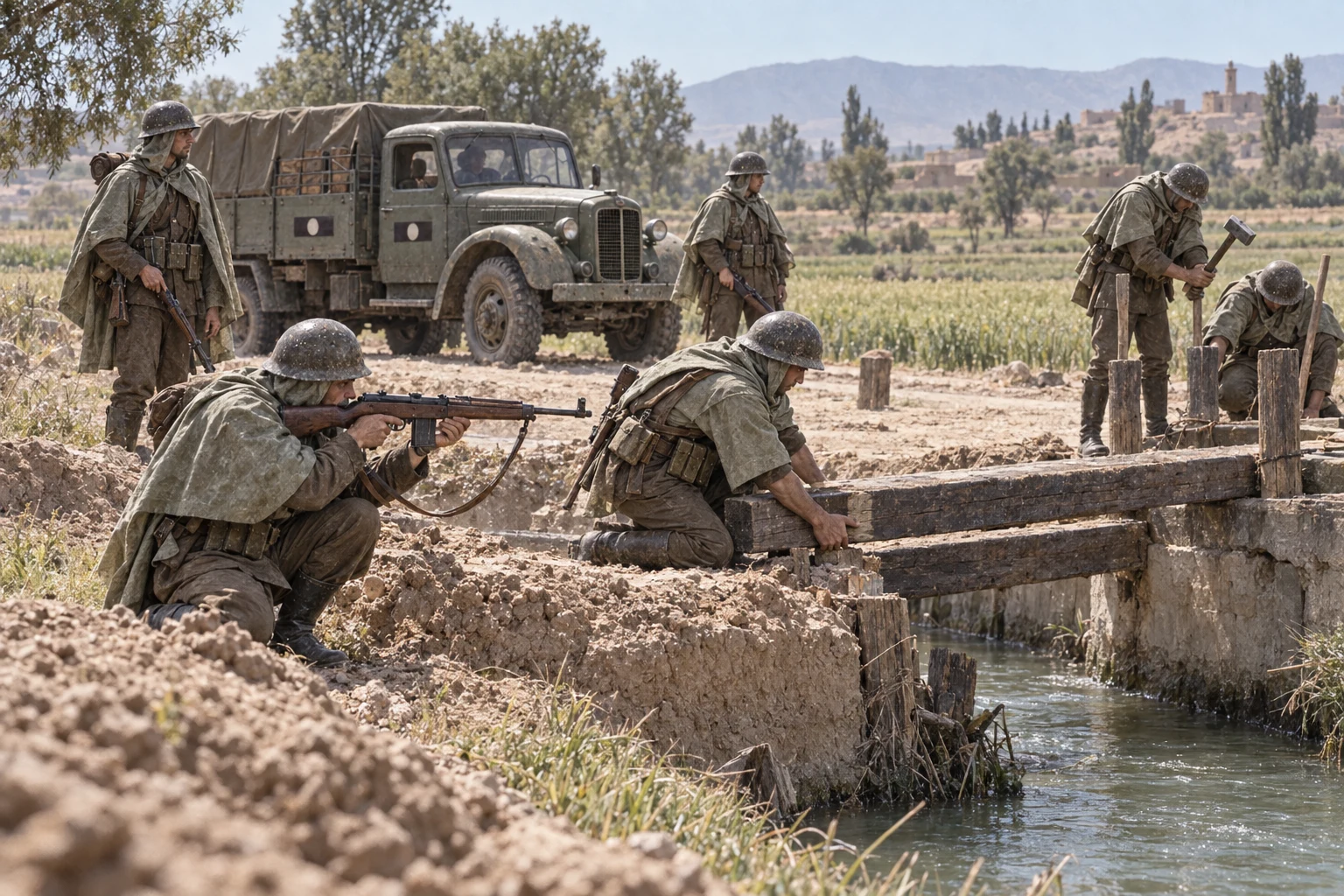
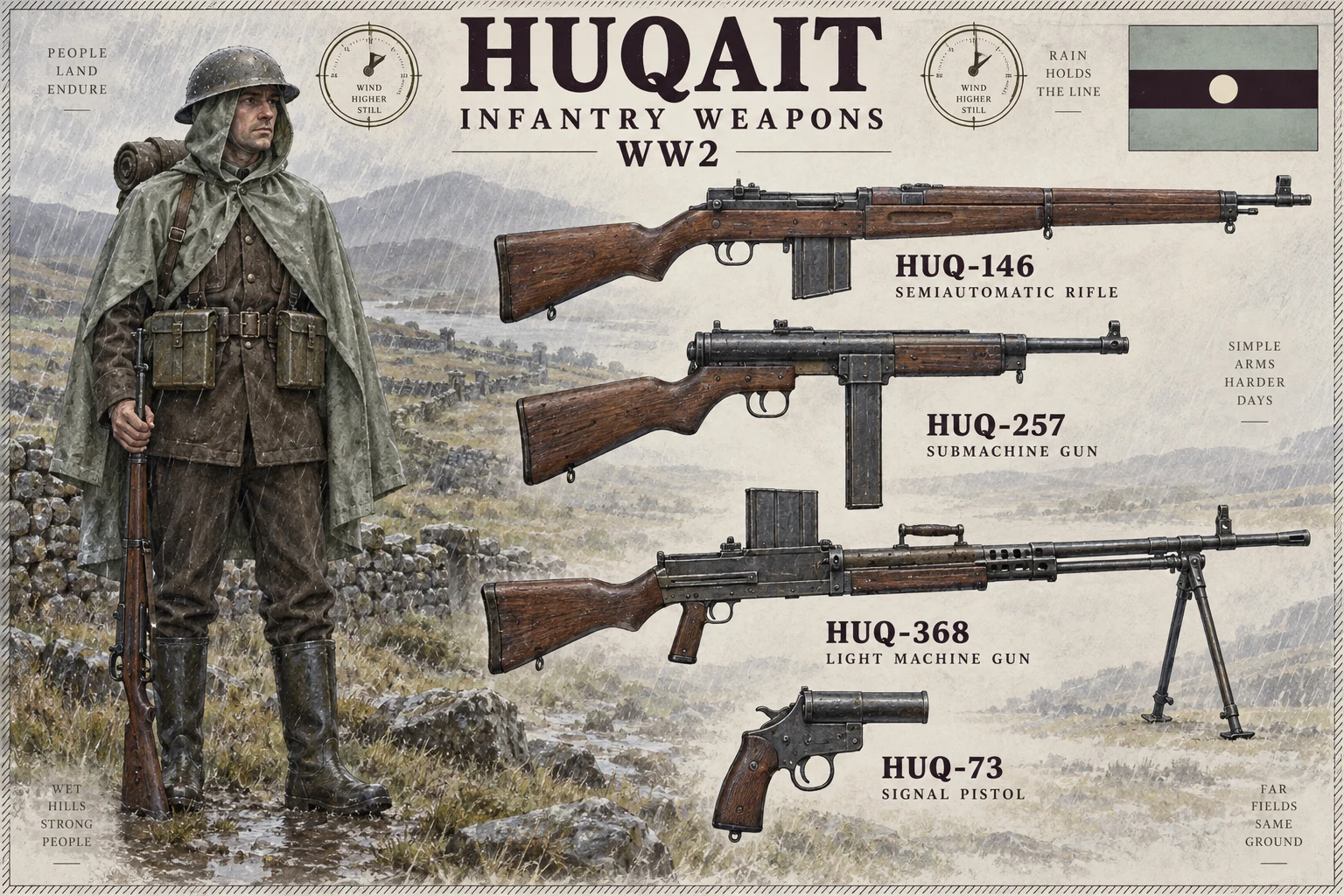
Original illustrations for this source record
Original archive artwork and captions are preserved. Dates, labels and claims printed within inherited images belong to the previous edition; the revised text governs the current history.