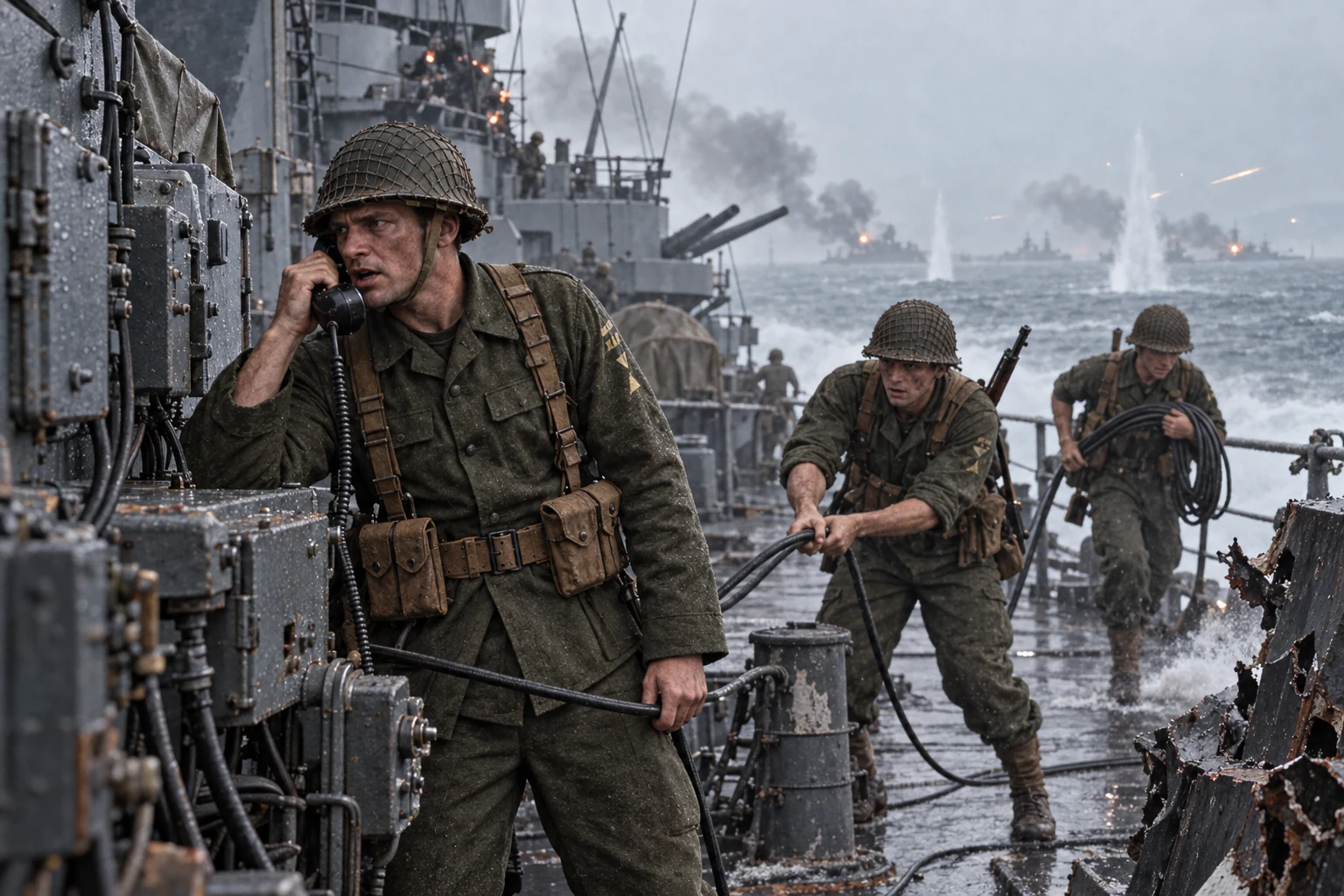
The reserve fleet battle
July 11–28, 1229 · Grand Isles approaches · Silvian and Allied escorts against Kelonese raiding forces
The ships called reserves
The Allied reserve movement of July 1229 contained damaged warships returning to service, replacement crews, and auxiliaries carrying equipment for the continuing island campaign. Calling it a reserve fleet concealed its uneven condition. Some ships had excellent crews and obsolete machinery; others possessed new equipment operated by sailors who had never heard hostile fire. Silvian Commodore Nera Ves commanded the immediate escort aboard the cruiser Common Resolve. Naviri Captain Talen Nu commanded an accompanying destroyer division, and Kavean patrol craft joined near their own consenting ports. Kelonese Rear Admiral Miro Taka sought to intercept the movement with the heavy cruisers Kairen and Osumi, five destroyers, and reconnaissance support. The battle added no new global fleet count and did not draw every carrier away from the larger Nagasaki war.
On July 11, the repair ship Civic Forge suffered machinery failure and reduced the convoy's speed. Ves considered leaving her under separate escort, but the ship carried specialized workshop equipment unavailable at the forward anchorage. She retained Forge while ordering the fastest transports to proceed under Nu's protection. The division of the convoy simplified movement for one group and exposed the other. Kelonese scouts found the slower ships on July 12 and tracked them intermittently through rain. Taka chose the slower group as his target, expecting that its escort would be too weak to prevent destruction of the auxiliaries. He did not know that the carrier Far Beacon had been diverted toward the area, although its aircraft could not arrive before the first surface encounter.
A cruiser between the transports
Kairen opened fire shortly after dawn on July 14. Common Resolve answered while Ves ordered the auxiliaries to scatter toward a prearranged Allied rendezvous. The Silvian cruiser was outmatched by the two enemy heavy ships but benefited from poor visibility and the narrow intervals in which either side could observe results. A shell struck Resolve's forward command spaces, killing the navigator and severing several internal communications lines. Ves moved to the after station, where Lieutenant Eren Moll reconstructed the ship's position from surviving instruments and reports shouted through passageways. His work lacked the dramatic visibility of the gunnery action but kept the cruiser from turning into the fleeing auxiliaries during a confused maneuver. Resolve remained afloat and under control despite severe damage.
The escort destroyer Civic Thread was less fortunate. Hit repeatedly while protecting Forge, she lost speed and began to settle. Commander Lera Noss ordered abandonment after a fire reached the after machinery space. Forge's boats returned to recover survivors even though the repair ship remained within sight of the enemy. Chief fitter Saren Pell directed civilian repair workers and naval sailors in lifting wounded men aboard. One boat was destroyed, killing its crew and several rescued sailors. Pell survived with burns and later insisted that the dead boatmen appear in the fleet's official account rather than only in the auxiliary service register. Their action saved 186 of Thread's crew, while ninety-four died in the ship or during rescue.
Far Beacon's aircraft arrived in the afternoon and forced Taka to break off. Their attacks damaged Osumi without disabling her, while Kelonese fighters brought down seven Silvian aircraft. Pilot Lieutenant Mara Venn ditched near the convoy and spent four hours in the water before a Kavean patrol craft recovered her. The patrol's commander had diverted from an assigned route after seeing dye on the sea, an initiative that temporarily left another approach uncovered. Ves endorsed the decision when the reports were reviewed. The battle's survivors repeatedly owed their lives to choices that appeared inefficient when measured only against the movement schedule. Such decisions also carried genuine risks for other ships, preventing the account from becoming a simple celebration of rescue without consequence.
The second passage
The scattered groups reassembled between July 17 and 19. Two transports had reached their destination independently, one had returned to a rear harbor with damage, and the remaining ships required a revised escort arrangement. Nu rejoined Ves with his Naviri destroyers and argued that the auxiliaries should proceed in a smaller group rather than wait for every damaged vessel. Allied command approved. Common Resolve withdrew for repair, and Ves transferred her flag to the light cruiser Civic Balance. Forge continued after emergency work restored sufficient speed. The new movement began on July 21, carrying fewer ships but preserving the workshop equipment that had originally made Forge worth defending. Its destination remained within consenting Allied territory; no neutral anchorage was treated as an automatic sanctuary or supply base.
Taka attacked again on July 24, hoping the first battle had exhausted the escorts. This time Nu's destroyers detected his approach early enough for the transports to alter course before contact. The Naviri destroyer Neralu was damaged in the ensuing action, but its attack forced Kairen to turn away from the convoy. Far Beacon's aircraft struck later that day and inflicted serious damage on Osumi, which had not fully repaired the earlier hits. Taka ordered the cruiser abandoned after flooding overwhelmed its damaged compartments. Kelonese destroyers recovered most of the surviving crew and withdrew. Nu's force did not pursue beyond the area where it could still protect the auxiliaries. The distinction between driving off the enemy and chasing it determined the convoy's survival.
Nu's division entered harbor flying national colors above battle damage that required months to repair. Neralu's crew remained together during reconstruction instead of being dispersed immediately. The decision preserved experience while denying other ships replacements, a choice Naviri's naval staff accepted because the damaged destroyer could return to service.
By July 28, the surviving reserve movement had reached Allied reception anchorages. Forge entered port with temporary repairs visible above the waterline and rescued sailors sleeping among its workshop machinery. Allied losses across the battle were one destroyer, two auxiliaries, forty-one aircraft, and 712 dead or missing presumed dead, with 1,146 wounded. Kelonese losses were Osumi, one destroyer, fifty-eight aircraft, and 1,284 dead or missing, with 903 wounded. These totals included the rescue losses and both encounters. The workshops ashore received their equipment late but intact enough to restore damaged landing craft before the next campaign. Ves's report called the operation successful and costly. Pell, still recovering from burns, added the boatmen's names to its appendices. They remained there in the final published record of a battle fought largely to ensure other ships could fight again.
Original illustrations for this source record
Original archive artwork and captions are preserved. Dates, labels and claims printed within inherited images belong to the previous edition; the revised text governs the current history.