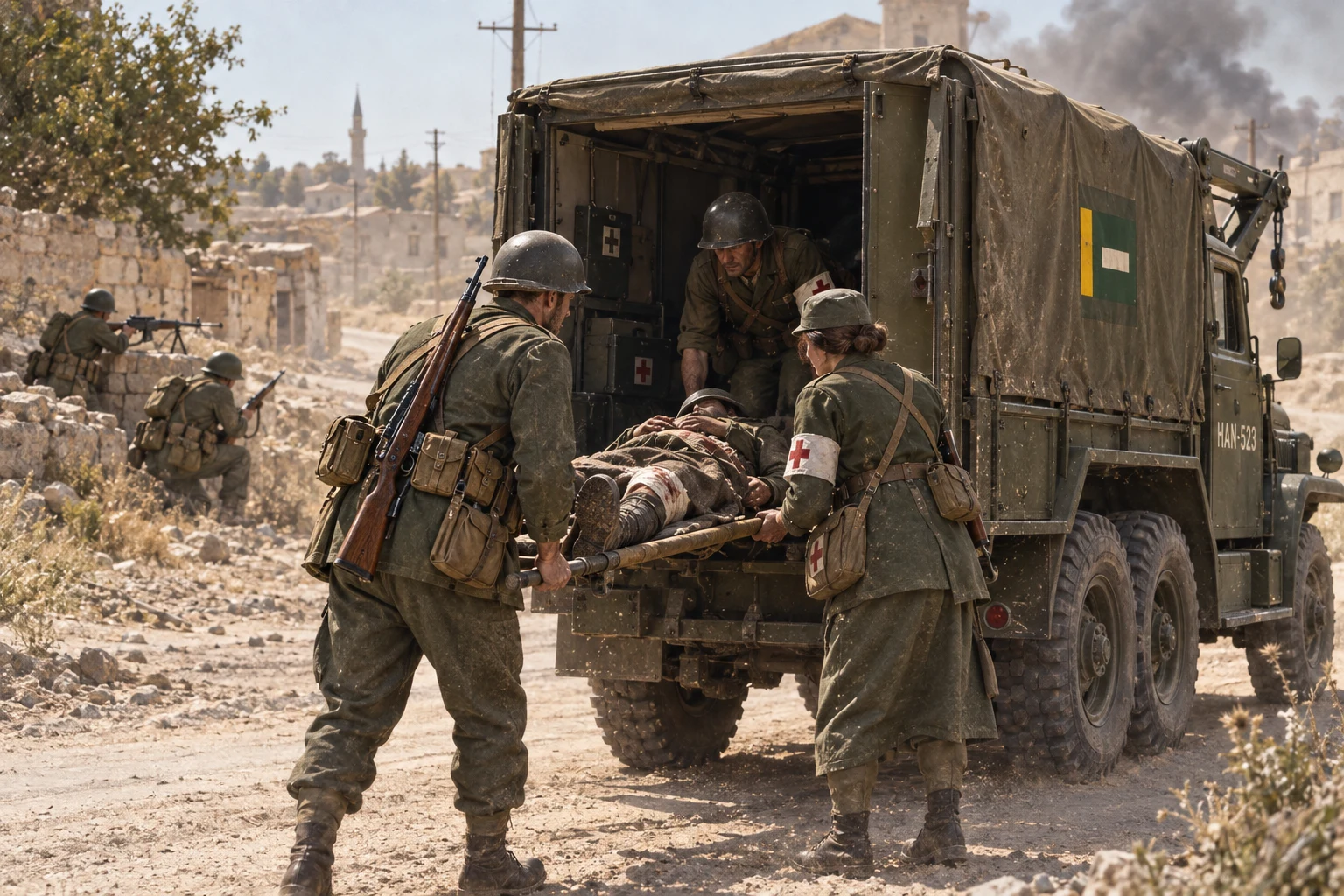
Ruuyaq's final field campaign
August 8–September 3, 1234 · Ruuyaq theater, Gaften · Allied Gaften commands against Ruuyaq's remaining organized forces
Defeat arrives through Gaften's own war
Ruuyaq's final crisis followed years of fighting within Gaften and the collapse of major Axis partners elsewhere. Hukular's and Tera's defeats mattered because they reduced external support and strategic alternatives. They did not automatically surrender Ruuyaqi units or liberate every occupied district. Allied regional armies and the continuing Silvian commitment still had to confront an opponent capable of organized local resistance.
The Namar administrative and transport district became one focus of the final field campaign. By this stage, Allied advances within the established theater had brought the war into Ruuyaq's remaining defensive system. The account does not invent a direct Handistan–Ruuyaq border or a neutral transit route to explain that result. It follows the culmination of the existing campaign and its authorized Allied arrangements.
General Tessa Varin's Silvian grouping participated alongside regional forces whose stake in the war long preceded Silvian entry. Handistani, Qarimi, Trenoan, Huqaiti, and Syran authorities had their own priorities concerning recovery, prisoners, and the future of occupied communities. The campaign command had to preserve cooperation through the approach of victory, when expectations about the settlement could create new disputes.
August 8–17: The outer positions
The operation beginning August 8 encountered defensive formations unevenly supplied and still dangerous. Some Ruuyaqi commanders held prepared positions effectively. Others lacked the support to sustain more than a short resistance. Allied intelligence distinguished those conditions imperfectly, and advancing troops sometimes found stronger opposition where higher headquarters expected little remaining capacity.
Varin's force attacked an outer district containing workshops and government stores. Its leading units captured part of the area, then paused while adjacent forces established contact. Earlier experience in 1228 had made the general wary of treating visible progress as proof that the entire support system could follow. The delay allowed some defenders to withdraw and prevented her own formations from becoming isolated beyond useful assistance.
Civilian movement complicated the fighting. Residents fled toward the Allies, remained under official restrictions, or moved between relatives according to incomplete reports. Local authorities sometimes continued ordinary services while military units departed. Allied civil personnel worked to preserve those functions where possible, distinguishing the administration of water, food, and hospitals from the political system responsible for the war.
August 18–27: The command's choices narrow
Ruuyaq's remaining field command attempted to concentrate reserves around the more important connections. The effort was limited by shortages, damaged movement, and competing instructions from political authorities. Some officials demanded resistance without presenting a plausible way to restore the force. Others began seeking information about terms while publicly insisting that the campaign could continue.
The battle around Namar's outer service quarter became a series of local engagements as defenders withdrew from some positions and reinforced others. Allied units captured prisoners in growing numbers, including men separated from their commands rather than formations surrendering together. Processing those prisoners required interpreters, medical care, and records at a scale that began competing with the movement of combat supplies.
Varin's headquarters established a clearer separation between troops conducting the advance and services handling the expanding rear responsibilities. The change improved movement and exposed shortages of trained personnel for custody and relief. Victory did not reduce the number of tasks requiring organization; it changed their distribution. Regional Allied governments provided additional civil and medical personnel while seeking information about their own missing citizens.
Namar’s medical office
At Namar's service quarter, the Allies captured a medical office whose staff had continued treating patients after the field command withdrew. Director Amira Qes possessed lists of people too ill to leave and requested supplies without endorsing either government's political claims. Varin authorized assistance through the joint medical arrangement while security personnel established which buildings remained occupied by troops.
The decision caused friction with officers who wanted every captured office searched before any resources entered it. Varin separated treatment from the examination of records, allowing both responsibilities to proceed under supervision. Qes's staff identified supplies in the building that military inventories had missed because the labels used administrative abbreviations. Those stores reduced the relief requirement and were recorded before distribution.
The office remained open through the capitulation, providing continuity for residents who otherwise would have lost treatment during the transfer of authority. Its survival did not vindicate the defeated political system or settle government. It preserved a public function while those decisions remained pending. The episode illustrates why the final campaign could not be assessed solely through positions taken and troops disarmed: the ability to keep a service operating determined whether military success immediately produced another civilian emergency.
August 28–September 3: A national decision
By late August, Ruuyaq could no longer connect local resistance to a credible plan for continuing the national war. Its forces retained weapons and positions, but the strategic system supporting them had failed. Authorized representatives entered the arrangements leading to general capitulation. Field commanders needed clear instructions to distinguish genuine national orders from rumors or unauthorized local approaches.
Fighting continued in places while those instructions circulated. Allied commanders maintained pressure and made provision for surrender where authorized. Some Ruuyaqi units ceased resistance promptly; others required further contact to verify the order. Medical and civilian emergencies persisted regardless of the negotiating schedule, requiring cooperation before every political question had been settled.
Ruuyaq's general capitulation took effect on September 3. It ended the state's organized national war without automatically concluding the separate conflicts of every Axis partner in Gaften. Those governments reached their own settlements as the principal front fragmented through the following weeks. The campaign's result belonged to the regional Allies and their supporting partners together. It completed a struggle begun in 1210, leaving the work of recovery in societies whose military liberation could not immediately restore the people, property, and ordinary institutions consumed by twenty-four years of war.
Original illustrations for this source record
Original archive artwork and captions are preserved. Dates, labels and claims printed within inherited images belong to the previous edition; the revised text governs the current history.