The western chains and the battle offshore
March 6–April 28, 1226 · Western Grand Isles and adjoining Nagasaki waters · Silvian-led Allied forces against the Kelonese Empire
A campaign sustained from two directions
The western chains campaign tested whether Silvia's hard-earned amphibious competence could operate across successive objectives while the fleet faced a continuing enemy. The landing force had to retain and support positions ashore; the naval command had to protect movement, sustain aviation, and keep damaged ships from exhausting the force's useful strength. Neither task could be completed once and treated as background to the other.
General Mira Dalen's army formations included veterans and replacements organized around procedures developed since Orava. Admiral Oren Vask coordinated naval support within the wider Allied arrangements. Their relationship had become more effective without becoming free of disagreement. Dalen sought predictable support for the troops ashore. Vask had to preserve a force capable of providing that support after another encounter at sea.
The campaign's local objectives were positions within the already established western island theater. This account does not assign new national borders or assume access through neutral Korai or Savaio. Allied island personnel remained central to interpreting terrain and coordinating civil arrangements. Silvian strength enlarged the operation; it did not make local knowledge unnecessary.
March 6–19: The first positions
The opening landings met organized resistance and secured usable footholds. Troops still arrived out of sequence in places, but shore commands identified the resulting gaps earlier. A formation missing communications equipment was not reported as fully ready merely because most of its infantry had landed. The clearer accounting slowed some planned movements and prevented unsupported expectations from becoming orders.
Kelonese defenders contested the approaches inland and attacked vulnerable connections. The Allies lost several exposed positions before establishing a more coherent arrangement. Dalen accepted local withdrawals where they preserved the force's ability to hold its principal objectives. Her command distinguished between giving up ground and abandoning the operation, a distinction that inexperienced headquarters had struggled to maintain two years earlier.
Offshore, damaged vessels began moving through repair and replacement arrangements. Each departure reduced immediate strength and preserved future availability. Vask refused requests to keep every ship continuously on station regardless of condition. The resulting gaps required revised support schedules, and infantry commanders sometimes waited longer than they considered acceptable. The tension was managed openly rather than concealed beneath assurances that the fleet would always be present in the same form.
March 20–24: The carrier action
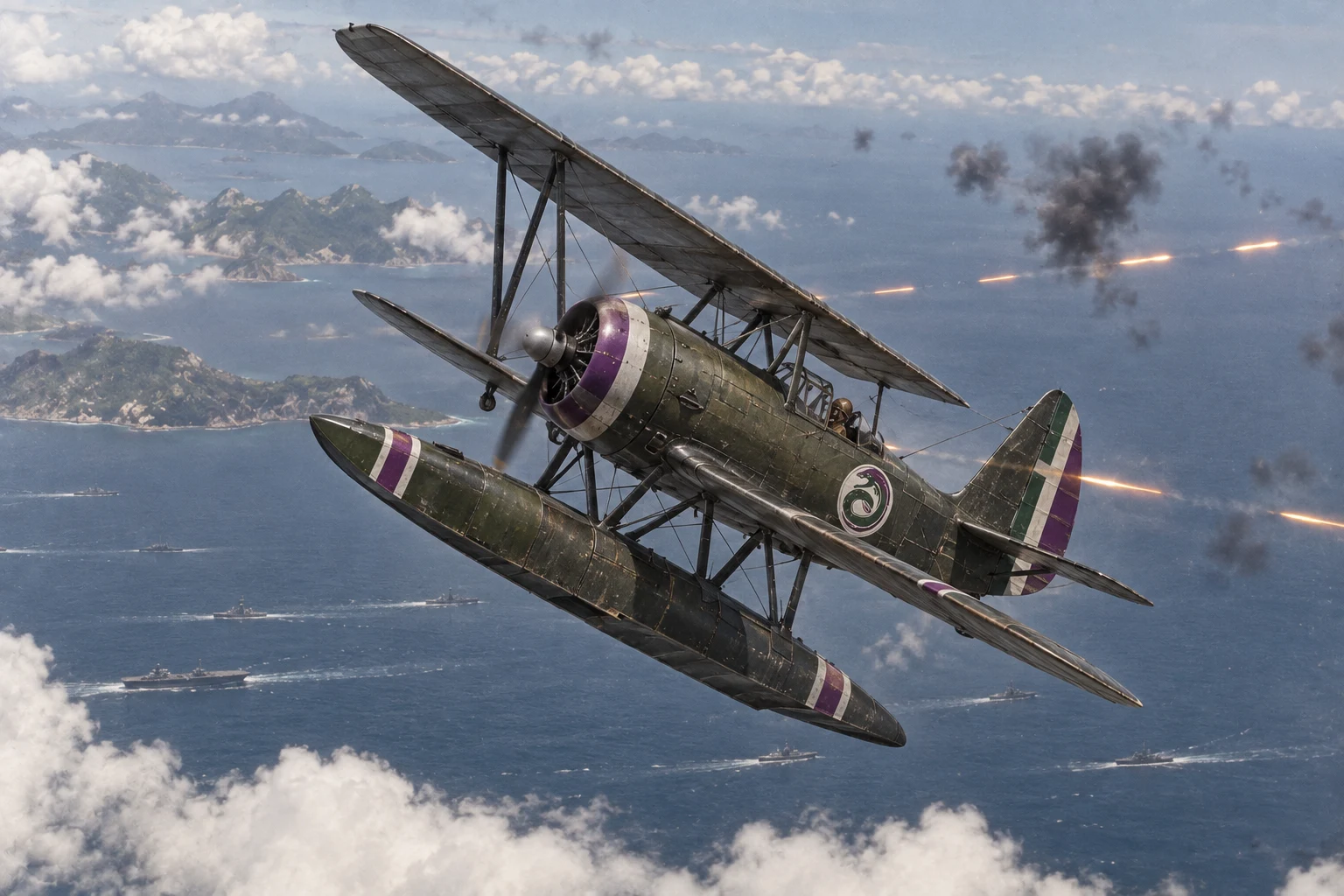
Kelonese naval forces challenged the supporting system during the third week of March. Reconnaissance and weather produced an incomplete picture for both commands. Reports identified enemy activity without always establishing the location of the force responsible. Silvian aviation operated amid changing information, and returning crews brought accounts that differed in the number and condition of ships seen.
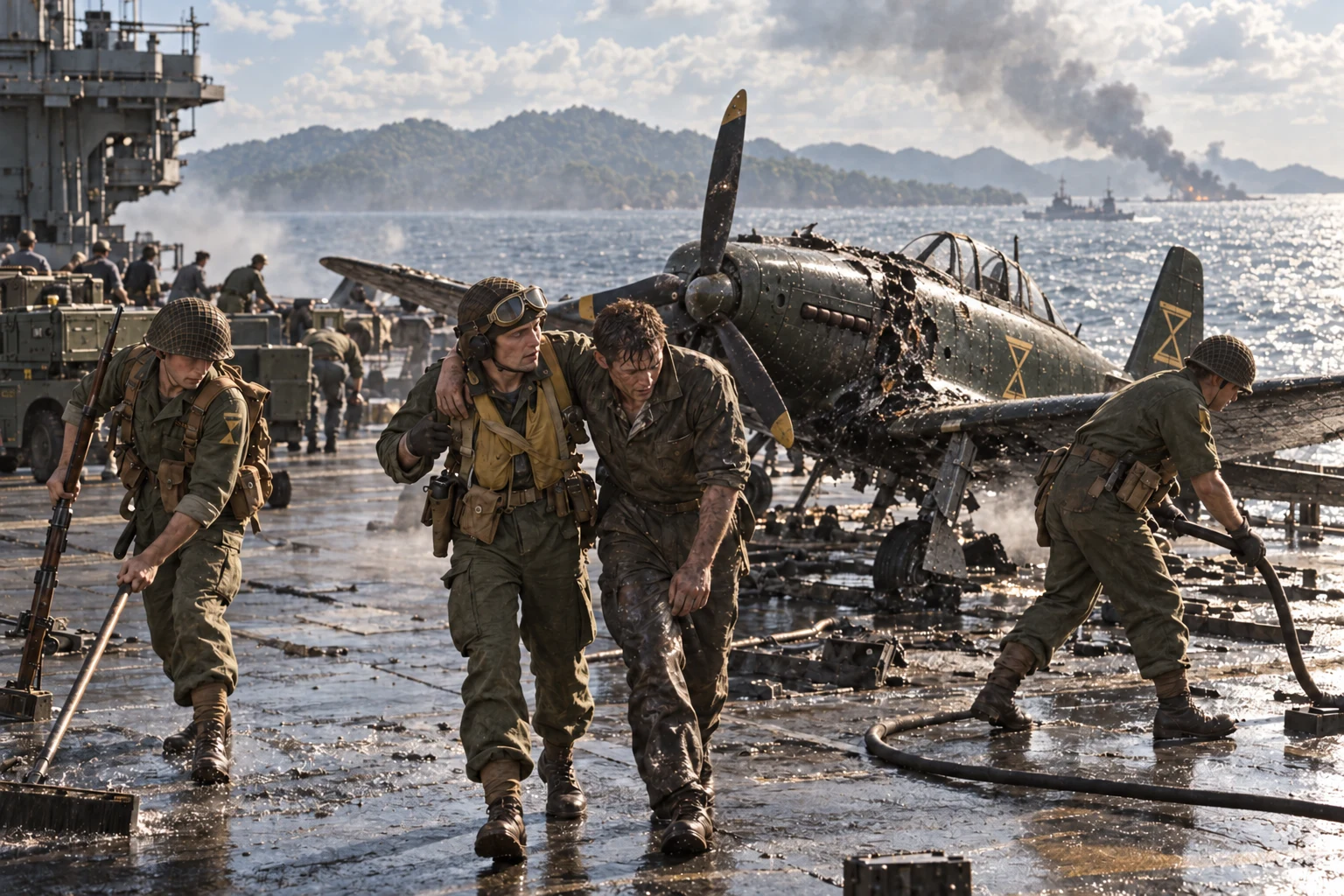
An attack damaged a Silvian carrier's flight facilities while aircraft remained away from the ship. The immediate problem was larger than repairing the deck: returning aircrews needed somewhere to land, other ships had their own schedules, and fuel limited how long decisions could be deferred. The force redistributed recoveries and suspended some planned activity. Aircraft reached alternate ships carrying crews who would have to be reunited with maintenance personnel and stores later.
Below the damaged flight facilities, repair and medical teams worked simultaneously. Smoke interrupted access to compartments, and reports of the ship's condition changed as parties reached previously inaccessible spaces. The captain retained enough control to withdraw with escort. His ship survived but could not continue performing its assigned role, a distinction reflected imperfectly in early victory claims that counted only vessels sunk.
Kelonese forces also suffered damage and lost aircraft. Their command did not achieve the interruption required to isolate the Allied landing force. Neither side obtained the complete destruction of the opposing fleet. The action ended through separation, recovery, and the need to manage damaged formations rather than a clear final exchange visible to every participant.
The damaged Resolute Horizon
The damaged carrier was the Silvian Resolute Horizon, flagship of Rear Admiral Jesan Tor. Its captain, Mera Dast, reported at 14:12 on March 22 that the flight facilities could not accept the returning group as scheduled. Vask's staff redistributed the aircraft among carriers already managing their own recoveries. Several crews landed on ships where maintenance personnel lacked immediate access to their individual aircraft histories, delaying inspection and subsequent use.
One returning pilot, Lieutenant Sela Renn, carried a wounded observer whose identity had been recorded under the wrong squadron. Medical staff treated him first and reconciled the affiliation later. The apparent disappearance from his original unit produced an urgent search that ended only when the receiving carrier transmitted a complete hospital return. The incident demonstrates how a fleet could preserve an aircraft and its crew while temporarily losing track of them as an operational team.
Resolute Horizon withdrew for repairs with reduced aviation capacity and returned to combat service in August. Its air groups did not all remain together during the interval. Some transferred, some retrained, and some rejoined later. The ship's survival therefore represented continuity of a hull and command institution rather than an uninterrupted formation of identical people. The navy's ability to manage those separations was part of the experience underpinning its much larger establishment at the end of 1226.
March 25–April 28: The campaign continues
The Allies adjusted support while continuing the land campaign. Troops ashore experienced the naval action through delayed stores, changed air support, and unfamiliar ship names in communications. The fact that supplies continued arriving did not mean the sea battle had been inconsequential. It meant the system possessed enough depth to absorb a major interruption without immediately abandoning the positions it supported.
Further fighting secured the campaign's limited western-chain objectives by April 28. Kelonese resistance remained elsewhere, and the broader Nagasaki naval war continued. The veteran amphibious force emerging from the operation was an institution able to repair, replace, coordinate, and learn while fighting. Its competence could not be reduced to the number of surviving soldiers who had personally endured every earlier landing.
The immense late-1226 establishment of 52 operational Silvian carrier battle fleets belongs to a later census, not a claim that all 52 fought together in this March action. This battle showed the demands that such a force would face repeatedly: aircraft separated from their ships, crews transferred, damaged hulls withdrawn, and shore formations waiting for support whose providers were themselves under attack. The campaign succeeded because those disruptions were managed well enough to preserve the connection between naval endurance and the army's continued presence ashore.
Original illustrations for this source record
Original archive artwork and captions are preserved. Dates, labels and claims printed within inherited images belong to the previous edition; the revised text governs the current history.