The Ranuvan relief battle
October 2–November 11, 1225 · Central Grand Isles · Ranuvan and Silvian forces against the Kelonese–Maliko system
Relief with a defined purpose
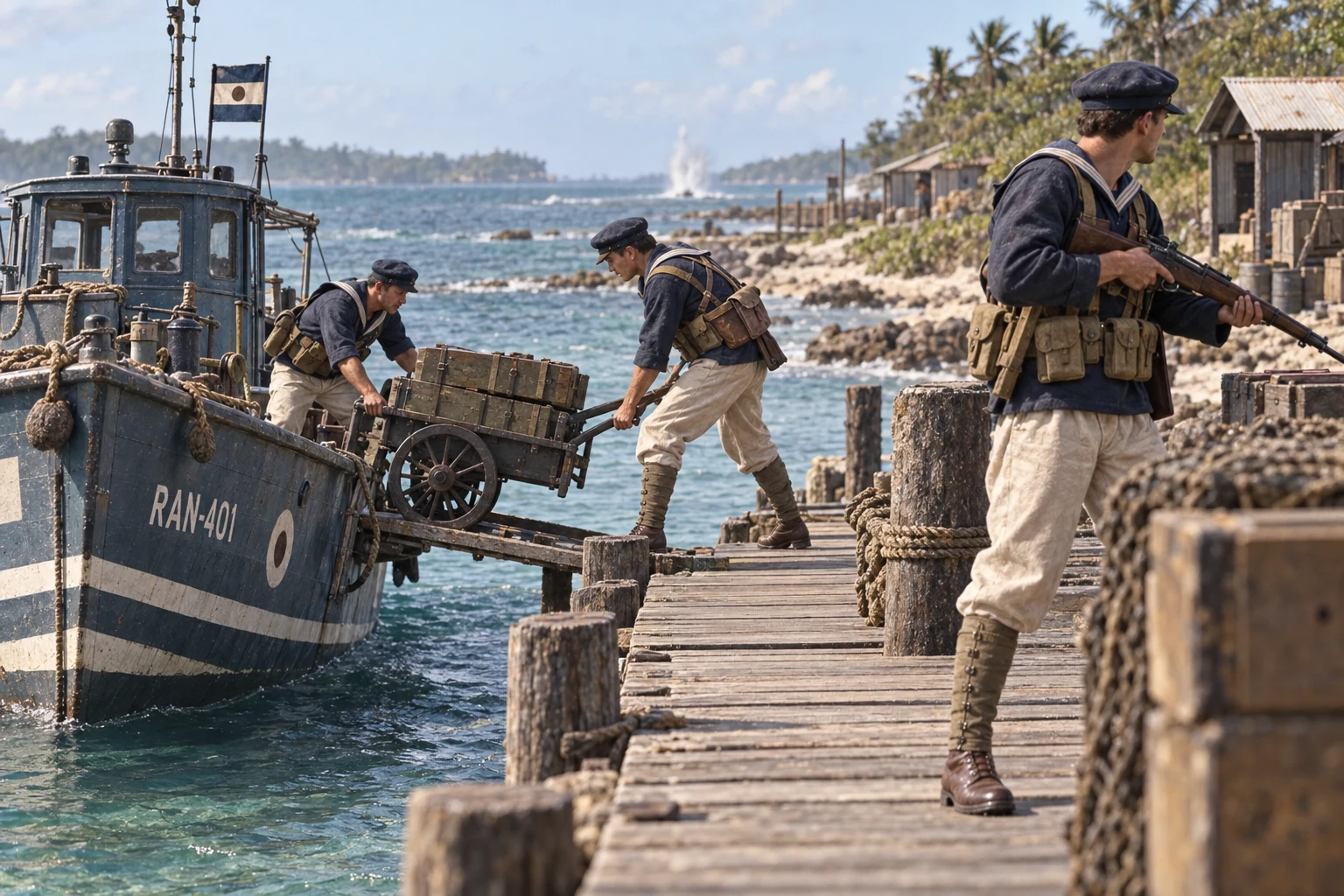
The Ranuvan operation sought to reduce pressure on an Allied receiving and defensive district, not to settle the entire central-island war. Maliko's Axis participation had made the region contested since 1210. Ranuva had maintained resistance through years of maritime support and local fighting. Silvian forces arrived as reinforcements to that existing effort, carrying substantial strength and less knowledge of the district than their hosts.
Ranuvan General Sena Tarel insisted that the plan include the continued operation of civilian reception facilities. The threatened district contained displaced people as well as military stores. A relief operation that secured a road while shutting the receiving system could replace one crisis with another. Silvian officers accepted a joint schedule that reserved access for medical and civilian movements even when military traffic increased.
The Loran receiving district combined coastal facilities with inland defensive positions. Its buildings had been repaired so often that no single plan reflected their current condition. Joint survey parties compared records with actual structures. The process discovered usable shelter omitted from military maps and damage concealed by optimistic administrative returns. Those findings altered the allocation of troops before the operation began on October 2.
October 2–12: Contact with the defenders
The first Allied movement relieved pressure on several Ranuvan positions and established firmer contact with the Silvian support system. The defenders had been holding with limited reserves and initially treated every arriving formation as immediately available for combat. Silvian commanders resisted committing units before their supporting equipment had reached them. The argument was resolved by identifying which local tasks could be undertaken at once and which required a complete formation.
Axis forces reacted with attacks against positions the Allies had only recently secured. Maliko units knew parts of the local terrain intimately and used that familiarity to contest movement. Kelonese support added pressure without giving every local commander control over all the assets he requested. The Allied advance consequently faced an opponent capable of coordinated resistance but also subject to delays and competing priorities.
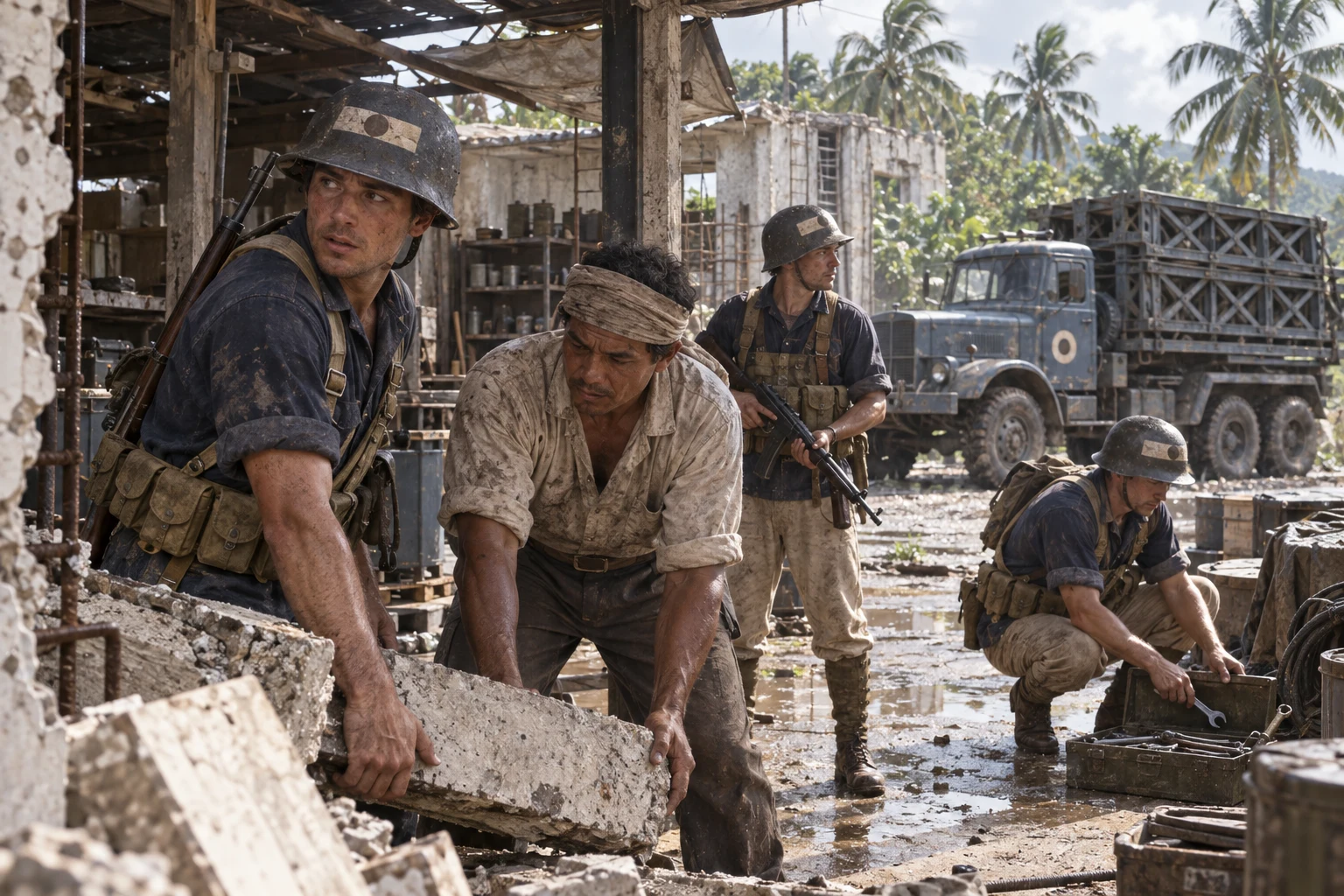
A hard fight developed around a vehicle repair compound. Its buildings mattered less than the access they controlled between receiving facilities and the inland defense. Ranuvan troops retained part of the compound while Silvian units recovered an adjoining district. Liaison officers established a shared account of which entrances and buildings each force actually held, preventing the word “compound” from concealing several separate tactical situations.
October 13–27: The relief becomes an extended battle
The operation lasted longer than initial public expectations. Heavy rain interrupted movement, damage accumulated, and exhausted formations needed relief while the objectives remained contested. General Tarel opposed abandoning the effort because the original pressure would return immediately. Silvian commanders requested a pause to reorganize support. The compromise maintained the positions already gained while delaying further attacks until the force could sustain them.
During the pause, civilian medical traffic exposed weaknesses in the agreed schedule. Ambulances and supply vehicles arrived with emergencies that could not wait for their assigned interval. Local officers improvised exceptions, sometimes creating congestion farther along the route. A joint control post was established to make decisions across the whole movement system rather than solving each queue independently.
Renewed attacks in the third week of October improved the Allied position at substantial cost. One Silvian battalion lost experienced junior leaders faster than replacements could learn the sector. Ranuvan officers helped maintain continuity by sharing local knowledge and liaison personnel. The arrangement worked because both commands acknowledged the dependency, rather than treating outside help as an embarrassment to a supposedly self-sufficient formation.
Two names for Building C
The repair compound's disputed buildings were eventually designated by letters after repeated confusion between Ranuvan workshop names and Silvian map numbers. General Tarel objected to permanently replacing local names, and the compromise used temporary letters only in operational messages. Signs at the entrances carried both forms. The measure made instructions clearer without erasing the civilian identity of a place that would return to ordinary use.
An October 19 relief illustrates its value. A Silvian company ordered to Building C reached the correct entrance while its Ranuvan guides continued using the name Eastern Coach Works. Earlier reports had treated those descriptions as separate objectives. The dual signs and revised sketch allowed the two commands to confirm contact without sending another party through the contested yard.
After the compound was secured, its surviving foreman used the same sketch to identify damaged equipment and prepare repair claims. Military documentation thus became part of restoration, but only because local staff could connect it to their existing records. The lettering was removed when the immediate campaign ended. Tarel preserved one sign in the district office as an example of a practical wartime arrangement that served cooperation without becoming a claim that the arrival of a larger allied army entitled it to rename the place permanently.
October 28–November 11: A corridor that functions
The final phase secured a dependable connection within Allied-held territory between the receiving district and the supported defense. This was not a new international corridor through neutral land. Its value came from restoring use of facilities and approaches already belonging to the participating Allied system. Neutral Palora's sovereignty remained separate from the operation and was not treated as a convenient solution to its difficulties.
Axis counterpressure continued but failed to undo the principal result. The Allies repaired damaged handling facilities and established rotation arrangements before announcing the operation complete on November 11. Some surrounding ground remained contested, and vessels still required protection. Relief meant that the district could sustain its tasks more reliably, not that danger had disappeared.
Ranuvan authorities measured the result through resumed deliveries, shorter medical delays, and the ability to keep displaced families in organized accommodation. Silvian commanders measured it through a retained objective and a functioning joint operation. Both assessments were valid. The battle demonstrated that the expedition's developing experience could serve another ally's existing war without requiring that ally to surrender control of its institutions. It also showed how much work followed the fighting before a tactical gain became the relief promised to the people depending on it.
Original illustrations for this source record
Original archive artwork and captions are preserved. Dates, labels and claims printed within inherited images belong to the previous edition; the revised text governs the current history.