Red Mangrove
July 9–August 3, 1224 · Western Grand Isles · Silvian and Allied island forces against Kelonese defenders
A foothold chosen for endurance
The operation called Red Mangrove followed the Orava inquiry and months of difficult jungle fighting. Its objective was a limited coastal foothold that the Allies could retain and use, rather than a rapid movement across an island based on optimistic assumptions about resistance inland. General Mira Dalen and Admiral Oren Vask agreed on more explicit conditions for continuing the advance. Disagreement remained, but they now had a shared procedure for deciding whether reports justified another commitment.
The terrain combined mangrove margins, firmer patches, and tracks serving inland settlements. The name did not imply a uniform swamp or a single obvious landing place. Allied island personnel identified differences that Silvian maps had compressed into vegetation symbols. Some knowledge came from people whose last visit preceded years of occupation, so planners treated it as valuable testimony requiring qualification rather than perfect intelligence.
Eran Vale's formation entered the operation with survivors from earlier fighting and replacements trained under revised procedures. The veterans understood how quickly small misunderstandings became separations. They checked meeting points, casualty arrangements, and the meaning of withdrawal instructions with an intensity the new men sometimes found excessive. Those habits were among the practical results of Orava's failure.
July 9–12: The shore is only the beginning
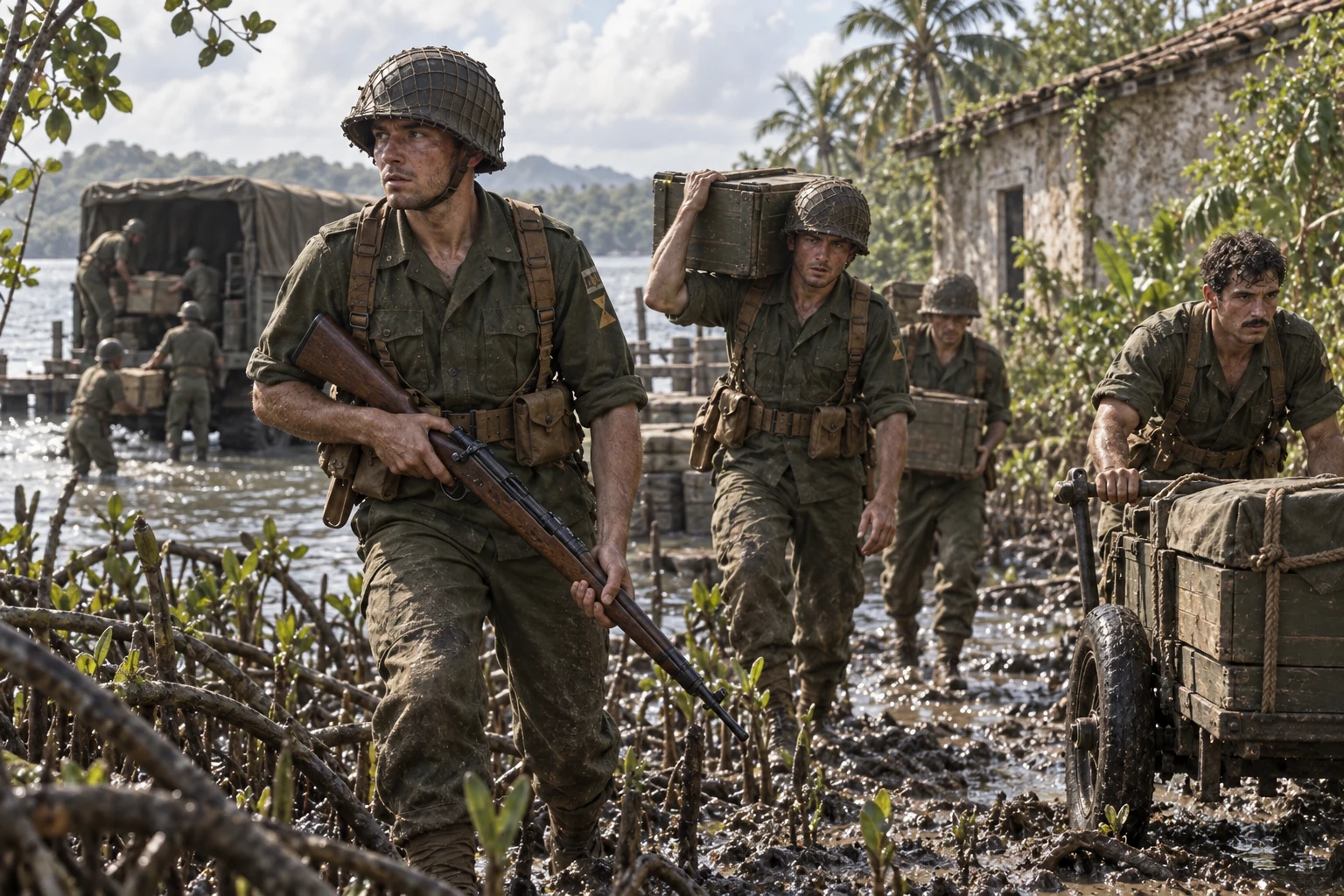
The landing on July 9 met resistance and suffered confusion, but the force established a more coherent shore organization than in February. Loads were tracked to their intended users, and reports distinguished material unloaded from material delivered forward. That distinction exposed shortages early rather than allowing commanders to assume everything visible on the beach had reached the troops.
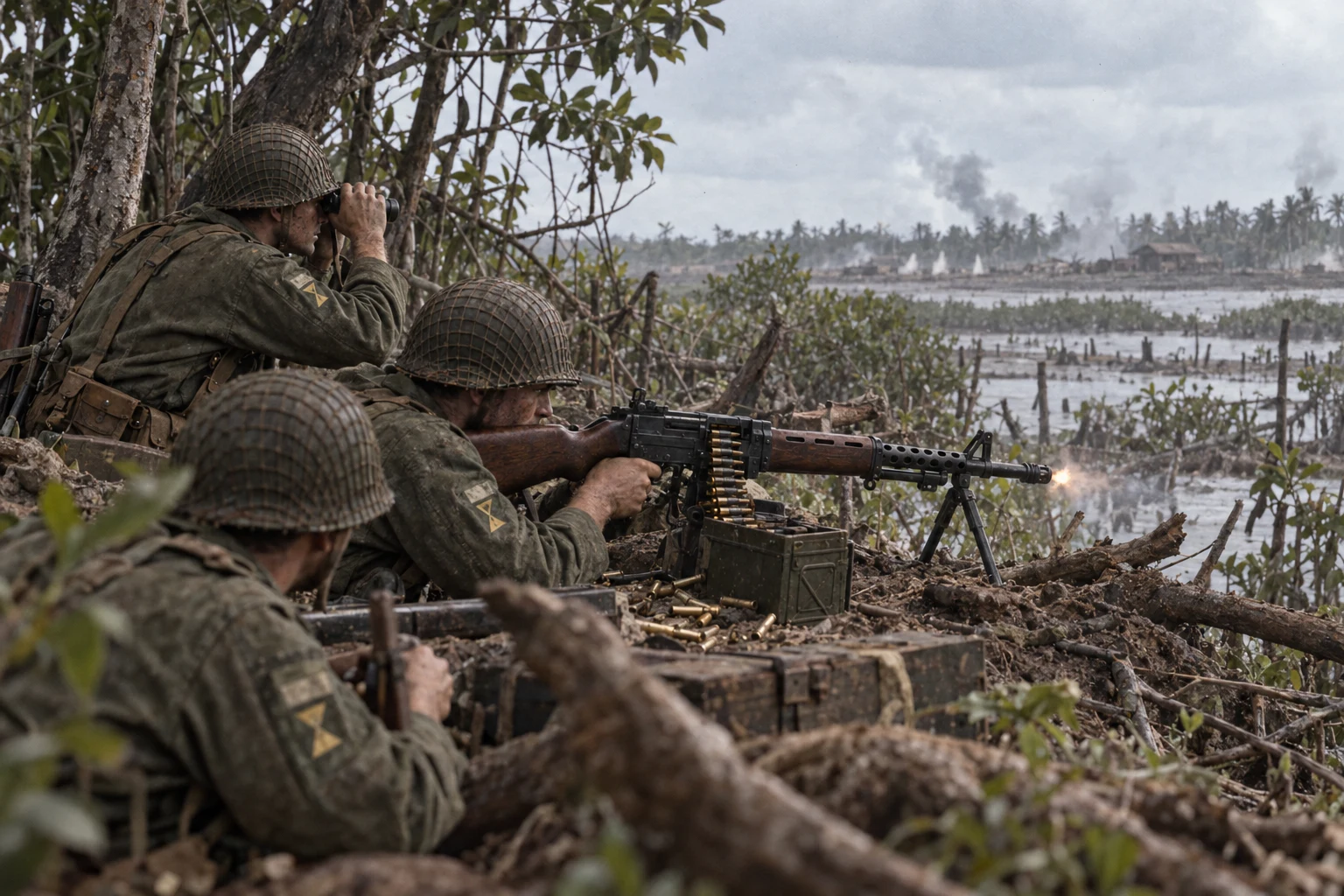
Vale's company moved toward a firm-ground position beside an abandoned agricultural building. Kelonese fire halted its leading elements before the whole company reached the intended area. Rather than reporting the objective taken because a patrol had entered it, Vale described the partial occupation and requested time to reconnect his groups. The more cautious report slowed higher expectations and brought support to the actual problem.
The first night remained dangerous. Sounds traveled unpredictably through vegetation and water, and men mistook movement by neighbors for enemy activity. Officers and experienced noncommissioned personnel spent hours preventing exhausted soldiers from reacting to every noise. A local guide who had accompanied the force corrected a mistaken identification of a track, helping a supply party reach the company without wandering into contested ground.
July 13–22: The counterattacks
Kelonese commanders recognized that the foothold threatened a useful part of their local system. They responded with attacks intended to disrupt its connections before it became firmly established. The Allies lost some exposed positions and recovered others. Dalen did not treat every local withdrawal as a collapse of the whole operation. Her headquarters asked which functions had been affected and whether the force could still sustain itself.
On July 16, a counterattack cut off one of Vale's forward groups for several hours. The men retained ammunition but lost their immediate route for casualty removal. Their eventual relief required coordination with neighboring troops whose own position was under pressure. The rescue succeeded at additional cost, and the recovered ground was not retained merely to justify that sacrifice. Vale shifted the line to a position his company could maintain.
Disease and exposure began reducing strength alongside combat losses. Medical personnel recorded men too ill to function who had remained with their units because they feared being judged unwilling. Dalen ordered condition reports to include those limitations. The change initially made the force look weaker in official returns while making its actual requirements clearer. Replacements were assigned to restore functioning units rather than simply equalize paper totals.
Leaving the observation shelter
The most contentious withdrawal during Red Mangrove concerned a forward observation shelter that had survived repeated attacks. Its occupants regarded departure as surrendering the only solid position they possessed. Vale's inspection showed that the shelter's immediate strength concealed its isolation: wounded could no longer be removed regularly, and the neighboring ground had changed hands. He explained the withdrawal using those practical conditions rather than dismissing the men's confidence in a place that had kept them alive.
Corporal Len Arven led the last party out, carrying the company observation notebook. It contained drawings that remained useful after the shelter was abandoned, although the new position required every bearing and landmark to be checked again. Arven annotated which entries described the former viewpoint. That small distinction prevented an incoming officer from assuming the notebook's observations had been made from the ground his troops now occupied.
The Kelonese counterattacking force occupied the abandoned shelter the following day and found stores the Silvians had been unable to remove. Its possession did not undo the Allied foothold. Dalen's report therefore separated the loss of a defended building from the survival of the operation's essential connections. The episode became a useful correction to accounts that treated maturation chiefly as greater willingness to attack. At Red Mangrove, improved judgment also meant leaving a strong-looking position before maintaining it consumed the force it was supposed to protect.
July 23–August 3: Holding becomes the result
The final phase consisted of consolidating the foothold under continued pressure. Engineers improved handling and shelter while infantry protected the work. Vask's naval support arrangements included rotation and repair rather than an assumption that every ship could remain continuously available. Weather and damage still interrupted delivery, but interruptions no longer automatically produced the same degree of disorder.
Civilian residents entered the Allied area gradually. Some had remained nearby throughout the fighting; others arrived after hearing that medical treatment was available. Their presence required food, screening for urgent illness, and arrangements for relatives still outside the foothold. Allied officers worked with surviving local authorities rather than treating the population as a collection of potential guides or laborers. The process was imperfect and sometimes slow, but it gave civil needs a recognized place in the operation.
By August 3, the Allies retained a costly but usable foothold. They had not conquered the surrounding island system or eliminated Kelonese resistance. The achievement was more specific: the force ashore could be supplied, relieved, and employed without depending on a succession of improvisations to avoid collapse. Vale's men understood the difference because they could see their wounded leave through a functioning chain and their replacements arrive with instructions that matched the ground.
Red Mangrove became a turning point in Silvian practice without being a clean victory. It demonstrated that restraint, accurate reporting, and coordinated support could preserve a result under pressure. The army still paid heavily for each advance, but its suffering now contributed to an organization increasingly capable of retaining what it had fought to gain.
Original illustrations for this source record
Original archive artwork and captions are preserved. Dates, labels and claims printed within inherited images belong to the previous edition; the revised text governs the current history.