Kandar Harbor
June 8, 1223 · Silvia · Kelonese attack and Silvian defensive action
Before the first warning
Kandar Harbor was a Silvian facility in a neutral republic. It was not an Allied belligerent base, and the attack did not interrupt a secret Silvian war already underway. The preceding harassment and diplomatic deterioration had encouraged defensive preparations without resolving how a major attack would begin. Ships remained in varying states of readiness, repair, loading, and ordinary harbor service. Their presence reflected the work of a navy and commercial port, not a single formation waiting for battle.
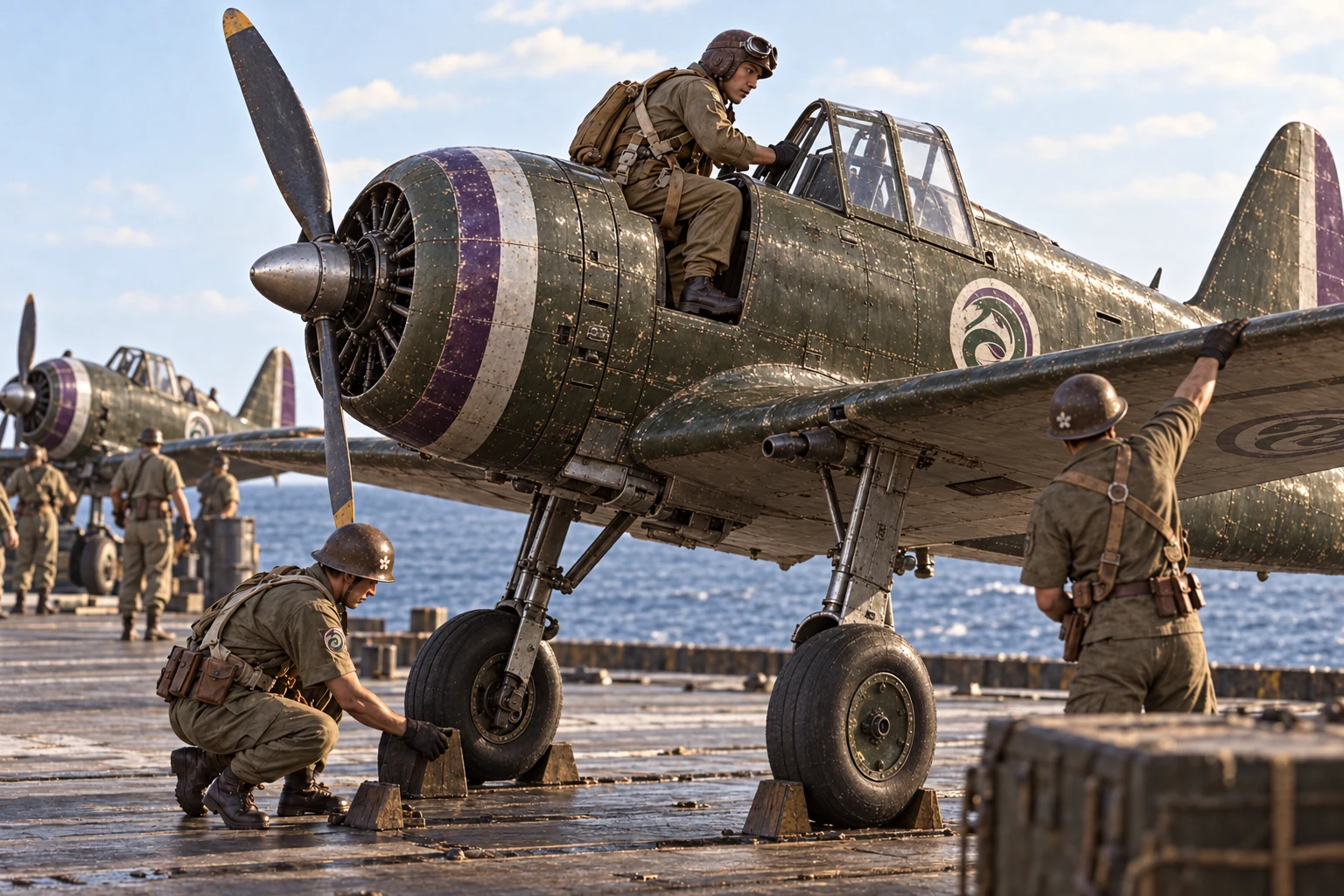
The Kelonese 3rd Strike Fleet, commanded by Vice Admiral Masen Kuro, launched 432 aircraft from six fleet carriers in two principal waves. Imperial planners intended to damage Silvian naval power and influence the republic's choices before full mobilization. The first strike reached Kandar at 06:12; the second arrived at 07:26. Thirty-one attacking aircraft were lost. Admiral Taren Seko retained wider naval authority while Kuro directed this operation.
At dawn, the harbor's first warnings reached different installations at different times. Some observers recognized hostile action promptly; others had to distinguish unfamiliar movement from the activity expected around a large port. Telephone operators and signal personnel tried to spread the alarm while attacks were already beginning. The interval between a warning being issued and a crew actually receiving it varied across the harbor.
The opening attacks
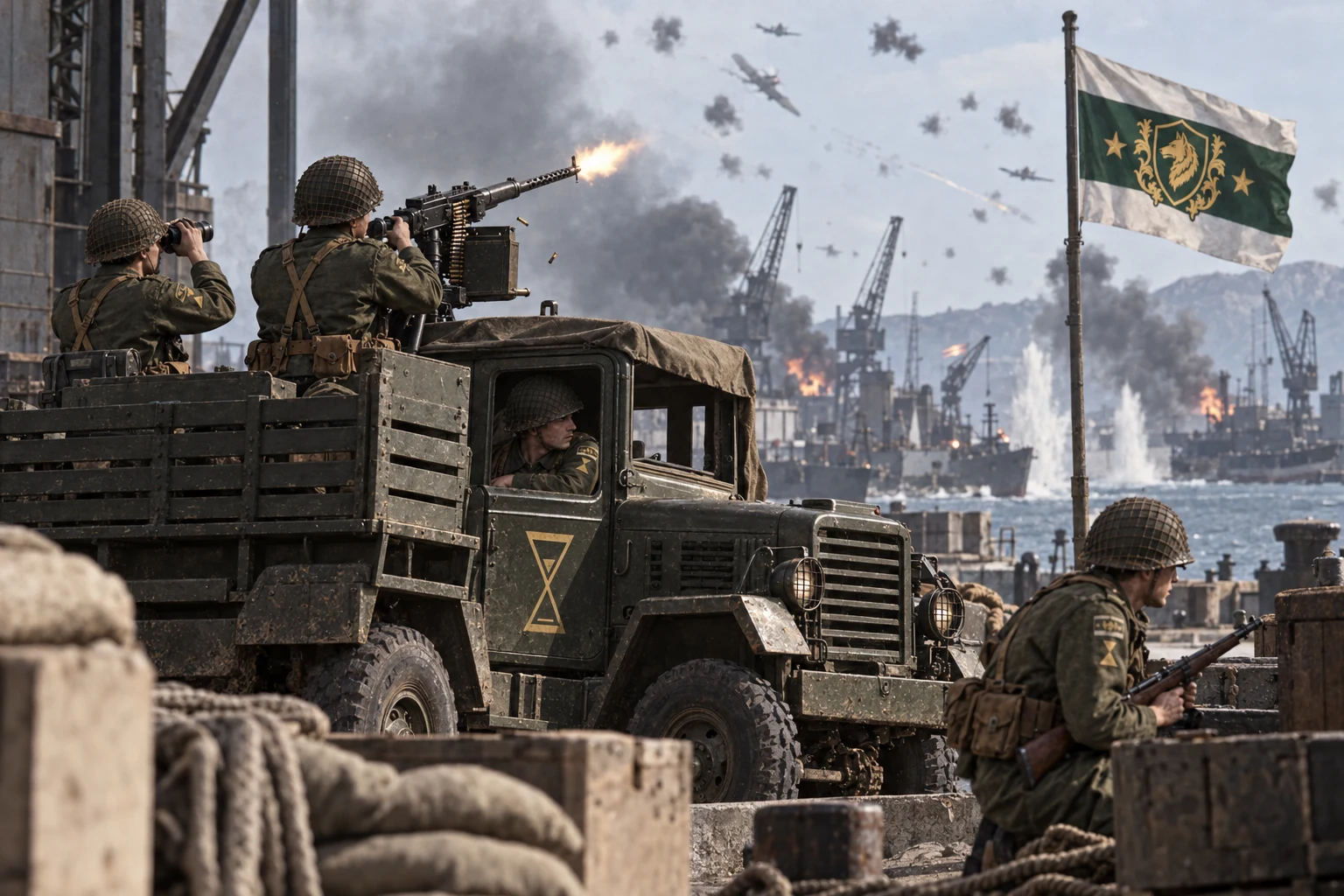
Explosions struck military and harbor facilities, sending smoke across the water and obstructing observation. Crews went to defensive stations amid damage that altered the routes they had practiced. A passage normally used to reach a gun position could be blocked, flooded, or filled with injured men. Officers had to determine whether silence from a station meant it was destroyed, disconnected, or simply unable to report while fighting.
Defensive fire developed unevenly. Some installations responded quickly; others lacked a clear view or reliable communication with neighboring positions. The defenders were trying to protect ships and people within a crowded harbor, where misidentification and falling fragments posed additional danger. Accounts of the attack later favored moments of visible action, but much of the immediate struggle involved keeping damaged systems operating long enough to be useful.
At one repair berth, Lieutenant Nara Vesk organized a ship's surviving deck personnel after its normal command route was interrupted. Her first tasks were to establish which compartments remained occupied and prevent rescue parties from entering damaged areas without anyone knowing where they had gone. She sent messengers with written assignments because shouted instructions were being lost amid noise and smoke. The measure was improvised control under attack, not evidence that the crew possessed an accurate picture of the whole ship.
Rescue while the harbor is still under attack
Small craft began collecting men from the water and transferring wounded from damaged vessels. Civilian crews participated alongside naval personnel. Their boats differed in stability, capacity, and the ability to approach wreckage safely. A craft able to reach a crowded quay might be poorly suited to moving a severely injured patient. Harbor officers assigned work as information reached them, sometimes redirecting a boat after it had already begun another rescue.
On shore, hospitals received casualties before complete notification of the attack. Staff cleared space, summoned personnel, and asked arriving vehicles to return for additional patients. Identification lagged behind treatment. Men arrived without papers, covered in oil or dust, and unable to give their names. Nurses attached temporary records so that a patient moved between rooms would not become an unidentified casualty each time.
Vesk's repair berth became a collection point for survivors from more than one vessel. The growing crowd complicated the defense and the movement of medical parties. She organized separate areas for men able to assist, those awaiting treatment, and those ready for transfer. Several sailors objected to leaving comrades whose location remained uncertain. The search continued where possible, but damaged compartments and continuing danger prevented assurances that everyone could be reached.
Resolute Civic
Vesk's ship, Resolute Civic, had entered Eastbank Repair Berth Four for machinery work. Part of its crew was ashore when the attack began, and some returning sailors found their usual access blocked. Petty Officer Jalen Eri organized them at a yard office, recorded names, and sent groups aboard through the entrance still confirmed usable. His register prevented the shore party being counted missing merely because its members had failed to reach their stations.
The cruiser lost electrical service in several sections. Engineer Sora Venn separated reports of flooding from alarms triggered by damaged wiring, allowing the command to direct scarce repair parties toward compartments requiring work. Her assessment changed as the parties returned. She corrected it rather than leaving contradictory instructions in force to preserve confidence in the first diagnosis.
At 09:18, a trapped repair gang was located in an adjoining service chamber. Opening access took another forty-six minutes. The recovered men included two civilians employed by the yard and a sailor reported dead after witnesses saw the compartment struck. Their recovery became part of the February 1224 reconciliation that fixed Kandar's final casualty register. It illustrates why the new definitive totals belong to the historical accounting, while the characters' first-day reports remain uncertain. Resolute Civic survived because corrections improved the ship's picture; its March 1224 return to service did not erase the people lost while that picture was being assembled.
Afternoon: Counting without certainty
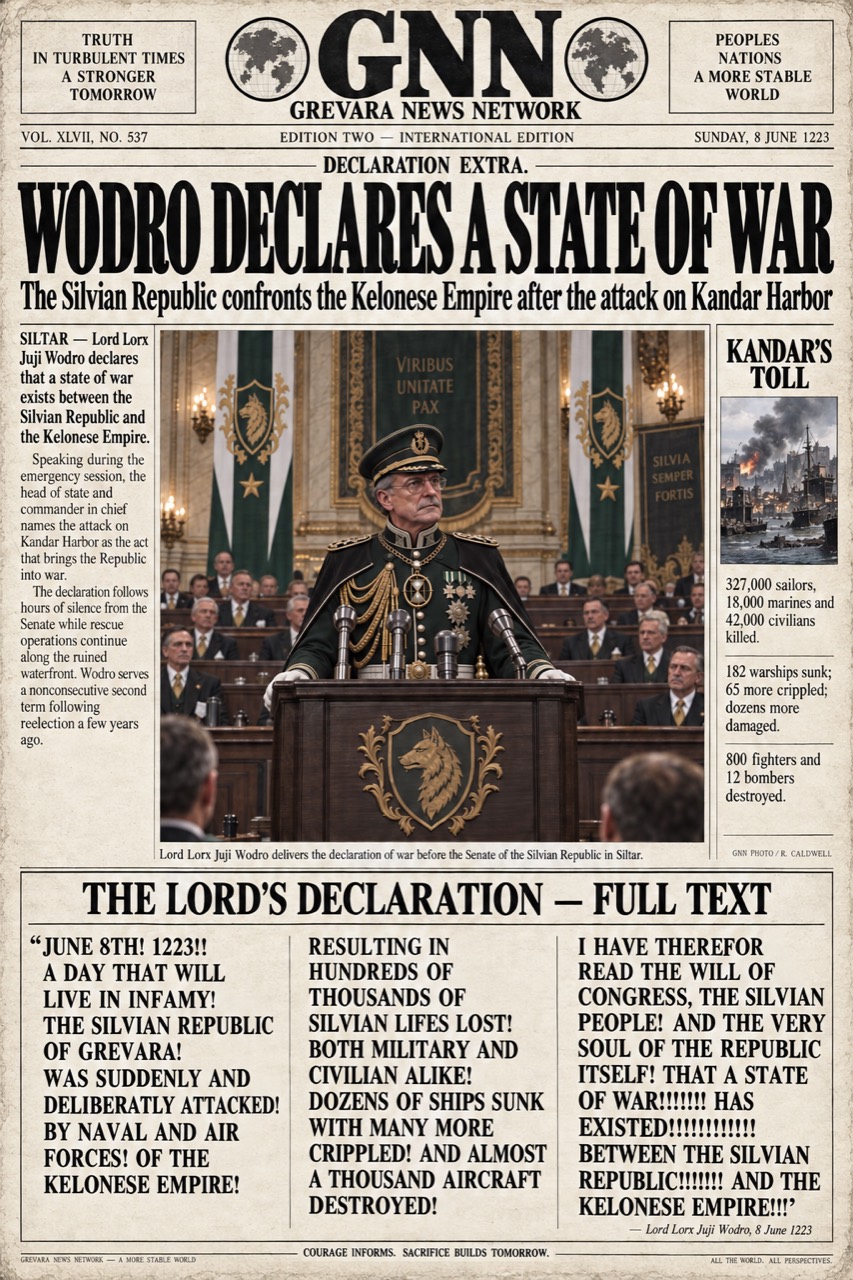
After the principal attack, fires, unstable structures, damaged machinery, and unexploded ordnance impeded recovery. Reports changed as ships regained contact. GNN’s June 8 declaration extra reported 327,000 sailors, 18,000 marines, and 42,000 civilians killed: 387,000 in all. The February 1224 individual register also records 5,927 wounded, including 1,824 civilians. The attack left 182 warships sunk, 65 more crippled, and dozens more damaged. Silvian aircraft losses were 800 fighters and 12 bombers destroyed. The newspaper reported the catastrophic scale that day; later record work reconciled individual identities and dispositions.
Lord Lorx Juji Wodro received military assessments while the government prepared its political response. The Senate's concurrence came late in the afternoon. Officials distinguished the attacker's identity from the wider alliance roster: a declaration against the Kelonese Empire did not automatically constitute war against all 107 eventual Axis nations. Silvian defensive combat on June 8 and the evening declaration marked the end of neutrality.
By evening, families were gathering at information points while rescue and repair continued. The declaration gave national meaning to a disaster whose individual outcomes remained unresolved. Vesk's survivors still lacked a complete list of their missing. Hospital staff continued revising names and destinations. Kandar changed the course of the world war, but those working through its first night experienced that change as unfinished searches, unfamiliar responsibilities, and the knowledge that the attack had opened a conflict whose scale the republic had not yet begun to understand.
Original illustrations for this source record
Original archive artwork and captions are preserved. Dates, labels and claims printed within inherited images belong to the previous edition; the revised text governs the current history.