The Ranuvan relief passage
August 14–18, 1221 · Grand Isles sea lanes · Ranuva, Motari, and Kavea against Kelonese and Maliko forces
A battle without Silvia
The convoy action of August 1221 belonged to the existing Allied island war. Silvia remained neutral, and no Silvian warships, troops, covert escort, or belligerent base supported this passage. The participating island states had already spent more than a decade organizing their own resistance. Their ability to send another convoy reflected institutions built through repeated losses, not preparation for an ally whose eventual entry they could not assume.
The convoy carried supplies and replacements toward Ranuvan facilities under pressure from the central-island Axis system. Motari provided part of the repair and assembly support, while Kavean and Ranuvan vessels shared escort duties. Admiral Lera Namin, formerly a local Naviri commander and now serving in Allied liaison, helped coordinate information from western survivors. Her role did not erase the national command of the ships undertaking the voyage.
The merchant vessels varied in speed and condition. One transport carried soldiers returning from training establishments; another held medical equipment and replacement machinery. The convoy commander, Captain Soren Vali of Kavea, resisted pressure to divide them into faster and slower groups shortly before departure. Escort availability made that apparently efficient change a risk to the ships least able to survive independently.
August 14–15: The convoy is found
Enemy reconnaissance identified the passage on August 14. The first attacks forced changes in movement and interrupted communications between sections of the convoy. Merchant captains received fragments of instructions through different channels. Several acted on the first message they understood rather than waiting for confirmation, creating disorder that subsequent orders had to repair while the threat continued.
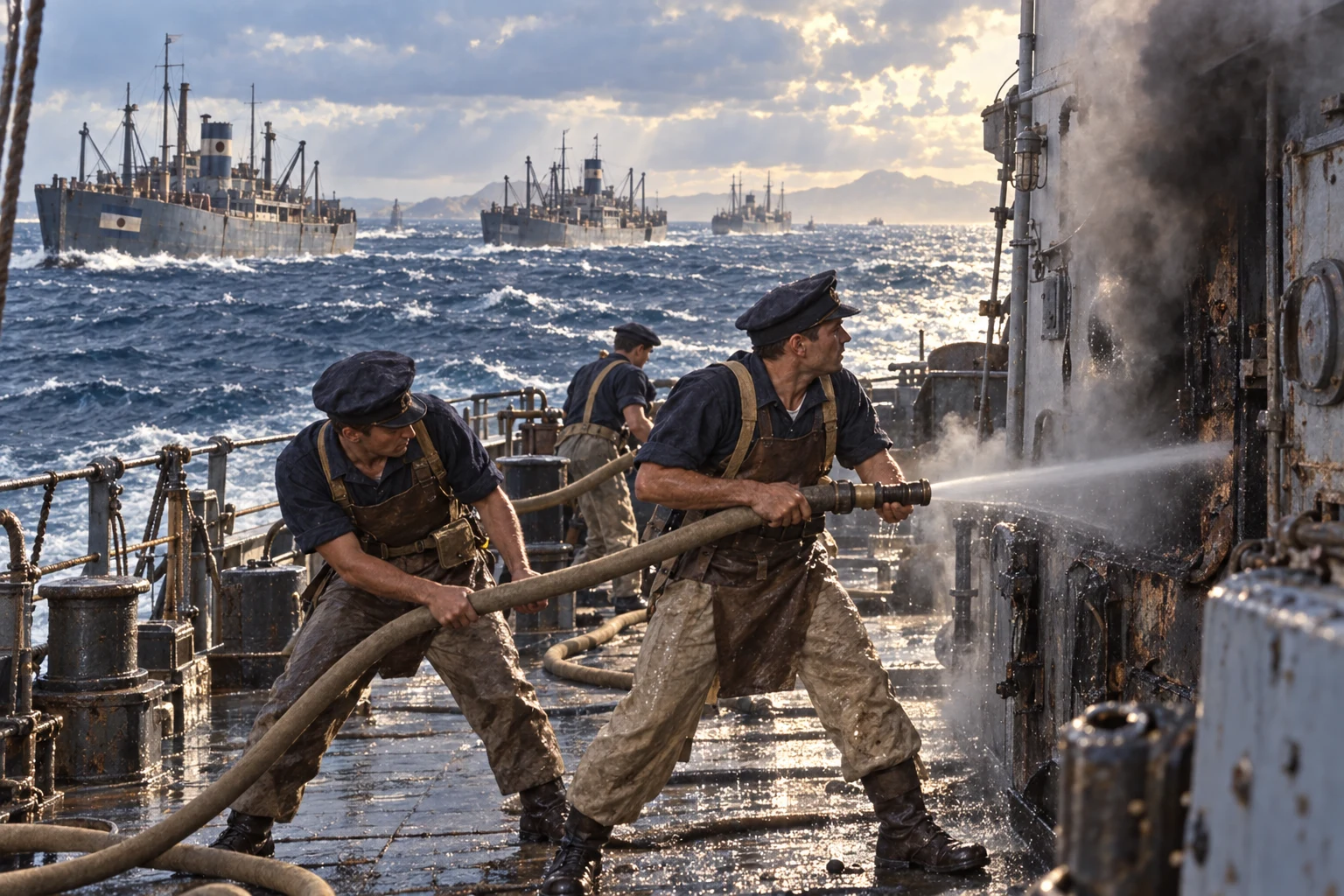
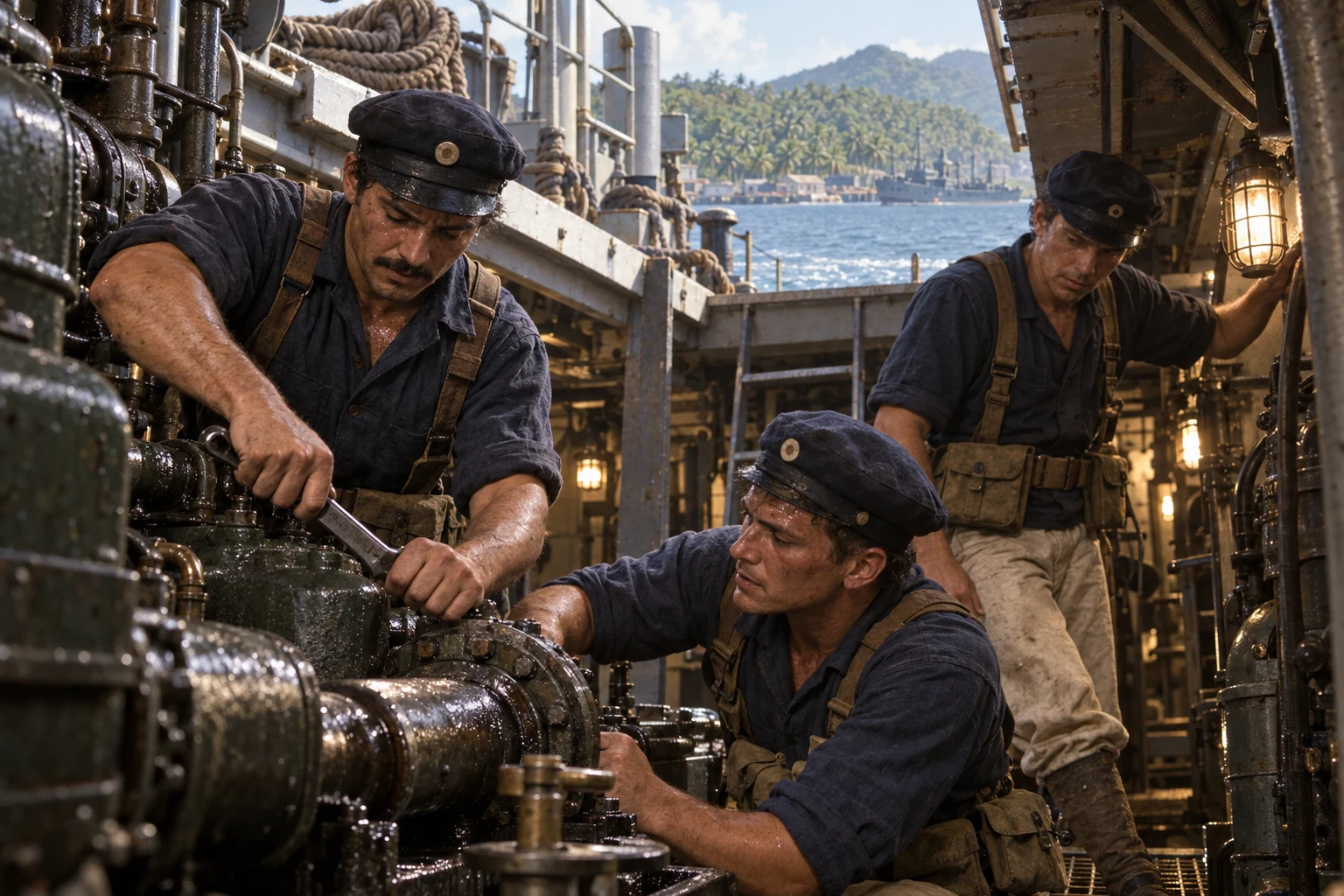
A Ranuvan escort took damage that reduced its speed without immediately disabling its weapons. Its captain remained with the threatened merchant section and requested assistance rather than attempting an independent return. Below decks, repair parties worked amid broken lighting and accumulating water. Men passed reports by messenger when internal communications failed, and the bridge's picture of the ship lagged behind conditions in the damaged compartments.
The Kelonese and Maliko forces operating against the passage did not function as a single perfectly informed body. Their reports described different portions of the convoy, and opportunities seen by one group were not immediately visible to another. Coordination difficulties limited the concentration of pressure. They nevertheless forced the escorts to spend fuel, ammunition, and attention protecting ships that had become separated from the main body.
August 16: The transport turns back
The most consequential damage struck a transport carrying troops and equipment. Its machinery remained partly functional, but fire and casualties made continued participation uncertain. The embarked soldiers had trained for service ashore, not damage control at sea. Officers organized them to assist the crew where useful and remain clear where crowding would obstruct trained sailors. Fear expressed itself in contradictory impulses: some men wanted to help everywhere, others froze beside equipment they had been ordered to guard.
Vali authorized the transport to return toward an approved Allied reception point with protection. The decision removed both cargo and an escort from the continuing passage. He judged that forcing the damaged ship onward would place the whole convoy under additional strain. The soldiers aboard interpreted the turn as failure until they learned how close the vessel had come to losing propulsion entirely.
The remaining ships endured further attacks without a general scattering. A merchant master whose bridge was damaged continued from an alternate control position with assistance from surviving officers. His vessel's cargo reached Ranuva, but the ship required extensive repairs. The convoy's successful arrival would therefore conceal a reduction in the shipping available for its successor.
Aboard Returning Tide
The damaged troop transport was Ranuva's Returning Tide. Its master, Elen Saro, objected when embarked officers attempted to direct shipboard repairs through their own chain of command. Vali confirmed the master's authority over navigation and damage control while leaving military officers responsible for their soldiers. That distinction reduced conflicting instructions without asking either institution to surrender duties it was equipped to perform.
The transport's forward medical compartment became unusable after smoke entered through damaged ventilation. Patients were moved to a dining space where tables had to be secured or removed before treatment could continue. A soldier trained as a cabinetmaker helped the crew improvise the conversion, then returned to his unit rather than being permanently counted as naval labor. Such temporary assistance mattered precisely because personnel belonged to one establishment while briefly serving another function.
Returning Tide reached an Allied repair harbor with its troops alive and much of its cargo recoverable. The unit was re-embarked later on a different vessel. In the campaign accounts, that delay appears as a postponed reinforcement; in the soldiers' experience, it meant arriving after an action for which they had prepared and meeting survivors. Their officers used the ship's damage report to explain a failure of arrival that had not been a refusal to sail.
August 17–18: The cost of delivery
Arrivals were spread across two days and several berths. Port officials had prepared for the original sequence, placing labor and equipment where ships were expected rather than where they actually appeared. Unloading had to be rearranged while wounded were removed and escorts refueled. Some cargo remained aboard longer than planned, delaying distribution to formations whose requests had justified the voyage.
The Allies retained most of the passage's useful cargo and prevented the Axis from closing the route. They also lost time, suffered ship damage, and diverted a transport that could not immediately be replaced. Vali's report resisted classifying every vessel that eventually reached an Allied harbor as a delivery success. Cargo returned to its starting system had survived without fulfilling the purpose for which it sailed.
The action illustrated the island coalition's endurance before Silvian entry. Its sailors and merchant crews maintained a contested maritime system through decisions that rarely produced a decisive victory. Each successful passage kept armies and civilian institutions functioning for another interval. Each damaged ship reduced the means of repeating that success. The war continued because the coalition kept rebuilding the capacity to undertake the next voyage, even when the last one had demonstrated how expensive endurance would remain.
Original illustrations for this source record
Original archive artwork and captions are preserved. Dates, labels and claims printed within inherited images belong to the previous edition; the revised text governs the current history.