The enclosed army's last battle
February 3–27, 1220 · Serin, Volara · Serin and surviving Ravell forces against Hukular-led forces
No harbor beyond the road
Serin's defenders entered their last coherent campaign with a strategic condition that no local success could remove: they were enclosed inland. There was no seaport through which a fleet could evacuate the army. Limited earlier departures had removed individuals and small groups, but neither shipping nor a mass airlift existed to carry the remaining formations away. The soldiers of Ravell who had continued fighting there since 1208 had spent years awaiting possibilities that the wider war never made real.
Dr. Lena Oric's medical reports described an army whose shortages extended beyond food and ammunition. Chronic illness, untreated injuries, inadequate rest, and diminished training had reduced the condition of men still counted as available. Some could hold a familiar position and could not march far with equipment. The command's choices were therefore constrained by the actual bodies behind its returns, not simply the number of units remaining on paper.
The Saret administrative district supported the final defensive grouping. Serin officers and Ravell commanders shared responsibilities through arrangements developed over years. National identities persisted within that cooperation. Soldiers carried different records, loyalties, and expectations about what surrender might mean, even when they occupied neighboring positions and depended on the same medical station.
February 3–11: The shrinking line
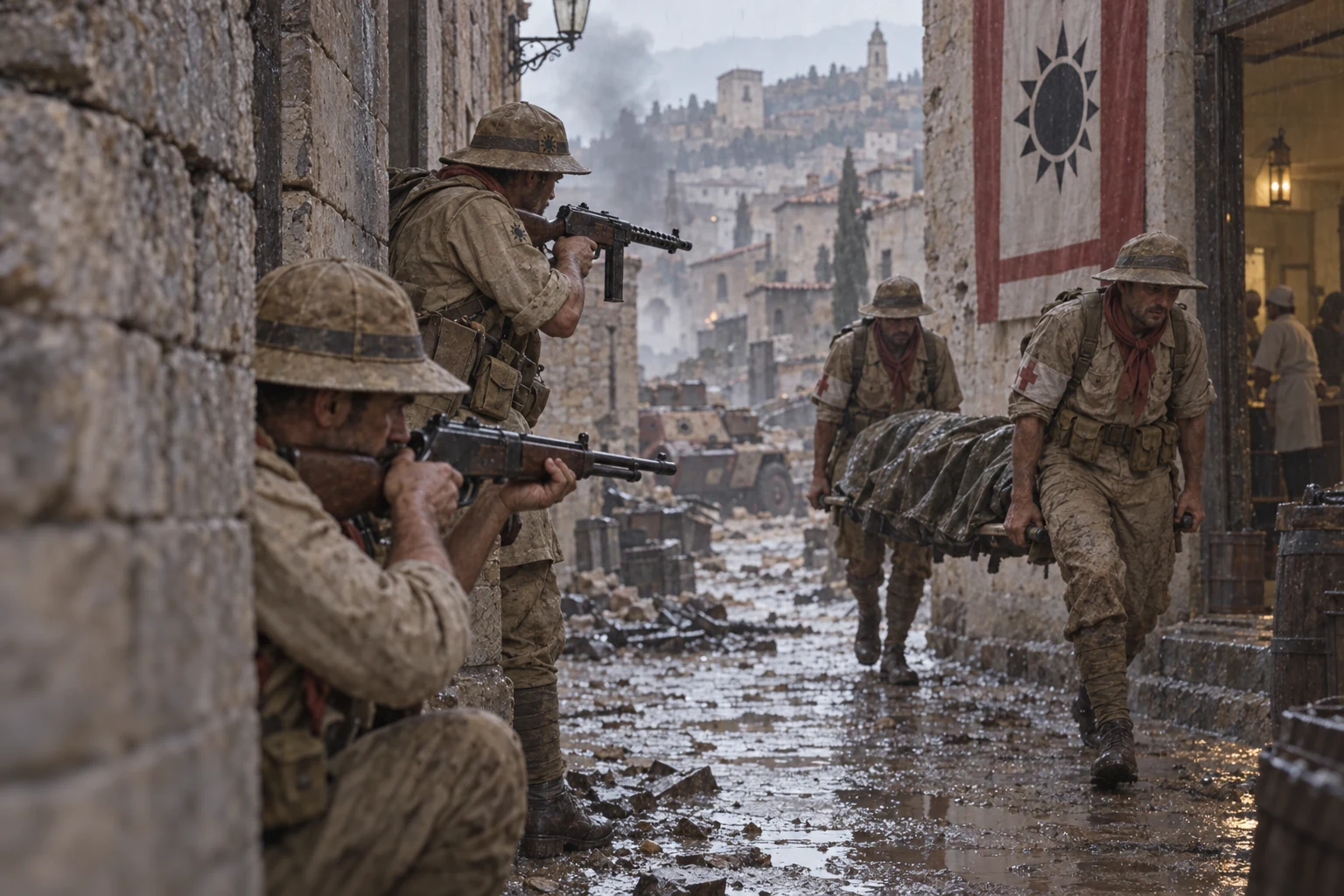
Hukular's renewed pressure began in early February and concentrated on reducing the defenders' remaining choices. The attacks did not need to destroy every position immediately. By taking ground that connected them, the invaders could force withdrawals and consume reserves. Serin's command responded with local counterattacks that sometimes succeeded tactically while leaving fewer rested troops for the next emergency.
A Ravell formation defended an old depot whose stores had long since been distributed. Its buildings still provided shelter and a recognizable point for assembling troops. When adjacent positions withdrew, the depot became exposed. The commander requested authority to retire and received instructions to hold until a medical movement passed behind him. His soldiers remained through another day, then left carrying wounded from both the depot and the road they had covered.
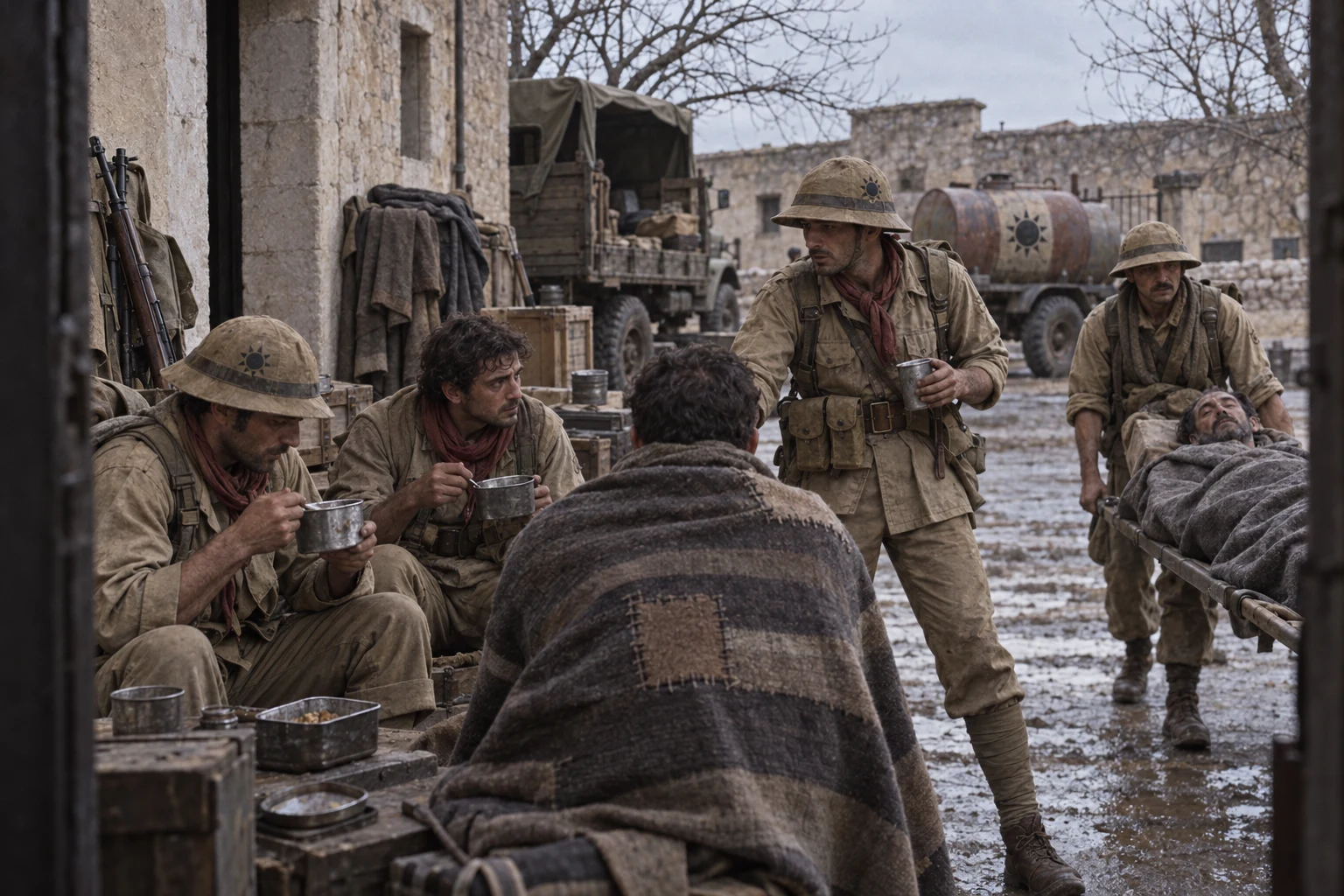
Oric's station received those men without enough beds. Staff placed patients on mattresses laid across floors cleared of administrative furniture. Treatment decisions depended on what could still be done with the available materials and whether a patient could survive another move. The staff continued recording names because the likelihood of separation and captivity made identification more urgent, not less.
February 12–21: The argument over one more effort
Military leaders debated an attempt to restore contact between separated defensive groups. Supporters believed that doing nothing would make collapse inevitable. Opponents argued that the force required for the effort no longer existed in the condition assumed by the plan. The discussion was sharpened by national pride: Ravell officers feared that surrender in exile would be remembered as abandonment of the country whose capital they had lost years earlier.
The eventual limited operation recovered contact briefly but failed to reopen a sustainable connection. Men reached positions from which they could see other friendly troops and still could not maintain regular movement between them. Enemy pressure, exhaustion, and the shortage of transport prevented the local achievement from becoming a restored front. Several units returned with fewer wounded than they had been ordered to collect because they lacked the strength to carry everyone at once.
By February 21, the command was receiving reports of positions unable to continue beyond another short interval. Some officers concealed the severity of their shortages, hoping supplies would arrive if they remained officially capable. Others described conditions accurately and feared being blamed for defeat. The final assessment compared their reports with medical evidence and the visible state of men reaching the rear.
The medical annex
The surrender negotiations included a separate medical annex drafted with Oric's participation. It listed the principal treatment sites, immobile patients, attendants, and stocks necessary to maintain care during transfer. The document could not ensure humane conduct everywhere, but it gave receiving officers specific obligations and created a record against which failures could later be identified. Oric insisted that patients be named wherever identification was possible instead of appearing only as a number under each hospital.
At the Saret dressing station, a final roll identified Ravell Captain Mira Sellen among the wounded. She had survived the 1208 capital battle and years of service before a leg injury in February left her unable to march with the remaining formations. Her earlier missing status was corrected before the station passed into captivity. The correction eventually reached Ravell's government abroad, although her family waited many months for confirmation.
Oric retained a duplicate patient list throughout her years in captivity sewn inside a document cover rather than relying on a single official copy. After liberation, the duplicate helped establish deaths, transfers, and survivors omitted from later camp records. It did not recover everyone. It did prevent the surrender's medical population from disappearing entirely into an undifferentiated casualty total, preserving evidence of particular lives at the moment their own commanders lost the power to protect them.
February 22–27: Terms for the survivors
Negotiations concerned the surviving field forces and the people immediately dependent on them. Serin's government abroad and Ravell's government under Sera Danic remained Allied. The local commanders could end resistance within their authority without extinguishing those states or transferring their allegiance to Hukular. Making that distinction clear did not make the decision emotionally easier for soldiers who had understood continued resistance as their remaining connection to home.
The last days brought sporadic fighting and uncertainty as orders moved through damaged communications. Some isolated troops heard of negotiations as rumors before receiving formal instructions. Commanders sought to prevent premature movement that could expose men to fire or create the appearance of a renewed attack. Medical personnel prepared lists of patients and attendants to accompany them into custody where possible.
The field capitulation took effect on February 27. Most of the remaining coherent Serin defense and surviving Ravell formations were captured or disarmed. There was no miraculous evacuation at the end. Oric stayed with patients through the transition, carrying records whose value now lay in making captivity less anonymous. The battle ended one of the war's longest continuities of resistance and left the Allied coalition with another occupied country, an enlarged prisoner population, and governments that had to continue speaking for armies they could no longer command in the field.
Original illustrations for this source record
Original archive artwork and captions are preserved. Dates, labels and claims printed within inherited images belong to the previous edition; the revised text governs the current history.