The fall of Praxen's administrative center
August 22–September 6, 1219 · Praxen, Viar · Praxen and Allied support against Rostan-led forces
Eight years of repair
The Praxen force defending its administrative center, Praxil, in 1219 was descended from the army that had checked Rostan's opening advance, but few units remained unchanged. Major Dena Kor had become a colonel, and the battalion she once commanded had been rebuilt repeatedly. Some of its veterans now instructed replacements; others occupied hospital wards or had disappeared from the rolls. The army possessed institutional memory without possessing an inexhaustible body of experienced soldiers.
Loss of workshops in 1216 had reduced the capacity to restore damaged equipment. By August 1219, vehicles were kept running through parts recovered from other vehicles, and the difference between a temporary repair and a permanent shortage had become difficult to maintain. The center's defense therefore depended on conserving movement as carefully as ammunition. Kor's assigned sector included an administrative quarter and an adjoining commercial district through which withdrawals would have to pass.
Rostan's command sought to force the government out and sever the remaining coordination around the center. Its troops had advantages in replenishment and initiative, but the defenders retained prepared positions and extensive local knowledge. The attack beginning August 22 was expected to be difficult. Rostan officers warned their units that the appearance of exhaustion should not be confused with the absence of organized resistance.
August 22–27: The registry quarter
Early fighting reached buildings holding civilian records and military personnel files. Praxen's clerks had already begun duplicating essential registers, but the process remained incomplete. Kor assigned transport for selected records alongside wounded and communications equipment. The decision drew objections from officers who saw boxes occupying space needed by soldiers. She considered those records part of the state's ability to continue paying, identifying, and supporting its people after losing the buildings.
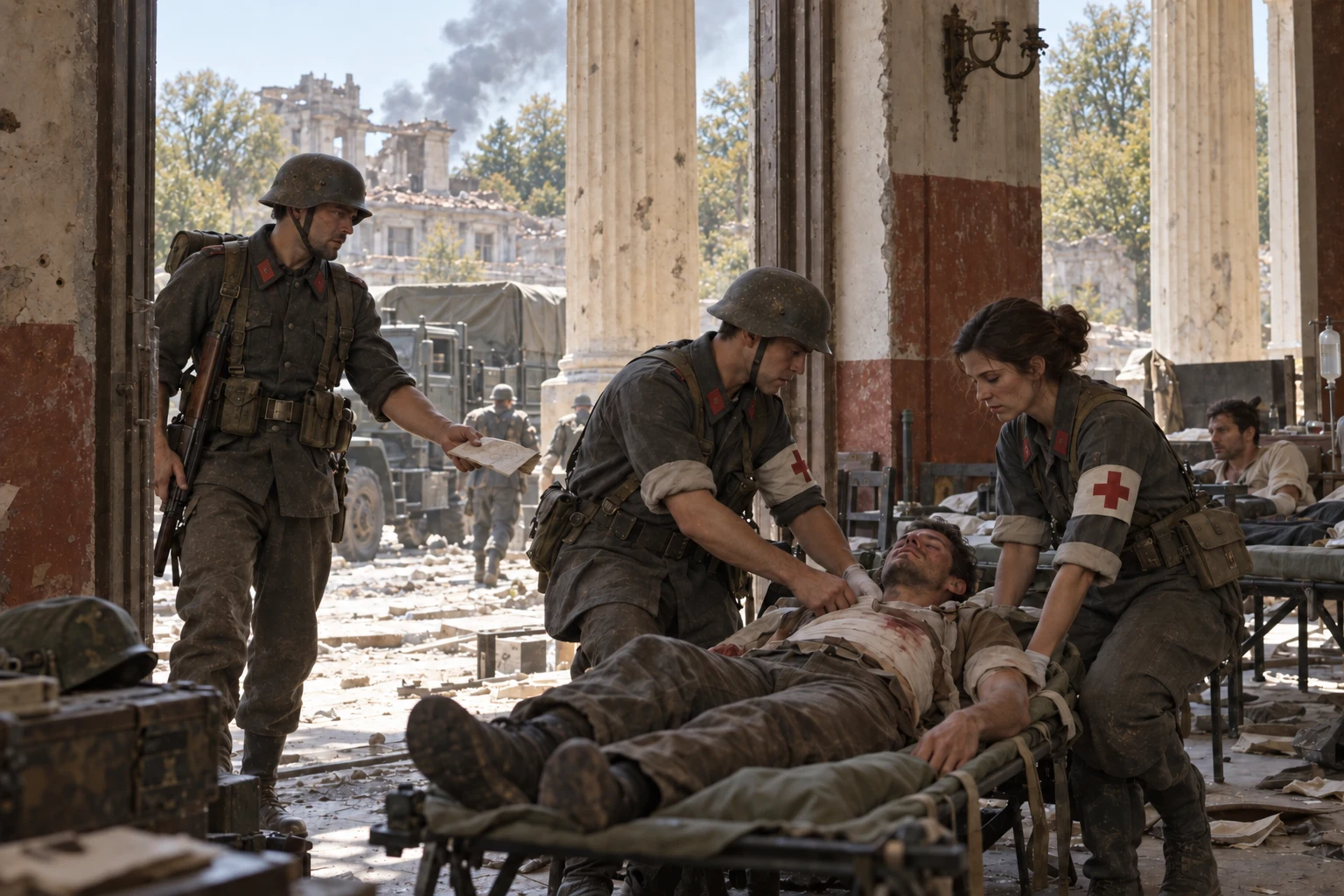
Rostan infantry took an outer office block on August 24. The defending company withdrew into an adjoining district and left a small group of wounded who could not be moved before contact closed. Their medical attendant remained with them. Later prisoner correspondence established that some had survived, but families received no immediate reassurance. For weeks, the distinction between missing and dead rested on information neither army had yet managed to transmit.
Kor's counterattack recovered a street connection long enough to remove additional personnel. It was not intended to restore the entire quarter. The troops understood that limited purpose because their order specified the evacuation it covered. Even so, several soldiers attempted to reach homes beyond the assigned area. Their officers faced the painful task of preventing personal rescue attempts that could isolate a larger group.
August 28–September 2: The center empties unevenly
Government departments moved westward at different speeds. Some had transport and established reception arrangements; others arrived at departure points with staff, dependents, and records that had not been included in the original allocation. Military traffic police could redirect vehicles but could not resolve which civilian obligation should take priority. Senior officials made decisions in person, accepting responsibility for what would remain behind.
Rostan pressure widened the gaps between Praxen positions. Kor shortened her sector and placed surviving troops around the routes still needed by the broader withdrawal. Her command post received fewer reports from the old front and more requests from units seeking a place in the new one. A map clerk used separate marks for positions confirmed occupied and positions merely ordered to be occupied. The distinction exposed how much of the apparent defense existed only in instructions.
On September 1, fighting reached a public assembly hall serving as a medical collection point. Patients were moved through a rear entrance while infantry held the adjoining streets. The last vehicle departed without several attendants who continued carrying men on foot. They reached the next treatment station after it had closed intake because of overcrowding. Kor intervened to have the group admitted rather than dispersed among facilities they could no longer reach safely.
Registers at Leressa
Kor's western reception order designated the town of Leressa as the temporary administrative seat. The decision gave retreating offices a destination but did not supply Leressa with enough rooms, desks, or trained clerks. Arriving officials shared school buildings with refugees and military services. Colonel Kor sent a personnel officer to coordinate the surviving army registers because several departments were independently declaring the same soldiers missing.
Clerk Ina Ver discovered the problem on September 19, 1219 by comparing hospital admissions with a battalion list carried from Praxil. Men transferred without their original papers appeared under shortened names in one system and full names in another. Her team reconciled records using unit details, relatives, and testimony from companions. The process corrected individual notices and exposed the limits of the army's first postbattle strength estimate.
Kor postponed publishing a definitive battalion loss total until that work had progressed. The delay angered families who interpreted silence as concealment. The administration responded with provisional individual status reports rather than an aggregate figure presented as final. This did not remove uncertainty, but it separated what was known about a particular person from the incomplete arithmetic of the defeated formation. Leressa became a functioning seat of resistance partly through such patient reconciliation, making government continuity a practical service rather than only a declaration that the state still existed.
September 3–6: Withdrawal and occupation
The final defense protected departure rather than promising to save the center. Some local commanders resisted that change because their positions remained strong. Kor explained that a building could still be defensible after the system connecting it to the army had failed. Most obeyed the withdrawal orders; several isolated groups did not receive them and continued fighting after adjacent districts had emptied.
Rostan secured the principal administrative center on September 6. Praxen's government and surviving forces continued in the western part of the country and through Allied support. The defeat did not constitute a national capitulation. It did, however, deprive the state of institutions and facilities whose functions could not be recreated immediately by proclaiming a new seat of administration.
Kor reached the western command with a diminished force and an incomplete set of records. Her soldiers were assigned rest, then further service. The battle demonstrated the durable but costly distinction between preserving a state and preserving its center. Praxen remained an Allied belligerent because enough people, authority, and military organization survived to continue, while the residents left under occupation experienced the same event as the disappearance of the government that had previously organized their daily lives.
Original illustrations for this source record
Original archive artwork and captions are preserved. Dates, labels and claims printed within inherited images belong to the previous edition; the revised text governs the current history.