The last defense of Pavren's capital
November 4–18, 1217 · Pavren, Volara · Pavren and attached Allied troops against Hukular-led forces
The city after the railway was cut
Pavenor, Pavren's capital, faced the November battle after months of diminishing access. The secondary railway had been severed on May 21, and the relief offensive ending July 2 had failed to restore the situation. The garrison consequently entered its final defense with shortages that could not be corrected by an emergency request. Some troops had served continuously through the preceding campaigns. Their knowledge of the city was extensive; their capacity to endure another sustained battle was not.
The Bell Market district lay on one of the remaining approaches to the governmental center. General Taren Ovel assigned its defense to a mixed grouping under Colonel Haren Vol. The grouping included remnants of formations whose official titles suggested more strength than they possessed. Vol organized positions around what the units could actually maintain, leaving some streets uncovered except by patrols. Residents interpreted those empty positions as evidence of abandonment even before the main attack arrived.
Hukular's command under Soren Kast approached the battle as the culmination of accumulated pressure. It did not need a dramatic charge through every district. Its forces sought to divide the remaining defense, interrupt movement, and make each local position more expensive to sustain. The method gave Pavren few quiet intervals in which to restore exhausted units.
November 4–9: Bell Market
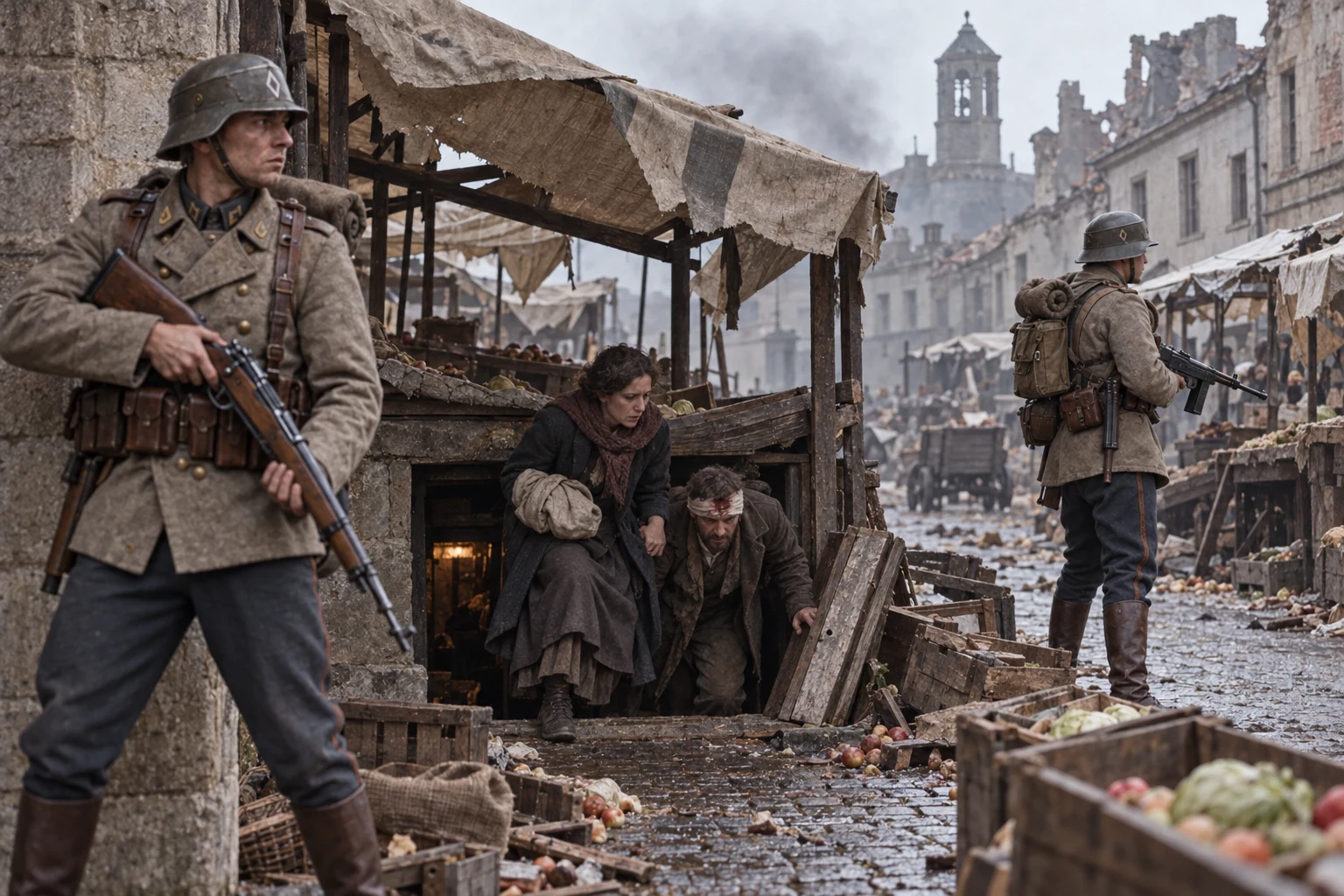
The first attacks reached Bell Market's outer warehouses on November 4. Pavren soldiers fought among stalls that civilians had converted into shelters and cooking places. Market officials had resisted earlier evacuation because the district still distributed food to nearby residents. Once firing reached it, removing civilians became inseparable from moving ammunition and wounded. Soldiers carried children and military stores along the same passages, slowing both tasks.
Vol's command briefly recovered a warehouse on November 6. The position contained a cellar crowded with residents who had remained after its previous occupants withdrew. The counterattack's commander requested medical assistance and transport rather than immediate reinforcement for another advance. Headquarters accepted the delay, although it meant the local success could not be exploited. The decision preserved civilians and left the military position exposed longer than planned.
Hukular troops renewed the attack from adjoining streets, forcing the defenders to abandon the warehouse after the cellar had been cleared. The building appeared in reports as captured twice and lost twice. Those summaries obscured why its second abandonment differed from its first: the people whose presence had constrained the fighting were no longer trapped inside.
November 10–15: The governmental district
The defense contracted toward the center. Pavren's authorities removed essential records and prepared to continue government abroad. Their departure was not a national surrender, but explaining that distinction to troops holding collapsing positions was difficult. Some soldiers believed the government had left them to make its escape possible. Others understood the need and still resented the unequal chances of survival.
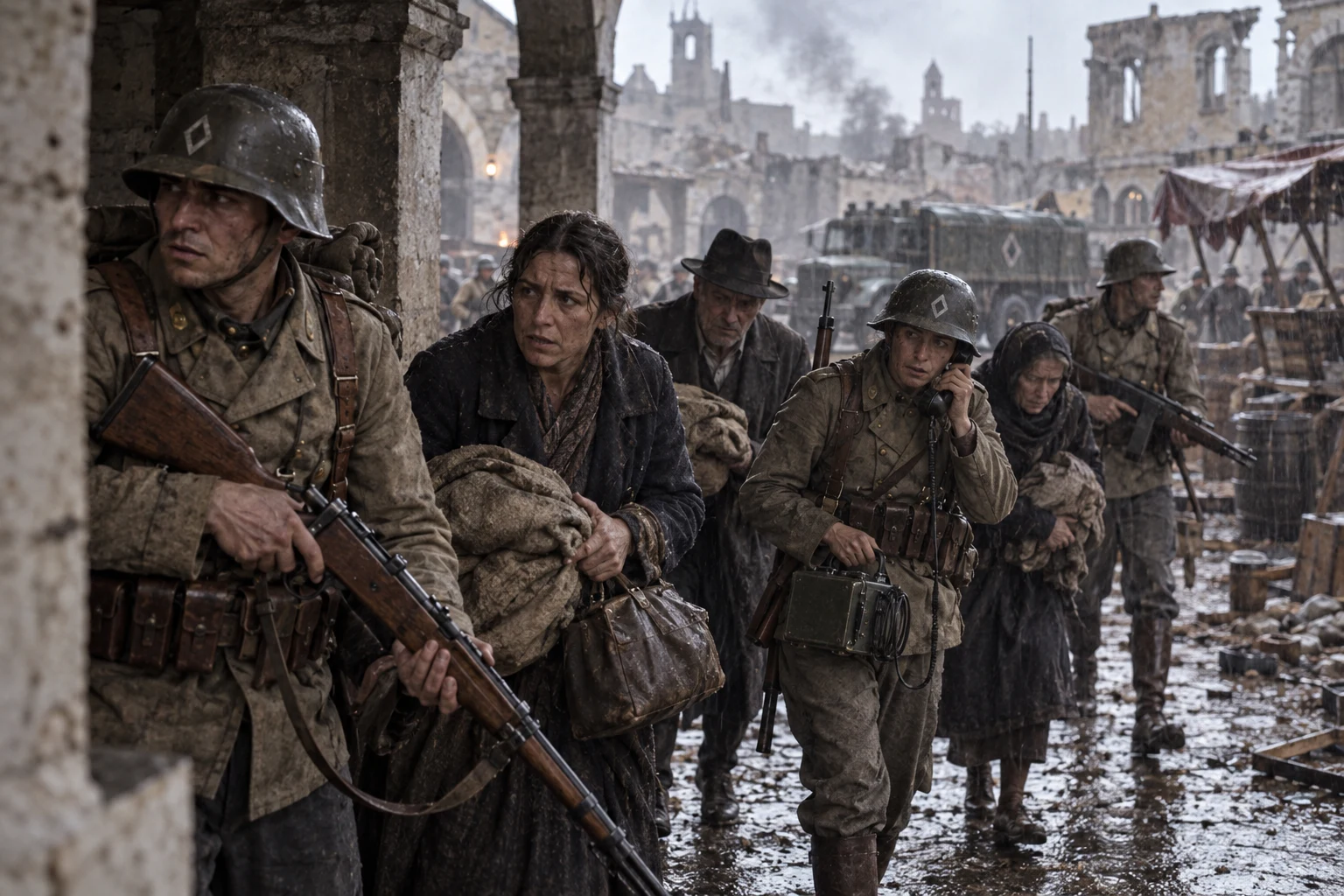
Ovel's headquarters shifted into a public works building after its original site became unusable. A telephone technician maintained a small surviving circuit by moving equipment from damaged offices. The resulting network connected several commands and omitted others entirely. Officers outside it increasingly acted on older instructions. Vol received permission to withdraw from Bell Market after he had already done so to avoid losing his force.
On November 14, a defensive line near the central administrative quarter broke into separate groups. Some continued resisting from buildings they could no longer leave safely. Others moved westward with organized columns. Hukular's advance encountered both fierce local defense and streets nearly empty of troops. Reports of easy progress in one district encouraged demands for speed elsewhere, producing additional losses where defenders remained concentrated.
Two editions of the bulletin
Pavenor's final civilian bulletin was printed on November 16 in two editions because its first instructions directed residents toward a collection point already under fire. Printer Ema Sorel halted distribution after a messenger from the district returned with a correction. Paper shortages meant the second edition used the reverse side of old municipal forms. Readers consequently saw unrelated tax headings behind the evacuation directions, encouraging rumors that the notice was counterfeit.
Vol assigned two local officials to accompany its distribution rather than attempting to enforce an instruction people did not trust. Their presence brought residents to a safer collection point and exposed the officials to capture when military withdrawal followed. One, council clerk Jeren Valt, escaped with the last group; the other, nurse and municipal deputy Sera Pell, remained with patients and entered captivity. Both survived the war.
The bulletin's two versions later helped establish the sequence of the capital's final days. They explained why families who followed apparently authentic instructions arrived at different places and became separated. The error proved neither official flight nor civilian disobedience. It arose because the battle changed faster than printed directions could travel, and because correcting the content did not automatically restore the public trust needed to make the correction effective.
November 16–18: A capital lost, a war continued
The final organized withdrawals removed part of the field command and surviving national formations. Not everyone could leave. Wounded soldiers, isolated positions, and troops whose routes closed entered captivity in large numbers. Vol escaped with a reduced group and brought records of men left behind, including names supplied by soldiers who had seen comrades alive shortly before departure.
On November 18, the capital fell. Hukular obtained a major political and military result, while Pavren's remaining western forces continued under worsening conditions. The field armistice of June 1218 would apply to an isolated group, not retroactively convert this battle into the surrender of the national government or every Pavren soldier.
Occupation authorities entered a city whose food distribution, housing, and medical services had already been damaged by the long approach to the final assault. Residents needed practical arrangements immediately, whatever claims accompanied the victory. For those who had escaped, the capital's loss changed the meaning of continued service. They now fought as soldiers of a country whose government and surviving institutions had to prove that defeat in its own center had not ended its existence.
Original illustrations for this source record
Original archive artwork and captions are preserved. Dates, labels and claims printed within inherited images belong to the previous edition; the revised text governs the current history.