The lost Kalanu approach
May 6–28, 1216 · Kalanu, Grand Isles · Kalanu's Allied defenders against the Kelonese Empire
A position worth more than its coastline
The approach district lost in May 1216 supported a part of Kalanu's remaining receiving system. Its value lay in the connection between anchorage, storage, and roads into the defended territory. The Maren district was not a single fortress whose capture would automatically end the campaign. It was a collection of facilities that became less useful whenever one link failed. By spring, shortages of repair material had left several links working only intermittently.
Commander Sela Vennik coordinated the local maritime arrangements while Colonel Radan Ise held the landward defense. Their daily conference concerned unloading capacity, casualties, and which vessels could depart before the next interruption. Both knew that the position could not be held indefinitely without relief. They disagreed about how much warning its eventual loss would provide. Vennik feared a sudden interruption at sea; Ise expected a gradual landward contraction.
Kelonese commanders understood the district's cumulative importance. They sought to make its use dangerous enough that defenders would have to choose between feeding the front and preserving vessels. Pressure at sea and on land reinforced each other without requiring a spectacular landing behind the whole defense. The operation began on May 6 with attacks that exposed how little spare capacity Kalanu retained.
May 6–12: The receiving sheds
An early bombardment damaged the covered area where cargo was sorted before movement inland. Supplies continued arriving, but rain and handling delays spoiled some stores and damaged packaging. Quartermasters could no longer identify every consignment quickly. Infantry commanders complained that ammunition had reached the harbor without reaching their units, while port personnel insisted that the missing loads were somewhere among goods that had lost their labels.
Ise's forward troops held a line of low buildings beyond the storage district. The buildings had been reinforced over several years, yet some shared walls concealed old openings that repairs had not closed securely. Kelonese troops entering an abandoned section found access farther into the complex than defenders expected. The resulting local penetration forced Kalanu to commit a reserve intended for a different sector.
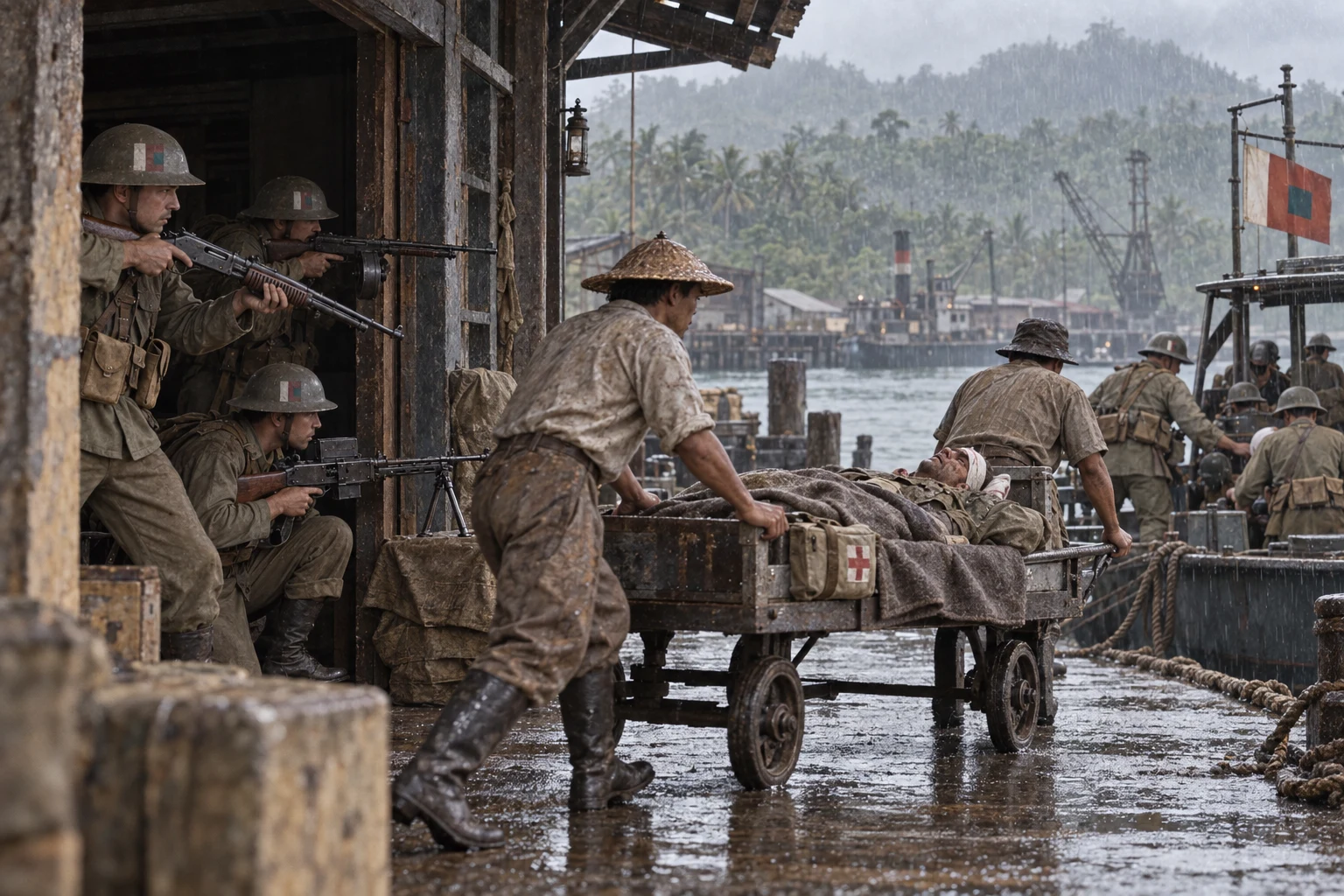
A counterattack on May 10 restored contact between two defensive groups without recovering all the lost buildings. The soldiers involved returned with wounded enemies as well as their own men. Medical personnel placed them in the same overloaded treatment area, where shortages were measured in clean dressings, water, and time. The harbor command's next request for shipping included space for patients who had not appeared on any earlier evacuation plan.
May 13–17: The choice becomes unavoidable
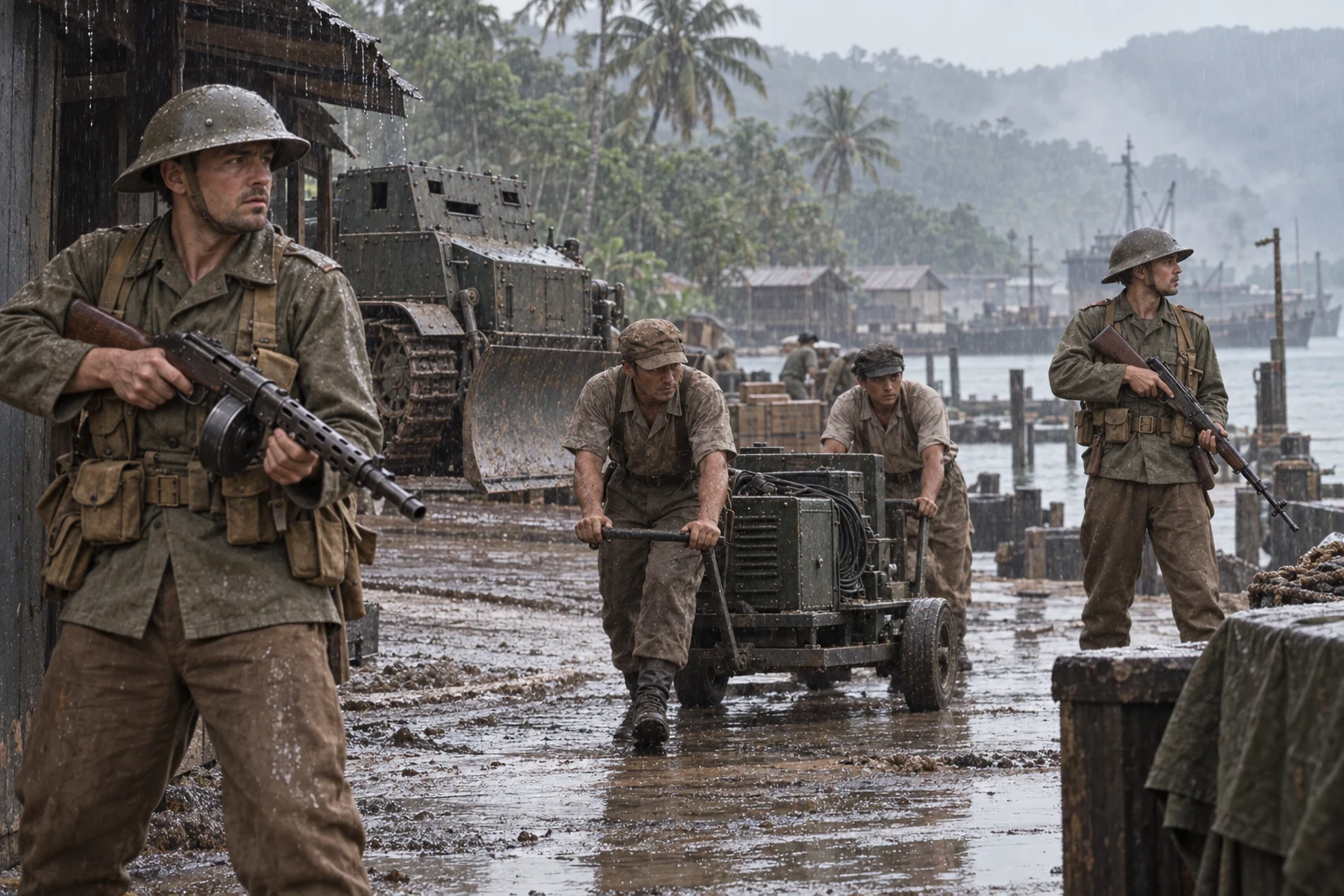
Vennik began moving repair equipment and specialist workers before the land position had been formally abandoned. Ise objected that removing them signaled defeat and reduced the capacity to sustain the defense. She answered that waiting until the final order would leave no means to recover equipment needed elsewhere. The dispute ended in a compromise that saved some machinery while keeping enough personnel to support the remaining departures.
Kelonese pressure intensified on May 15. One defensive company lost contact with its battalion and held after adjacent troops had withdrawn. Its commander sent a messenger toward the old headquarters, found it empty, and assumed the unit had been abandoned. The battalion had moved only a short distance but failed to leave a reliable guide. The company escaped in fragments, carrying a grievance that later reports initially dismissed as confusion.
On May 17, the Kelonese force secured the principal approach position. Kalanu's remaining defenders withdrew beyond the most threatened facilities. The harbor system did not disappear entirely that afternoon, but it ceased to be a dependable receiving point. Ships could no longer be scheduled on the assumption that unloading, storage, and onward movement would all remain available.
Dast’s withdrawal order
The company left holding after its neighbors withdrew belonged to Kalanu's 11th Coastal Regiment. Captain Meri Dast had received an earlier instruction requiring explicit authorization before departure, issued after an unauthorized retreat elsewhere. The rule intended to preserve cohesion now threatened to isolate her company. When its messenger found the old headquarters empty, Dast requested confirmation through a surviving naval liaison set whose operators had assumed their responsibilities concerned ships alone.
Vennik's staff passed the request to Ise and returned authority to withdraw. The exchange took long enough that the company lost its easiest route, but it established that the retreat was ordered rather than improvised. Dast kept the written signal through later inquiries, protecting surviving soldiers from allegations based on the regiment's incomplete records.
During departure, the company carried its wounded on doors removed from an evacuated customs store. Port workers recognized the markings and later helped identify where several unrecorded patients had entered the hospital system. Dast's unit reached the next line reduced but organized. Its experience prompted a revision allowing designated local commanders to leave when communication failed under specified battlefield conditions. The revision acknowledged that preserving control sometimes required granting judgment to officers on the ground, rather than making their obedience depend on a headquarters that could no longer be reached.
May 18–28: The aftermath is still a battle
The following days involved evacuation, local rear-guard fighting, and attempts to recover stores left in exposed locations. Some missions returned with useful cargo; others found their objectives destroyed or inaccessible. Vennik halted further attempts after the risks exceeded what could realistically be saved. Families of missing port workers challenged the decision because military calculations about recoverable cargo did not answer whether people might still be alive.
The loss tightened pressure on Kalanu's remaining facilities and forced longer, less dependable movements. Other Allied island states helped, but their own commitments limited what they could absorb. The district's fall therefore mattered beyond the ground occupied by Kelonese troops. It transferred work onto a network already operating near exhaustion.
By May 28, the local campaign had settled into a diminished Kalanu position. The national government continued the war, and the later 1219 local armistice was still years away. Maren marked an intermediate defeat in that erosion. Its defenders had not suddenly become incapable or unwilling; the institutions supporting them had lost another component they could not fully replace. The battle's enduring image was a repair machine arriving safely at a new workshop beside technicians who had no complete list of the colleagues left behind.
Original illustrations for this source record
Original archive artwork and captions are preserved. Dates, labels and claims printed within inherited images belong to the previous edition; the revised text governs the current history.