Rauk's battle for the Havera approaches
February 18–April 19, 1215 · Northern Volaran front · Hukular-led forces against the Allied defense
The promised decision
Marshal Ilyan Rauk's offensive was intended to transform accumulated Hukular gains into a decisive northern result. The operation began on February 18, striking the Allied system protecting the approaches toward Havera. Its scale and political importance encouraged commanders to interpret local success as confirmation of the larger design. Rauk expected reserves to pass through opened ground before the defenders could reconstruct their line.
The Allied defense had received warnings but could not identify every threatened sector. Reinforcing one district meant weakening another or using troops whose rest had already been postponed. In the Keral approach sector, Havera's General Elsen Rove commanded a mixed defensive grouping supported by Pavren and Hestunian commitments within the wider front. He expected a serious attack and still underestimated how quickly the first positions would become difficult to hold.
Hukular's opening fire disrupted communications and damaged exposed works. Forward Allied troops endured the attack in positions that had been repaired repeatedly and were not uniformly strong. Some sheltered effectively; others suffered heavy losses before enemy infantry reached them. The initial rupture was real. Rauk's first reports of progress were not fabricated, although the conclusions drawn from them exceeded what the attacking formations had secured.
February 18–March 7: The line bends
Rove's command lost several forward positions and withdrew toward a more compact arrangement. Retreating soldiers brought contradictory accounts of enemy strength. A battalion that had faced the main attack described overwhelming pressure; a neighboring unit that had withdrawn under orders had seen relatively little fighting. Staff officers compared these reports with the actual condition of arriving formations rather than averaging them into a reassuring estimate.
Hukular's advance encountered its own congestion. Units intended to exploit the opening moved through ground already occupied by artillery, wounded, supply columns, and prisoners. Officers demanded priority for their formations, each citing orders from above. The bottlenecks did not stop the offensive, but they delayed the concentration Rauk needed to turn an Allied withdrawal into a collapse.
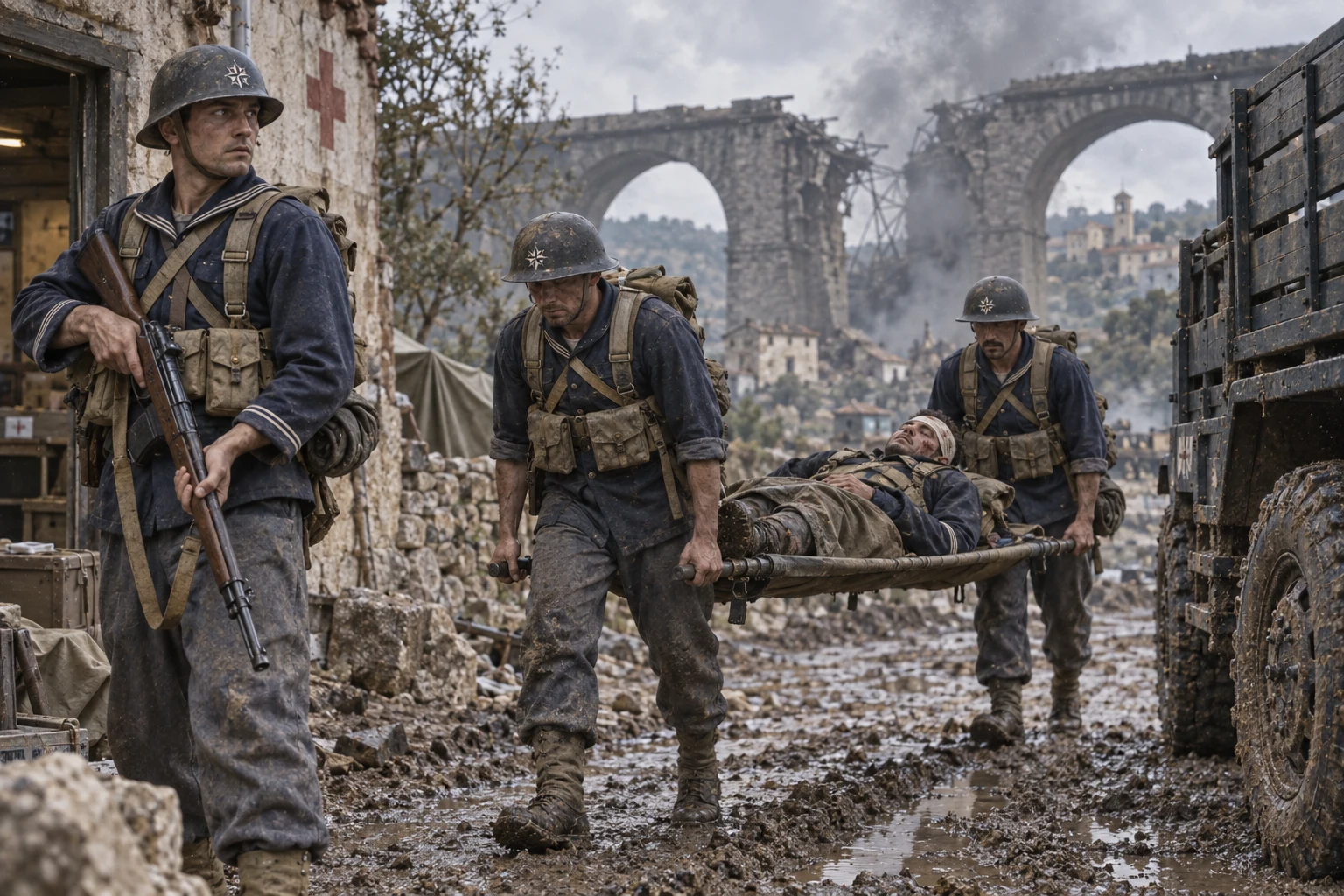
At Keral's stone viaduct district, the defenders held a position that protected movement behind them. The viaduct itself was damaged and no longer the effortless transport asset shown on older plans. Fighting centered on the adjoining ground, where retreating units could be reorganized before moving onward. Rove committed a reserve there because losing that function would make the next withdrawal much harder, even if the structure had little immediate traffic value.
March 8–24: The battle narrows
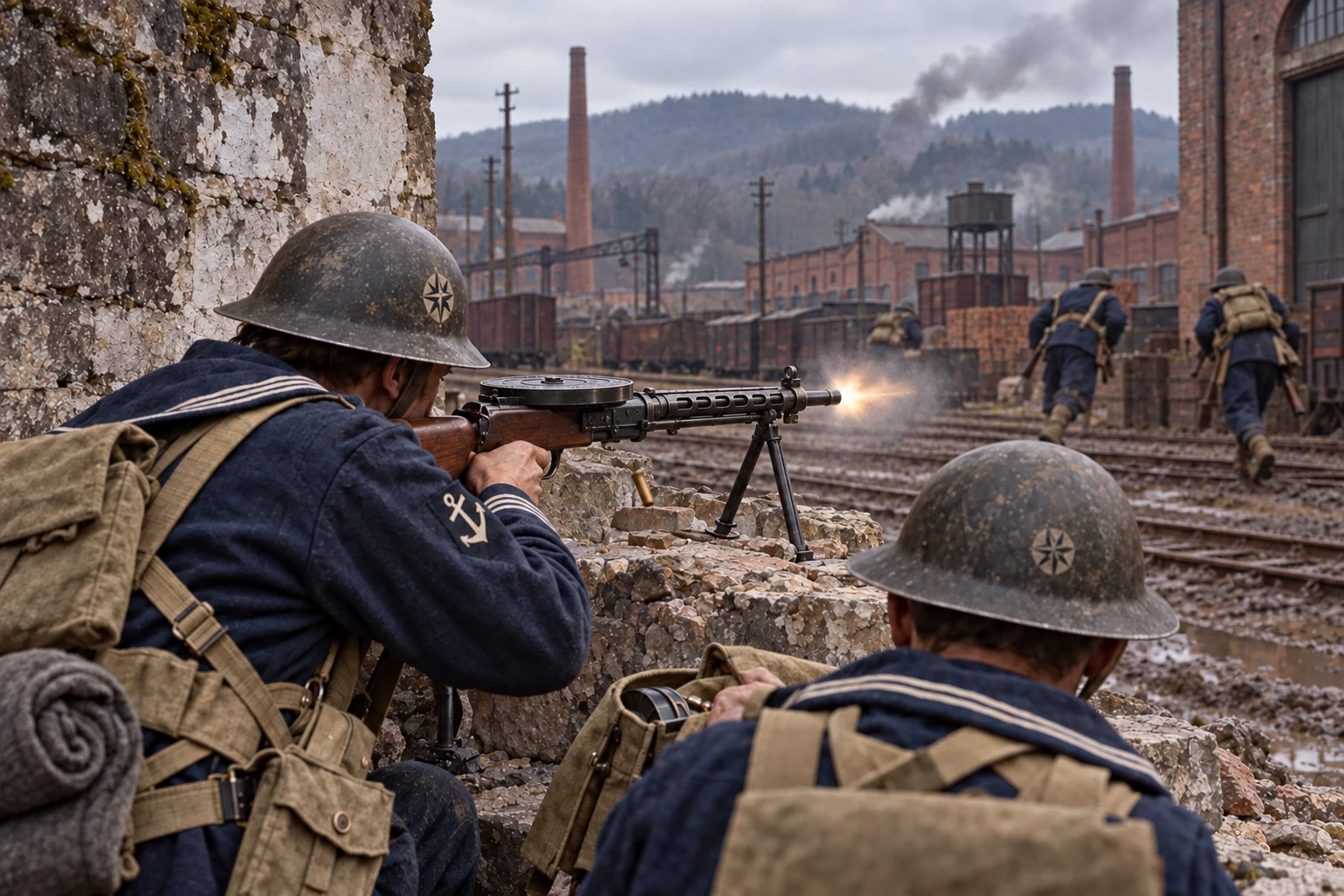
By March 8, the offensive had become a sequence of concentrated struggles along the Havera approaches. Hukular troops attacked positions held by formations that had already retreated and recovered. Their opponents were tired, but no longer as dispersed as during the opening days. Allied artillery and infantry support became more consistent as the front shortened and damaged communications were replaced.
One of the hardest local actions occurred around a roadside hospital complex evacuated before the main fighting. Its buildings offered shelter and misleading symbols of safety. Medical markings remained visible on damaged walls even though the patients had gone and troops now occupied adjoining structures. Allied officers ordered the distinction reported to their own commands, but information spread slowly. The site changed function faster than the maps and assumptions surrounding it.
Rauk demanded continuation. His subordinate commanders reported that fresh troops could renew the effort, while the services responsible for moving and supplying them warned of diminishing capacity. The offensive consumed the reserve intended to exploit success in the work of achieving another local gain. Each attack could still be described as purposeful; together they were exhausting the means of securing the promised decision.
The age of a report
Rove's headquarters tracked Rauk's advance with colored pins whose apparent precision troubled staff officer Captain Venn Arlo, the officer responsible for incoming reports. A battalion's last confirmed position could remain marked for hours after its communications failed. Arlo introduced a second annotation recording the age of each report. The altered map looked less reassuring because it displayed ignorance alongside possession, but it helped Rove distinguish positions requiring verification from those requiring immediate reinforcement.
On March 16, the system prevented a reserve from being sent toward a formation already moving back. A runner reached headquarters with an order acknowledgment written before the withdrawal. Without its timestamp, the document would have seemed current. Arlo compared it with a later medical-evacuation report showing the battalion's wounded arriving from another direction. Rove delayed the movement, confirmed the change, and assigned the reserve to the position the retreating troops would actually need.
The reserve's revised destination helped steady the viaduct district that evening. Arlo could not claim that his annotation had won the battle; several other decisions and the infantry's resistance made the result possible. His contribution was narrower and demonstrable: headquarters avoided spending scarce troops on an obsolete situation. The practice survived Rove's subsequent campaigns because it treated the age of information as part of its meaning rather than as a clerical detail to be discarded when a report reached the map.
March 25–April 19: The culmination
The final phase brought narrower attacks and increasingly limited results. Allied units lost ground in places but retained the system protecting Havera from immediate defeat. Rove's command rotated exhausted companies when possible and accepted that some damaged forward positions no longer justified another counterattack. This flexibility was unevenly applied. Several local commanders still fought to recover ground whose military value had largely disappeared.
Hukular's soldiers experienced the changing offensive through longer waits, mixed replacement drafts, and orders that referred to advances no longer visible from their positions. Wounded men returned to hospitals already occupied by casualties from earlier phases. Repair establishments worked on equipment that command reports had counted as temporarily unavailable so often that its return became an assumption rather than a realistic schedule.
The offensive ended on April 19. Hukular had gained territory and inflicted serious losses, but failed to break the defense of Havera's approaches. The distinction between gains and decision became central to the command reckoning that followed. Rauk remained in office for several more months before his removal on October 1 and replacement by Soren Kast.
For the Allies, survival was a major result purchased through repeated local defeats and recoveries. Havera's continued resistance did not mean its frontier had been untouched or its people spared. The battle established the limit of Rauk's attempt to force a quick northern conclusion. Kast would inherit an army still capable of advancing, and would pursue a slower strategy that demanded less from any single offensive and more from the endurance of the states facing it.
Original illustrations for this source record
Original archive artwork and captions are preserved. Dates, labels and claims printed within inherited images belong to the previous edition; the revised text governs the current history.