The long spring offensive
March 8–April 27, 1213 · Pavren front, Volara · Allied northern armies against Hukular-led forces
The attack planned in winter
The Allied northern offensive aimed to recover transport capacity and force Hukular to relinquish a portion of occupied Pavren. Its planners had studied the failure of 1209 and believed that more preparation, ammunition, and coordinated support would overcome the earlier weaknesses. The resulting plan was stronger in several respects. It also depended on a sequence in which each success would make the next easier, leaving little allowance for an advance that gained ground without restoring movement.
The central local objective in this account was the Naret embankment, a raised railway approach overlooking low agricultural ground. Pavren and Hestunian formations would attack under agreed coordination, with reserves intended to exploit a breach. Havera's supporting commitments helped sustain the wider front, but did not make every Allied formation available for this single operation. Political leaders nevertheless spoke about the offensive as if the coalition's combined resources were concentrated behind it.
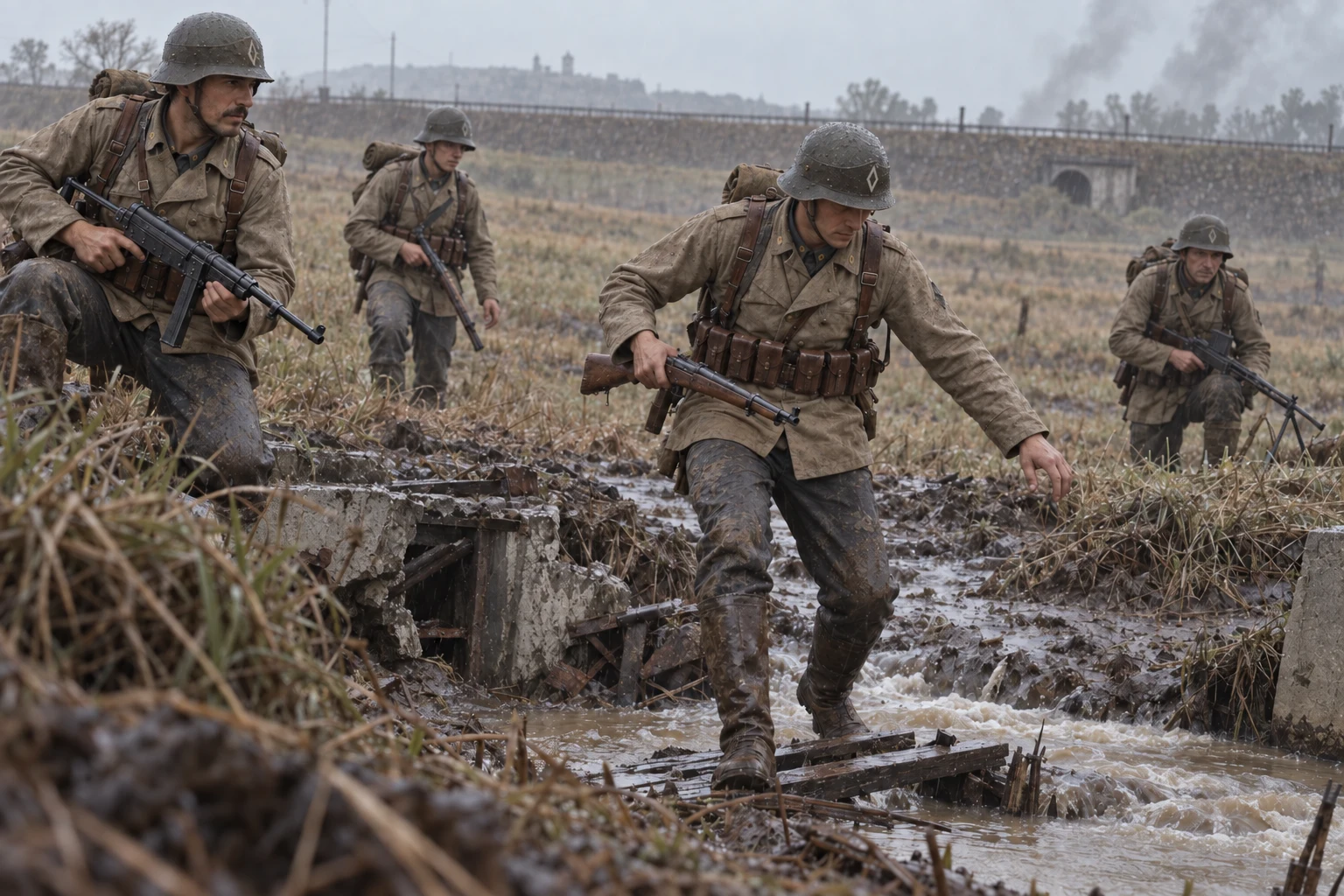
Before March 8, infantry officers walked the available approaches and compared reports from patrols. Their knowledge was detailed near the existing line and much thinner beyond it. Maps marked drainage channels without showing which had been blocked by winter damage. Artillery preparation changed the terrain further. The first troops would enter a landscape more thoroughly shelled than the one on which their rehearsals had been based.
March 8–16: The first belt
The opening attacks took several positions and brought the Allies nearer the embankment. Hukular defenders lost men and equipment but retained organized positions behind the damaged forward belt. Some withdrew under orders; others were driven out. Allied headquarters struggled to distinguish the two, because both produced prisoners and reports of abandoned works. The distinction mattered to whether the next advance would meet a shaken remnant or a prepared formation.
At the Lower Mill position, a Pavren battalion entered buildings reported cleared by an adjacent unit. Resistance continued from a detached storage structure whose ownership had never been recorded separately. Fighting there interrupted the movement of supporting troops and left wounded men in a courtyard exposed from more than one direction. The building was eventually taken, but the delay separated the battalion's progress from the timetable of the surrounding attack.
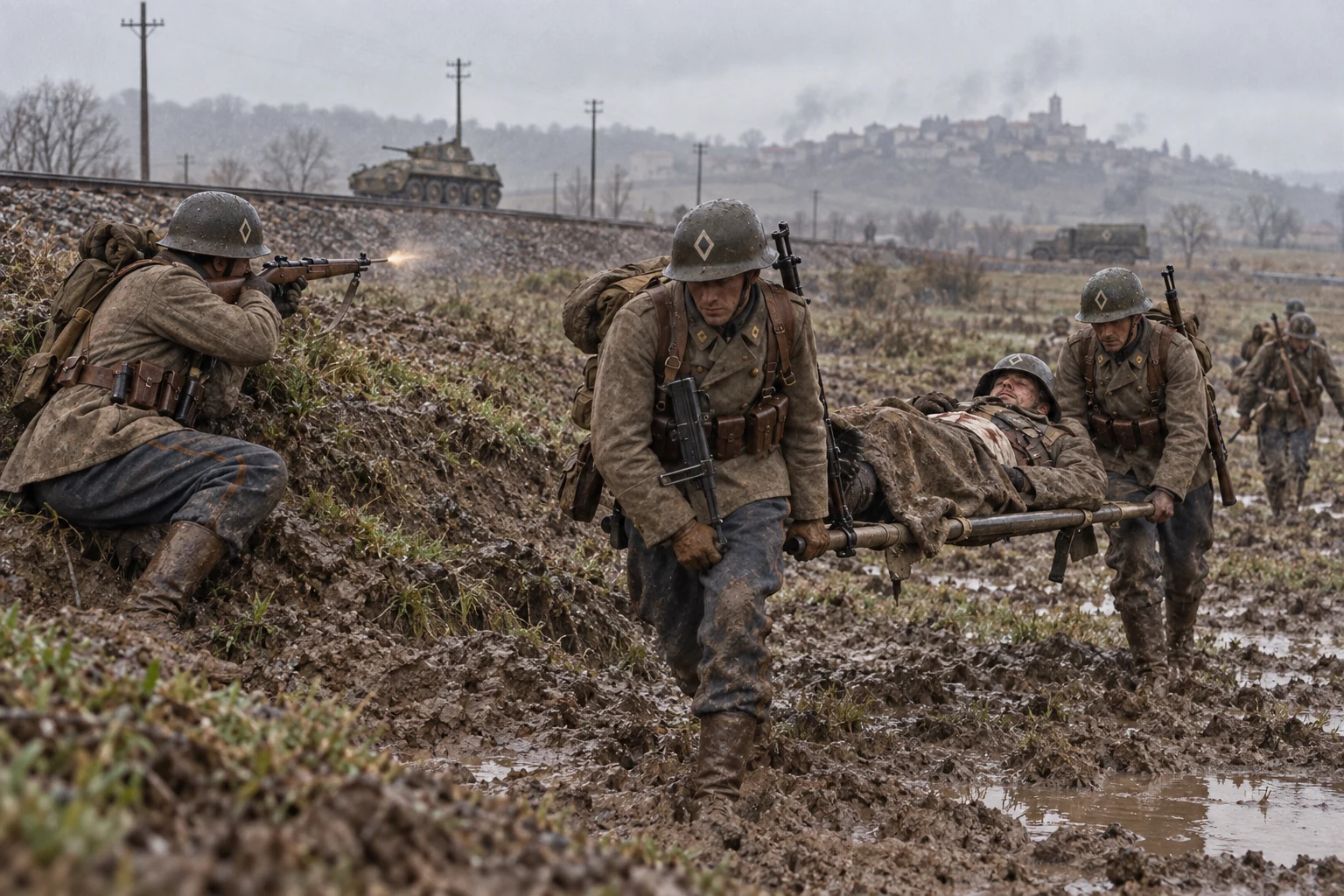
Casualties arrived at aid posts faster than transport could remove them. Medical officers expanded treatment into nearby barns, then discovered that some structures lacked adequate drainage and ventilation. Moving patients again consumed the same labor needed to bring in new wounded. The offensive's growing medical burden was visible behind the front before headquarters accepted that its fighting strength was falling more quickly than replacements could restore it.
March 17–April 6: The embankment
Repeated attacks reached portions of Naret without securing the whole approach. Soldiers held shallow, damaged positions beneath a skyline they could not comfortably observe. Carrying parties moved supplies through ground whose usable paths changed after each bombardment. A route that had served one company became unsuitable for the next, and directions passed by word of mouth sometimes outlasted the conditions that made them accurate.
Hukular counterattacks were selective. Local commanders sought to dislodge exposed Allied groups and prevent consolidation, not necessarily to recover every forward position. This imposed recurring emergencies on the attackers' reserves. Formations intended for exploitation were committed to holding or relieving ground already gained. The offensive continued moving men forward while losing the uncommitted strength needed to turn a foothold into a larger result.
An Allied command conference in late March considered a pause. Advocates argued that the force required reconstruction; opponents believed a pause would concede the initiative after heavy sacrifice. Neither position was irrational. The decisive error lay in treating previous losses as evidence that the remaining objective had become more attainable. The command approved another phase with narrower stated goals, while public announcements continued to imply the original ambition.
The ration parties’ map
At Lower Mill, Captain Renn Avar inherited command after his battalion's senior officers were wounded in separate incidents. He had the authority to direct the companies and no clerk who knew the complete disposition of them. Avar assembled his first picture from ration parties returning through the mill yard. They knew where men were actually waiting for food, often more accurately than the last position reports. The information enabled him to reconnect two groups that headquarters had believed adjacent but that could no longer communicate directly.
This practical reconstruction took a night. During it, higher command requested another attack report and interpreted the slow answer as possible loss of control. Avar's explanation eventually reached the staff with the names of the guides who had confirmed each position. The attack was postponed locally, preventing his fragmented battalion from undertaking a movement based on a fictional arrangement of its companies.
Avar was later criticized for using supply personnel as scouts outside their normal responsibilities. He accepted the criticism as a description of an emergency, not a model to impose routinely. The review distinguished an improvisation that repaired a failure from a procedure that should become permanent. That distinction was easily lost in popular accounts, which favored the resourceful captain and omitted the damaged reporting system that had made his inquiry necessary.
April 7–27: The offensive closes
The final attacks produced local gains and further depletion. In one newly occupied section, soldiers found that a structure marked as a command shelter had become a collection point for wounded defenders. Capturing it brought responsibility for patients the Allied medical system was already struggling to absorb. The incident complicated reports that counted prisoners as an uncomplicated measure of success.
By mid-April, several participating units could maintain positions but lacked the experienced junior leadership required for another deliberate assault. Replacements arrived with training and little knowledge of the sector. Surviving veterans spent their rest periods teaching them how the local system worked. Strength returns improved numerically while exhaustion deepened among the men expected to make the replacements useful.
The operation ended on April 27 without its principal transport objectives. Some ground remained Allied, but Naret and the surrounding defense had not yielded the intended breakthrough. The subsequent inquiry examined command assumptions, medical planning, and the use of reserves. Its most uncomfortable finding was that many individual reports had been accurate: the failure emerged from headquarters combining limited truths into a picture of progress that the army on the ground could no longer sustain.
Original illustrations for this source record
Original archive artwork and captions are preserved. Dates, labels and claims printed within inherited images belong to the previous edition; the revised text governs the current history.