The Naviri harbor defense
February 9–28, 1210 · Western Grand Isles · Naviri against the Kelonese Empire
The first morning
The Kelonese attack reached Naviri's Selen harbor district before local authorities had resolved whether the latest diplomatic demands were an ultimatum or another stage of bargaining. Harbor personnel were still arranging ordinary departures when warnings interrupted work. Some vessels moved immediately; others remained alongside because their crews were ashore or their machinery required attention. The difference between a ship listed as available and one able to leave became decisive within minutes.
The first attacks damaged storage and communications facilities without destroying the harbor as a whole. Smoke from fuel and commercial cargo obscured the approaches. Naval observers reported more fires than they could identify, and the local command briefly believed its principal repair facility had been lost. A civilian messenger reached headquarters with news that the workshops remained usable, although their power supply had failed. Repair crews began improvising work before the military picture was clear.
Commander Lera Namin directed the local naval defense. Her available vessels included serviceable patrol craft, ships under repair, and auxiliaries whose civilian crews had not been organized for combat. She ordered the repair establishments to prioritize machinery that would enable departures rather than complete every scheduled job. Several ships left with unfinished work, carrying technicians who expected to continue repairs elsewhere. Their survival would matter more than the appearance of a fully restored harbor fleet.
February 10–14: A state chooses resistance
Naviri's declaration on February 10 clarified the political situation but did not create additional guns or trained personnel. The harbor's landward defense drew on regular troops and locally mobilized units. Captain Tovan Eri, assigned to the warehouse quarter, discovered that his soldiers had received plans showing commercial buildings as solid blocks. In reality, alleys, shared courtyards, and passages connected them in ways the plans omitted. Warehouse workers became guides, sometimes refusing to leave until relatives had been found.
Kelonese forces secured positions along the threatened coast and pressed the district from their local footholds. Their commanders expected that interruption of port activity would compel withdrawal. Instead, Naviri dispersed handling work among surviving facilities. The improvised system moved less cargo and required more labor, but it kept the defense supplied. Vessels unloaded at inconvenient places, and carts carried material through residential streets while municipal officials argued for protected hours to distribute civilian food.
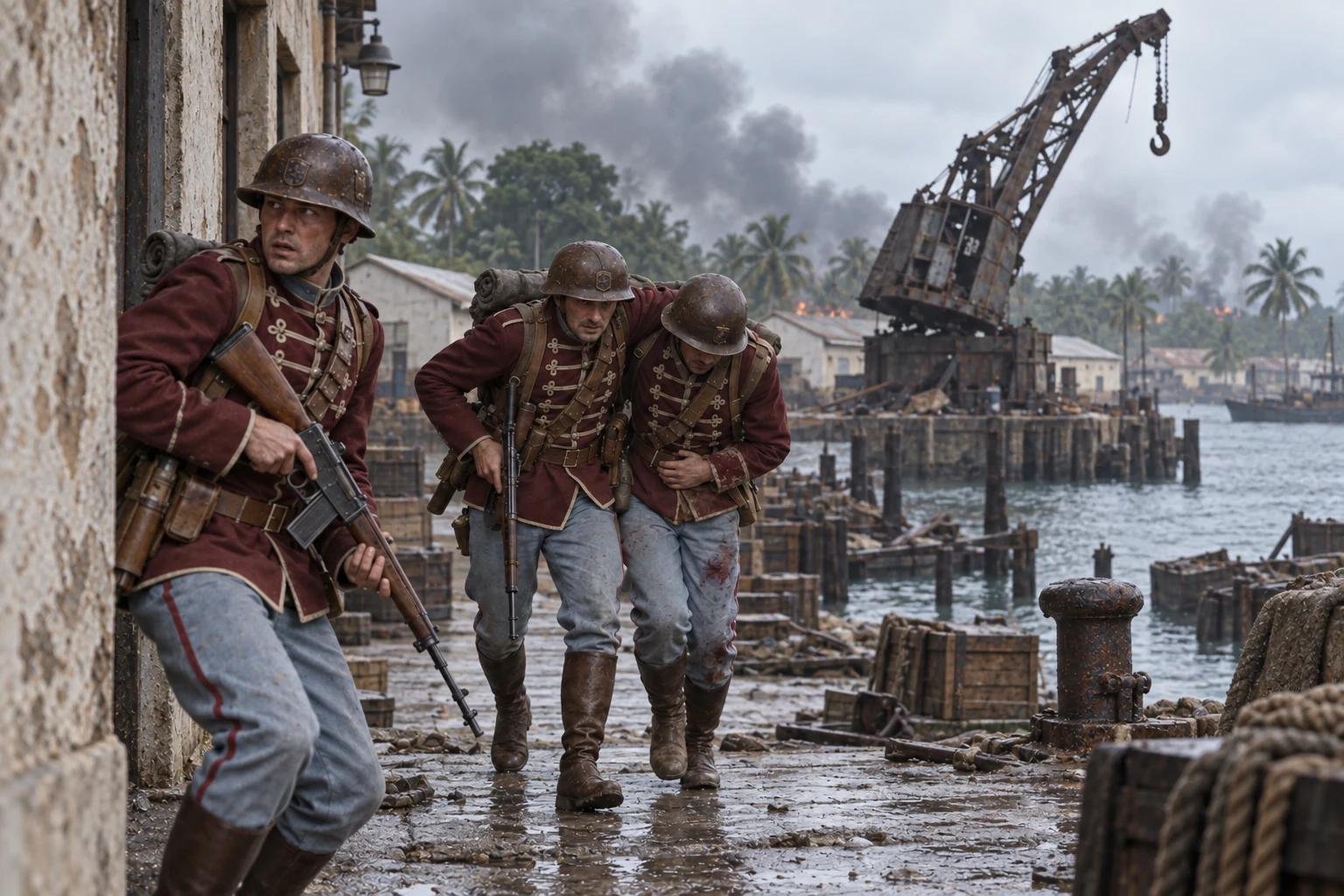
On February 13, fighting reached a customs compound overlooking part of the harbor. Its capture would improve Kelonese observation and make remaining traffic more dangerous. Eri's mixed force held the main office while losing the adjoining storage sheds. The defenders could hear movement in rooms separated from them by damaged walls, yet lacked a reliable picture of the whole compound. A night relief brought fresh troops into the wrong entrance and had to be redirected by a customs clerk.
February 15–22: The struggle for usable ground
The Kelonese command committed additional infantry to widen its foothold. Naval support damaged Naviri positions, but it also wrecked facilities the attackers hoped to occupy. A crane collapsed across a quay intended for unloading occupation stores. Clearing it required equipment still aboard ships waiting offshore. Admiral Taren Seko's wider headquarters received reports of captured coastline alongside requests for labor, machinery, and protected unloading time.
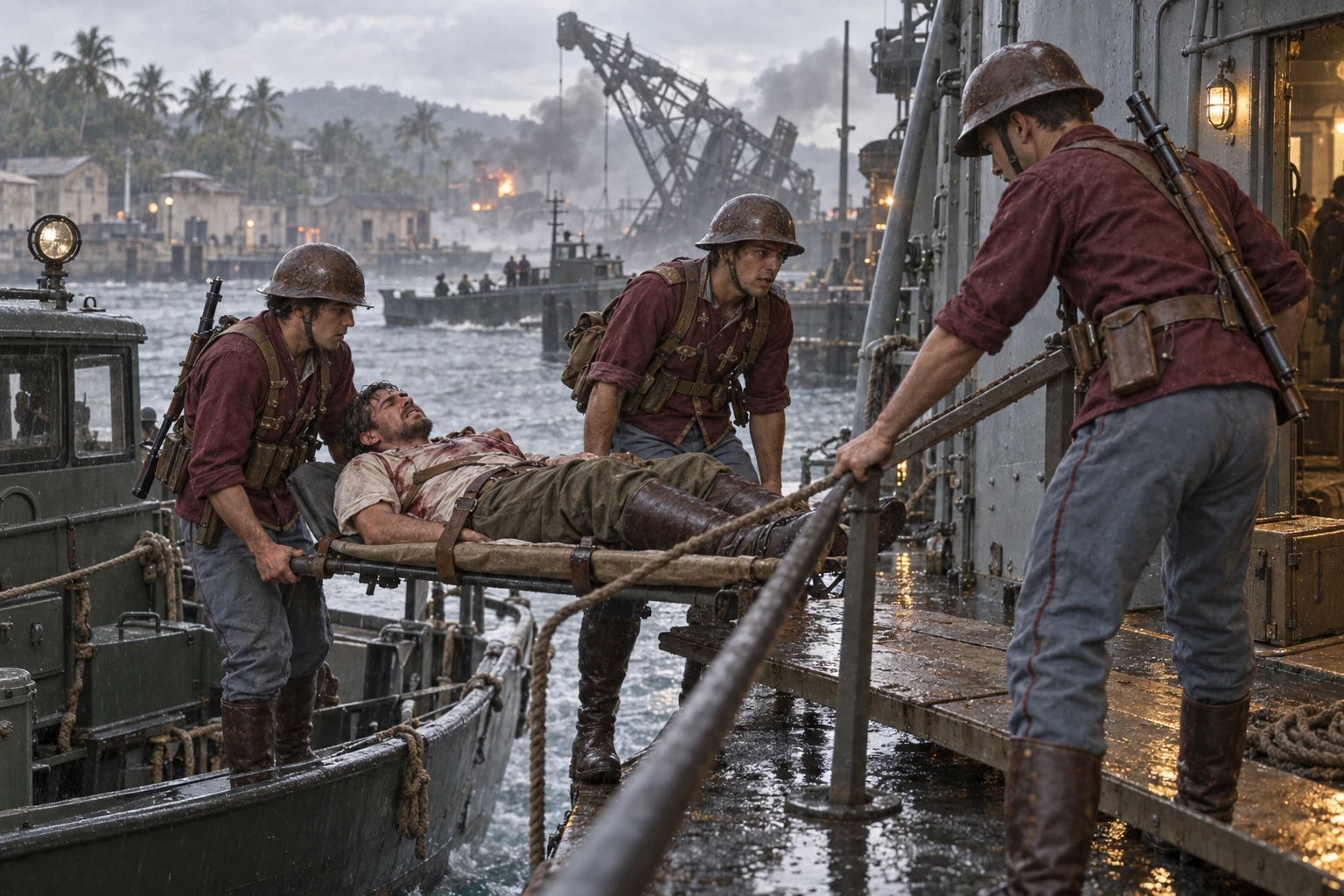
Namin's remaining vessels made local movements under increasing danger. Their work was rarely dramatic: moving wounded, carrying messages when shore communications failed, and shifting ammunition between facilities that could no longer exchange it by road. One auxiliary grounded while attempting to reach an unfamiliar unloading point. Its cargo was recovered over successive tides, occupying men whom the land defense had expected as reinforcements. The incident illustrated how the harbor's physical damage multiplied demands beyond the immediate fighting.
The customs compound changed hands in parts rather than falling in a single assault. By February 20, Eri's force had withdrawn from the main office but retained buildings farther inland. The soldiers carried out the customs register because a clerk insisted that it contained claims belonging to thousands of households and businesses. Some officers considered the burden absurd until the same records later helped identify displaced workers and their dependents.
The cutter Amaret
Selen's western basin contained the training cutter Amaret, too small to determine the naval battle and initially overlooked in the harbor's major movements. Its commanding officer, Lieutenant Des Nori, had a crew partly composed of trainees. Namin assigned the vessel to local transfer work because its shallow draft and familiar crew made it useful among damaged facilities. Nori protested that the cadets had expected operational service. By the second day, they were carrying wounded beneath enemy attack and no longer regarded the assignment as sheltered duty.
The cutter's most difficult journey took injured dockworkers from an isolated quay to the surviving medical landing. A loose crane cable prevented a straightforward approach, and the injured could not all climb aboard without assistance. Nori landed a party that remained ashore between trips. The cutter completed two transfers before damage forced it out of service; the shore party returned by another vessel after being reported missing by its own command.
The Amaret survived the campaign and became a harbor training vessel again after extensive repair. Its casualty list included instructors and trainees, making the distinction between training establishment and fighting fleet unusually visible to Naviri's public. Namin's report credited the small craft by name. She wanted future planners to understand that the survival of a major naval facility could depend partly on vessels absent from the lists used to compare fleet strength.
February 23–28: A damaged foothold, an undefeated country
Naviri's command eventually abandoned the most exposed harbor positions to preserve its remaining force. The withdrawal did not evacuate the entire surrounding population. Residents sheltered where movement had become more dangerous than remaining, while local officials continued registering those who reached safer districts. The later April evacuation grew from these early arrangements and from their failures.
By February 28, the Kelonese Empire held important coastal positions and had disrupted a valuable port district. It had not forced Naviri's national surrender. Surviving forces remained organized, repair activity continued elsewhere, and the entry of additional Allied island states would widen the struggle. Selen's damaged facilities required extensive work before the occupiers could use them consistently.
The battle's immediate lesson differed for each side. Naviri learned that dispersal and civilian cooperation could preserve resistance after a harbor ceased to function normally. Kelonese commanders learned that occupying a shoreline imposed obligations their opening bombardments had made harder to meet. The government that had expected a short coercive campaign now possessed a costly foothold and an enemy whose surviving institutions continued to turn commercial knowledge into military endurance.
Original illustrations for this source record
Original archive artwork and captions are preserved. Dates, labels and claims printed within inherited images belong to the previous edition; the revised text governs the current history.