The failed Pavren counterstroke
May 4–26, 1209 · Eastern Pavren, Volara · Pavren and Hestunia against Hukular-led forces
A promise made to a railway timetable
The Allied plan for May sought to recover an occupied transport district before Hukular could turn its winter gains into permanent positions. Pavren's government wanted visible evidence that participation in the coalition would restore territory. Hestunian planners wanted to shorten the threatened front and release forces for the defense of Havera's approaches. Those purposes overlapped, but the proposed timetable assumed that an initial success would quickly restore railway movement through damaged ground.
The district's principal local objective was the Veylan sidings, a freight connection surrounded by farms and workers' housing. Pavren officers warned that the adjoining drainage ground became difficult after prolonged rain. The warning appeared in the plan as a transport qualification rather than a reason to change the attack. Commanders expected that engineers would resolve the difficulty while the infantry advanced. Their reserve of engineering labor was already committed to keeping existing approaches open.
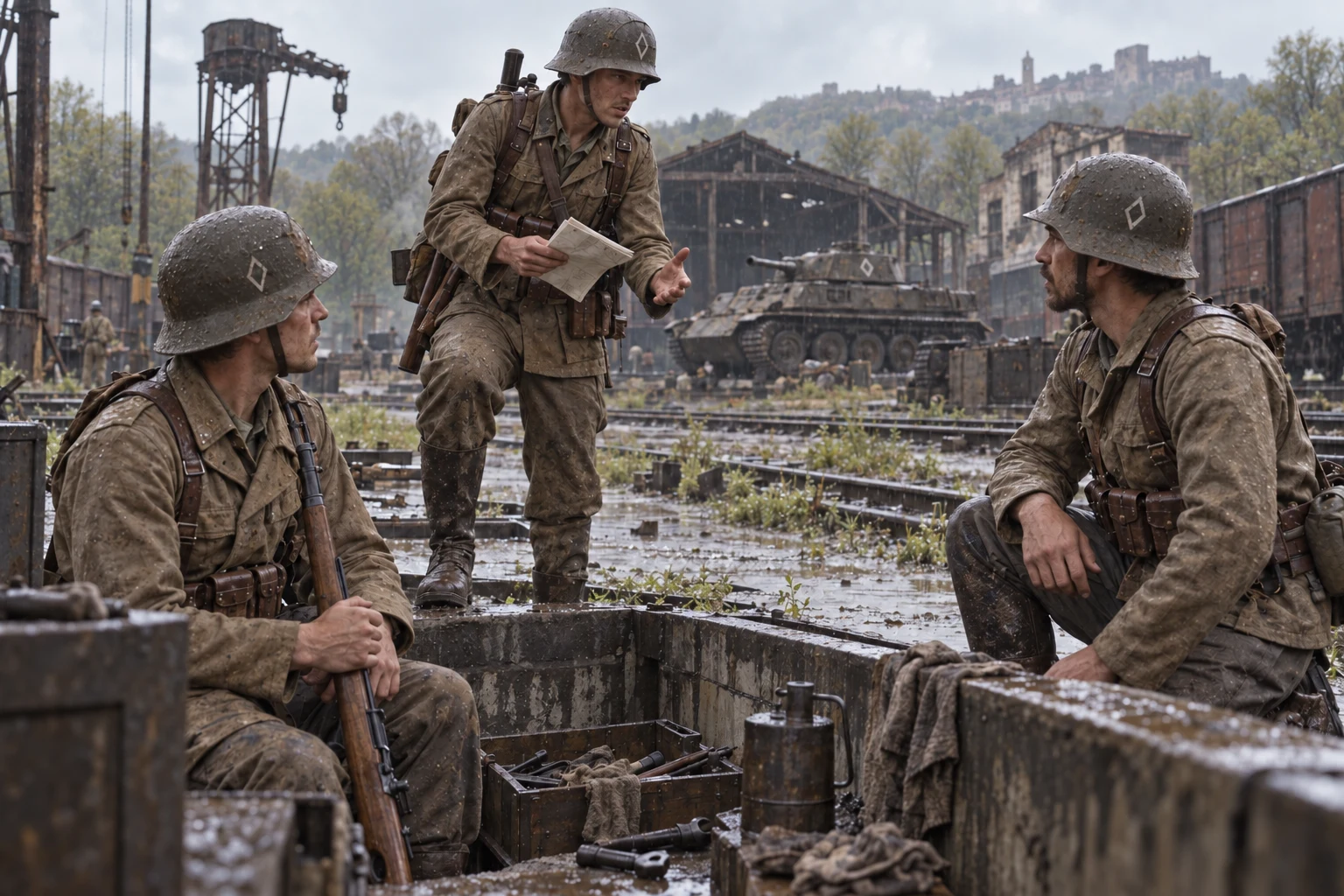
Colonel Haren Vol, a Pavren officer coordinating the leading brigade group, received Hestunian support units shortly before the operation. Their equipment was useful, but their reporting procedures differed. A request described as urgent by one headquarters entered the other's ordinary queue. Liaison officers reduced some confusion without having time to establish common habits. Vol knew the participating formations by designation better than he knew their actual readiness.
May 4–8: Success measured too early
The attack began on May 4 and initially recovered several forward positions. Hukular's local commanders yielded ground that had been difficult to supply rather than committing their reserves immediately. Allied observers saw retreating parties and reported a weakening defense. The first day's summaries consequently treated occupied trenches as the beginning of a larger withdrawal. In fact, the defenders were concentrating around more useful ground behind them.
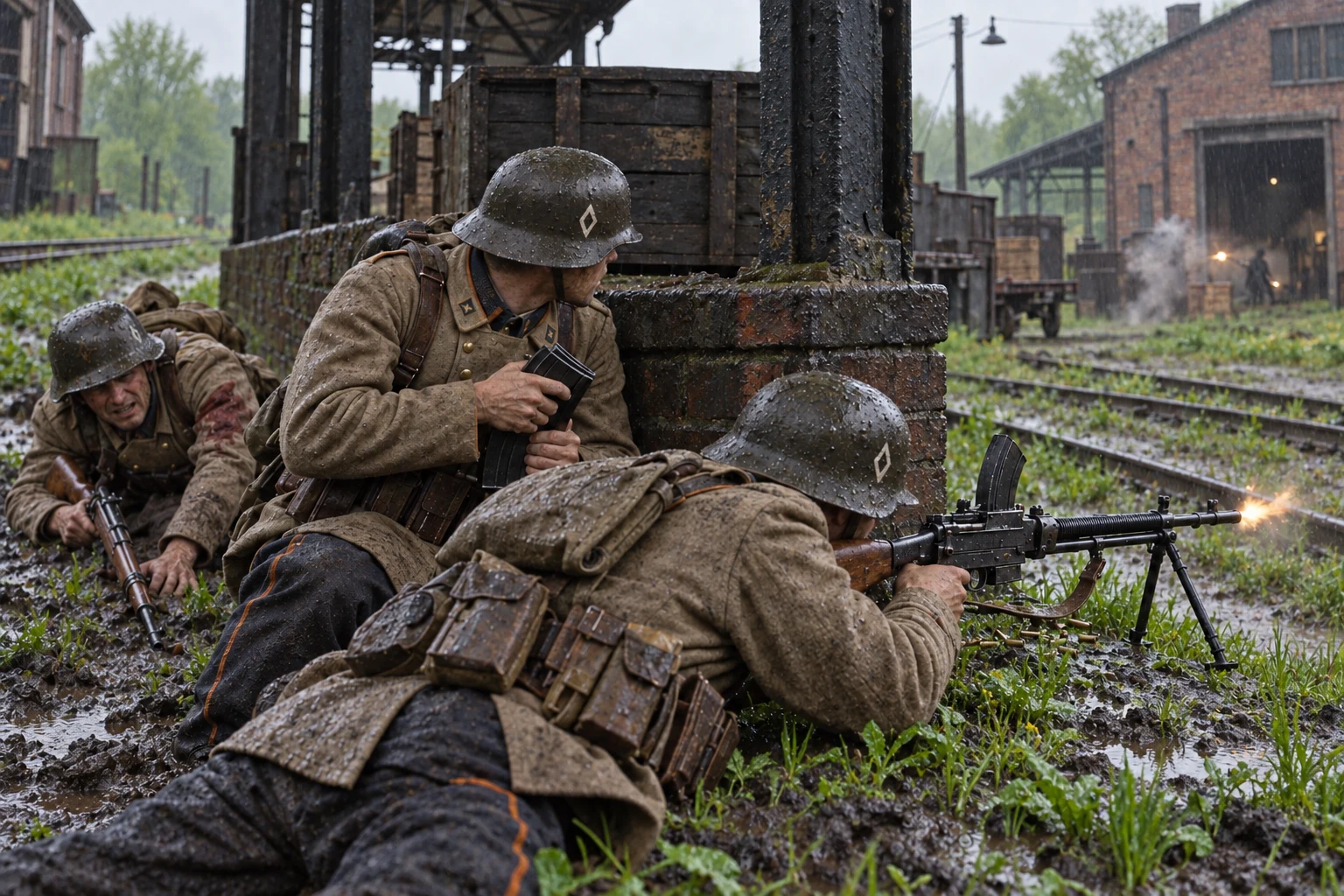
Vol's infantry reached the edge of the sidings on May 6. The railway facilities were badly damaged, and the leading companies could not determine which buildings were empty. Patrols encountered defenders in a workshop that reconnaissance had listed as destroyed. Fighting there delayed the movement of adjacent units, leaving a gap between the advancing center and its slower support. The command's map still showed a continuous line because no report explicitly stated where continuity had been lost.
Rain during the following two nights turned vehicle movement into a competition for the few dependable surfaces. Ammunition reached the front, but food, medical equipment, and replacement communications gear arrived irregularly. Men carried loads intended for carts and reached their positions exhausted. The difficulty reduced the force available for the next attack without appearing immediately in strength returns, which continued to count those men as present.
May 9–17: The position consumes its holders
Hukular counterattacks did not attempt to recover every lost field. They concentrated on places where Allied movement was already congested. A renewed struggle around the workshop district isolated a Pavren company for much of May 10. Its commander reported adequate ammunition and a shortage of water. Headquarters initially understood this as a request that could wait until the next scheduled delivery. By the time a party reached the position, the wounded had gone many hours without treatment.
The Allies reinforced rather than abandoning the advance. Political pressure contributed, but so did uncertainty: some commanders believed another effort would turn a costly foothold into the intended success. Vol argued that the force was becoming less capable each day despite the arrival of replacements. New men filled vacancies but did not restore the lost knowledge of routes, buildings, and neighboring units. His recommendation for a pause was accepted only after another limited attack failed.
During that pause, medical officers reorganized evacuation through a farm complex outside the most heavily contested ground. The owner had left with part of his family, while relatives remained to tend livestock. They helped identify dry storage space and warned which well was contaminated. The hospital's presence protected some supplies from requisition and consumed others. Its functioning depended on cooperation that neither military inventories nor civilian property lists adequately described.
Present and ready
The clearest warning reached Vol from a company that had technically met its objective. Its commander reported occupying the weighing platform with seventy-three men fit for immediate duty, while the battalion return listed the company at one hundred and eighteen present. The difference consisted of stretcher bearers still carrying casualties, men guarding prisoners, runners, and soldiers temporarily incapable of another movement. None was fictitious. The error lay in assuming that presence meant the same thing for every purpose.
On May 11, Vol asked the other companies for similarly separated returns. Their replies arrived piecemeal and revealed that the reserve assembled for the next attack was considerably smaller than the headquarters map implied. The figures strengthened his argument for a pause, although they did not secure one immediately. Officers supporting continuation accused him of counting ordinary military duties as exceptional incapacity. He answered that those duties still had to be performed by someone after the attack began.
A later review adopted the distinction between administrative presence and immediate fighting availability for this brigade group. It did not become a perfect coalition-wide system overnight. Some commanders continued reporting flattering totals, and others lacked clerks to maintain more detailed categories. At Veylan, the change came too late to rescue the offensive. It nevertheless explains why the surviving formation could identify what required rebuilding rather than accepting replacements as proof that every function had already been restored.
May 18–26: A withdrawal with consequences
By May 18, the Allied command accepted that Veylan could not be retained at the existing cost. The retreat was conducted in stages, with the most exposed positions abandoned first. Hukular patrols discovered some withdrawals quickly and missed others, producing a confused final week in which local attacks continued after the larger purpose had changed. Several Allied units fought simply to recover wounded men and equipment left in positions already scheduled for evacuation.
The counterstroke ended on May 26 with limited peripheral gains and failure to recover the principal transport objective. Pavren's government faced anger over announcements that had described early movement as a breakthrough. Hestunian inquiries focused on the gap between possession of ground and the capacity to supply it. Vol retained his command, but his brigade group spent the next months rebuilding rather than preparing another immediate offensive.
For Hukular, the battle confirmed that an Allied attack could be absorbed without an ambitious counteroffensive of its own. For the Allies, the most important loss was confidence in an easy reversal of occupation. The men returning from Veylan knew that the front could move forward on a map while the army's actual condition deteriorated. Their account would recur in later inquiries, often after another plan had assumed that repaired railways would follow success quickly enough to sustain it.
Original illustrations for this source record
Original archive artwork and captions are preserved. Dates, labels and claims printed within inherited images belong to the previous edition; the revised text governs the current history.