The Three Junctions
June 2–18, 1208 · Ravell front, Volara · Ravell against Hukular
A railway becomes the front
The three junctions were not three neighboring stations that could be seen from one observation post. They were separate connections within Ravell's eastern transport district, joined by sidings, repair yards, and stretches of open railway. Losing any one would force traffic onto the others. Losing all three would separate the field army from stores that existed in national inventories but could no longer reach its units. Ravell's command consequently defended a transport system whose importance was greater than the apparent strength of its buildings.
Colonel Anet Daro, newly appointed to coordinate the district, inherited infantry battalions from different commands and railway personnel with better local knowledge than her staff. Her headquarters occupied a freight office at the middle junction. Its wall diagram showed working tracks in black and damaged sections in red. By June 2, the diagram had become misleading: several black sections were physically intact but unusable because enemy observation made daylight movement hazardous. Daro asked the stationmasters to mark availability separately from condition.
Hukular's attacking formations had advanced quickly during the invasion's opening weeks. Their commanders now faced a choice between taking the junctions intact and destroying the transport system they expected to use. Initial fire concentrated on approaches and defensive positions, but observers repeatedly confused occupied warehouses with stores awaiting evacuation. Damage accumulated across the whole district. The invaders could interrupt Ravell's railway more easily than they could make it operate for themselves.
June 2–7: The eastern connection
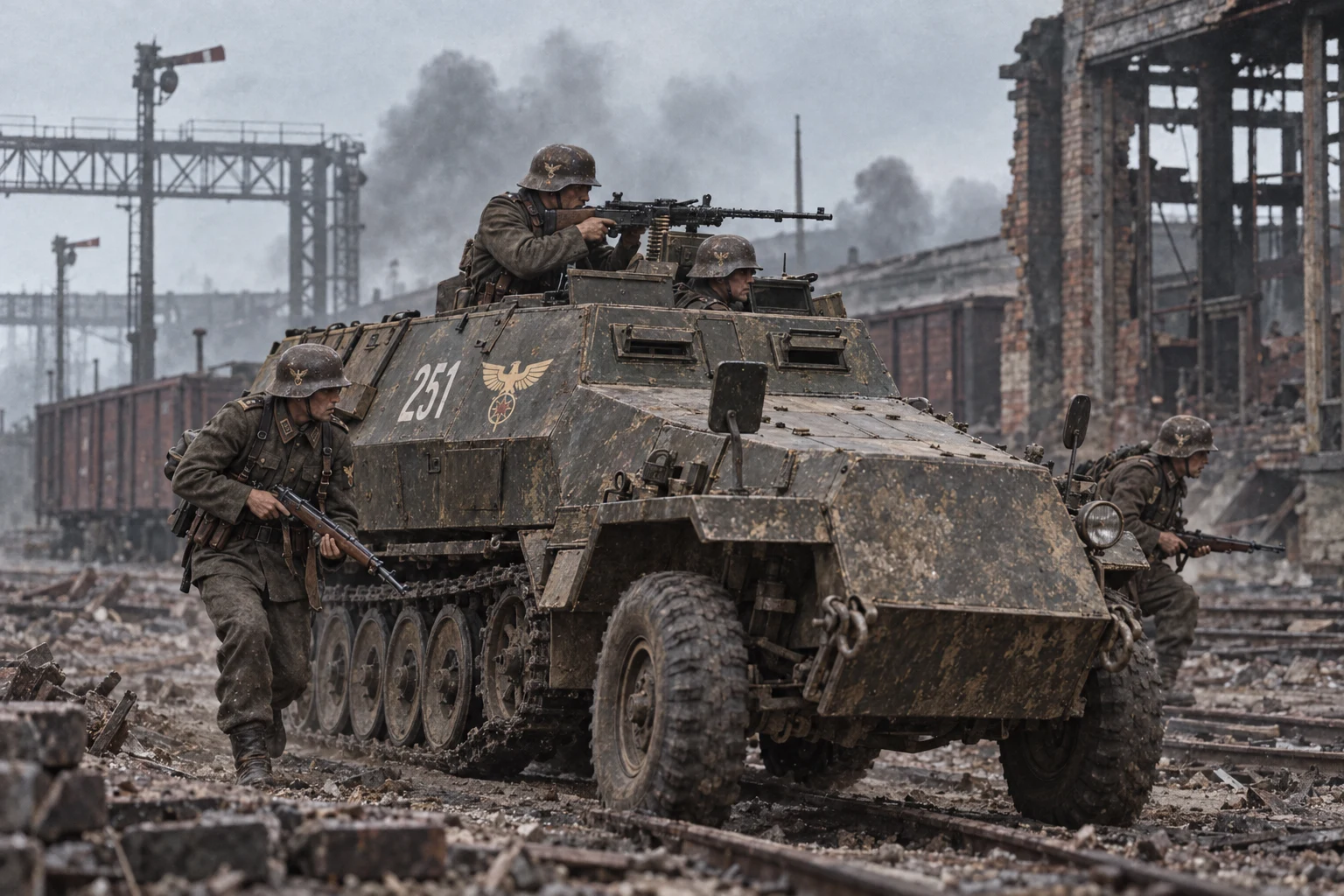
The first sustained attack struck the eastern junction on June 2. Ravell's forward companies withdrew from exposed cottages into the railway works, leaving patrols uncertain whether an entire battalion had broken or merely changed position. Hukular infantry reached an abandoned platform before encountering resistance from the repair sheds beyond it. The fighting divided into separate contests around brick workshops, coal heaps, and wagons whose contents neither side knew.
A fire in a loaded freight wagon spread smoke along the platforms. Daro received reports that the station was burning and ordered the medical post farther west. The station itself remained partly usable, but the move saved patients when shelling struck the original dressing rooms later that afternoon. It also lengthened every subsequent carry from the fighting. Men who could have survived rapid treatment waited while stretcher teams searched for the relocated post.
On June 4, Ravell attempted to reinforce the eastern connection by rail. The train stopped short of a damaged signal cabin, and its infantry detrained along an embankment rather than at the intended platform. Some joined the defense; others spent hours moving equipment that had been packed for unloading beside cranes. Their arrival increased the number of rifles without restoring the missing transport capacity. By June 7, Daro authorized abandonment of the eastern junction after the last recoverable medical and maintenance stores had departed.
June 8–14: The middle yards
Hukular's command interpreted the withdrawal as evidence that the district was close to collapse. The next advance encountered a more concentrated defense. Ravell's surviving companies knew which buildings remained connected and which apparent passages ended in wreckage. They could move casualties through parts of the works while the attackers still relied on sketches prepared before the bombardment altered them. This advantage was local and temporary, but it prevented the eastern success from becoming an immediate sweep through all three junctions.
Daro's reserve counterattacked on June 10 and recovered a weighing house and adjoining yard. The small success produced an exaggerated report that the middle station had been cleared. A supply train was released toward it before the correction arrived. Railway workers halted the movement outside the threatened area, then spent the night reversing vehicles that could not simply turn around. Their intervention prevented a transport loss that would have been larger than the military value of the recovered building.
By June 13, ammunition reached some companies in mixed loads stripped from abandoned wagons. A battalion could possess shells it could not fire and lack cartridges its infantry needed. Quartermasters began sending handwritten inventories with individual carts. The process was slow, but it made the shortage intelligible. Daro refused another counterattack because the forces listed as available included men searching the yards for their own equipment.
The broken drawbar
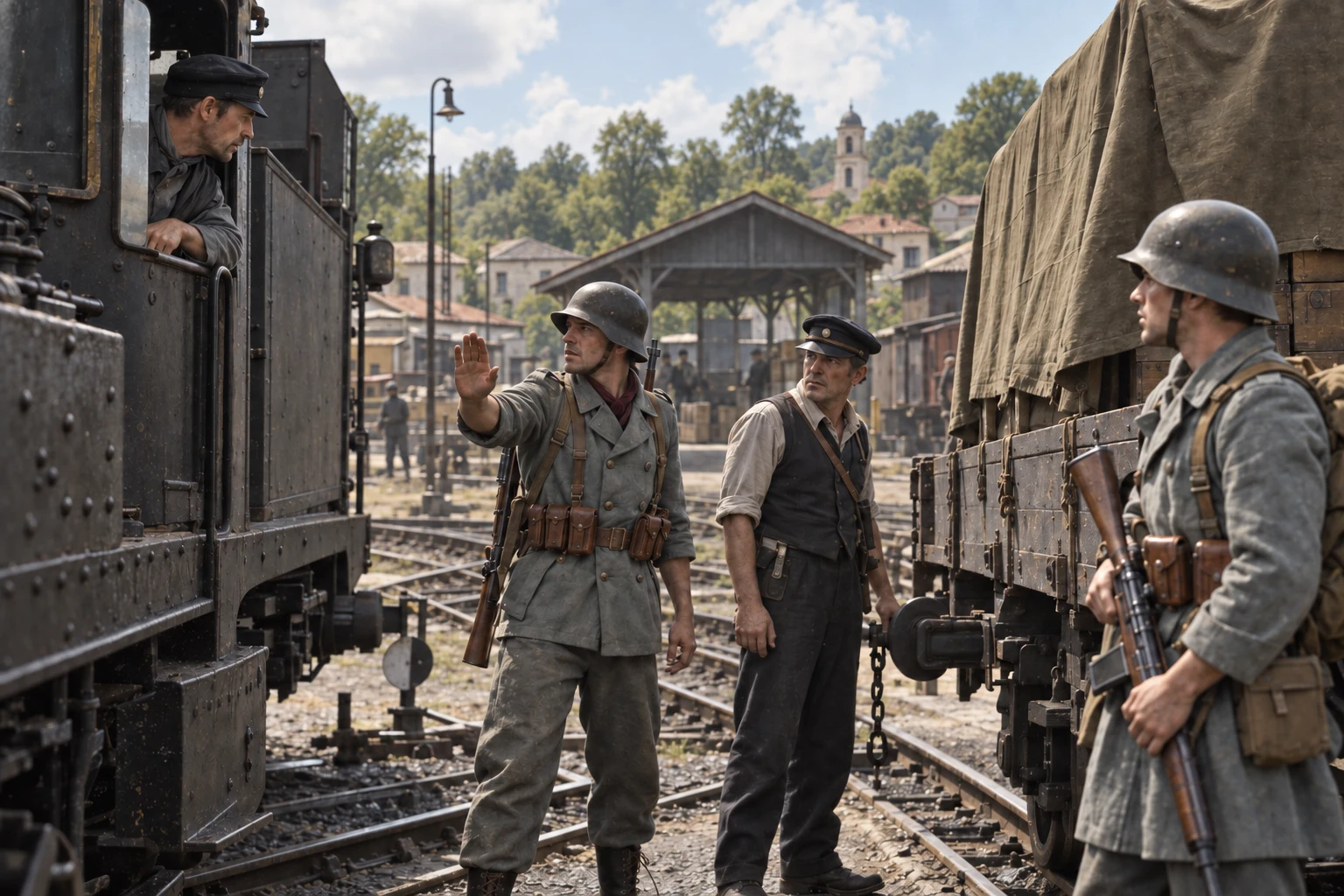
The hardest night in the middle yards began when a switching locomotive returned without the wagon carrying its brake crew. Driver Pel Naret insisted the coupling had failed before enemy fire reached the line. An infantry officer suspected that the crew had abandoned its work. Daro sent railway inspector Arda Sel to examine the damaged equipment. Sel found a fractured drawbar and blood on the footplate, establishing that the missing men had been separated by mechanical failure rather than a collective decision to flee. The distinction changed the search order: patrols looked beside the disabled wagon instead of searching the withdrawal columns for deserters.
Two men were recovered alive before dawn. One had remained with a wounded colleague beneath the wagon, unable to signal without attracting fire. Their return gave Daro information about a section of track that headquarters had presumed wholly occupied. She used the interval to remove a stranded carriage of medical equipment, then closed the route when renewed observation made another journey untenable. The opportunity lasted less than a morning and saved material needed by the hospitals farther west.
Sel's finding also prevented disciplinary action against workers whose apparent absence had been interpreted without evidence. The railway union later retained her report alongside the military withdrawal orders. It became an account of how hurried accusations could endanger the cooperation on which an army depended, and how a technically informed inquiry could recover both people and trust during a retreat.
June 15–18: The last connection
The western junction became the evacuation point and the final defensive position. Those functions interfered with each other. Troops passing through occupied space needed by hospital wagons, while civilians brought possessions that could not be accommodated. Local officials opened a separate assembly area in a schoolyard so that families did not have to wait directly beside the military loading tracks. Some refused to leave it when relatives failed to appear.
Hukular pressure resumed on June 16. Ravell's rear companies held long enough for the remaining organized formations to withdraw, but scattered parties were cut off in the industrial district. On June 18, the last junction passed into Hukular's control. Daro reached the next command post with a staff reduced to a few exhausted officers and clerks carrying the railway availability sheets.
The battle had delayed the invasion without stopping it. Ravell preserved part of its army and evacuated stores that would sustain later resistance, but lost the transport system that made an eastern defense possible. Hukular acquired wrecked infrastructure and a new repair burden. The railway workers' diagrams survived because Daro considered them operational records; later readers could trace the defeat through the growing difference between a track that existed and a track that could still carry a train.
Original illustrations for this source record
Original archive artwork and captions are preserved. Dates, labels and claims printed within inherited images belong to the previous edition; the revised text governs the current history.