August 22: eight years of continuity and loss
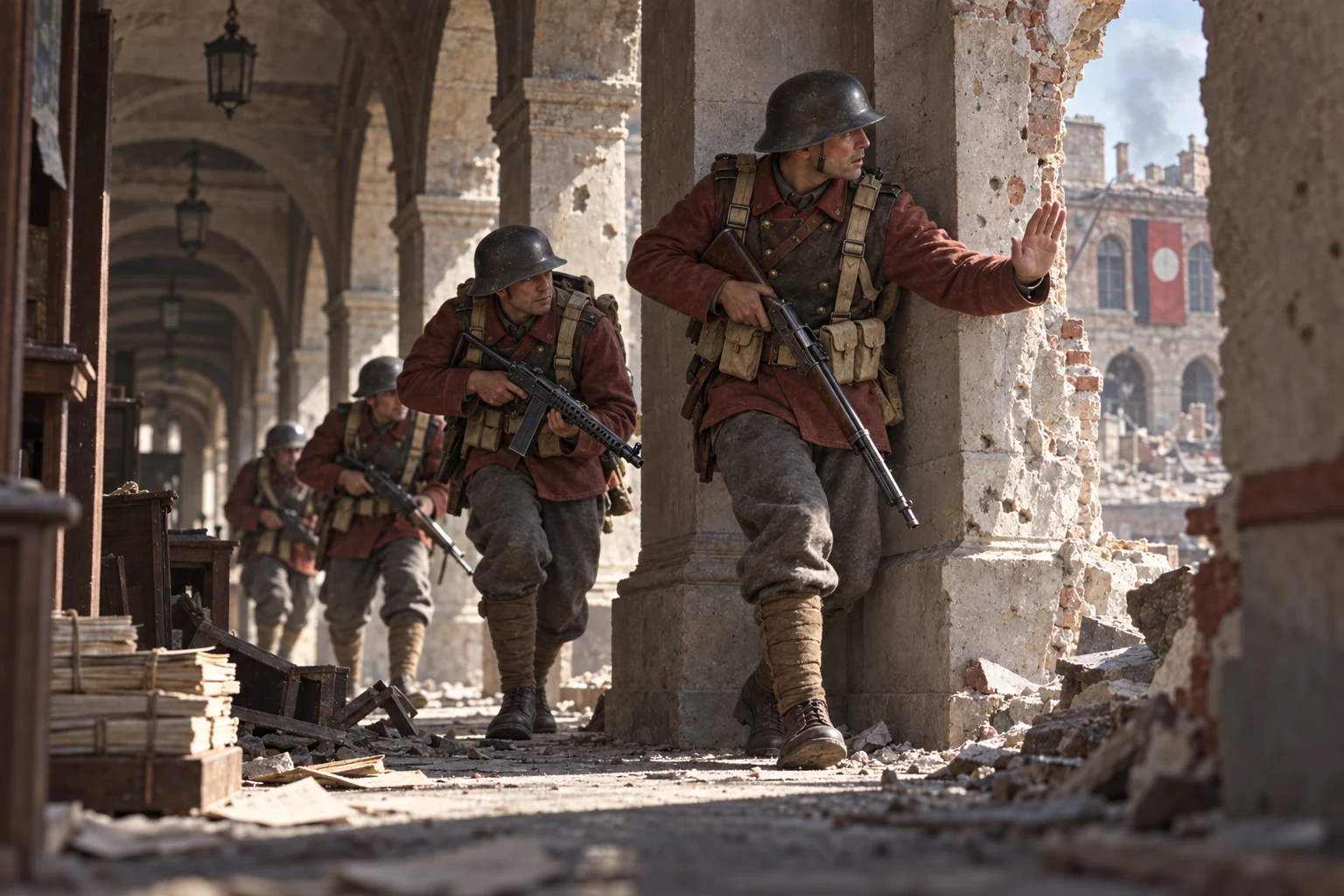
The defense of Praxil, Praxen's administrative center, lasted from August 22 to September 6, 1219. Its soldiers belonged to an army descended from the force that checked Rostan's opening advance eight years earlier. Descent did not mean unchanged personnel or inexhaustible experience. Dena Kor, formerly a major commanding a battalion, was now a colonel; her old formation had been rebuilt repeatedly. Some veterans instructed replacements, others remained in hospitals or had disappeared from the rolls. The battle consequently began with institutional memory distributed among people of different capacities and circumstances. Remembering earlier resistance helped the state continue, but did not restore every trained soldier lost since that resistance began.
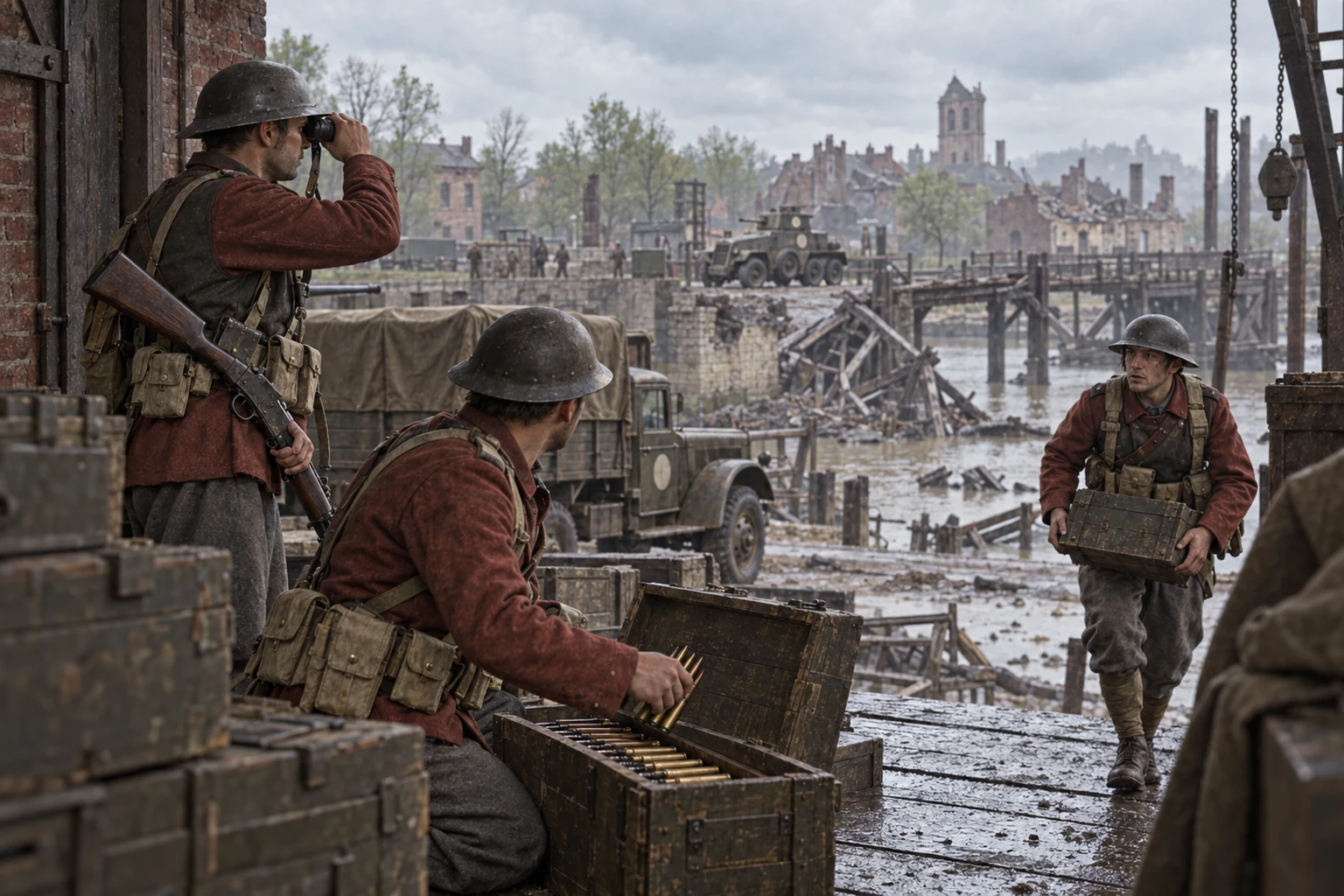
The loss of workshops in 1216 had reduced equipment repair. By 1219, vehicles operated with parts recovered from other vehicles, blurring the boundary between an interim repair and a permanent shortage. Kor's defense depended on conserving movement as well as ammunition. Her assigned sector included the administrative quarter and an adjoining commercial district needed by withdrawals. The same vehicle could be requested for patients, personnel, papers or communications equipment, while its condition limited how reliably it could perform any task. The source does not quantify the fleet or invent a mechanical solution. It establishes that repair losses had made transport a constrained resource long before Rostan reached the final administrative positions.
Rostan aimed to force the government out and sever the remaining coordination around the center. Its troops held advantages in replenishment and initiative, but expected prepared positions and knowledgeable defenders. Officers warned that visible exhaustion did not imply the absence of organized resistance. That recognition matters: the aggressor's plan addressed a functioning enemy rather than merely collecting an abandoned city. Praxen's local knowledge could support limited counterattacks and withdrawal even when broader resources were declining. The two sides' agency lay in those unequal possibilities. Rostan could choose renewed pressure; Kor had to decide which functions to preserve when holding the administrative center as a whole became increasingly doubtful.
Praxen and Rostan belong to Viar in the retained atlas. Praxil and Leressa are inherited narrative locations within Praxen, not newly geolocated settlements supplied by this essay. Movement westward connected the endangered center to a continuing seat of administration, but the source does not provide a full route map or guarantee every department could use it. This limited geography helps explain the stakes without manufacturing tactical precision. The battle was about keeping a state able to act after losing one center, which required people, military cohesion, records and reception capacity. A declaration of survival could authorize further resistance only if some practical means remained to carry out its obligations.
August 22–27: the registry quarter and the people in the files
Early fighting reached buildings holding civilian registers and military personnel records. Clerks had begun duplication, but the task was incomplete when the attack arrived. Kor allocated transport to selected records alongside wounded people and communications equipment. Officers objected that boxes took space needed by soldiers. Her reasoning treated the records as part of the state's ability to identify, pay and support its population after the buildings were lost. This was an allocation under scarcity, not a claim that paper had greater value than people. Records carried obligations to people, including those absent from the immediate column, whose entitlement or status could otherwise become difficult to establish.
Rostan infantry captured an outer office block on August 24. The defending company moved into a neighboring district, leaving wounded whom it could not remove before contact closed. A medical attendant stayed with them. Later prisoner correspondence established that some survived, but their families received no immediate assurance. For weeks, missing and dead could not be reliably distinguished because neither army had transmitted the required information. The source thus preserves both abandonment under battlefield constraint and continued care by a person who remained. It does not supply an exact number left in the building or identify a prisoner policy that this essay could legitimately add.
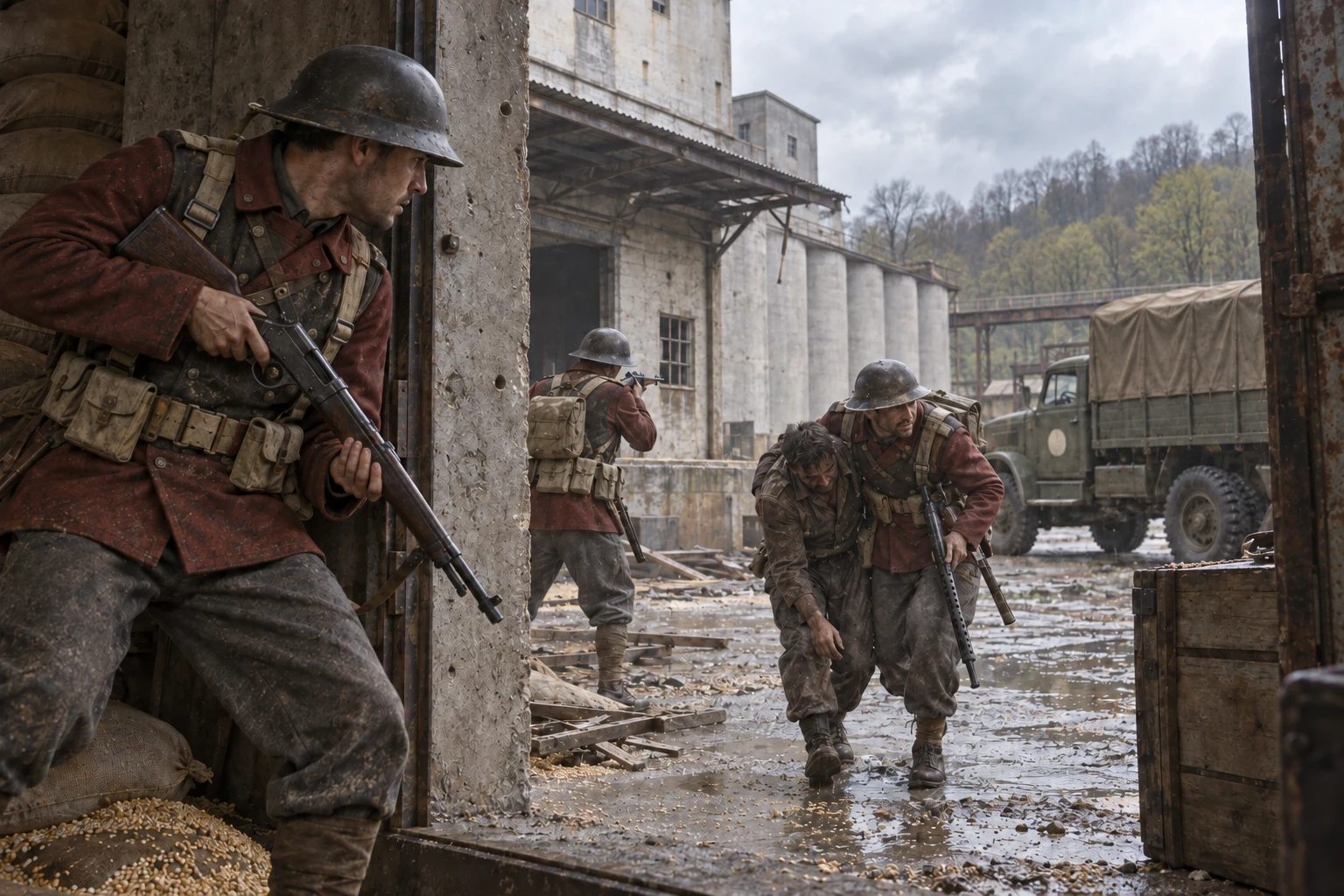
Kor's counterattack reopened a street connection long enough to remove more personnel. Its stated purpose was evacuation, rather than recovery of the entire registry quarter. The limited order helped soldiers understand what their effort was intended to achieve. Some still tried to reach homes beyond the assigned area, forcing officers to stop personal rescue attempts that could isolate a larger group. That conflict should remain painful rather than be resolved through an imagined successful rescue. The troops were members of threatened communities as well as a formation. A defined operational purpose could guide their action, but did not erase their knowledge that relatives might remain beyond its permitted reach.
The quarter's importance emerges from these overlapping activities: duplication of files, transport of records, treatment of wounded and temporary reopening of a route. Capturing the offices was a Rostan success; preserving selected contents and people limited what that capture destroyed. There is no contradiction in acknowledging both. A purely institutional narrative might follow the boxes and forget patients left behind, while a purely tactical account might count the counterattack without its evacuation purpose. The inherited source allows those strands to be joined at a concrete scale. The essay does so without claiming that preservation was comprehensive or that Kor's priorities eliminated all uncertainty for the people whose names the records contained.
August 28–September 2: an administration leaves at different speeds
Government departments departed westward unevenly. Some possessed transport and reception arrangements; others appeared at collection points with staff, dependents and records outside the original allocation. Military traffic police could redirect vehicles but could not determine which public obligation deserved priority. Senior officials had to decide in person what would move and what would remain. This distinction between organizing flow and authorizing its purposes was central to the withdrawal. A traffic system could become more efficient while still carrying an unresolved distribution of opportunity. The source records officials accepting responsibility rather than describing departure as a neutral sorting process that inevitably delivered everyone to safety.
Rostan pressure widened the gaps between defensive positions. Kor shortened her sector to protect routes needed by the broader retreat. Requests from units seeking a place in the new line replaced some reports from positions on the old one. A map clerk distinguished ground confirmed occupied from ground merely ordered to be occupied. That modest change exposed a consequential difference: an instruction could give headquarters the appearance of a defense where no formation had arrived. The map's usefulness came from marking the limits of execution. It provided no extra troops, yet made it harder to mistake a desired position for a verified barrier to Rostan's continuing advance.
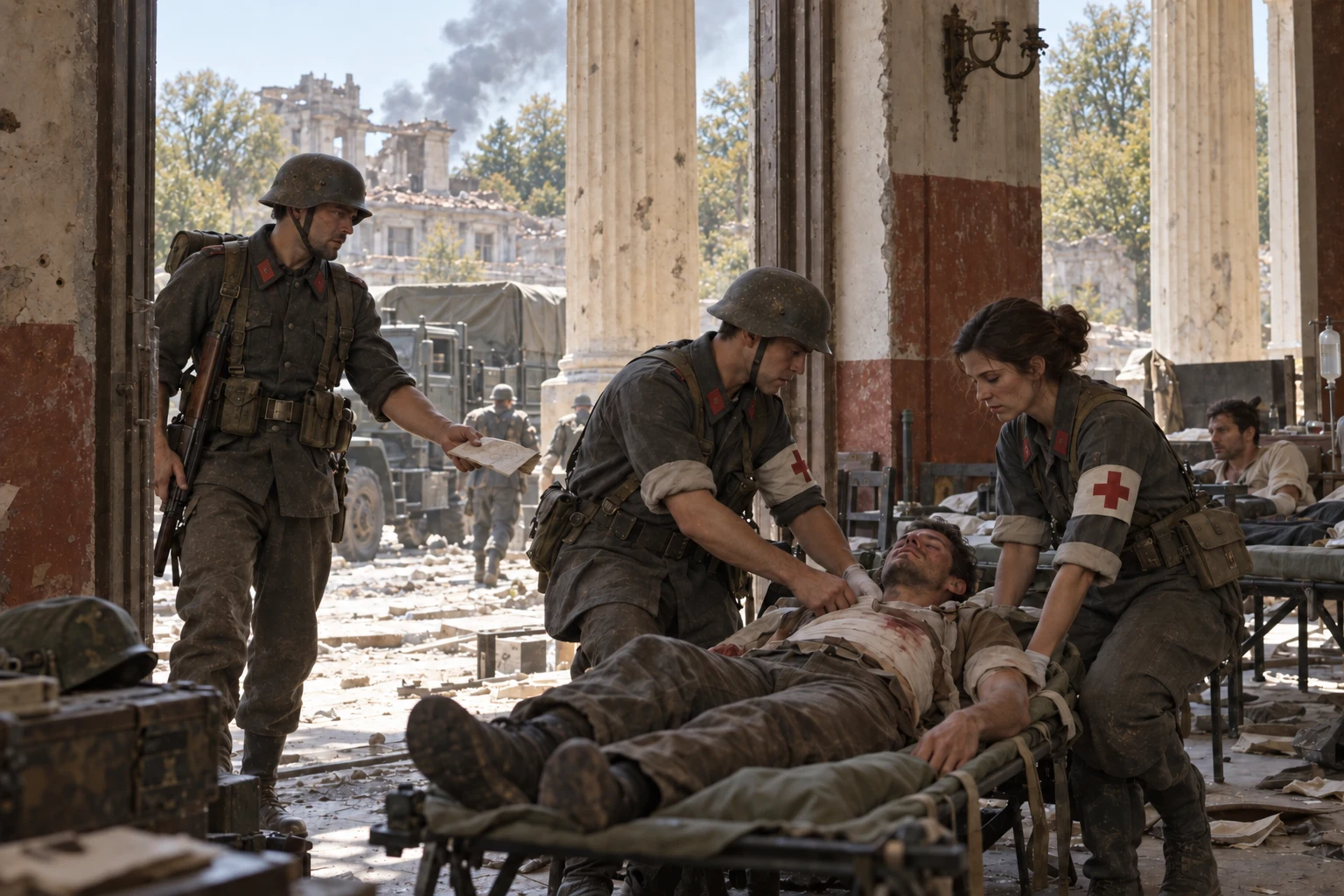
On September 1, fighting reached a public assembly hall serving as a medical collection point. Infantry held adjoining streets while patients moved through a rear entrance. The last vehicle left before several attendants finished carrying men out on foot. They reached another station after it had stopped intake because of overcrowding. Kor intervened to obtain admission rather than let the group disperse among facilities it could no longer safely reach. The medical movement required a receiving institution as well as departure from danger. A patient successfully removed from one building had not yet reached care if the next facility could not accept him.
This incident reveals how battlefield evacuation could transfer a problem rather than resolve it. Transport, attendants, destination capacity and authority to admit patients formed one connected chain. Kor's intervention repaired a particular break in that chain; the source does not establish that she reorganized the whole medical service or made overcrowding disappear. Her action is significant at its supported scale because the group had arrived exhausted at a closed intake point and lacked a safe alternative. It also shows why decisions usually categorized as administrative could directly affect survival during the military withdrawal. Praxen's resistance depended partly on institutions functioning for people already removed from the front.
September 3–6: defending departure rather than the center
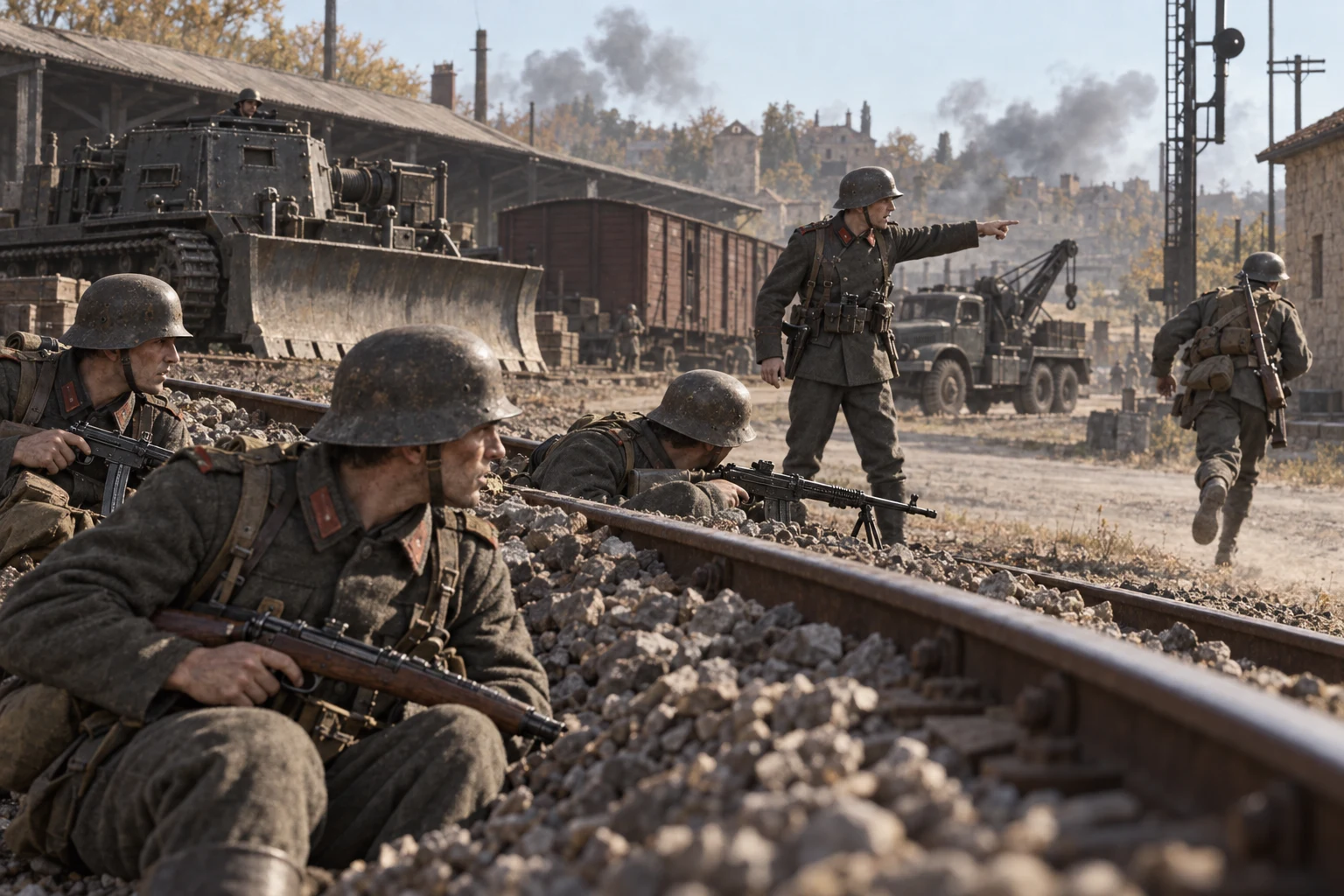
The final defense sought to protect departure rather than promise that Praxil could be saved. Some local commanders resisted that change because their own buildings remained strong. Kor explained that a place could still be defensible after the system connecting it to the army had failed. Most received and followed withdrawal orders; isolated groups that did not receive them continued fighting after neighboring districts emptied. The source therefore distinguishes reluctance from failed communication. Both could prolong local resistance, but they were different circumstances requiring different judgments. Apparent endurance in a building did not necessarily show either a deliberate rejection of national command or a sound place within the broader defense.
Rostan secured the principal administrative center on September 6. Praxen's government and surviving formations continued in the country's west and through Allied support. This was not national capitulation. It nevertheless removed facilities and institutions whose functions could not be restored immediately by naming a new administrative seat. The defeat was substantial precisely because the state remained obligated to work without many of its former means. Residents under occupation experienced the disappearance of the government that had organized daily life, while officials who escaped needed to demonstrate continuity through service. Both experiences belonged to the same loss of the center, although they produced very different immediate conditions.
Kor reached the western command with fewer soldiers and an incomplete collection of records. Her troops received rest and then further service. That sequence is continuity through loss rather than a return to their prebattle state. The source supplies no basis for assigning them a new numbered corps or attaching unrelated registry units to make their history look more complete. Their earlier and later identity rests in Kor's retained command history and the formation repeatedly reconstructed since 1211. Readers can follow the first defensive battle and the 1219 annual to trace that continuity, while keeping the administrative center's fall separate from the broader Allied war that Praxen continued to fight.
September 19 at Leressa: repairing the account of the army
Kor's western reception order designated Leressa as a temporary administrative seat. The destination did not automatically provide enough rooms, desks or trained clerks. Arriving offices shared schools with refugees and military services, reproducing some of the pressure that the retreat had been meant to escape. Kor sent a personnel officer to coordinate surviving army registers because several departments were declaring the same soldiers missing independently. A functioning administration required shared information, not simply multiple offices each performing familiar procedures. Duplication after displacement could multiply uncertainty when records had arrived incomplete and individual movements had not been entered consistently.
On September 19, clerk Ina Ver compared hospital admissions with a battalion list carried from Praxil. Men transferred without their original papers appeared under abbreviated names in one system and full names in another. Her team used unit details, relatives and companions' testimony to reconcile the entries. The work corrected individual notices and showed that the first postbattle estimate of army strength was incomplete. This is a documented problem of matching people across records, not permission to invent new strength figures. The canon's annual June 1 census definition remains separate from a formation's uncertain postbattle accounting in September; neither can be inferred numerically from the other.
Kor postponed a definitive battalion loss total while reconciliation progressed. Families read the silence as possible concealment, so the administration issued provisional reports about individual status instead of presenting one aggregate number as final. The alternative did not remove uncertainty. It distinguished what could be said about a particular soldier from what the unsettled arithmetic of a defeated unit could yet support. Ver's contribution therefore changed both information and communication of its limits. A family seeking news of one person was not helped merely by a confident total, especially if duplicate missing entries and inconsistent names had made that total unreliable.
There was a retained precedent in Kor's first battle. During the 1211 defense, separated soldiers had been assigned to functioning companies instead of immediately restored to their original units. That helped short-term cohesion but later caused contradictory casualty and pay notices when one formation still listed a man missing while another employed him. The 1219 problem was not identical, but the relationship is clear: military recovery could precede administrative reconciliation. Following both accounts avoids assuming that years of experience abolished such difficulties. Movement under renewed pressure generated new mismatches, and Ver's work had to establish individual continuity after the old paperwork ceased to provide it reliably.
Leressa became a seat of resistance in part through this patient work. Reconciled names, admitted patients and surviving staff gave substance to claims that government continued. The battle's civilian consequences remained larger than those recoveries: many residents stayed under occupation, institutions had lost buildings and resources, and some soldiers' fates remained unknown. Its supported lesson is therefore not that records could compensate for defeat. Records enabled selected obligations to continue after defeat, while exposing what the state still did not know. Read beside Kor's earlier defense, Praxil's fall shows how sustained resistance depended on adapting institutions repeatedly without pretending those adaptations returned the nation to its former condition.
The recurrent administrative problem also gives ordinary personnel a place beside the recurring officer. Kor could order coordination and delay a misleading total; Ina Ver had to compare entries, seek unit details and consult relatives or companions. These tasks were complementary rather than interchangeable. The original records Ver's discovery on September 19, after the September 6 fall, so her reconciliation belongs to the aftermath and cannot be credited with preserving the earlier frontline positions. It helped the surviving state describe what had happened to people once those positions and institutions were gone. That temporal distinction protects both the battle's causal account and the clerk's actual achievement.