Distribution before the coastline
The [depot-ring campaign](campaign-the-depot-ring-campaign) in 1222, [littoral disruption campaign](campaign-the-littoral-disruption-campaign) in 1223 and [reception-base denial](campaign-the-reception-base-denial) in 1224 follow the conversion of supplies into field capability. The first group takes place in Eastern Aldren’s rear belt; the later groups concern its littoral and coast. A protected stockpile was not a functioning distribution system, and an anchorage was not a completed overseas base. Teran commands attacked the movement, access and communications that joined these assets to troops. Their victories explain why a growing coalition could retain resources and still suffer local operational defeats while attempting to establish the arrangements needed to use those resources.
Colonel Dema Orven appears with the 3rd Reserve Corps in the depot group. Commodore Karel Thun’s eight coastal engagements use the 5th Coastal Group, a command coordinating separate shore and military transport establishments. Its operations were supported from already-held Teran coastal positions in Volara. Nothing in these victories authorizes an invented passage through a neutral country or an instantaneous transfer to a remote island front. The coast supplied particular staging arrangements, boats and infantry approaches. Those material conditions are part of the causal explanation. A commodore’s coordination of land and sea movement is not equivalent to personally commanding every branch of the national military.
The rear belt’s four failures in 1222
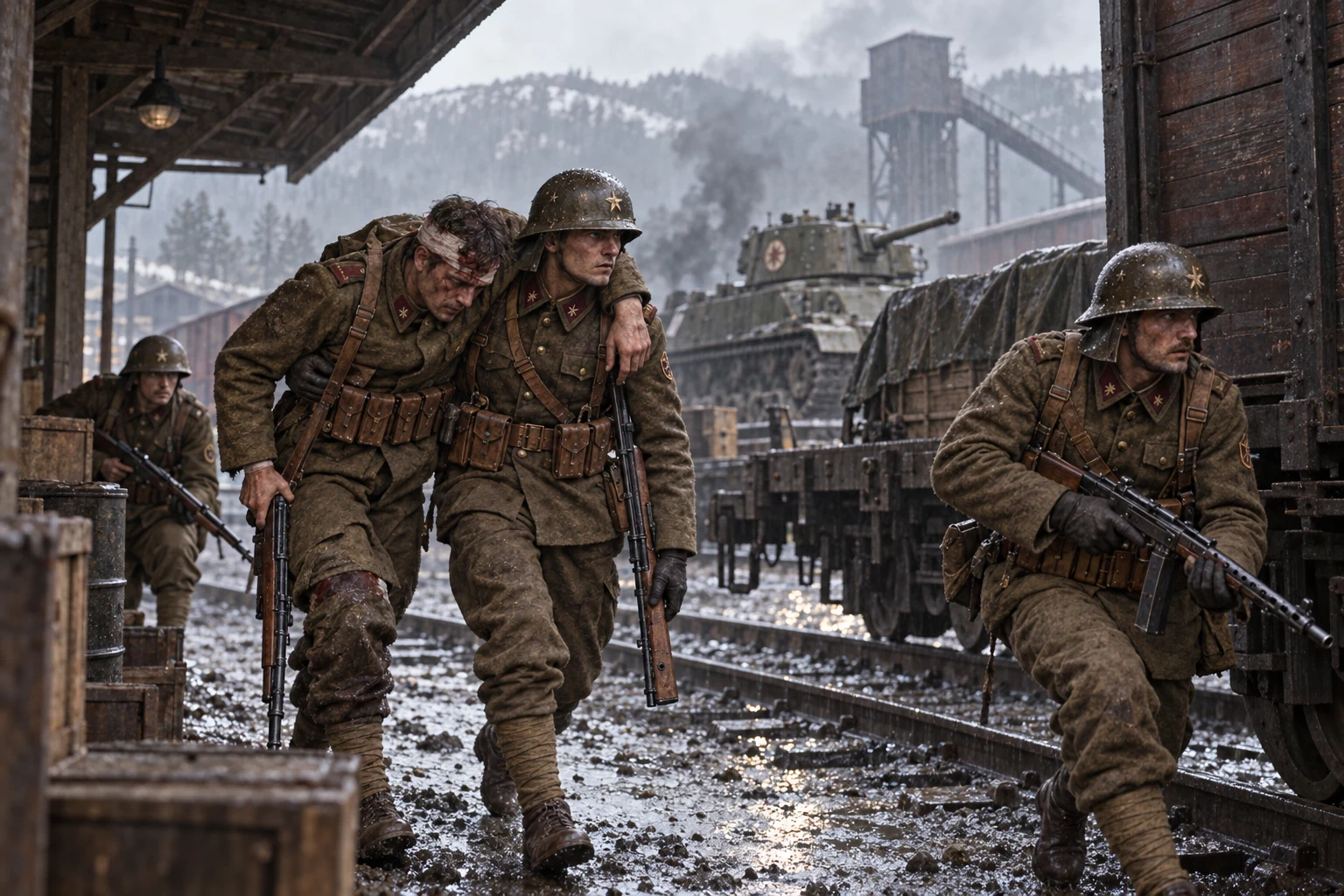
At [The Inner Wagon Ring](new-battle-277), February 12 onward, Aldren’s protected distribution ring allowed rapid movement toward threatened sectors but relied on a narrow exit. Orven’s fire and pressure on the outer guards converted protection into congestion. The reserve failed to receive ammunition when it mattered most. Drivers escaped through gardens with some stocks, preserving endurance for retreating troops while abandoning the ring’s coordinated function. The military outcome therefore rested on failed delivery rather than complete destruction of supplies. A distribution installation could lose the campaign’s immediate timing contest while leaving enough material outside its perimeter to help sustain another defensive arrangement.
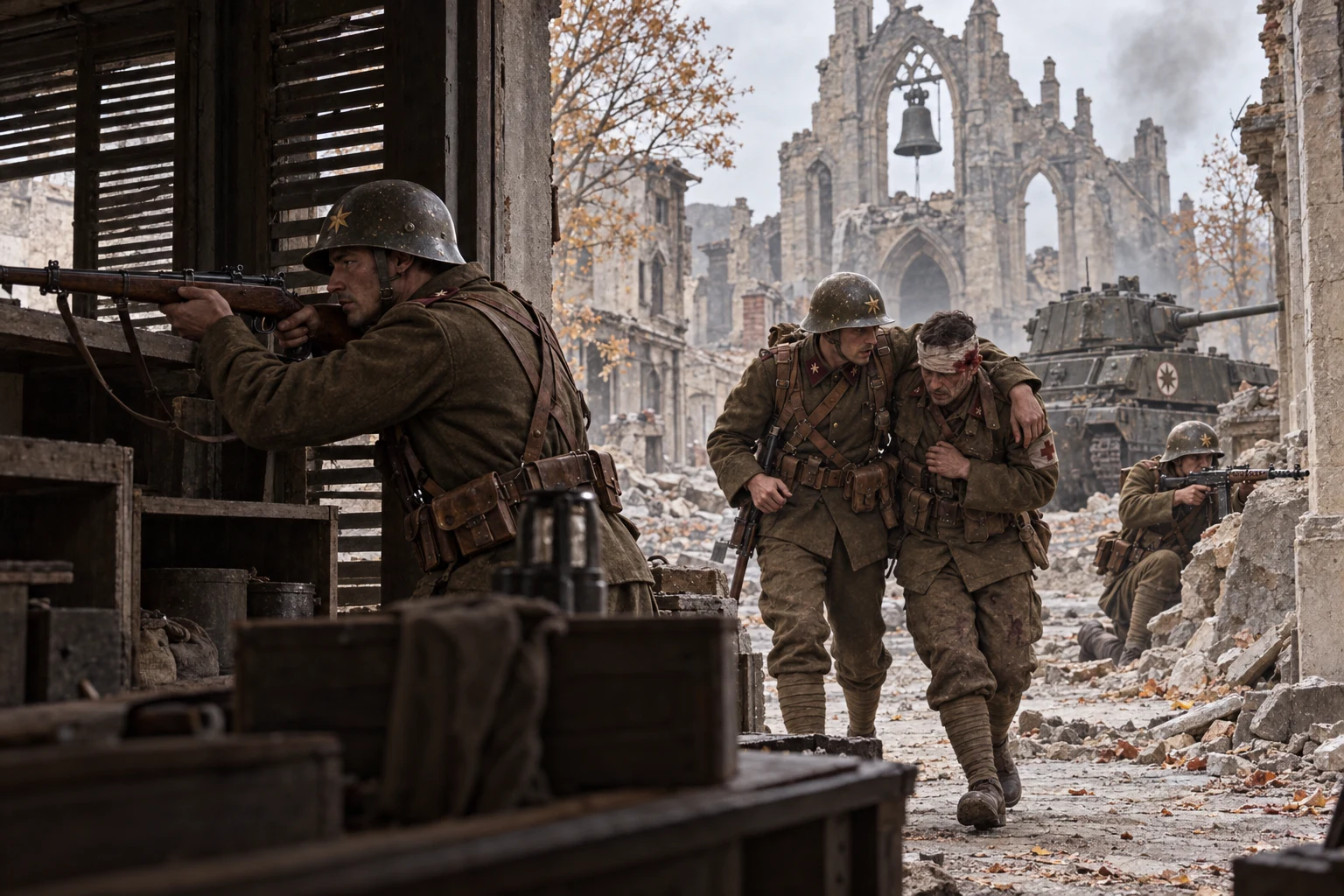
The [Counterbattery Orchard](new-battle-278) in May concealed guns among rows and alternate clearings. Comparing sound reports with ammunition traffic narrowed the active sites; concentrated fire and infantry occupation of the connecting lane removed their useful support. Crews withdrew remaining guns before the lane closed completely. In August, [The Night Sorting Yard](new-battle-279) attempted to hide train concentration through blackout and night-only sorting. Daytime dispersal of empty wagons disclosed the working pattern. Teran fire at the exits and infantry action against the switch guard prevented timely distribution. Aldren railway crews saved a train and prevented collisions, acts whose significance lay in preserving people and usable stock amid the defeat of the timetable.
The November [Timber Redoubt](new-battle-280) protected the depot road against ordinary infantry pressure. Orven isolated its supply entrance, directed fire against observation and supported engineers approaching through drainage. The expected road reserve never restored the position. The garrison destroyed documents and surrendered; Tera gained the redoubt and evidence of supply arrangements under strain. This fourth engagement links fortified protection to distribution rather than treating them as separate subjects. Strong timber did not compensate for interrupted observation and replenishment. Conversely, the redoubt had required purposeful engineering and an assault to take; describing its isolation does not imply that the occupants had simply surrendered when the first shell fell.
The coast before and after Silvia’s entry
February’s [Harbor Crane Fight](new-battle-281) and May’s [Outer Breakwater](new-battle-282) both precede the Kandar Harbor attack of June 8, 1223. Their opponents must therefore be read in their recorded Aldren setting, rather than retroactively supplied with a fully mobilized Silvian expeditionary army. Thun’s shore detachment used an existing Teran-controlled staging coast to reach the crane access road. Captured harbor ground lacked the expected capacity because Aldren crews damaged machinery and evacuated operators. At the breakwater, a limited landing and shore artillery turned the land connection instead of sending transports through the defended entrance. Disabled guns, mines and wreckage delayed use of the newly captured anchorage.
These two victories show that access and capacity were separate objectives. Taking a crane did not create a competent workforce willing and able to operate it. Taking the land end of a breakwater did not immediately clear water for military shipping. The 5th Coastal Group required the same kinds of coordination after victory that Thun had demanded before it: engineers, trained operators, transport scheduling and protected approaches. That continuity of work prevents the campaign from becoming a story of harbors opening automatically when defenders withdrew. It also restores civilian labor and coastal services to the account, since damaged machinery and restricted movement continued affecting inhabitants after the main combat had ended.
The [Coastal Reception Yard](new-battle-283) in August belongs to a changed political situation. Silvia had entered after Kandar, and advance personnel were working with Aldren to build reception facilities. The arrangement remained incomplete. Thun struck the approach before incoming supplies dispersed; Silvian and Aldren teams evacuated records and wounded by separate routes. At November’s [Lighthouse Relay](new-battle-284), the cable network connecting shore defenses and liaison personnel failed after Teran action against the inland junction. A naval radio restored contact after the posts fell, saving later transports from the same danger. The local victories delayed entry becoming functioning cooperation without undoing Silvia’s decision to fight.
Denying reception without owning every sea route
The [Shallow-Water Depot](new-battle-285), February 1224, used limited depth as a defensive expectation. Thun answered with smaller military craft and shore movement from an existing Teran position, cutting the depot road before the defenders concentrated. Allied boats saved personnel and selected stores. The loss removed a dispersed base; it did not close Allied maritime access everywhere. The operational finding is geographically bounded. A successful local combination of shallow-draft movement and land access cannot establish unrestricted Teran command of distant waters. The battle instead demonstrates how an apparently protective physical constraint could be overcome when the attacker already possessed a suitable supporting position nearby.
In May’s [Pierhead Counterstroke](new-battle-286), an Allied detachment captured a landing facility before securing the inland road. Unloading congestion gave Thun the interval for a land counterattack and fire against military access. The detachment evacuated before complete isolation, losing equipment but denying Tera the whole body of troops. This was a failure in the order of establishing a base, not a failure to reach the shore. The pier could receive machines faster than the insecure road could distribute or protect them. Allied command accepted loss of recent gains to retain people, a decision that limited the tactical disaster without converting it into the successful landing originally intended.
The August [Dockside Workshop](new-battle-287) repaired vehicles damaged in unloading. Its growing concentration became visible through recovery traffic rather than through the workshop’s protected walls. Cutting the service road and isolating the entrance forced mechanics and infantry to leave unrepaired vehicles. Tools and specialists escaped in fishing craft, preserving future rebuilding while the immediate base lost recovery capacity. In November, [The Fog Anchorage](new-battle-288) hid the reinforcement convoy but also disrupted identification and unloading. Thun’s higher shore observation and limited strike against its assigned reception point blocked the exit while ships redistributed cargo. Several transports reached a secondary anchorage; reinforcement survived piecemeal and failed to produce the intended immediate offensive.
Entry, mobilization and actual arrival
Silvia’s volunteer-only system matters to the campaign’s larger context, but its national headcount is not the strength of a coastal reception detachment. The user-established 450,000 pre-entry active personnel in 1223 includes the national administration, not men simultaneously standing at an Aldren pier. Later expansion likewise cannot be projected backward to make the August yard a completed mass base. Entry began a chain of decisions about recruitment, training, shipping, liaison and support. The Teran coastal victories attacked that chain at points where arrival and operational readiness were separated. They reveal formidable opposition to coalition development while preserving the chronology of Silvia’s entry and its eventual contribution to Allied victory.
The evacuated liaison teams, records, mechanics and operators were particularly significant because reception systems require knowledge as well as equipment. A replacement crane could not by itself restore a dispersed schedule; another workshop needed tools and people familiar with the vehicles; a naval warning could redirect later transports when a shore relay had fallen. The sources establish those acts of preservation without claiming that every new base succeeded. Their causal value is conditional: survivors made rebuilding possible, while the immediate defeats still cost time, material and offensive opportunity. The next [rebuilding campaigns](chron-campaign-12) would expose how retaining cadres and deploying them safely were two different achievements.
Coastal inhabitants and the price of a working base
The civilian consequence of these operations cannot be confined to direct shell damage. Military yards controlled roads used for ordinary distribution; damaged cranes and wrecked entrances changed access to port employment and supplies; workshops and fishing craft became part of escape under combat pressure. The records give named military mechanisms and selected civilian actions rather than comprehensive population returns. No unrecorded displacement count is supplied here. The archive should instead preserve the connection between each installation’s ordinary function and the military interruption. Even a successful evacuation of specialists could leave residents beside machinery that no longer supported the harbor’s previous daily life.
Occupation introduced coercion into the interpretation of captured capacity. The fact that Thun limited a strike to a military reception point does not establish that all subsequent use of coastal labor was voluntary or lawful. Conversely, the source records do not authorize a newly invented atrocity at each dock. The history must keep the military finding precise and the responsibility question open to the relevant accountability record. Tera captured or recovered facilities while still needing people, repair and continuing protection to use them. Captured ground increased the tasks imposed on military and civilian establishments; it did not eliminate the inhabitants’ interests or choices in the name of logistical efficiency.
The scale of the victory series
The twelve engagements connect distribution on land with reception at sea through a shared problem of throughput, but their physical obstacles and opponents differ. A wagon exit congested a reserve; orchard lanes sustained hidden guns; train exits governed night sorting; coastal roads joined landing sites to the interior; workshop tools sustained readiness. The [1222](year-1222), [1223](year-1223) and [1224](year-1224) records establish the changing war around these operations, while [Kandar Harbor](chron-major-020) explains the entry threshold without becoming the cause of the two earlier coastal battles. Selected victories should neither be merged into a continuous blockade nor used to erase Allied access through other locations.
Tera repeatedly defeated the local arrangements intended to bring resources forward, preserving the distinction between possession and usable capability. The Allies repeatedly preserved people who could assemble new arrangements after equipment and installations were lost. Those outcomes made the coastal struggle more than a sequence of shore seizures. It was a contest over the time needed to make an alliance function, fought amid civilian facilities whose restoration could consume the victor’s own engineers and administrators. Teran operational competence imposed severe delays. It also carried finite support requirements, while the coalition’s institutional survival left open the later recovery that the empire’s tactical victories had been intended to prevent.