Different ground, different concentration
The [hill-road offensive](campaign-the-hill-road-offensive) of 1217, [western artillery contest](campaign-the-western-artillery-contest) of 1218 and [southern contraction](campaign-the-southern-contraction) of 1220 place three kinds of terrain at the center of the Teran war. Mountain approaches restricted armor and evacuation. Dry frontage exposed ammunition movement and made observation networks decisive. Low river ground limited transport to causeways, storehouses, pumps and ferry roads. Their shared problem was how to make a concentration physically usable. A staff could allocate guns or a reserve on paper and still fail if the road, warning or supply path did not support their arrival at the right interval.
General Selan Var’s recorded 1217 force belonged to the 14th Field Army. Colonel Dema Orven’s 1218 coordination appears with the 3rd Reserve Corps, and Var’s 1220 operations likewise use the 3rd. These are bounded affiliations on the Aldren front. They do not imply an unchanged force moving without relief from each mountain pass to every later river site. The unit histories record rotation, rebuilding and local sector transfers with support. The battles also expose differences between kinds of competence: waiting for infantry to secure observation, allocating ammunition against a relay, maintaining a short bridge, and choosing whether a captured road is worth pursuit are related decisions without being interchangeable recipes.
Moving through the hills in 1217
The [White Pass](new-battle-265), February 15 onward, made the obvious armored advance vulnerable to guns above a bend. Var held tanks back while infantry took the observation crest, then moved vehicles in small groups with engineers clearing road damage. Aldren crews saved guns through alternate tracks. Tera therefore won the pass and still faced effective artillery beyond it. Controlling the crest changed what the defending guns could see and how the column could move; it did not destroy the entire defensive artillery establishment. The distinction prevented victory from becoming an excuse to accelerate transport into another choke point before supporting reconnaissance and recovery were ready.
The [Shepherds’ Track](new-battle-266) in May offered a route Aldren had judged unsuitable for a major attack. That judgment was partly correct: it could not sustain the whole Teran force. Light infantry carried limited ammunition and radios to an upper position while pressure continued below. Their success divided defensive attention, but their supply nearly failed before the road force linked with them. A historian can identify the successful connection without imagining a permanent mountain supply system. The attack depended on time: the isolated detachment had to last until the main force arrived, and the lower force had to exploit the distraction before ammunition exhaustion made the high position untenable.
At [The Sheltered Hairpin](new-battle-267) in August, a concealed battery repeatedly stopped vehicles. Dismounted reconnaissance found its rear access, infantry attacked there and smoke covered a restricted movement through the bend. The gun crew destroyed remaining ammunition and escaped uphill. Recovery of damaged vehicles delayed the next stage, reminding the command that passage could be won before traffic had been restored. November’s [Ridge Hospital Road](new-battle-268) had an additional constraint: the reserve approach shared ground with medical and civilian evacuation. Var blocked the military branch and struck the reserve assembly area; Aldren medical staff maintained an evacuation lane during withdrawal. The defeat was severe without making those rescuers’ work incidental to its consequences.
How the artillery contest differed
In 1218 the critical obstacle was often a network rather than an elevation. At [The Double Observation Post](new-battle-269), two Aldren posts promised redundancy, but both relied on a shared relay. Orven targeted that common connection first. Occupied posts could no longer coordinate batteries during the assault, although runners restored one link for a final barrage covering retreat. This was a defeat of centralized timing, not disappearance of every defending gun. It also clarifies how apparent redundancy can conceal dependency: two eyes do not provide two complete systems if both must pass their observations through the same vulnerable route.
May’s [Dust Barrage](new-battle-270) made resupply visible in dry weather. Aldren intended to hit ammunition movement before Tera concentrated. Orven divided deliveries and used empty vehicles to draw premature fire. Revealed guns then faced counterbattery missions while the main supply arrived. Aldren observers recognized the deception and damaged later stocks, but the decisive local concentration had already become possible. The advantage was temporary and purchased through careful allocation. It cannot be explained by limitless shells. The later recognition matters because repeating the identical movement against an informed defender would no longer promise the same result; observation remained an evolving contest between commands able to adapt.
At [The Sunken Gun Lane](new-battle-271) in August, protected travel between alternate pits concealed guns until they reached the exits. Orven concentrated on those transfer points, forcing surviving batteries beyond useful support distance as infantry reached the works. The November [Forward Telephone House](new-battle-272) possessed an emergency radio in addition to cables. Teran infantry seized the neighboring cable junction, supporting fire isolated the roads and reconnaissance blocked the radio team’s move to its alternate station. Defenders continued local fighting for hours. Tera defeated the separate positions before a new network formed, showing how the loss of central coordination changed mutual support without depriving individual defenders of purpose or the capacity to resist.
The river belt contracts
The 1220 [Long Causeway](new-battle-273) forced Aldren’s reserve through exposed wet ground. Var threatened its landward end with limited infantry and withheld armor until the reserve turned. The resulting strike cut retreat, while boats rescued some soldiers across flooded fields. Guns and vehicles remained trapped on the road. The balance between personnel saved and equipment abandoned made the contraction militarily serious without requiring an invented prisoner count. A causeway’s value lay in supporting heavy movement across ground boats could help men escape but could not immediately turn into an equivalent artillery or transport route.
At [The Salt Storehouse](new-battle-274) in May, a raised floor protected ammunition from flooding amid civilian salt traffic. Reconnaissance distinguished the guarded military access and Var’s force seized the road while infantry cleared the perimeter. Defenders dispersed stocks to nearby villages before the final assault. The immediate offensive lost its central depot, while some future resistance retained supply. Military storage in a civilian distribution setting imposed burdens on inhabitants whichever army held the entrance. The campaign record supports the survival of dispersed ammunition; it does not authorize a new account of every village’s politics, evacuation or occupation treatment. Those questions require evidence rather than assumptions derived from a depot’s fall.
The August [Drainage Pump Line](new-battle-275) put linked pump houses across flooded ground. Var attacked the lateral road, and engineers restored a short bridge for armor to threaten two garrisons from the rear. The withdrawing defenders kept pumps operating. Tera won a district whose water system now lay under its control, inheriting obligations toward civilians vulnerable to neglect. November’s [Second Ferry Road](new-battle-276) exposed an observation failure: aerial reconnaissance missed the sheltered landing. Ground patrols found fresh wheel tracks; infantry, fire and a mobile road block then disabled its organized transport function. Ferrymen rescued troops from another bend, preserving lives while failing to preserve a reserve route sufficient for the former defensive frontage.
Escape routes are operational evidence
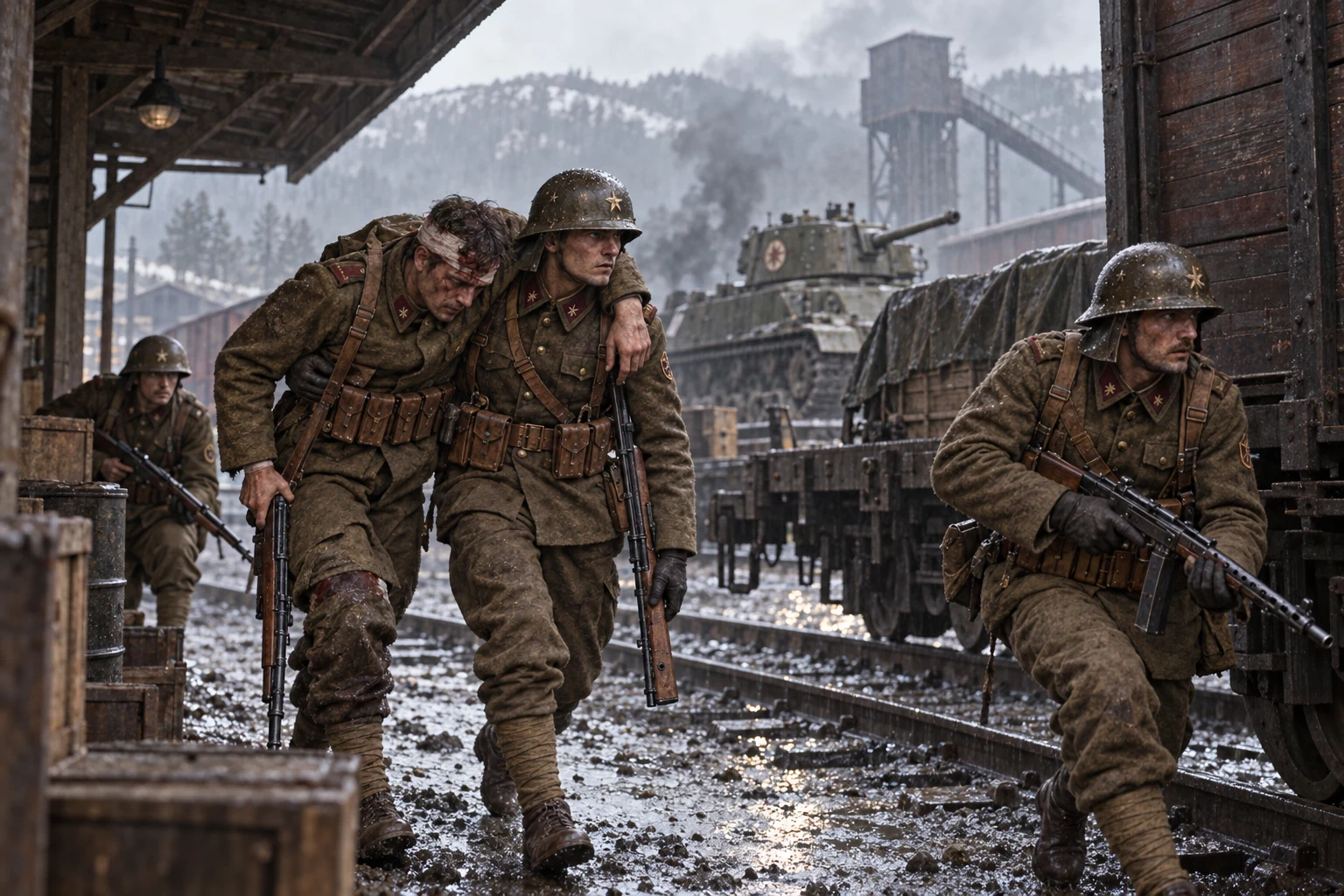
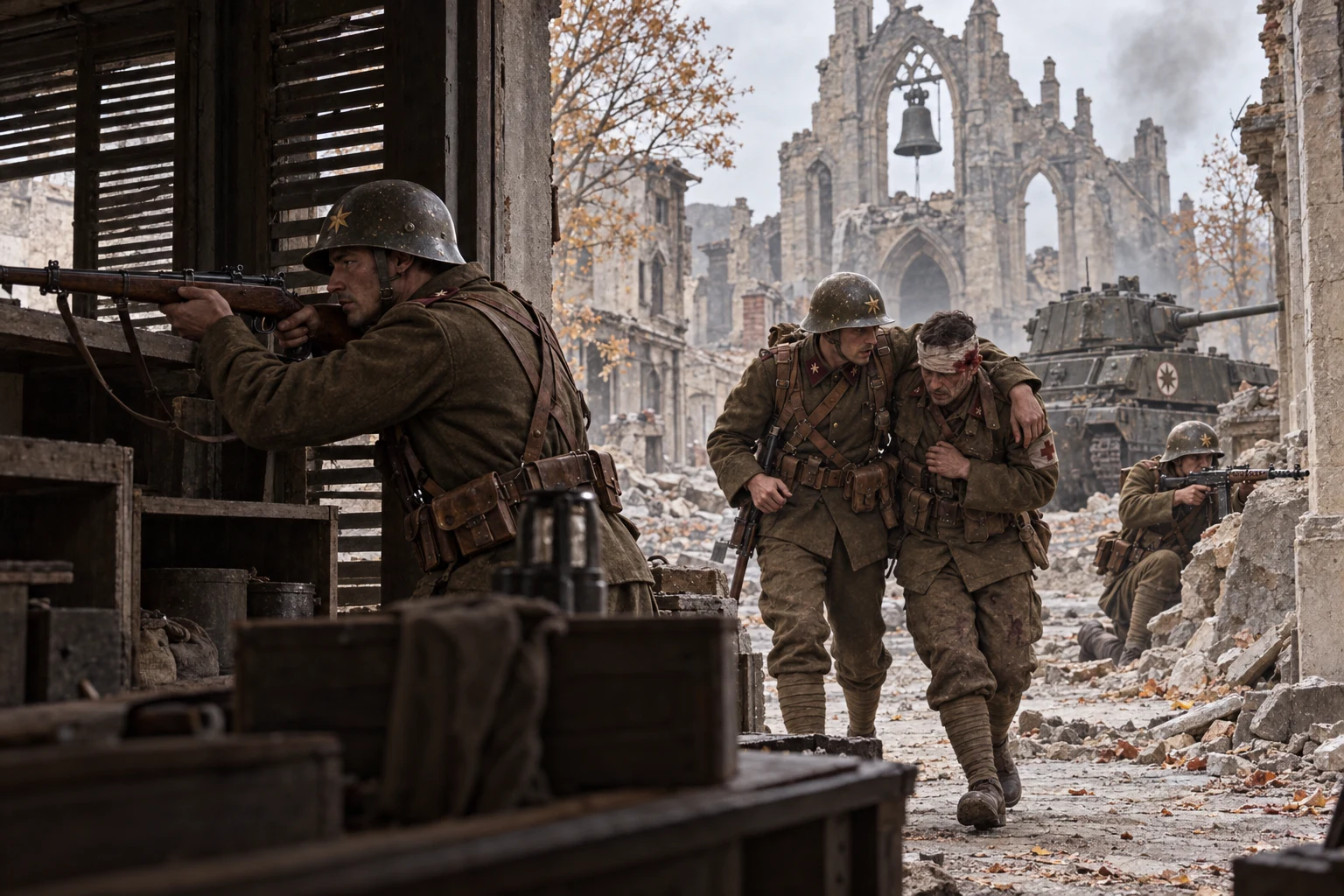
Aldren’s alternate tracks, medical lane, runners, boats and ferrymen are not decorative humane details appended to a victory account. They explain what the victorious Teran formations did not obtain. Saved guns delayed movement beyond the White Pass. Preserved medical passage altered the cost of the Ridge Hospital Road defeat. The runner-restored observation link produced a barrage under which troops withdrew. Boats and ferries kept a fraction of soldiers available despite the loss of heavy equipment. Each escape had a particular capacity and limit. Treating all withdrawals as flight would hide how commanders and civilians preserved the basis of later resistance while accepting a locally irreversible loss.
The same distinctions shaped Teran action after battle. Infantry control of a bend did not remove damaged vehicles. A shared relay could be severed faster than the attacker could establish its own working network. A pump district remained vulnerable if occupation failed to maintain water machinery. Mobile victory therefore imposed engineering and administrative work before it yielded enduring operational advantage. Var and Orven exploited separations in the opponent’s systems, but still needed connections of their own. Their recurring presence provides continuity of practice across the ledger without licensing the claim that every engagement used identical doctrine or produced an equally complete territorial result.
Concentration under material limits
The campaign cannot be understood by assigning national June 1 strength to a mountain lane or a causeway. Those totals concern active people in the national military administration, including support and other branches, not simultaneous combatants in these selected engagements. No exact local strength or loss return is established here. The verified evidence is narrower and useful: guns withheld until an observation crest fell, a high detachment near ammunition exhaustion, a delivery window secured before Aldren recognized the deception, and heavy equipment stranded where boats could save people. These mechanisms show how finite support shaped operational outcomes more persuasively than numerical grandeur detached from the battlefield.
Civilian consequence also changed with terrain. In the hills, an evacuation road could determine whether wounded people and families escaped a threatened district. On dry frontage, visible resupply brought fire to routes shared with other movement. In lowland districts, military control of pumps and ferry landings affected the continuity of ordinary water management and transport. The sources do not quantify these burdens, and this synthesis does not manufacture totals. It locates consequences within established physical functions. The result is a history in which roads and water installations remain part of the communities that used them, even when both military commands reduce them to arrows on an operational map.
The next logistical threshold
The [industrial campaign](chron-campaign-09) had attacked repairs, observation and reserve assembly. The hill and river groups demonstrate that those processes could fail on a narrower physical bottleneck even when people and equipment survived. Their importance leads into [depot rings and coastal reception](chron-campaign-11), where distribution and unloading would become decisive at larger establishments. The [1217](year-1217), [1218](year-1218) and [1220](year-1220) records provide annual context, including fronts and events outside this selected sequence. The twelve battle IDs provide the detailed basis for the distinct tactical findings. Neither level of evidence should be substituted for the other.
Across these campaigns Tera repeatedly achieved operational concentration by making it arrive where Aldren could not answer with equivalent support. Yet the defender’s purposeful retreats made that superiority incomplete and temporary. Retained crews, rescued wounded, preserved water service and alternate communications had later effects that conquest could not cancel in a single engagement. These are meaningful Teran victories and meaningful limits at the same time. The aggressor’s professional ability extended its pressure through difficult ground; its control also expanded the infrastructure and civilian obligations attached to occupation. The continuing war depended on what each side could maintain after the last shot, rather than on the apparent simplicity of the captured objective.