The operation
Helion troops reached a ledge above the road along Kaven's ridge shelf while damaged imperial vehicles were being prepared for departure. The road connected the Hukular Viar corps with its consenting Axis receiving base. It did not become a safe withdrawal route merely because the column had assembled. July 19–26, 1233, brought a fight to remove the ledge's interference long enough for that slow technical movement to pass.
Lieutenant General Velra Nesk directed the Hukular 2nd Viar Expeditionary Corps as its resident commander. General Raden Thesk handled the overseas coordination, while General Soren Kast's larger military system faced pressures beyond this locality. Major General Elya Vos's opposing force used quarry tracks to reach ground overlooking the exit. The action remained in Helion's established theater. It neither created a direct Hukular land frontier nor moved the corps simultaneously into Serk's separate Gaften commitment.
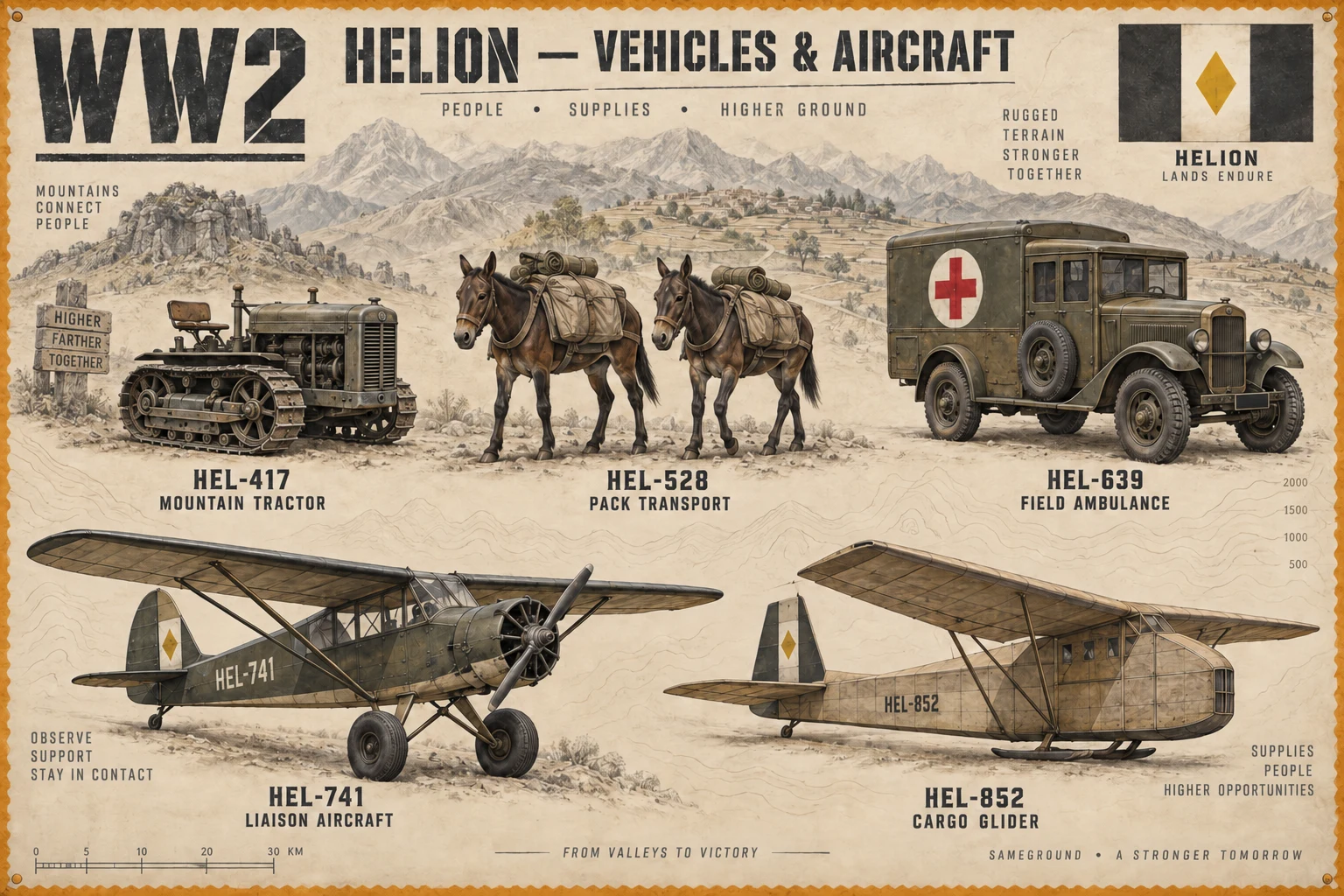
The threatened column carried machines in different conditions. Some could run, others required towing or attention at a waiting point. The mechanics and tools accompanying them were part of what would let a smaller future force continue fighting. Nesk's staff had to decide which burdens could move within the time bought by a counterstroke. Attempting to save every vehicle could hold indispensable people behind a machine whose recovery consumed the whole route.
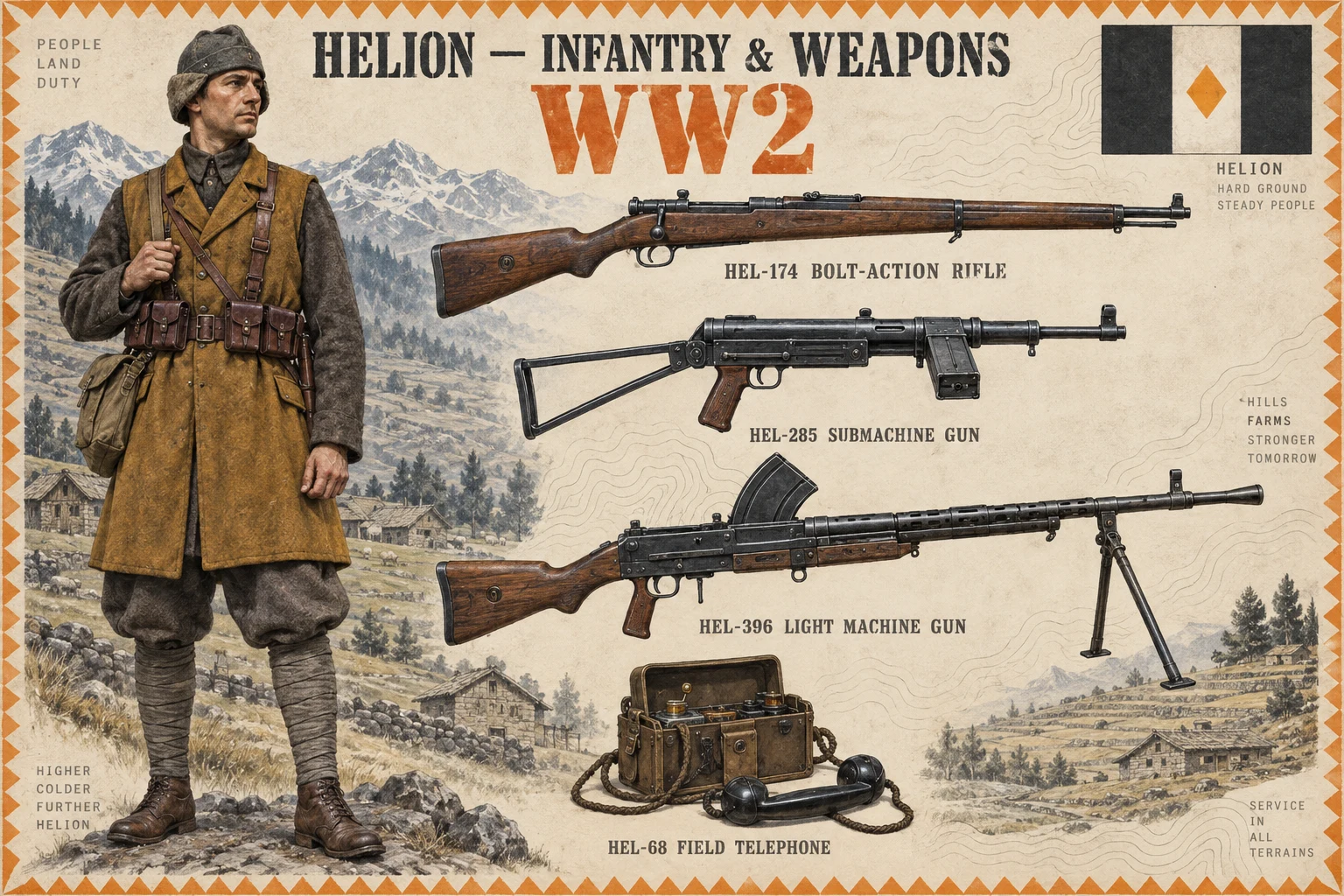
Vos's troops had a practical reason to occupy the ledge. Preventing movement could remove more useful imperial capacity than following withdrawing infantry across every neighboring position. Quarry approaches allowed infantry to reach the overlooking ground while bypassing some of the road's restrictions. Their foothold still needed contact with its own support. The terrain useful for a lightly equipped party did not guarantee that the heavier weapons needed to hold it indefinitely would arrive with equal speed.
The imperial covering arrangement used depth and alternate exits rather than demand a last stand without departure instructions. Loads waited in sheltered places while the threatened approach was assessed. Nesk separated the forward combat task from the slower technical return and ensured provision for resistance after the initial entry. A successful rush onto the shelf would have little value if exhausted troops could not keep it long enough for the following repair wagons.
The local counterstroke addressed the force above the heavy road. Holding troops drew attention onto approaches they could support while a reserve moved against parties that had reached beyond their best fire protection. The object remained the ledge and its relation to the exit. Every extra yard pursued after recovering it would reduce the strength protecting the column, possibly restoring the very interdiction the operation had been ordered to remove.
Hukular regained the overlooking position. Helion's defenders resisted, inflicted cost and kept pressure elsewhere, but could not maintain the immediate threat during the passage. Success was measured by the repair movement completed behind the recovered shelf. That movement preserved part of Nesk's organization while abandoning ground. The outcome did not turn the retreat into a renewed Viar offensive or make the wider Allied campaign wait for every imperial mechanic to rebuild his tools.
The receiving base remained a further constraint after the shelf was regained. A damaged vehicle reaching its edge might require space, tools and a team already working on another evacuation load. The column's saved mechanics also needed shelter and enough organization to find their equipment again. Passage out of Kaven therefore preserved an opportunity for reconstruction rather than complete it. Nesk's command had to retain what each group actually carried and where it was assigned, instead of allow a successful departure report to make missing parts or dispersed specialists disappear from the next readiness assessment.
For an invented fictional illustration, Nesk says: “Leave a machine rather than leave the people who can mend the next one.” These words are authored for the chapter, not quoted from a preserved workshop instruction. They explain the selection problem without certifying exactly which vehicles escaped. Recovery of technical capacity involved judgment under threat, including equipment that could no longer justify the carrying effort its weight imposed.
Wounded people moved before the final covering infantry, and some damaged material remained. The rear guard needed its own escape arrangement after the column passed. Reports from the ridge could not immediately account for every carrier or party departing by another route. The scenario supplies no reliable local strength or casualty figure. A formation still bearing the same corps title could be less capable after a successful withdrawal, with fewer vehicles and a supporting margin reduced by the action itself.
Medical personnel in the district continued caring for injured soldiers and displaced residents after the firing shifted. Ammunition traffic took transport otherwise useful for civilian evacuation. Damaged utilities harmed people who had not joined either army. Lists of missing neighbors and requisitioned vehicles offered a civilian account separate from the column's military inventory. Preserving them did not prevent immediate loss, but retained the difference between battle damage and property removed under occupying authority.
The resident corps's earlier arrival and later replacements had used sea transport to consenting Rostan and Novren facilities. Agreed Axis approaches carried onward movement into the fighting area. Those rights did not confer every neutral port or make the receiving base instantly capable of accepting unlimited evacuation. Nesk still needed vehicles, workshops and ammunition at the next place; the departure from Kaven was only one necessary stage in keeping the saved personnel useful.
By July 26, the ledge had served the imperial purpose and the repair column had been moved. Hukular won the finite task while Helion and the Allied coalition retained the larger pressure that had made withdrawal necessary. Kaven's significance lies in that distinction. Technical survival could extend resistance and impose further costs without reconstructing the political and industrial arrangement from which the corps' original freedom of action had come.
Forces & losses
No verified engagement-level strength figures have been authored for this record.
No verified engagement-level casualty figures have been authored for this record.
Voices from the campaign
The authored in-universe quotations are identified within the narrative above.
Participants and command
Hukular, Helion, Resident Axis support partners
Soren Kast, Velra Nesk, Raden Thesk, Elya Vos