The operation
The ammunition reserve at Ravel supported Helion troops holding their eastern assembly approaches. Protected by ridge terrain and reverse-slope trenches, the depot was difficult to neutralize from distant gun positions. Velra Nesk's resident 2nd Viar Expeditionary Corps attacked from July 19 to 27, 1230 to gain the ridge shoulder and the exit of a concealed cable passage. Elya Vos sought to keep reserve stocks moving while retaining the sheltered routes for relief of the summit defenses. The battle concerned the practical links between ledges, trenches and depot access. Reaching a crest without severing those links would leave the defenders able to replace exhausted troops more readily than the attackers.
This ridge and its passage are newly authored tactical geography within Helion's existing theater. No exact coordinates, surveyed elevations or direct frontier with Hukular are asserted. The summit offered observation over some approaches, but folds of ground concealed the reverse slope and parts of the reserve movement. A connecting shoulder carried communications trenches and access toward the passage exit. Nesk's scouts examined these relationships before the assault, separating an apparent view of the depot's direction from actual observation of its traffic. The cable passage enabled stocks to move under cover even when firing made the more visible hillside tracks difficult to use.
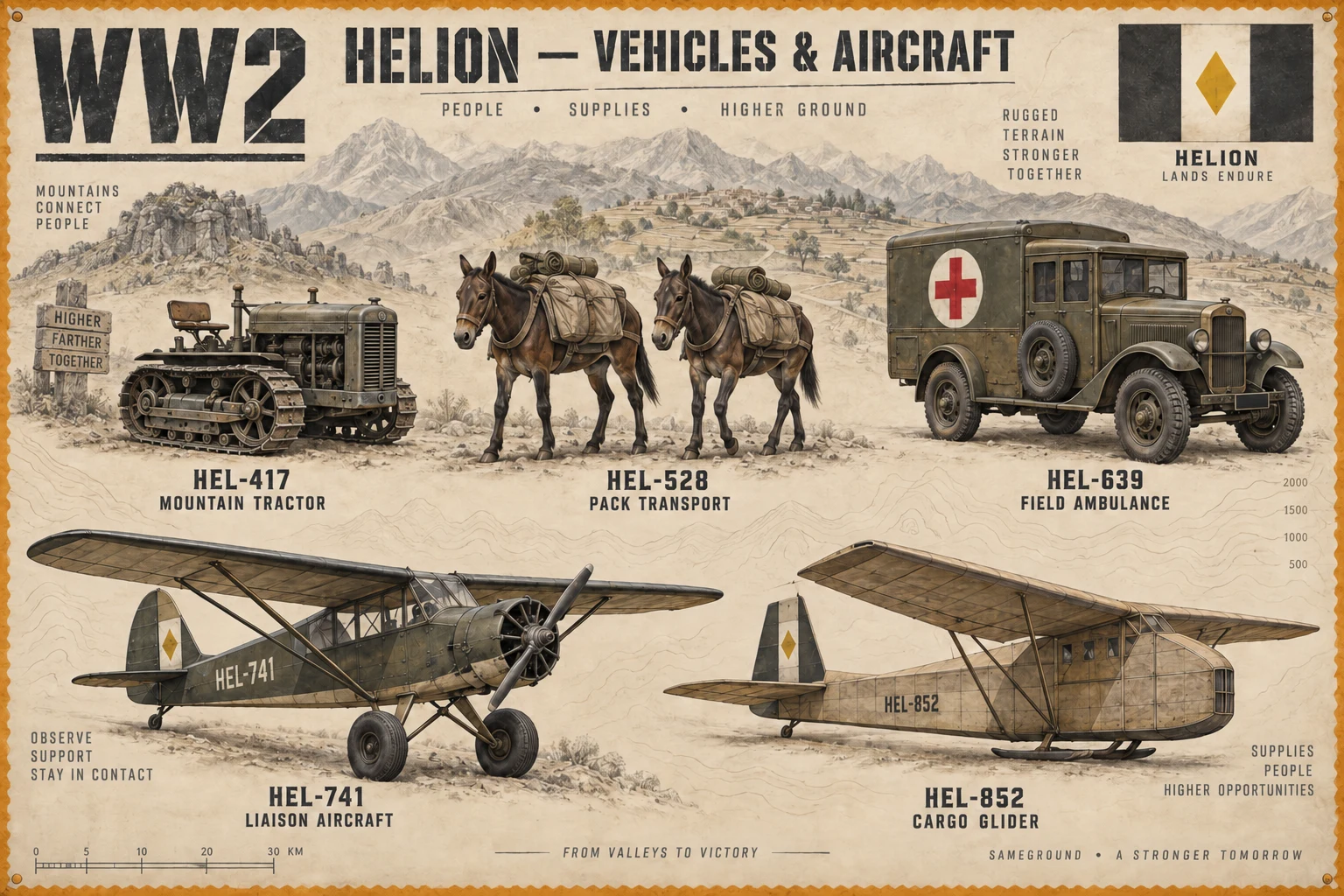
The Viar corps maintained its own workshops, vehicles and forward ammunition stocks. Its deployment and subsequent replacements had used sea transport to consenting Rostan and Novren facilities under newly authored arrangements. Defined Axis approaches joined those reception areas to the established fighting zone. Neutral countries retained their own borders; the agreements did not make all of Viar available to Hukular traffic. Thesk coordinated this commitment separately from the resident Gaften force, and Kast's headquarters supplied national direction. Nesk commanded the ridge battle locally. The long replacement chain made it especially important to use the available carriers and supporting weapons where they could produce a sustainable gain.
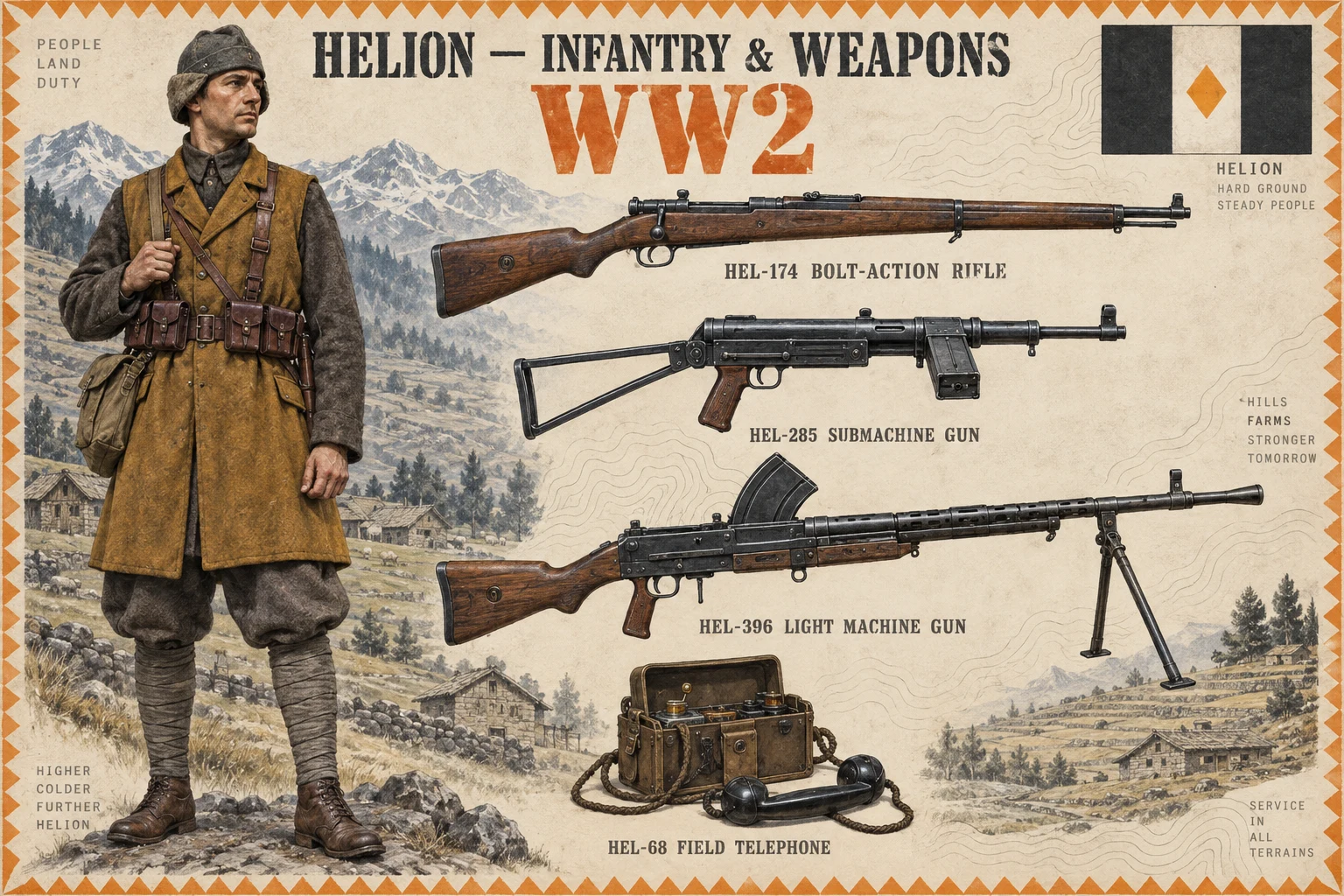
Nesk assigned supporting ledges to separate infantry parties before committing the main climb. A group losing contact on one approach would therefore not remove cover from every other ascent. Spare ammunition remained below the crest until carriers could follow a searched line. Mortars moved by hand to successive ledges where they could influence positions hidden from the rear artillery. That effort took soldiers away from the assault and imposed pauses between movements. The depot's importance did not cancel the carrying problem: each forward weapon required repeated loads, while every wounded soldier leaving the climb demanded people and route space that could otherwise support ammunition movement.
The opening pressure against the summit encountered Helion troops sheltered on the reverse slope. Vos used the trenches to move fresh defenders toward threatened entrances while depot personnel continued shifting reserve stocks through the cable passage. Hukular's distant gunfire restricted exposed movement but could not fully reach those covered connections. Nesk halted the direct extension and reinforced the shoulder effort. Continuing to climb would spend the leading troops without stopping the cycle of relief behind the crest. The separate ledge parties now mattered because they could maintain pressure while the main assault's direction changed, rather than expose the whole operation during its pause.
Helion infantry counterattacked along a communications trench toward the threatened shoulder. The attempt aimed to restore its sheltered relief route before Hukular could join the supporting positions. Nesk used a held infantry group to secure the nearer trench connection and keep carriers moving to the ledges. Mortar teams shifted to support that fight, reducing immediate pressure on the summit. Vos gained time to remove more stores, but could not reopen the whole shoulder approach. The struggle concentrated on access: whichever side held the connection could sustain or interrupt movement behind the visible height, even while the summit positions remained dangerous.
Hukular then gained the passage exit and consolidated the shoulder. Helion defenders could still use portions of their reverse-slope trenches, but the previous routine of relief and ammunition delivery no longer passed through a protected shared access. Vos displaced the local assembly line toward longer approaches and withdrew stores that could still be moved. The depot came under direct pressure without this account claiming that every crate had been captured or every summit defender surrounded. Nesk retained the connecting ground and established observation over a route formerly sheltered from the corps' positions. That forced a local reorganization beyond the narrow territory occupied.
Holding the shoulder demanded continued ammunition and repeated checks on the carrier line. Evacuation down steep ground required pauses when stretcher parties and supplies could not pass safely at the same point. The supporting weapons also needed service after prolonged use. Local casualty totals and committed strengths are not supplied; national military establishments cannot be treated as the number fighting on Ravel. The practical cost lay in reduced carrier availability, the reserve spent retaining the trench and personnel committed to a height that still faced opposition. Nesk ended the battle with improved observation and a shorter opposing relief route denied, rather than unlimited fresh capacity.
Storekeepers and medical personnel maintained records distinguishing military reserves from supplies intended for hospitals and households. Copies mattered when occupying authorities redirected usable stocks and described the remaining stores as a captured military inventory. Families still needed food and medical movement along tracks now guarded for the corps' supply. Some residents assisted people unable to leave the hillside shelters; others followed the withdrawing forces while preserving receipts and lists of missing relatives. Those choices gave the locality a history beyond the assembly line's displacement. Nesk's ability to use a captured route did not settle ownership of civilian goods or remove responsibility for deprivation imposed through occupation.
On July 27 Hukular held Ravel's passage exit and ridge shoulder, bringing the depot under pressure and disrupting Helion's local assembly system. Vos retained forces and some evacuated stocks for continuing service. The victory remained tied to sea deliveries, repairs and the ability to carry supplies uphill; it did not create a new continental army or transfer Serk's Gaften corps into Viar. SharkStrike belonged to 1232 and supplied no completed battlefield event here. Nesk's preserved fictional quotation accurately identifies the relationship that changed: before the shoulder was held, Helion could replace men faster than the attackers could bring shells toward the summit.
Forces & losses
No verified engagement-level strength figures have been authored for this record.
No verified engagement-level casualty figures have been authored for this record.
Voices from the campaign
At Ravel Ridge Depot, the shoulder mattered before the summit. Until we held it, the enemy could replace men faster than we could bring shells uphill.Velra Nesk · Authored fictional archival excerpt
Participants and command
Hukular, Helion, Resident Axis support partners
Soren Kast, Velra Nesk, Raden Thesk, Elya Vos