The operation
Water carriers and guns made the stone terrace at Saren worth a counterstroke. Huqaiti troops had regained it and brought pressure against the lower mountain front held by Hukular's resident Gaften force. Their gain was substantial enough to endanger supply, but it extended beyond the support that could keep every forward position fighting together. Lieutenant General Hadin Serk used that interval between June 16 and 25, 1227, to recover the wall and terrace junction. The object was to protect the expeditionary concentration, not to spend its remaining mobility chasing every withdrawing party up the mountain.
The 1st Gaften Expeditionary Corps was already a resident formation. Its sea deployment and replacement flow used consenting Ruuyaq and Azmar reception facilities, with onward movement through agreed Axis approaches and existing fighting lodgments. Sea carriage to those facilities did not become a direct land frontier between Ruuyaq and Handistan, and it granted no transit through neutral Amarin. General Raden Thesk coordinated the overseas commitment under Soren Kast's supreme command. Serk made the field decisions at Saren with the troops, weapons and carrying capacity available to the corps there.
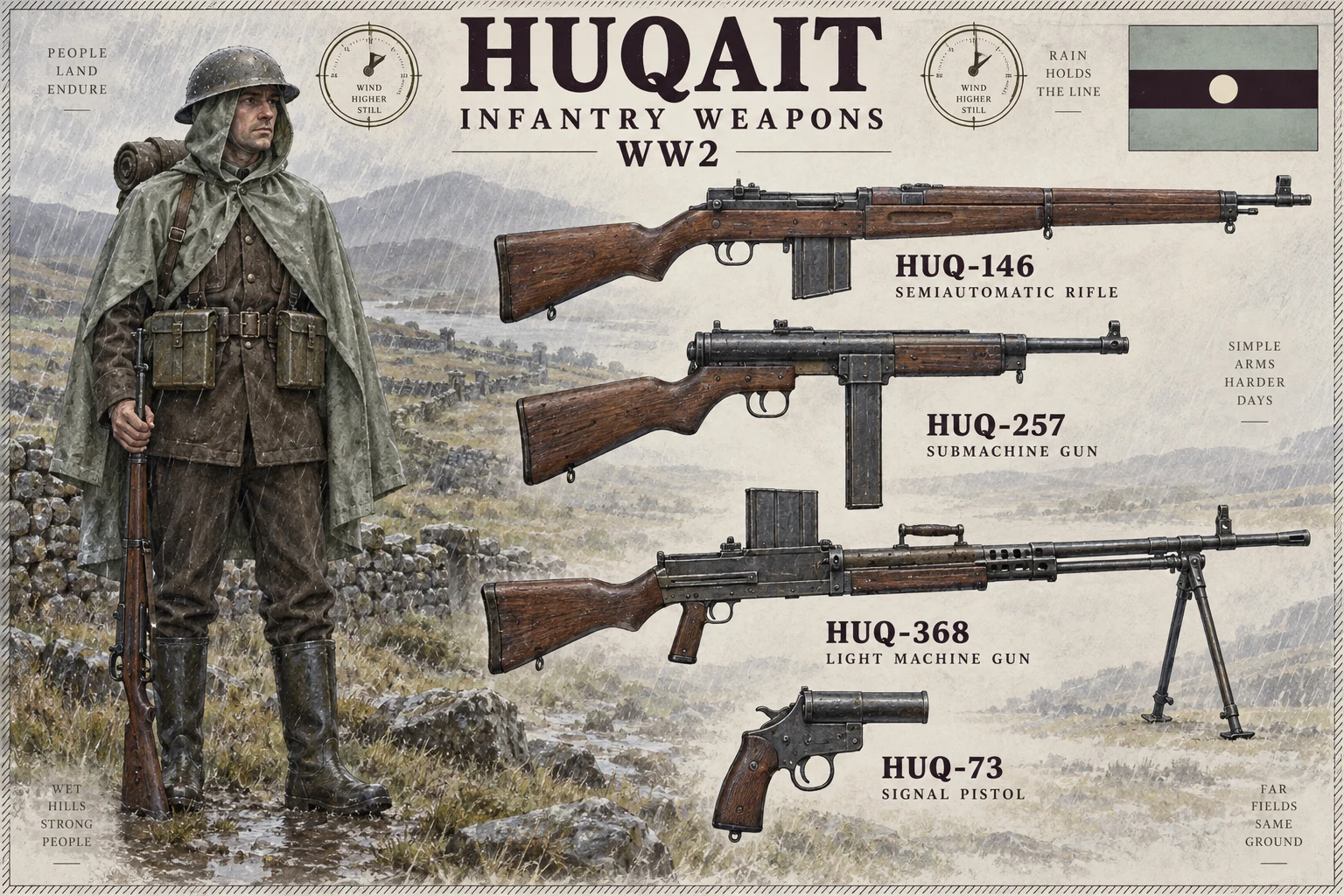
On the Allied side, Huqaiti riflemen occupied the upper wall. Major General Hamir Qel served as the Handistani liaison and field officer working with authorized partner commands in Huqait. That relationship assisted the defense without changing the nationality of the men holding the local position. When the road was blocked, concealed pack movements kept the wall supplied. The defenders had prepared an alternative to vehicle access. Their advance could survive a road interruption longer than a force whose ammunition and water depended entirely on wheels.
Serk kept the counterstroke reserve away from the first holding battle. It had a separate ammunition source, allowing the troops under immediate pressure to use their allotment without emptying the means of the later blow. The holding force had to endure that separation. It could see a reserve being preserved while its own positions took losses, and waiting for the shoulder to become vulnerable required more than announcing a future attack. The command had to maintain contact, recognize the actual extent of the Huqaiti advance and give the holding troops enough support to remain in place.
The counterstroke began against the shoulder rather than the strongest wall. Serk's mobile group moved while artillery restricted the approaching routes. Supporting fire could not be shifted so completely that the holding force was left to absorb the renewed pressure alone. The balance mattered: a brilliant movement past a collapsed holding line would not restore the terrace. By contesting the junction, the attackers struck at the link between the forward Huqaiti positions and the movement that could reinforce or evacuate them.
Qel's partner defense still had riflemen in strong positions and supplies arriving by packs. Its difficulty became coordinating those positions as the shoulder route narrowed. Reinforcement, casualty movement and another advance now competed for access under growing pressure. The Hukular force retook the upper wall and terrace junction. Huqaiti troops withdrew from the exposed salient with some equipment preserved. Their withdrawal reflected a choice to retain a useful fighting force when continuing the local advance had become more dangerous than giving up the ground.
Recovery of the terrace reduced the immediate threat to guns and water carriers. It did not refill the ammunition point or restore the men lost while the holding group waited. Serk used the recovered position and shorter line for replenishment and redistribution. The mobile reserve had consumed fuel and recovery effort, and the guns that supported it needed further supplies. A pursuit would draw on the same resources required to make the regained concentration reliable. Restoring the supply arrangement was the usable operational consequence of victory at Saren.
The restored route also had to accommodate equipment brought back from the counterstroke. A disabled vehicle awaiting recovery occupied attention and space that carriers needed for water. Moving it out of the immediate path could help supply but expose the recovery crew. Keeping it under close protection could slow the very route the battle had reopened. These choices made recovery work part of holding the ground. The losses recorded here are therefore expressed through diminished reserves, delayed transport and damaged equipment; the scenario supplies no exact casualty return from which a precise total could honestly be made.
An invented fictional observation attributed to Hadin Serk is included to express the decision behind replenishment: “Give the terrace back its carrying parties before you ask the reserve for another climb.” This is new authored speech, not testimony copied from a veteran's papers. It assigns neither a new casualty figure nor a newly discovered order to the archival record.
Medical staff continued treating soldiers and displaced residents after firing moved away. Vehicles allocated to Hukular ammunition were unavailable to people needing evacuation. Residents recorded missing neighbors and the places to which requisition parties had taken local vehicles. Such lists kept occupation seizures distinct from equipment destroyed during battle. They could not repair a utility line or return a vehicle at once, but they preserved an account outside the victorious command's supply ledger.
The regained stone junction put Serk's gun positions and water traffic on a more secure footing. Up the mountain, Qel's partners had taken men and equipment out of the exposed salient; below it, the medical staff and carrying parties continued work neither side could abbreviate in a victory report. The next useful act at Saren was the arrival of a load where it was needed.
Forces & losses
No verified engagement-level strength figures have been authored for this record.
No verified engagement-level casualty figures have been authored for this record.
Voices from the campaign
The authored in-universe quotations are identified within the narrative above.
Participants and command
Hukular, Huqait, Ruuyaq Axis partners
Soren Kast, Hadin Serk, Raden Thesk, Hamir Qel