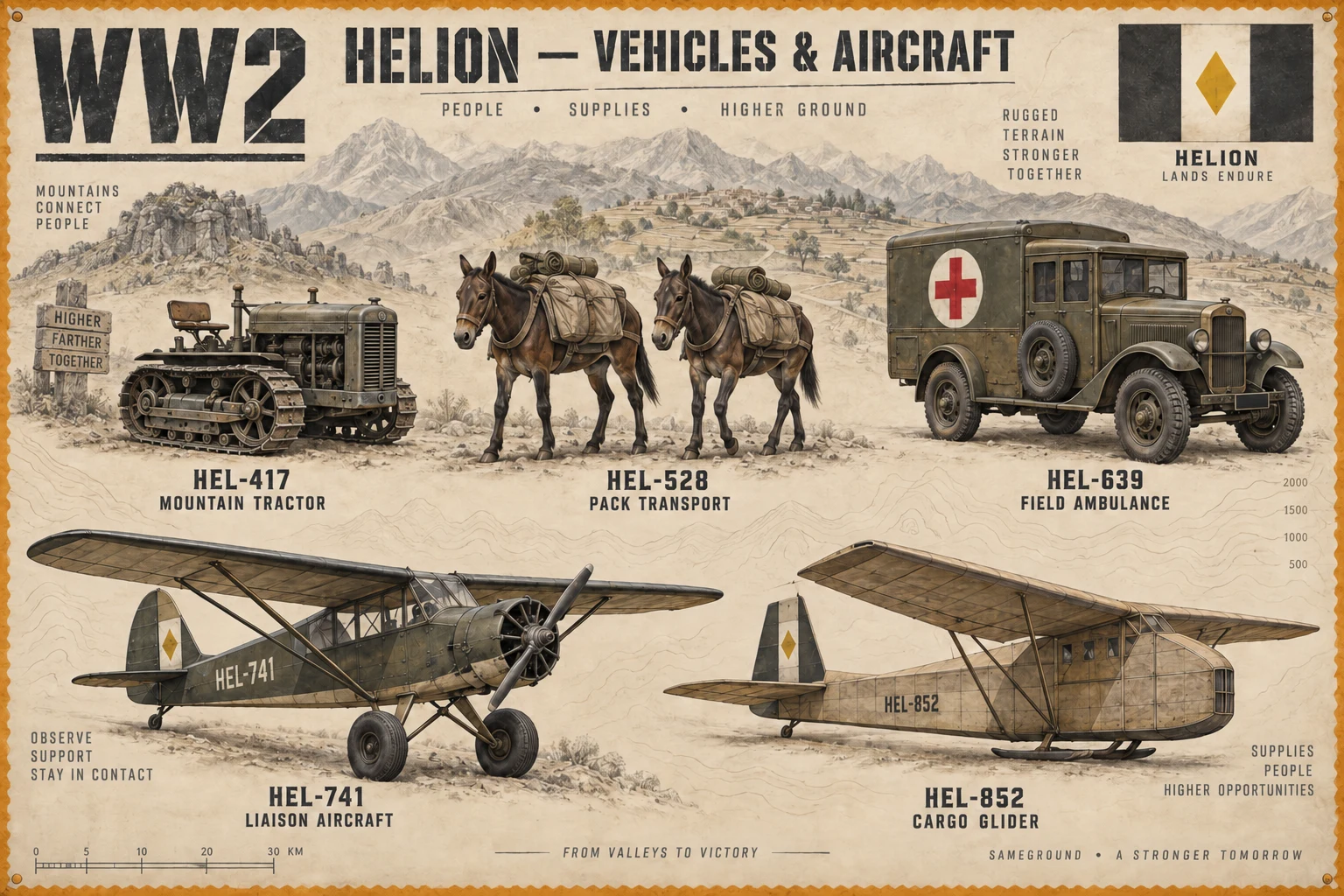
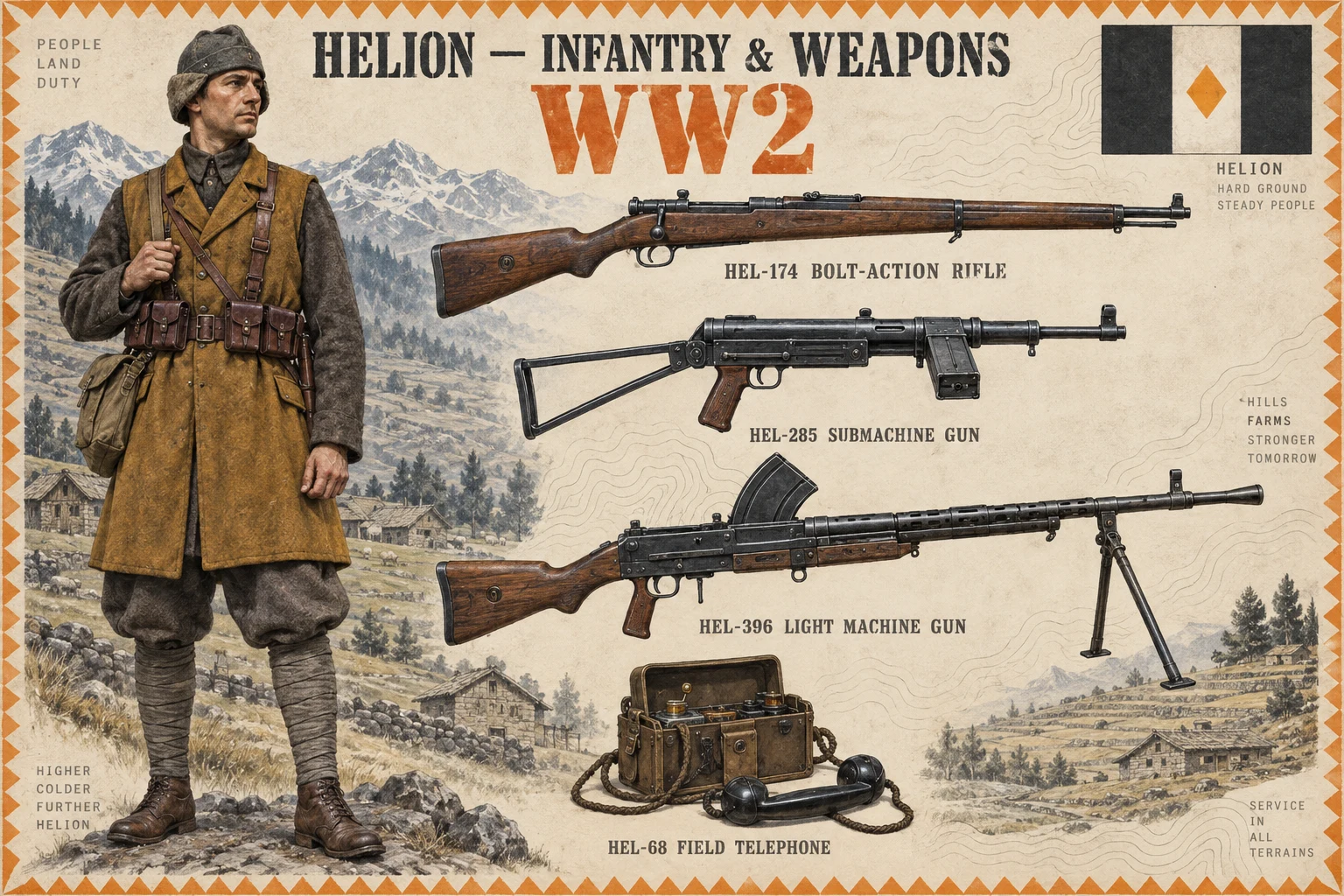
The operation
Ovel Brake Works supported Helion's hillside transport, where a vehicle unable to stop or move reliably could close an entire road. The inspection sheds and brake workshops therefore influenced the capacity of assembly districts beyond the works themselves. Between August 9 and 16, 1219, Velra Nesk's Hukular 2nd Viar Expeditionary Corps attacked this repair complex. Elya Vos served the Allied Viar field and liaison effort defending it. The objective was useful for two reasons: removing Helion's local repair capacity would lengthen vehicle returns, and retaining some installations could help Hukular maintain pressure from its own resident formation.
The corps was distinct from the expeditionary force in Gaften. Its vehicles, workshops, and forward ammunition reserve were maintained within the Viar commitment, with sea transport feeding consenting Rostan and Novren reception facilities. Supplies traveled onward along agreed Axis approaches to the existing fighting area. Neutral states' borders supplied no automatic corridor, and Hukular had no imagined direct land frontier with the works. Raden Thesk coordinated overseas resources while Soren Kast directed the wider national effort. Nesk commanded the field battle, making choices within the stores and repair capacity actually available rather than relying on simultaneous relocation of distant troops.
Reconnaissance identified the works as more than a collection of sheds. Inspection trenches let mechanics reach equipment from below and now gave defenders protected positions near the bays. Lifting gear, power, portable tools, and clear vehicle exits formed a connected repair process. An attack that destroyed the pits or blocked the departures could capture machine tools while leaving the site incapable of returning a vehicle to the road. Nesk therefore assigned infantry approaches around utilities and service passages before a movement into the central sheds. The fire plan recognized places where suppressing defenders would also risk damaging the capacity the corps wanted to retain.
Helion's troops used the inspection trench rather than presenting a continuous line at the shed fronts. From that recessed ground they could delay infantry entering the bays while surviving mechanics moved away with portable tools. Vos's defensive effort protected skill and equipment as well as the immediate position. A mechanic saved with instruments might restore capacity elsewhere even if the building was lost. The defenders' evacuation route consequently mattered as much as their firing positions. Hukular could deny the road exit, but doing so before controlling adjacent passages risked exposing blocking troops to resistance moving unseen through the works.
The corps first tightened control around the utilities and approaches. Infantry obtained positions from which the service exits could be watched while engineering personnel waited for access to unsafe installations. Forward loads were kept small enough to pass through the narrow lanes without immobilizing the return movement. Damaged vehicles from the attack could not be allowed to crowd the same approaches needed for ammunition and wounded men. This constraint affected the battle's tempo: an apparently available lane was not an invitation to send every waiting vehicle into it. The hillside road system gave little room to recover from a blocked column.
Helion's trench defense forced the assault to deal with threats below the usual line of sight. Occupation of a shed entrance left defenders able to obstruct movement among the machinery. Nesk's infantry worked to connect the secured passages around the trench, limiting the places from which Helion troops could move against successive entries. Fires and damaged utilities complicated that movement without making a general demolition useful. As engineers gained protected access they isolated dangerous connections and addressed fires, while the infantry continued securing the enclosure. Those tasks overlapped: restoration could begin locally before resistance across the whole complex had ended, but only where troops could protect the workers.
The decisive loss for the defenders was control of utilities and service passages together. Keeping a firing position in the trench no longer preserved protected circulation through the repair enclosure. Mechanics and the tools they could carry withdrew with the defending effort, while the inspection sheds passed into Hukular hands. The loss lengthened Helion's repair cycle by forcing damaged vehicles to seek other facilities or wait longer for attention. It did not remove every mechanic from Helion's service or make every road immediately available to the corps. Vos's preservation of skilled workers reduced the lasting gain the attackers could extract from capturing fixed installations.
Initial inspection showed why Nesk's victory report and the repair inventory measured different things. Equipment could look intact yet lack a gauge, a sound support, or safe power. Some machinery failed the first assessment, and the tools evacuated by Helion left gaps no order could fill. The corps selected repair tasks suited to what survived rather than promising immediate restoration of all damaged transport. Returning a vehicle to hillside use required confidence in its brakes as well as a running engine. Testing and inspection took time, during which guards, fire crews, and mechanics remained tied to the works rather than available for pressure farther forward.
Civil officials and volunteer carriers accompanied the withdrawing defense through the threatened exit, while other residents stayed with relatives unable to travel. The works had supported civilian employment and transport as well as military vehicles. Under occupation, military repair priorities reduced access to equipment and roads on which ordinary deliveries depended. People who remained could not simply replace skilled colleagues and tools evacuated during the fighting. They retained property and family records while accommodating wounded and displaced neighbors. Their continued work preserved a community, but labor demanded by the occupying army did not turn the district's machinery into property free of its former owners' claims.
Ovel ended with the inspection sheds taken and Hukular better placed to pressure the remaining assembly districts. Nesk's capture of the connected utility and movement system made surviving equipment potentially useful, while the defenders' trench resistance and evacuation limited immediate output. The corps gained an incremental repair advantage rather than an instantly complete workshop. Its sustainable pressure still depended on separate resident maintenance, scheduled sea supply, and the agreements that admitted those supplies through Rostan and Novren. The battle's effect appeared in longer Helion return journeys and more usable Hukular repair options, both consequences continuing after infantry stopped fighting inside the sheds.
Forces & losses
No verified engagement-level strength figures have been authored for this record.
No verified engagement-level casualty figures have been authored for this record.
Voices from the campaign
At Ovel Brake Works, the machines were useful only with power, tools, and people able to work them. The first inventory was less impressive than the first report.Velra Nesk · Authored fictional archival excerpt
Participants and command
Hukular, Helion, Resident Axis support partners
Soren Kast, Velra Nesk, Raden Thesk, Elya Vos