The operation
The name Goat Pass described a carrying route before it described a military objective. At Serran in April 1212, pack animals could negotiate the steep tracks while field guns had to be dismantled and moved in loads. The same route that allowed infantry to gain height could therefore leave its supporting weapon parts scattered below. Huqaiti defenders understood the interval between an early climbing party and a gun assembled where it could protect that party. They used alternate ledges and removed ropes employed by local heavy transport teams, making ordinary knowledge of the pass insufficient for an invading column.
Lieutenant General Hadin Serk directed the Hukular 1st Gaften Expeditionary Corps in the April 16–23 action. His force remained a resident overseas contingent supported by actual sea deliveries to agreed Ruuyaqi and Azmari facilities. General Raden Thesk coordinated that commitment within Marshal Ilyan Rauk's wider system. Supplies reached the fighting area through authorized Axis approaches and established lodgments, not through an imaginary land corridor from Volara. No agreement granted automatic transit through neutral Amarin or every state between the reception port and the next desired objective.
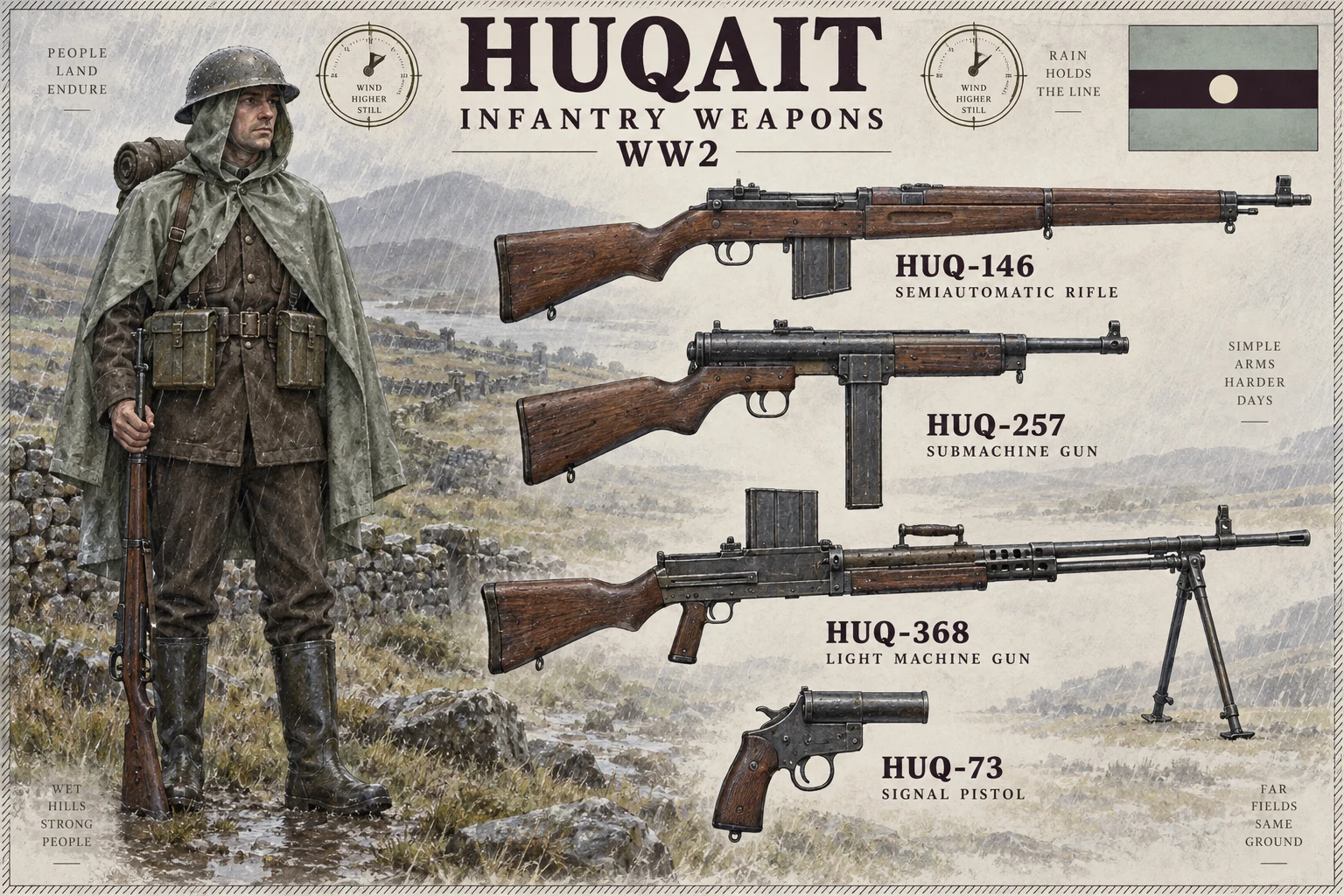
Major General Hamir Qel's Allied liaison related Huqait's local defense to partner requirements. The riflemen positioned on ledges did not have to stay at every exposed place to delay the corps. They fired from one cover and shifted to another as the attackers identified it. Removing the hauling ropes denied a method the Hukular engineers had expected to use rather than destroying the entire pass. A path could remain open to a scout and effectively closed to a team carrying a weapon component, giving the defenders useful time to alternate their pressure between the road and upper movement.
Serk ordered the pack routes surveyed separately from the more substantial approach. Loads for the climbing infantry were selected for a limited task at the upper paths, not an unbounded advance into Huqait. Engineers below needed men and tools that assault officers also wanted committed ahead. The commander retained that labor because a leading company reaching the exit would still need a dependable connection for ammunition. Every gun part sent upward also occupied carrying capacity that could otherwise move provisions or bring a wounded man back.
The first movement on April 16 reached an apparently usable ledge and discovered the missing hauling arrangement. Men could pass it in small groups, but transferring heavier stores required new work under fire. Huqaiti riflemen shifted between alternate positions instead of offer one target for every supporting gun. Serk paused the heavy movement while keeping pressure through light infantry on another path. This divided effort risked separation: the climbing parties could gain ground and run short of support while the engineers still cleared the approach below.
During the next stages, ammunition reached the upper groups in smaller loads. Overloaded animals slowed on narrow sections, and handlers reduced burdens rather than force every load through at the rate demanded by the original timetable. Some dismantled weapons had to wait for components carried by different parties. The delays were not evidence that those weapons had been lost in combat, but they reduced the number immediately useful to the infantry. Serk's staff revised the forward task accordingly, keeping the upper groups focused upon securing paths needed for a connection rather than taking ground no supply party could hold behind them.
The Huqaiti defense expected reinforcements to reach the exit through its remaining link between the heights and lower approach. Hukular light infantry secured upper paths while engineers advanced the main movement under supporting fire. Their convergence threatened the place from two directions before the defending reserve could restore both. Riflemen retained cover on separate ledges and could no longer alternate pressure through the same protected junction. Losing the exit therefore divided commitments that had previously worked as one defense, compelling withdrawal of positions still locally capable of resistance.
An explicitly invented illustration gives Serk the words, “Join the parties at the exit before asking either one to go farther.” This is authored fiction for the narrative, not a recovered line from a field report. It expresses the operation's necessary limit. A light group beyond the path could not sustain itself by the mere fact of having arrived first. Joining it to the approach made the gain supplyable and created a place from which the corps could defend the route required by its own slower weapons and stores.
The captured gradient remained a capacity ceiling. Serk could send additional infantry or improve its artillery allotment more readily than he could do both together. Empty transport and returning carrying parties needed intervals that forward movement could not consume indefinitely. Engineers kept guards along the cleared approach and repaired places made unsafe by repeated heavy loads. Holding the upper paths protected that slow work from a renewed attack. The result was a difficult but dependable supporting passage, not a mountain road whose narrow turns had been widened by victory alone.
Medical movement required further carrying labor before vehicles could receive casualties. A party bringing a wounded soldier down could not appear simultaneously in a return promising another ammunition load uphill. Reports from the upper positions arrived unevenly and did not describe every surviving Huqaiti group alike. Serk had the actual exit and supporting paths checked before reporting an unrestricted opening. The corps retained a local advantage while its opponent preserved troops and some stores deeper in the mountain defense. The next operation would have to reckon with those forces rather than treat their withdrawal as disappearance.
Civilian storekeepers recorded allocations intended for hospitals and households before occupation parties redirected goods. Concealed copies preserved claims the military inventory might otherwise describe as ownerless supplies found near the route. Capturing the pass explained the army's interest in those resources and did not establish a right to seize everything useful. Residents needed food, containers and transport for their own life under restrictions. A path dependable for the victorious corps could become less available to a household when guards reserved its carrying intervals for military loads.
By April 23, the pass exit and upper paths were held by Hukular, with the heavy approach connected to the climbing force. Serk could sustain selected forward troops instead of maintain an isolated raid from carried stocks alone. Huqait had lost a useful mountain support arrangement while retaining deeper resistance and its national Allied purpose. The operation extended the resident corps's practical reach within its real overseas system. Its result came from joining unequal movements at a bounded objective and continuing the repair and guard work their success demanded, not from inventing effortless regional access after a difficult climb.
Forces & losses
No verified engagement-level strength figures have been authored for this record.
No verified engagement-level casualty figures have been authored for this record.
Voices from the campaign
The authored in-universe quotations are identified within the narrative above.
Participants and command
Hukular, Huqait, Ruuyaq Axis partners
Ilyan Rauk, Hadin Serk, Raden Thesk, Hamir Qel